Connect with us

Economy

Nigerian Firm Tops Seeds Index Ranking

Published

on

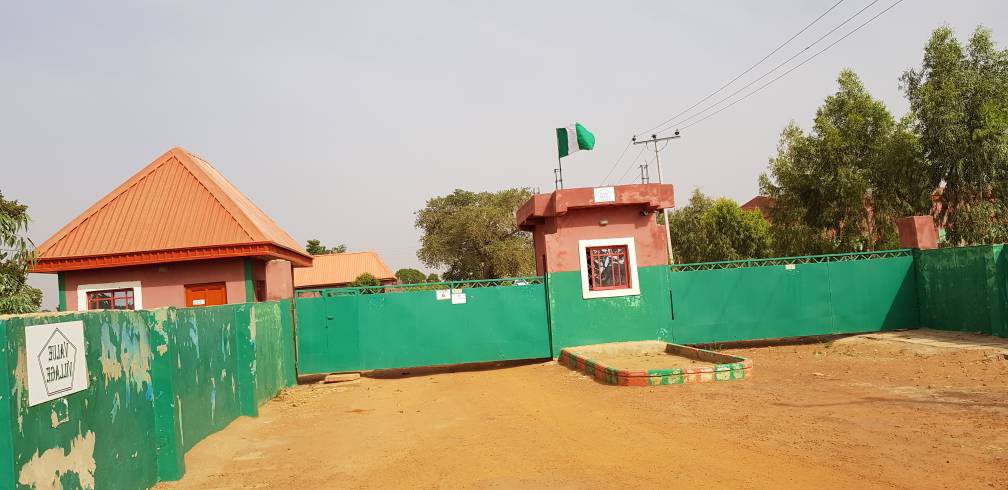
A company based in Nigeria known as Value Seeds Limited has topped the rankings in new research on seed companies operating in Western and Central Africa.

However, the overall picture is one of international and African seed companies falling short in delivering quality seed and new varieties to smallholder farmers.

This limits the potential to address food security, nutrition and climate resilience, according to a new study by the Amsterdam-based Access to Seeds Foundation.

While there is a growing number of seed companies active in the region, both home grown and international, less than half of the 23 companies researched conduct plant breeding in Western and Central Africa. This limits the release of new varieties adapted to the region, and explains the high number of varieties that are older than five years offered in company portfolios.

The Access to Seeds Index 2019 – Western and Central Africa ranks Value Seeds number one. Like most of the other companies from the region, it operates exclusively in its home country of Nigeria. It stands out for its maize and rice ‘value kits’, all-in-one input packages tailored for smallholders.

Also, it provides capacity building activities that specifically target women and next-generation farmers. Other Nigerian companies also dominate the top half, such as Maslaha Seeds, Premier Seed, and Da-Allgreen Seeds, showing the relative strength of the seed industry from Nigeria.

Ranked second is Technisem from France, which has the widest presence in the region, covering 17 countries and offering training in 13 of them. The company sets an example by establishing Novalliance, which taps into local potential of homegrown African seed companies. Among the top-ten index companies that belong to this group are Tropicasem from Senegal, Semagri from Cameroon, and Nankosem from Burkina Faso. Their combined breeding efforts result in the most up-to-date portfolio in the region, with a high number of newly released varieties.

“What both Value Seeds and Technisem represent is the importance of partnerships to improve access to seeds in the region,” said Ido Verhagen, Executive Director at Access to Seeds Index. “In the case of Value Seeds, its partnership with the Alliance for a Green Revolution in Africa (AGRA) paid off, as its grant-based support enabled the company to improve its products and intensify its outreach to smallholder famers.”

For the most part, open-pollinated varieties still dominate across the region, in contrast with Eastern Africa and South Asia. The exception is maize, for which hybrid varieties are more commonly available. In addition, research shows that for almost half (48%) of the crops, the most recent variety is older than five years, with only a fifth (21%) having a variety less than three years. The lack of newly developed varieties seriously impacts the resilience to a changing climate and emerging disease and pests, which reduces yields.

Compared to a dozen of companies active in Nigeria and Senegal, only one company is active in each of Central African Republic, Equatorial Guinea and Guinea-Bissau.

“Our study shows the potential of homegrown seed companies. However, most operate only in their home markets, which causes geographic imbalances in seed sector development,” said Mr Verhagen.

“This also means that capacity building activities offered by companies only reach farmers in a handful of countries. This limits the adoption of new technologies by farmers in overlooked countries”, he added.

“The relevance of access to seeds and plant breeding should not be underestimated,” said Verhagen. “The number of undernourished people in the world reached an estimated 821 million in 2017 – it’s rising. Climate change and weather extremes have been identified as a major reason for the increase. The seed industry has a vital role to play in helping farmers to adapt to climatic challenges while simultaneously raising production levels.”

According to the FAO, the number of undernourished people has been on the rise in Western Africa and Sub-Saharan Africa as a whole in recent years. Western Africa has seen undernourishment rise to 15.1% of the population in 2017 from 10.4% in 2010.

The Access to Seeds Index 2019 is one of the first Sustainable Development Goals (SDGs) benchmarks published by the World Benchmarking Alliance.

The alliance was launched in September 2018 during the UN General Assembly in New York. The Access to Seeds Index was established with support from the Bill & Melinda Gates Foundation and the Government of the Netherlands.

The Access to Seeds Index for Western and Central Africa focuses on 23 leading seed companies in this region. This was preceded by rankings of the industry in both Eastern and Southern Africa and South and Southeast Asia, along with a ranking of Global Seed Companies.


Dipo Olowookere is a journalist based in Nigeria that has passion for reporting business news stories. At his leisure time, he watches football and supports 3SC of Ibadan. Mr Olowookere can be reached via [email protected]

Advertisement
Click to comment

Leave a Reply

Your email address will not be published. Required fields are marked *

Economy

Adedeji Urges Nigeria to Add More Products to Export Basket

Published

on

nigeria Export Basket

By Adedapo Adesanya

The chairman of the Nigeria Revenue Service (NRS), Mr Zacch Adedeji, has urged the country to broaden its export basket beyond raw materials by embracing ideas, innovation and the production of more value-added and complex products

Mr Adedeji said this during the maiden distinguished personality lecture of the Faculty of Administration, Obafemi Awolowo University (OAU), Ile-Ife, Osun State, on Thursday.

The NRS chairman, in the lecture entitled From Potential to Prosperity: Export-led Economy, revealed that Nigeria experienced stagnation in its export drive over three decades, from 1998 to 2023, and added only six new products to its export basket during that period.

He stressed the need to rethink growth through the lens of complexity by not just producing more of the same stuff, lamenting that Nigeria possesses a high-tech oil sector and a low-productivity informal sector, as well as lacking “the vibrant, labour-absorbing industrial base that serves as a bridge to higher complexity,” he said in a statement by his special adviser on Media, Dare Adekanmbi.

Mr Adedeji urged Nigeria to learn from the world by comparative studies of success and failure, such as Vietnam, Bangladesh, Indonesia, South Africa, and Brazil.

“We are not just looking at numbers in a vacuum; we are looking at the strategic choices made by nations like Vietnam, Indonesia, Bangladesh, Brazil, and South Africa over the same twenty-five-year period. While there are many ways to underperform, the path to success is remarkably consistent: it is defined by a clear strategy to build economic complexity.

“When we put these stories together, the divergence is clear. Vietnam used global trade to build a resilient, complex economy, while the others remained dependent on natural resources or a single low-tech niche.

“There are three big lessons here for us in Nigeria as we think about our roadmap. First, avoiding the resource curse is necessary, but it is not enough. You need a proactive strategy to build productive capabilities,” he stated, adding that for Nigeria, which is at an even earlier stage of development and even less diversified than these nations, the warning is stark.

“Relying solely on our natural endowments isn’t just a path to stagnation; it’s a path to regression. The global economy increasingly rewards knowledge and complexity, not just what you can dig out of the ground. If we want to move from potential to prosperity, we must stop being just a source of raw materials and start being a source of ideas, innovation, and complex products,” the taxman stated.

He added that President Bola Tinubu has already begun the difficult work of rebuilding the economy, building collective knowledge to innovate, produce, and build a resilient economy.

Continue Reading

Economy

Nigeria Inaugurates Strategy to Tap into $7.7trn Global Halal Market

Published

on

Halal Market

By Adedapo Adesanya

President Bola Tinubu on Thursday inaugurated Nigeria’s National Halal Economy Strategy to tap into the $7.7 trillion global halal market and diversify its economy.

President Tinubu, while inaugurating the strategy, called for disciplined, inclusive, and measurable action for the strategy to deliver jobs and shared prosperity across the country.

Represented by Vice-President Kashim Shettima, he described the unveiling of the strategy as a signal of Nigeria’s readiness to join the world in grabbing a huge chunk of the global halal economy already embraced by leading nations.

“As well as to clearly define the nation’s direction within the market, is expected to add an estimated $1.5 billion to the nation’s Gross Domestic Product (GDP) by 2027. It is with this sense of responsibility that I formally unveil the Nigeria National Halal Economy Strategy.

“This document is a declaration of our promise to meet global standards with Nigerian capacity and to convert opportunity into lasting economic value. What follows must be action that is disciplined, inclusive, and measurable, so that this Strategy delivers jobs, exports, and shared prosperity across our nation.

“It is going to be chaired by the supremely competent Minister of Industry, Trade and Investment.”

The president explained that the halal-compliant food exports, developing pharmaceutical and cosmetic value chains would position Nigeria as a halal-friendly tourism destination, and mobilising ethical finance at scale,” by 2030.

“The cumulative efforts “are projected to unlock over twelve billion dollars in economic value.

“While strengthening food security, deepening industrial capacity, and creating opportunities for small-and-medium-sized enterprises across our states,” he added.

Allaying concerns by those linking the halal with religious affiliation, President Tinubu pointed out that the global halal economy had since outgrown parochial interpretations.

“It is no longer defined solely by faith, but by trust, through systems that emphasise quality, traceability, safety, and ethical production. These principles resonate far beyond any single community.

“They speak to consumers, investors, and trading partners who increasingly demand certainty in how goods are produced, financed, and delivered. It is within this broader understanding that Nigeria now positions itself.”

Tinubu said many advanced Western economies had since “recognised the commercial and ethical appeal of the halal economy and have integrated it into their export and quality-assurance systems.”

President Tinubu listed developed countries, including the United Kingdom, France, Germany, the Netherlands, the United States, Canada, Australia, and New Zealand.

“They are currently among the “leading producers, certifiers, and exporters of halal food, pharmaceuticals, cosmetics, and financial products.”

He stated that what these developed nations had experienced is a confirmation of a simple truth, that “the halal economy is a global market framework rooted in standards, safety, and consumer trust, not geography or belief.”

The president explained that the Nigeria national halal economy strategy is the result of careful study and sober reflection.

He added that it was inspired by the commitment of his administration of “to diversify exports, attract foreign direct investment, and create sustainable jobs across the federation.

“It is also the product of deliberate partnership, developed with the Halal Products Development Company, a subsidiary of the Saudi Public Investment Fund.

“And Dar Al Halal Group Nigeria, with technical backing from institutions such as the Islamic Development Bank and the Arab Bank for Economic Development in Africa.”

The Minister of Industry, Trade and Investment, Mrs Jumoke Oduwole, said the inauguration of the strategy was a public-private collaboration that has involved extensive interaction with stakeholders.

Mrs Oduwole, who is the Chairperson, National Halal Strategy Committee, said that the private sector led the charge in ensuring that it is a whole-of-government and whole-of-country intervention.

The minister stressed that what the Halal strategy had done for Nigeria “is to position us among countries that export Halal-certified goods across the world.

The minister said, “We are going to leverage the African Continental Free Trade Area (AfCFTA) to ensure that we export our Halal-friendly goods to the rest of Africa and beyond to any willing markets; participation is voluntary. “

She assured that as the Chairperson, her ministry would deliver on the objectives of the strategy for the prosperity of the nation.

The Chairman of Dar Al-Halal Group Nigeria L.td, Mr Muhammadu Dikko-Ladan, explained that the Halal Product Development Company collaborated with the group in developing the strategy.

“In addition to the strategy, an export programme is underway involving the Ministry of Trade and Investment, through which Nigerian companies can be onboarded into the Saudi Arabian market and beyond.£

Mr Dikko-Ladan described the Strategy as a landmark opportunity for Nigeria, as it creates market access and attracts foreign direct investment.

Continue Reading

Economy

UK, Canada, Others Back New Cashew Nut Processing Plant Construction in Ogun

Published

on

Cashew Nut Processing Plant

By Adedapo Adesanya

GuarantCo, part of the Private Infrastructure Development Group (PIDG), has provided a 100 per cent guarantee to support a $75 million debt facility for Robust International Pte Ltd (Robust) to construct a new cashew nut processing plant in Ogun State, Nigeria.

GuarantCo, under the PIDG is funded by the United Kingdom, the Netherlands, Switzerland, Australia, Sweden and Canada, mobilises private sector local currency investment for infrastructure projects and supports the development of financial markets in lower-income countries across Africa and Asia.

Nigeria is one of Africa’s largest cashew producers of 300,000 tonnes of raw cashew nuts annually, yet currently less than 10 per cent are processed domestically. Most raw nuts are exported unprocessed to Asian and other countries, forfeiting up to 80 per cent of their potential export value and adding exposure to foreign exchange fluctuations.

According to GuarantCo, this additional plant will more than double Robust’s existing cashew processing capacity from 100 metric tonnes per day to 220 metric tonnes per day to help reduce this structural gap.

The new plant will be of extensive benefit to the local economy, with the procurement of cashew nuts from around 10,000 primarily low-income smallholder farmers.

There is an expected increase in export revenue of up to $335 million and procurement from the local supply chain over the lifetime of the guarantee.

Furthermore, the new plant will incorporate functionality to convert waste by-products into value-added biomass and biofuel inputs to enhance the environmental impact of the transaction.

It is anticipated that up to 900 jobs will be created, with as many as 78 per cent to be held by women. Robust also has a target to gradually increase the share of procurement from women farmers, from 15 per cent to 25 per cent by 2028, as it reaches new regions in Nigeria and extends its ongoing gender-responsive outreach programme for farmers.

Terms of the deal showed that the debt facility was provided by a Symbiotics-arranged bond platform, which in turn issued notes with the benefit of the GuarantCo guarantee. These notes have been subscribed to in full by M&G Investments. The transaction was executed in record time due to the successful replication of two recent transactions in Côte d’Ivoire and Senegal, again in collaboration with M&G Investments and Symbiotics.

Speaking on the development, the British Deputy High Commissioner, Mr Jonny Baxter, said: “The UK is proud to support innovative financing that mobilises private capital into Nigeria’s productive economy through UK-backed institutions such as PIDG. By backing investment into local processing and value addition, this transaction supports jobs, exports and more resilient agricultural supply chains. Complementing this, through the UK-Nigeria Enhanced Trade and Investment Partnerships and the Developing Countries Trading Scheme, the UK is supporting Nigerian businesses to scale exports to the UK and beyond, demonstrating how UK-backed partnerships help firms grow and compete internationally.”

Mr Dave Chalila, Head of Africa and Middle East Investments at GuarantCo, said: “This transaction marks GuarantCo’s third collaboration with M&G Investments and Symbiotics, emphasising our efforts to bring replicability to everything we do so that we accelerate socio-economic development where it matters most. The transaction is consistent with PIDG’s mandate to mobilise private capital into high-impact, underfinanced sectors. In this case, crowding in institutional investors in the African agri-processing value chain.

“As with the two recent similarly structured transactions, funding is channelled through the Symbiotics institutional investor platform, with the notes externally rated by Fitch and benefiting from a rating uplift due to the GuarantCo guarantee.”

Adding his input, Mr Vishanth Narayan, Group Executive Director at Robust International Group, said: “As a global leader in agricultural commodities, Robust International remains steadfast in its commitment to building resilient, ethical and value-adding supply chains across origin and destination markets. This transaction represents an important step in advancing our long-term strategy of strengthening processing capabilities, deepening engagement with farmers and enhancing local value addition in the regions where we operate. Through sustained investment, disciplined execution and decades of operating experience, we continue to focus on delivering reliable, high-quality products while fostering inclusive and sustainable economic growth.”

For Ms María Redondo, director at M&G Investments, “The guarantee gives us the assurance to invest in hard currency, emerging market debt, while supporting Robust’s new cashew processing plant in Nigeria. It’s a clear example of how smart credit enhancement can unlock institutional capital for high-impact development and manage currency and credit risks effectively. This is another strong step in channelling institutional capital into meaningful, on‑the‑ground growth.”

Also, Ms Valeria Berzunza, Structuring & Arranging at Symbiotics, said: “We are pleased to continue our collaboration with M&G Investments, GuarantCo, and now with Robust through a transaction with a strong social and gender focus, demonstrating that well-structured products can boost commercially attractive, viable, and impactful investments.”

Continue Reading

Trending