Feature/OPED
Outsourcing and Subcontracting: Insights and Opportunities for SMEs in a Pandemic
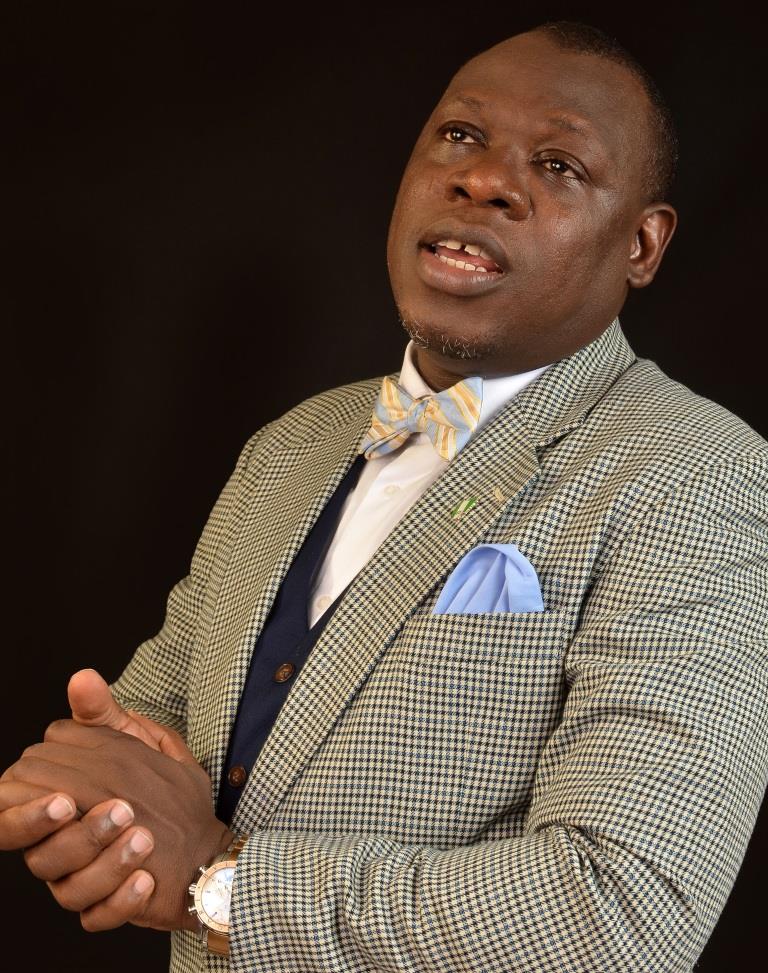
By Timi Olubiyi, PhD
Numerous factors can make businesses decide to outsource or even engage a sub-contractor in their day-to-day activities.
Results of many surveys indicate that some of the key reasons for this are the competence of the third party, cost reduction purposes, reaction to government policies, and unpredictable business climate, among others.
However, the current reality of the harsh environment, the novel Coronavirus (COVID-19) pandemic, high economic pressures and the craving for business survival lay at the heart of the need for outsourcing or subcontracting as a strategy to stem the tides of these challenges.
Outsourcing is primarily a cost-efficient solution and cost-cutting measure where regular business tasks are completed by individuals or businesses outside of the firm.
Subcontracting, on the other hand, (subcontractors, co-contractors, or partners) is when a company hires another individual or company to complete a specific specialized task that sometimes typically cannot be done internally.
While the practice of outsourcing and subcontracting are not new, the popularity especially in a developing and emerging economy like Nigeria is largely due to costs of labour, operations and production.
Around the country, there are lots of critics of outsourcing/subcontracting due to associated risks and the attendant negative impacts.
Distinctively the practices can easily be noticed around the country, chiefly with the increasing use of contract staff, in many sectors of the economy. It has spread across industries, from manufacturing to services industries, and other occupations, including construction, banking, oil and gas, telecommunications among others.
However, under the employment regulation, a contract staff is perceived as an unemployed person; who is supposed to take a temporary job while looking for a permanent role.
Conversely, in Nigeria, some contract staff usually remain as far as 10-12 years or more on the role. This negates the campaign against unemployment and poverty reduction initiatives by the government.
It can be said that the attraction to subcontracting or outsourcing practices in business operations is mainly because companies do not necessarily have to make provisions for workers benefits such as compensation, pension, health, wardrobe, holiday, or even sick leave.
Nevertheless, whether the consequences for subcontracting or outsourcing are good or bad, lots of surveys conducted in the recent decade have shown that the practice improves business profitability and drastically reduces the cost of doing business.
However, much is still desirable in the area of regulations, engagement contracts, protection, and formality by government and policymakers.
Agreeably, the whole idea of the practice is to reduce business costs by entrusting part or all not too sensitive roles to an outsourcing or subcontracting company or individual.
Besides, business owners, operators, and entrepreneurs often use outsourcing and subcontracting interchangeably; however, in reality, the two practices are quite different and distinct.
Empirically, outsourcing and subcontracting differ greatly from the descriptions. On the contrary, from the business perspective, and in my view, subcontracting and outsourcing have similar objectives which are that both strategies are adopted in a business to save time and cost, despite being two different terms.
Both reduce the cost of service and production which in turn affect sale prices, operation expenses, labour cost, and more importantly it improves competitiveness when multiple businesses have the same goods or services.
This led me to conclude that the difference between outsourcing and subcontracting is very indirect. But the primary difference lies in the amount of control a company has over the work process and the length of time of engagement in my opinion.
Significantly, subcontracting does not involve permanently allocating out entire jobs or departments within a firm and the job is usually agreed upon on a contract basis.
On the other hand, outsourcing is governed by a contract stipulating the services expected and the payment terms that may be fixed-priced for the duration of the contract or based on some sort of pay-per-use/service arrangement.
Common business operations that can be outsourced or subcontracted are training, recruiting, facility management, security, information technology operations, research, software, and network services, and so on.
With the pandemic and the new normal, it is evident that to stay competitive business organisations particularly Small and Medium-sized Enterprises (SMEs) need to review their business process and consider outsourcing or subcontracting were necessary to maintain a competitive edge and customer satisfaction.
Currently, businesses need to focus more attention on their core functions and on increasing their productivity. In fact, high-cost business activities can be outsourced to specialists and professionals to keep operating expenses, payroll, and overhead low.
More so, with these practices, freeing up time to focus on value-added and the main services of the business can easily be achieved.
For instance, to meet up accounting functions in any small business, companies do not necessarily need to employ the services of a sit-in chartered accountant to achieve the stipulated duties of an experienced accountant, outsourcing can be leveraged upon to achieve the task for a quarterly or annual retainership fee. This usually covers the bookkeeping, and management, and maintenance of records or software if need be.
In conclusion, to grow your practice or business, it is essential to consider subcontracting or outsourcing as a strategy at this time because of the aforementioned and harsh current realities.
Functions such as compliance tasks, that is tax matters (withholding, company income tax, VAT, and PAYE), technology and software requirements, preparation of accounts to meet regulatory framework, and stipulated guidelines can be conveniently outsourced.
Accounting is one of the most common areas where small businesses choose to outsource for effectiveness, compliance, and to main an adequate business structure, this you can also key into.
Handing the accounting task off to experts has shown to decrease costs and increase compliance. Likewise, the non-sensitive functions like social media marketing, software, facility management particularly cleaning can be outsourced to reduce operating expenses going forward. Good luck!
How may you obtain advice or further information on the article?
Dr Timi Olubiyi is an Entrepreneurship and Small Business Management expert with a PhD in Business Administration. He is a prolific investment coach, business engineer, Chartered Member of the Chartered Institute for Securities and Investment (CISI), and a financial literacy specialist. He can be reached on the Twitter handle @drtimiolubiyi and via email: dr***********@***il.com, for any questions, reactions, and comments.
Feature/OPED
The Hidden Workforce of the 2026 Access Bank Lagos City Marathon
When the final runner crossed the finish line at the 11th edition of the Access Bank Lagos City Marathon (ABLCM), the applause began to fade. But for hundreds of workers across Lagos, the real work was just beginning.
Major highways had been closed to facilitate the event. Tens of thousands of runners moved through the city in a coordinated surge of athletic endurance. Thousands of bottles of water and energy drinks were distributed, alongside sachets containing essential medical supplies and medication. The race route itself was meticulously prepared, lined with banners, barricades, medical tents and precision timing systems that ensured safety, organisation and accurate performance tracking from start to finish.
What followed was the part that a few cameras lingered on, yet it remains one of the clearest indicators of institutional progress.
Within minutes of the race conclusion, coordinated sanitation teams fanned out across the marathon corridor. Their work went beyond sweeping. Waste was systematically sorted. Plastic bottles were separated from general refuse. Sachets were gathered in bulk. Collection trucks moved along predefined routes, ensuring rapid evacuation of waste. Temporary race infrastructure was dismantled with quiet precision.
In a megacity like Lagos, speed is a necessity. Urban momentum cannot pause for long. The ability to restore order quickly after an event of this magnitude reflects operational discipline across interconnected systems, municipal authorities, environmental agencies, private waste management partners and event coordinators.
Globally, large-scale sporting events are no longer evaluated solely by participation numbers or prize purses. Sustainability has emerged as a defining metric. Environmental responsiveness is now a core measure of credibility. Cities seeking tourism growth, foreign investment and international partnerships must demonstrate that scale does not compromise responsibility. The 2026 marathon provided a compelling case study in this evolution.
The clean-up operation itself generated meaningful economic activity. Temporary employment opportunities emerged for sanitation workers and logistics personnel. Recycling partners engaged in material recovery, reinforcing circular economy value chains. What was once viewed as routine waste disposal has evolved into a structured ecosystem of environmental services, a sector of increasing importance in modern urban economies.
This level of sustainability was the result of deliberate planning. Effective post-event recovery requires route mapping, waste volume projections, coordination between sponsors such as Access Bank Plc and municipal bodies, contingency planning for congestion points and clear communication protocols.
Each edition of the marathon has built on lessons from the last. International participation has expanded. Accreditation standards have strengthened. Media visibility has grown. Most importantly, environmental management has become embedded in the marathon’s operational framework rather than treated as an afterthought.
Progress rarely arrives in dramatic leaps, it advances through incremental improvements, refined systems and institutional learning. Just as elite runners close performance gaps through disciplined training, cities strengthen their global standing through consistent operational excellence.
The 2026 marathon, therefore, tells a story that extends far beyond athletic achievement. It is a story of coordination, sustainability as strategy rather than slogan, and the often unseen workforce, sanitation workers, planners, volunteers, security officials and environmental partners, whose discipline sustains the spectacle.
Because in the end, global cities are judged by how well they host and how responsibly they restore. On the marathon day in Lagos, it was the runners who demonstrated endurance and the systems, and the people behind them, who ensured that when the cheering stopped, the city kept moving.
Feature/OPED
N328.5bn Billing: How Political Patronage Built Lagos’ Agbero Shadow Tax Empire
By Blaise Udunze
Lagos prides itself as Africa’s commercial nerve centre. It markets innovation, fintech unicorns, rail lines, blue-water ferries, and billion-dollar real estate. Though with the glittering skyline and megacity ambition lies a parallel state, a shadow taxation regime run not from Alausa, but from motor parks, bus stops, and highway shoulders. They are called “agberos.” And for decades, they have functioned as Lagos’ unofficial tax masters.
What began as loosely organised transport unionism mutated into a pervasive and often violent system of extortion. Today, tens of thousands of commercial buses, over 75,000 danfos according to estimates by the Lagos Metropolitan Area Transport Authority, ply Lagos roads daily. Each bus is a moving ATM. Each stop is a tollgate. Each route is a revenue corridor.
Looking at the daily estimate from their operations, at N7,000 to N12,000 per bus per day, conservative calculations show that between N525 million and N900 million is extracted daily from drivers. Annually, that balloons toward N192 billion to N328.5 billion or more, money collected in cash, unreceipted, unaudited, unaccounted for. This illicit taxation on an industrial scale did not emerge in a vacuum.
The reality today is that to understand the scale of the problem, one must confront its political history. It was during the administration of Bola Ahmed Tinubu as Lagos State governor from 1999 to 2007, who is now the President, that the entrenchment of transport union dominance and motor park patronage deepened.
Under his political machine, transport unions became not just labour associations but mobilisation structures, formidable grassroots networks capable of crowd control, voter turnout engineering, and territorial enforcement. In exchange for political loyalty, street influence translated into operational latitude.
Motor parks became power bases. “Area boys” became enforcers. Union leadership became politically connected. What should have been regulated associations morphed into revenue-generating franchises with muscle.
The system outlived his tenure. It institutionalised itself. It professionalised. It is embedded in Lagos’ political economy.
And today, it thrives in broad daylight. Endeavour to visit Ajah under bridge, Ikeja under bridge, or Mile-2 along Ojo at 6:00 a.m. Watch drivers clutching crumpled naira notes. Observe men in green trousers and caps marked NURTW weaving between buses, collecting what drivers call òwò àrò, or evening as òwò iròlè money taken from passengers.
A korope driver shouts, “Berger straight!” His bus fills. The engines rumble. But before he moves, he must pay. If he refuses? The side mirror may disappear. The windscreen may crack. The conductor may be assaulted. The vehicle may be blocked with planks, and if they resist, the conductor or driver may be beaten. Movement becomes impossible. It is not optional.
This is common across Lagos, especially amongst drivers in Oshodi, Obalende, Ojodu Berger, Mile 2, Iyana Iba, and Badagry, and describes a three-layered structure ranging from street collectors, area coordinators, and union executives at each location. Daily targets flow upward. Commissions remain below.
One conductor disclosed he budgets at N8,500 daily for louts alone, excluding fuel, delivery to vehicle owners, and official tickets. Another driver says he parts with nearly N15,000 in total daily levies across routes.
Of N40,000 collected on trips, barely N22,000 survives before fuel. Sometimes, drivers go home with N3,500. Working like elephants. Eating like ants. The impact extends far beyond drivers.
Every naira extorted is transferred to commuters. An N700 fare becomes N1,500. A N400 corridor becomes N1,200 in traffic, and this is maintained even after fuel prices fall; fares rarely decline. The hidden levy remains.
Retail traders reduce stock purchases because transport eats profits. Civil servants watch salaries stagnate while commuting costs climb. Market women complain that surviving Lagos costs more than living in it.
This is not just a transport disorder. It is inflation engineered by coercion. Economists call it financial leakage, money extracted from the productive economy that never enters the fiscal system. Billions circulate annually without appearing in government ledgers. No roads are built from it. No hospitals funded. No schools renovated.
It is taxation without development. Small and Medium Enterprises form nearly half of Nigeria’s GDP and employ the majority of its workforce. In Lagos, they are under assault from informal levies layered on top of official taxes. Goods delivered by bus carry hidden transport premiums. Commuting staff face higher daily costs. Inflation ripples through supply chains.
The strike by commercial drivers in 2022 exposed the depth of resentment. Under the Joint Drivers’ Welfare Association of Nigeria (JDWAN), drivers protested “unfettered and violent extortion.” Lagos stood still. Commuters trekked. Appointments were missed. Businesses stalled.
Drivers alleged that half of their daily income vanished into motor park collections.
Some who protested were attacked. Yet the collections continued.
Drivers insist daily collections at single corridors can exceed N5 million. Park chairmen allegedly control enormous cash flows. Uniformed collectors operate with visible confidence.
Meanwhile, the Lagos State Government denies sanctioning any roadside extortion. Officials describe the tax system as institutionalised and structured. They promise reforms through Bus Rapid Transit, rail expansion and corridor standardisation. Yet the shadow toll persists.
Contrast this with Enugu State, where Governor Peter Mbah introduced a Unified e-Ticket Scheme mandating digital payments directly into the state treasury. Paper tickets were banned. Cash collections outlawed. Revenue flows are traceable. Harassment criminalised.
Drivers in Lagos say openly that they should be given a single N5,000 daily ticket paid directly to the government, and end the chaos. Instead, they face multiple actors, agberos, task forces, and traffic officials, each demanding settlement.
The difference is in governance philosophy. One digitises and centralises revenue to eliminate leakages.
The other tolerates fragmentation that breeds shadow collectors. The uncomfortable truth is that the agbero structure is politically sensitive. Transport unions are not just labour bodies; they are political instruments. They mobilise during elections. They maintain territorial presence. They command street loyalty. In return, they are allegedly tolerated, protected, or absorbed into broader political structures as they turn into war instruments and a battle axe in the hands of the government of the day. The underlying reality is that the agbero who are the street-level power structures and the government authorities benefit from each other; the line between unofficial influence and official governance becomes unclear, making reform politically sensitive.
The issue is not merely about street disorder; it is about economic governance. Illicit taxation distorts pricing mechanisms, reduces productivity, discourages the formalisation of businesses, and weakens public trust. If citizens are compelled to pay both official taxes and unofficial levies, compliance morale declines. Why comply with statutory taxation when parallel systems operate unchecked?
Dismantling them is not merely administrative; it is political. Perhaps unbeknownst to the people, the cost of inaction is immense. Lagos aspires to be a 21st-century smart megacity under such an atmosphere. But investors notice informal roadblocks. Businesses factor in unpredictability. Commuters absorb unofficial taxes daily. Across Lagos roads, the script repeats “òwò mi dà,” meaning, give me my money.
Passengers plead with collectors to reduce levies so they can proceed. Conductors argue over dues before departure. Citizens feel hostage to a system they neither elected nor authorised.
Taxation, constitutionally, belongs to the state. It must be legislated, receipted, audited and deployed for the public good.
Agbero taxation is none of these. It is coercive. It is not transparent. It is extractive. Lagos has launched rail lines and BRT corridors. The Lagos Metropolitan Area Transport Authority continues transport reforms. Officials promise that bus reform initiatives will eliminate unregistered operators. But reform cannot be selective. You cannot modernise rail while medieval tolling persists on roads. You cannot preach digital governance while cash collectors flourish at bus stops. You cannot aspire to global city status while informal muscle dictates movement.
The solution is not episodic arrests. It is a structural overhaul: mandatory digital ticketing across all parks; a single harmonised levy payable electronically; an independent audit of union revenue; protection for drivers who resist illegal collections; and political decoupling of unions from patronage networks.
The agbero empire is not merely about bus fares. It is about how patronage systems, once empowered, metastasise into parallel authorities. What may have begun as strategic alliance-building two decades ago has matured into a shadow fiscal regime embedded in daily life.
The challenge is that Lagosians are left with no choice as they now pay twice, once to the government, once to the streets. And unlike official taxes, shadow taxes leave no developmental footprint. No bridge bears their name. No hospital wing testifies to their billions. No classroom is built from their collections. Only inflated fares. Broken windscreens. Frustrated commuters. And drivers who sweat under the sun, calculating how much will remain after everyone has taken their cut.
The agbero question is ultimately a governance question. Is Lagos governed by law, or by tolerated coercion? Is taxation a constitutional function, or a roadside negotiation? Is political convenience worth permanent economic distortion? What is absolutely known is that the structure has a political backing and what politics created, politics can dismantle.
Unless meaningful reform takes place, Lagos will continue to remain a megacity with a shadow treasury, where movement begins not with ignition, but with payment to men who answer to no ledger without any tangible returns. This is to say that every danfo that moves carries not just passengers, but the weight of a system that taxes without law, collects without accountability and punishes the very people who keep the city alive.
Blaise, a journalist and PR professional, writes from Lagos and can be reached via: bl***********@***il.com
Feature/OPED
How to Nurture Your Faith During Ramadan
Many Muslims grow up learning how to balance life carefully. Faith, work, and responsibility all sit on the same scale, and during Ramadan, that balance becomes even more delicate. Days start earlier than usual, nights stretch longer, and energy is spent with intention.
Over time, this rhythm shapes more than schedules; it quietly shapes how Ramadan is experienced.
Between getting ready for work, navigating long days, preparing meals for iftar, observing prayers, and trying to rest, moments for reflection are often pushed to the side. When there’s finally time to pause, many people assume meaningful Islamic content requires complete silence, full attention, and emotional space, things that can feel scarce during the month.
They scroll past channels they believe may be too formal, or not suited to their everyday routine. They stick to what feels familiar, even if it doesn’t quite align with the spirit of the season and without realising it, they limit themselves.
What many don’t know is that content designed for moments like these already exists on GOtv. The Islam Channel offers programming that understands Ramadan as it is truly lived.
On the Islam Channel, viewers can find thoughtful discussions that explore faith in a way that feels relevant to modern life, educational programmes that break down Islamic teachings clearly and calmly, and inspiring shows that encourage reflection without feeling overwhelming. There are conversations that can play softly in the background while you’re cooking, reminders you can catch while getting dressed for work, and programmes that help you unwind gently after a long day of fasting.
What sets the channel apart is how it personalises Islamic themes, making them accessible not just during prayer time, but throughout the day. Its content is created to inform, reflect, and inspire, whether you’re actively watching or simply listening as life continues around you. And while it speaks directly to Muslim audiences, it also remains open and welcoming to non-Muslims interested in understanding Islamic values, culture, and everyday perspectives.
During Ramadan, television often becomes part of the atmosphere rather than the focus. And having access to content that aligns with the season can quietly enrich those in-between moments, the ones that often matter most.
This Ramadan, the Islam Channel is available on GOtv Ch 111, ready to meet you wherever you are in your day.
And here’s the exciting part: with GOtv’s We Got You offer, you can enjoy your current package and get access to the next package at no extra cost. There’s never been a better time to hop on and get more shows, more suspense, and more entertainment, all for the same price!
To upgrade, subscribe, or reconnect, download the MyGOtv App or dial *288#. For watching on the go, download the GOtv Stream App and enjoy your favourites anytime, anywhere.
-
Feature/OPED6 years agoDavos was Different this year
-
Travel/Tourism10 years ago
Lagos Seals Western Lodge Hotel In Ikorodu
-
Showbiz3 years agoEstranged Lover Releases Videos of Empress Njamah Bathing
-
Banking8 years agoSort Codes of GTBank Branches in Nigeria
-
Economy3 years agoSubsidy Removal: CNG at N130 Per Litre Cheaper Than Petrol—IPMAN
-
Banking3 years agoSort Codes of UBA Branches in Nigeria
-
Banking3 years agoFirst Bank Announces Planned Downtime
-
Sports3 years agoHighest Paid Nigerian Footballer – How Much Do Nigerian Footballers Earn