Connect with us

Economy

States Pressured us to Borrow from CBN for March Allocation—FG

Published

on

Borrow from CBN

By Modupe Gbadeyanka

The last is definitely not heard concerning the revelation by the Governor of Edo State, Mr Godwin Obaseki, that in March 2021, the federal government allegedly printed N50 to N60 billion to augment the allocation shared among the federal, state and local governments.

The Minister of Finance, Budget and National Planning, Mrs Zainab Ahmed, who had earlier denied the claims by Mr Obaseki last Wednesday, admitted on Monday that last month, the country had a shortfall of N50 billion from the revenues generated in February 2021 and shared last month.

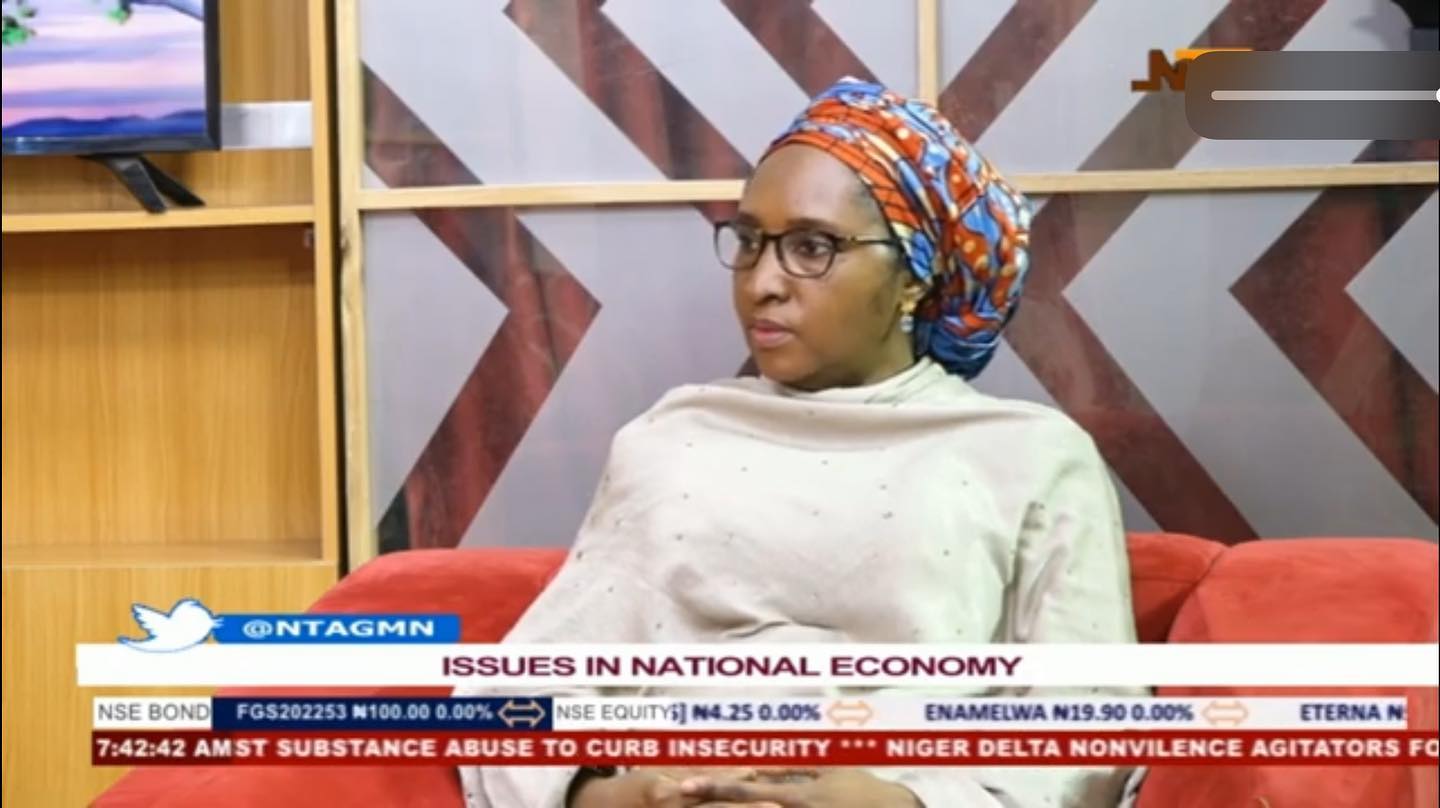
Mrs Ahmed, in an interview on Good Morning Nigeria programme on the FG-owned Nigerian Television Authority (NTA), stated that, “In the month of March, we had a shortfall of FAAC that was about N50 billion; we didn’t have enough accrued in any of those accounts other than some N8.5 billion that we took from the exchange rate differential account so we added that and we ended up with the FAAC of N605 billion.

“An average FAAC that is healthy for us is N650 billion. So, it means we had a shortfall of about N50 billion. The states, to be honest, wanted us to go and borrow from the Central Bank (of Nigeria) to augment FAAC but we didn’t do that.

“And we would make sure we don’t have to do that because it’s time for all of us to go back and do more. A lot of states are trying to do that in terms of increasing the performance of their internally generated revenues, but it is difficult to do that at a time when growth is very, very slow,” she said.

“So, it was a surprise when we heard a sitting governor saying that the CBN had printed money for FAAC. That was very unfortunate because it was not true. The FAAC information is published so you can see the revenue contributed by each of the agency; that is what we shared,” she added.

The Minister agreed with Governor Obaseki that the country was facing a difficult fiscal problem as a result of low revenue but she blamed this on the COVID-19 pandemic.

“These are very difficult challenging times because revenues are low and the demand for expenditures is very high understandably because we have to keep intervening to make sure the pandemic is contained as well as the economic impact it has caused.

“In our case in Nigeria, the crash of the crude oil prices really hit us very hard in terms of revenue. We have very low revenues, we have very high expenditures.

“What we have done so far is just to provide some stability to make sure salaries are paid, pensions are received every month; that we send funds to the judiciary and the legislature; that we meet our debt service obligations.

“That’s what we are doing. It also means we have had to borrow more than we had planned before the COVID-19 started because we need to still continue to invest in infrastructure using our capital budget.

“We borrowed to invest in key projects such as roads, rail, airports, seaports and several other investments that are required in health and in education and upgrading the social standards and quality of life of our people and Nigeria is not unique as several countries of the world went into recession.

“Almost every other country has had to borrow more than it planned. It means we expanded our deficit very fast in 2020. 2021 is a year that we see as the year of recovery,” she said.

Speaking further, the Minister said, “It is a very difficult time. I can explain to you how difficult it is, not just for the federal government but also for the states.

“We see increasing reductions in our FAAC revenues; FAAC revenues are the revenues that we put together every month, that are collected from both oil and non-oil sectors from the collection of the NNPC (Nigerian National Petroleum Corporation) the FIRS (the Federal Inland Revenue Service) and all other revenues collection agencies.

“So, FAAC reduces and whenever FAAC reduces, it is a very difficult situation and in the past one year, we have tried to fall back on some specific accounts that are meant to be saved; savings that when you have such a situation, you fall back on the resources and augment.

“So, we take funds based on Mr President’s approval either from Excess Crude or Stabilisation Account or in some cases, President approved for us to take funds from LNG (Liquefied Natural Gas) dividends.”

However, she expressed optimism that the country would bounce back, noting that the government hopes to achieve a growth of 3 per cent in 2021, adding that some of the multilateral institutions are putting it at 2.5 per cent.


Modupe Gbadeyanka is a fast-rising journalist with Business Post Nigeria. Her passion for journalism is amazing. She is willing to learn more with a view to becoming one of the best pen-pushers in Nigeria. Her role models are the duo of CNN's Richard Quest and Christiane Amanpour.

Advertisement
Click to comment

Leave a Reply

Your email address will not be published. Required fields are marked *

Economy

UK Backs Nigeria With Two Flagship Economic Reform Programmes

Published

on

UK Nigeria

By Adedapo Adesanya

The United Kingdom via the British High Commission in Abuja has launched two flagship economic reform programmes – the Nigeria Economic Stability & Transformation (NEST) programme and the Nigeria Public Finance Facility (NPFF) -as part of efforts to support Nigeria’s economic reform and growth agenda.

Backed by a £12.4 million UK investment, NEST and NPFF sit at the centre of the UK-Nigeria mutual growth partnership and support Nigeria’s efforts to strengthen macroeconomic stability, improve fiscal resilience, and create a more competitive environment for investment and private-sector growth.

Speaking at the launch, Cynthia Rowe, Head of Development Cooperation at the British High Commission in Abuja, said, “These two programmes sit at the heart of our economic development cooperation with Nigeria. They reflect a shared commitment to strengthening the fundamentals that matter most for our stability, confidence, and long-term growth.”

The launch followed the inaugural meeting of the Joint UK-Nigeria Steering Committee, which endorsed the approach of both programmes and confirmed strong alignment between the UK and Nigeria on priority areas for delivery.

Representing the Government of Nigeria, Special Adviser to the President of Nigeria on Finance and the Economy, Mrs Sanyade Okoli, welcomed the collaboration, touting it as crucial to current, critical reforms.

“We welcome the United Kingdom’s support through these new programmes as a strong demonstration of our shared commitment to Nigeria’s economic stability and long-term prosperity. At a time when we are implementing critical reforms to strengthen fiscal resilience, improve macroeconomic stability, and unlock inclusive growth, this partnership will provide valuable technical support. Together, we are laying the foundation for a more resilient economy that delivers sustainable development and improved livelihoods for all Nigerians.”

On his part, Mr Jonny Baxter, British Deputy High Commissioner in Lagos, highlighted the significance of the programmes within the wider UK-Nigeria mutual growth partnership.

“NEST and NPFF are central to our shared approach to strengthening the foundations that underpin long-term economic prosperity. They sit firmly within the UK-Nigeria mutual growth partnership.”

Continue Reading

Economy

MTN Nigeria, SMEDAN to Boost SME Digital Growth

Published

on

MTN Nigeria SMEDAN

By Aduragbemi Omiyale

A strategic partnership aimed at accelerating the growth, digital capacity, and sustainability of Nigeria’s 40 million Micro, Small and Medium Enterprises (MSMEs) has been signed by MTN Nigeria and the Small and Medium Enterprises Development Agency of Nigeria (SMEDAN).

The collaboration will feature joint initiatives focused on digital inclusion, financial access, capacity building, and providing verified information for MSMEs.

With millions of small businesses depending on accurate guidance and easy-to-access support, MTN and SMEDAN say their shared platform will address gaps in communication, misinformation, and access to opportunities.

At the formal signing of the Memorandum of Understanding (MoU) on Thursday, November 27, 2025, in Lagos, the stage was set for the immediate roll-out of tools, content, and resources that will support MSMEs nationwide.

The chief operating officer of MTN Nigeria, Mr Ayham Moussa, reiterated the company’s commitment to supporting Nigeria’s economic development, stating that MSMEs are the lifeline of Nigeria’s economy.

“SMEs are the backbone of the economy and the backbone of employment in Nigeria. We are delighted to power SMEDAN’s platform and provide tools that help MSMEs reach customers, obtain funding, and access wider markets. This collaboration serves both our business and social development objectives,” he stated.

Also, the Chief Enterprise Business Officer of MTN Nigeria, Ms Lynda Saint-Nwafor, described the MoU as a tool to “meet SMEs at the point of their needs,” noting that nano, micro, small, and medium businesses each require different resources to scale.

“Some SMEs need guidance, some need resources; others need opportunities or workforce support. This platform allows them to access whatever they need. We are committed to identifying opportunities across financial inclusion, digital inclusion, and capacity building that help SMEs to scale,” she noted.

Also commenting, the Director General of SMEDAN, Mr Charles Odii, emphasised the significance of the collaboration, noting that the agency cannot meet its mandate without leveraging technology and private-sector expertise.

“We have approximately 40 million MSMEs in Nigeria, and only about 400 SMEDAN staff. We cannot fulfil our mandate without technology, data, and strong partners.

“MTN already has the infrastructure and tools to support MSMEs from payments to identity, hosting, learning, and more. With this partnership, we are confident we can achieve in a short time what would have taken years,” he disclosed.

Mr Odii highlighted that the SMEDAN-MTN collaboration would support businesses across their growth needs, guided by their four-point GROW model – Guidance, Resources, Opportunities, and Workforce Development.

He added that SMEDAN has already created over 100,000 jobs within its two-year administration and expects the partnership to significantly boost job creation, business expansion, and nationwide enterprise modernisation.

Continue Reading

Economy

NGX Seeks Suspension of New Capital Gains Tax

Published

on

capital gains tax

By Adedapo Adesanya

The Nigerian Exchange (NGX) Limited is seeking review of the controversial Capital Gains Tax increase, fearing it will chase away foreign investors from the country’s capital market.

Nigeria’s new tax regime, which takes effect from January 1, 2026, represents one of the most significant changes to Nigeria’s tax system in recent years.

Under the new rules, the flat 10 per cent Capital Gains Tax rate has been replaced by progressive income tax rates ranging from zero to 30 per cent, depending on an investor’s overall income or profit level while large corporate investors will see the top rate reduced to 25 per cent as part of a wider corporate tax reform.

The chief executive of NGX, Mr Jude Chiemeka, said in a Bloomberg interview in Kigali, Rwanda that there should be a “removal of the capital gains tax completely, or perhaps deferring it for five years.”

According to him, Nigeria, having a higher Capital Gains Tax, will make investors redirect asset allocation to frontier markets and “countries that have less tax.”

“From a capital flow perspective, we should be concerned because all these international portfolio managers that invest across frontier markets will certainly go to where the cost of investing is not so burdensome,” the CEO said, as per Bloomberg. “That is really the angle one will look at it from.”

Meanwhile, the policy has been defended by the chairman of the Presidential Fiscal Policy and Tax Reforms Committee, Mr Taiwo Oyedele, who noted that the new tax will make investing in the capital market more attractive by reducing risks, promoting fairness, and simplifying compliance.

He noted that the framework allows investors to deduct legitimate costs such as brokerage fees, regulatory charges, realised capital losses, margin interest, and foreign exchange losses directly tied to investments, thereby ensuring that they are not taxed when operating at a loss.

Mr Oyedele  also said the reforms introduced a more inclusive approach to taxation by exempting several categories of investors and transactions.

Continue Reading

Trending