World
Russia Lauds French Investment Despite European Sanctions
By Kester Kenn Klomegah
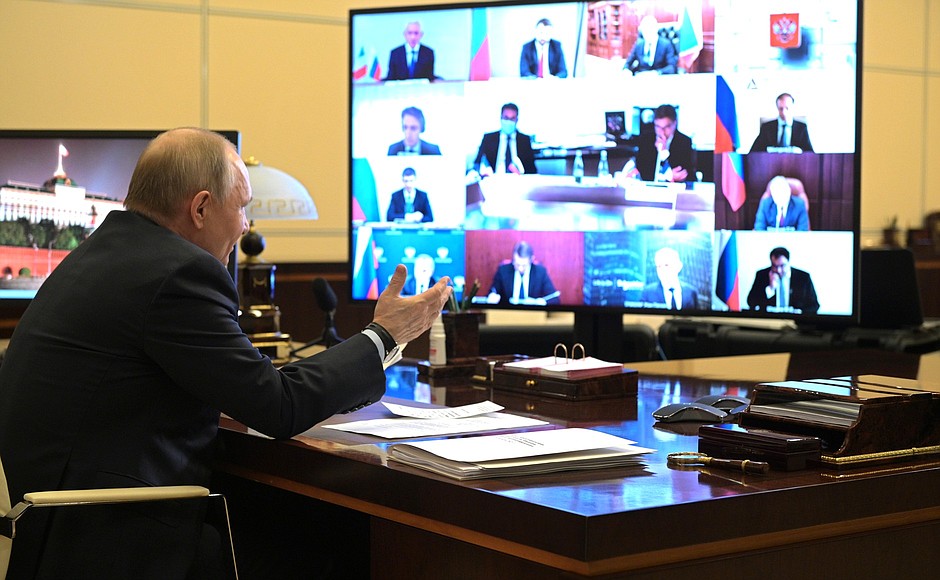
On April 29, Russian President Vladimir Putin held a videoconference with leaders of several French companies-members of the Franco-Russian Chamber of Commerce and Industry (CCI France-Russia) to discuss some aspects of Russian-French trade, economic and investment cooperation, including the implementation of large joint projects as well as the prospects for collaborative work.
Putin noted that the Economic Council of the Franco-Russian Chamber of Commerce and Industry is still operational in spite of difficulties, and the late April meeting was the fourth time since 2016.
From the historical records, France has been and remains a key economic partner for Russia, holding a high but not sufficiently high, 6th place among EU countries in the amount of accumulated investment in the Russian economy and 5th place in the volume of trade.
Despite a certain decline in mutual trade in 2020 (it went down by 14 per cent compared to 2019), the ultimate figure is quite acceptable at $13 billion. French investment in Russia is hovering around $17 billion, while Russian investment in France is $3 billion.
Over 500 companies with French capital are operating in various sectors of the Russian economy. French business features especially prominently in the Russian fuel and energy complex, automobile manufacturing and, of course, the food industry.
“It could have been more if the French regulatory and state authorities treated Russian businesses as Russia is treating French businesses. We appreciate that in a difficult economic environment, French companies operating in Russia have not reduced their activity,” Putin pointed out.
The Russian Government established the Foreign Investment Advisory Council, which includes six French companies. Further, there is an opportunity to discuss specific issues related to the economic and investment climate in Russia, and that opportunity is traditionally provided at the St Petersburg International Economic Forum, which will be held on June 2-5.
French companies are involved in the implementation of globally famous landmark projects, such as the construction of the Yamal LNG and Arctic LNG 2 facilities and the Nord Stream 2 gas pipeline project. This, Putin regrettably said “We are aware of and regret the amount of political speculation concerning the latter. I would like to point out once again that it is a purely economic project, it has nothing to do with present-day political considerations.”
Russia intends to increase assistance to the development of science and technology. Funds will be directed primarily to innovation sectors such as pharmaceuticals and biotechnology, nuclear and renewable energy, and the utilisation of carbon emissions.
“We are interested in involving foreign companies that would like to invest in Russia and in projects we consider high priority. In order to do this, we will continue to use preferential investment regimes and execute special investment contracts, as you know. A lot of French companies successfully use these tools on the Russian market. For example, more than one-third of 45 special investment contracts have been signed with European, including French, partners,” he explained during the meeting.
He also mentioned continuous efforts to attract foreign companies to localise their production to state purchases and to implementing the National Development Projects, as well as existing opportunities for French businesses in special economic zones. Today there are 38 such zones created throughout the Russian Federation.
Russia pays particular attention to attracting high-quality foreign specialists. Their employment is being fast-tracked, and their families can now obtain indefinite residence permits. There is a plan to launch a special programme of ‘golden visas’ whereby to issue a residence permit in exchange for investment in the real economy, a practice is used in many other countries.
Taking his turn, Co-Chair of the CCI France-Russian Economic Council, Gennady Timchenko, noted that the pandemic has changed the world, people and business and that French companies in Russia are responsible employers and socially responsible members of Russian society.
Despite the crisis and the geopolitical situation, a number of French companies have launched production in 2020–2021. Companies such as Saint-Gobain and Danone have renewed their investments. French companies have increased their export of products manufactured in Russia; they are investing in priority sectors of the Russian economy. For example, this year the French company Lidea is launching a plant called Tanais to produce seeds. Russia is dependent on the import of 30 to 60 per cent of these seeds, according to various estimates.
Despite the current geopolitical conditions and information field, there are important signals for French business and the Russian side to strengthen economic cooperation, attract investment, and create partnerships on a new mutually beneficial basis.
Co-Chair of the CCI France-Russian Economic Council, Patrick Pouyanne, noted that the meeting has become an excellent tradition, the presence of 17 CEOs and deputy CEOs of French companies shows the importance of these joint meetings, and further reflect the deep interest of French business in Russia.
In addition, Patrick Pouyanne further offered some insights into Russia-French cooperation. By 2020, twenty members of the Economic Council invested a total of 1.65 trillion rubles, supporting 170,000 jobs. These companies have operated in Russia for decades and continue investing in the Russian economy despite the sanctions and the epidemic. These companies help France maintain its status as the second-largest investor in Russia. In 2020, France invested over $1 billion in Russia despite the economic difficulties caused by the pandemic.
Concluding his remarks, Patrick Pouyanne stressed that the economic operators believe everyone will benefit if Russia, France and all of Europe are not divided or isolated. This is the challenge today. Indeed, diplomacy has to continue playing an important role in settling differences, and businesses are convinced that meetings like this create bridges between Russia and France to strengthen investment and economic cooperation.
World
Russian-Nigerian Economic Diplomacy: Ajeokuta Symbolises Russia’s Remarkable Achievement in Nigeria
By Kestér Kenn Klomegâh
Over the past two decades, Russia’s economic influence in Africa—and specifically in Nigeria—has been limited, largely due to a lack of structured financial support from Russian policy banks and state-backed investment mechanisms. While Russian companies have demonstrated readiness to invest and compete with global players, they consistently cite insufficient government financial guarantees as a key constraint.
Unlike China, India, Japan, and the United States—which have provided billions in concessionary loans and credit lines to support African infrastructure, agriculture, manufacturing, and SMEs—Russia has struggled to translate diplomatic goodwill into substantial economic projects. For example, Nigeria’s trade with Russia accounts for barely 1% of total trade volume, while China and the U.S. dominate at over 15% and 10% respectively in the last decade. This disparity highlights the challenges Russia faces in converting agreements into actionable investment.
Lessons from Nigeria’s Past
The limited impact of Russian economic diplomacy echoes Nigeria’s own history of unfulfilled agreements during former President Olusegun Obasanjo’s administration. Over the past 20 years, ambitious energy, transport, and industrial initiatives signed with foreign partners—including Russia—often stalled or produced minimal results. In many cases, projects were approved in principle, but funding shortfalls, bureaucratic hurdles, and weak follow-through left them unimplemented. Nothing monumental emerged from these agreements, underscoring the importance of financial backing and sustained commitment.
China as a Model
Policy experts point to China’s systematic approach to African investments as a blueprint for Russia. Chinese state policy banks underwrite projects, de-risk investments, and provide finance often secured by African sovereign guarantees. This approach has enabled Chinese companies to execute large-scale infrastructure efficiently, expanding their presence across sectors while simultaneously investing in human capital.
Egyptian Professor Mohamed Chtatou at the International University of Rabat and Mohammed V University in Rabat, Morocco, argues: “Russia could replicate such mechanisms to ensure companies operate with financial backing and risk mitigation, rather than relying solely on bilateral agreements or political connections.”
Russia’s Current Footprint in Africa
Russia’s economic engagement in Africa is heavily tied to natural resources and military equipment. In Zimbabwe, platinum rights and diamond projects were exchanged for fuel or fighter jets. Nearly half of Russian arms exports to Africa are concentrated in countries like Nigeria, Zimbabwe, and Mozambique. Large-scale initiatives, such as the planned $10 billion nuclear plant in Zambia, have stalled due to a lack of Russian financial commitment, despite completed feasibility studies. Similar delays have affected nuclear projects in South Africa, Rwanda, and Egypt.
Federation Council Chairperson Valentina Matviyenko and Senator Igor Morozov have emphasized parliamentary diplomacy and the creation of new financial instruments, such as investment funds under the Russian Export Center, to provide structured support for businesses and enhance trade cooperation. These measures are designed to address historical gaps in financing and ensure that agreements lead to tangible outcomes.
Opportunities and Challenges
Analysts highlight a fundamental challenge: Russia’s limited incentives in Africa. While China invests to secure resources and export markets, Russia lacks comparable commercial drivers. Russian companies possess technological and industrial capabilities, but without sufficient financial support, large-scale projects remain aspirational rather than executable.
The historic Russia-Africa Summits in Sochi and in St. Petersburg explicitly indicate a renewed push to deepen engagement, particularly in the economic sectors. President Vladimir Putin has set a goal to raise Russia-Africa trade from $20 billion to $40 billion over the next few years. However, compared to Asian, European, and American investors, Russia still lags significantly. UNCTAD data shows that the top investors in Africa are the Netherlands, France, the UK, the United States, and China—countries that combine capital support with strategic deployment.
In Nigeria, agreements with Russian firms over energy and industrial projects have yielded little measurable progress. Over 20 years, major deals signed during Obasanjo’s administration and renewed under subsequent governments often stalled at the financing stage. The lesson is clear: political agreements alone are insufficient without structured investment and follow-through.
Strategic Recommendations
For Russia to expand its economic influence in Africa, analysts recommend:
- Structured financial support: Establishing state-backed credit lines, policy bank guarantees, and investment funds to reduce project risks.
- Incentive realignment: Identifying sectors where Russian expertise aligns with African needs, including energy, industrial technology, and infrastructure.
- Sustained implementation: Turning signed agreements into tangible projects with clear timelines and milestones, avoiding the pitfalls of unfulfilled past agreements.
With proper financial backing, Russia can leverage its technological capabilities to diversify beyond arms sales and resource-linked deals, enhancing trade, industrial, and technological cooperation across Africa.
Conclusion
Russia’s Africa strategy remains a work in progress. Nigeria’s experience with decades of agreements that failed to materialize underscores the importance of structured financial commitments and persistent follow-through. Without these, Russia risks remaining a peripheral player (virtual investor) while Arab States such as UAE, China, the United States, and other global powers consolidate their presence.
The potential is evident: Africa is a fast-growing market with vast natural resources, infrastructure needs, and a young, ambitious population. Russia’s challenge—and opportunity—is to match diplomatic efforts with financial strategy, turning political ties into lasting economic influence.
World
Afreximbank Warns African Governments On Deep Split in Global Commodities
By Adedapo Adesanya
Africa Export-Import Bank (Afreximbank) has urged African governments to lean into structural tailwinds, warning that the global commodity landscape has entered a new phase of deepening split.
In its November 2025 commodity bulletin, the bank noted that markets are no longer moving in unison; instead, some are powered by structural demand while others are weakening under oversupply, shifting consumption patterns and weather-related dynamics.
As a result of this bifurcation, the Cairo-based lender tasked policymakers on the continent to manage supply-chain vulnerabilities and diversify beyond the commodity-export model.
The report highlights that commodities linked to energy transition, infrastructure development and geopolitical realignments are gaining momentum.
For instance, natural gas has risen sharply from 2024 levels, supported by colder-season heating needs, export disruptions around the Red Sea and tightening global supply. Lithium continues to surge on strong demand from electric-vehicle and battery-storage sectors, with growth projections of up to 45 per cent in 2026. Aluminium is approaching multi-year highs amid strong construction and automotive activity and smelter-level power constraints, while soybeans are benefiting from sustained Chinese purchases and adverse weather concerns in South America.
Even crude oil, which accounts for Nigeria’s highest foreign exchange earnings, though still lower year-on-year, is stabilising around $60 per barrel as geopolitical supply risks, including drone attacks on Russian facilities, offset muted global demand.
In contrast, several commodities that recently experienced strong rallies are now softening.
The bank noted that cocoa prices are retreating from record highs as West African crop prospects improve and inventories recover. Palm oil markets face oversupply in Southeast Asia and subdued demand from India and China, pushing stocks to multi-year highs. Sugar is weakening under expectations of a nearly two-million-tonne global surplus for the 2025/26 season, while platinum and silver are seeing headwinds from weaker industrial demand, investor profit-taking and hawkish monetary signals.
For Africa, the bank stresses that the implications are clear. Countries aligned with energy-transition metals and infrastructure-linked commodities stand to benefit from more resilient long-term demand.
It urged those heavily exposed to softening agricultural markets to accelerate a shift into processing, value addition and product diversification.
The bulletin also called for stronger market-intelligence systems, improved intra-African trade connectivity, and investment in logistics and regulatory capacity, noting that Africa’s competitiveness will depend on how quickly governments adapt to the new two-speed global environment.
World
Aduna, Comviva to Accelerate Network APIs Monetization
By Modupe Gbadeyanka
A strategic partnership designed to accelerate worldwide enterprise adoption and monetisation of Network APIs has been entered into between Comviva and the global aggregator of standardised network APIs, Aduna.
The adoption would be done through Comviva’s flagship SaaS-based platform for programmable communications and network intelligence, NGAGE.ai.
The partnership combines Comviva’s NGAGE.ai platform and enterprise onboarding expertise with Aduna’s global operator consortium.
This unified approach provides enterprises with secure, scalable access to network intelligence while enabling telcos to monetise network capabilities efficiently.
The collaboration is further strengthened by Comviva’s proven leadership in the global digital payments and digital lending ecosystem— sectors that will be among the biggest adopters of Network APIs.
The NGAGE.ai platform is already active across 40+ countries, integrated with 100+ operators, and processing over 250 billion transactions annually for more than 7,000 enterprise customers. With its extensive global deployment, NGAGE.ai is positioned as one of the most scalable and trusted platforms for API-led network intelligence adoption.
“As enterprises accelerate their shift toward real-time, intelligence-driven operations, Network APIs will become foundational to digital transformation. With NGAGE.ai and Aduna’s global ecosystem, we are creating a unified and scalable pathway for enterprises to adopt programmable communications at speed and at scale.
“This partnership strengthens our commitment to helping telcos monetise network intelligence while enabling enterprises to build differentiated, secure, and future-ready digital experiences,” the chief executive of Comviva, Mr Rajesh Chandiramani, stated.
Also, the chief executive of Aduna, Mr Anthony Bartolo, noted that, “The next wave of enterprise innovation will be powered by seamless access to network intelligence.
“By integrating Comviva’s NGAGE.ai platform with Aduna’s global federation of operators, we are enabling enterprises to innovate consistently across markets with standardised, high-performance Network APIs.
“This collaboration enhances the value chain for operators and gives enterprises the confidence and agility needed to launch new services, reduce fraud, and deliver more trustworthy customer experiences worldwide.”
-
Feature/OPED6 years agoDavos was Different this year
-
Travel/Tourism9 years ago
Lagos Seals Western Lodge Hotel In Ikorodu
-
Showbiz3 years agoEstranged Lover Releases Videos of Empress Njamah Bathing
-
Banking7 years agoSort Codes of GTBank Branches in Nigeria
-
Economy3 years agoSubsidy Removal: CNG at N130 Per Litre Cheaper Than Petrol—IPMAN
-
Banking3 years agoFirst Bank Announces Planned Downtime
-
Banking3 years agoSort Codes of UBA Branches in Nigeria
-
Sports3 years agoHighest Paid Nigerian Footballer – How Much Do Nigerian Footballers Earn