World
Russia-Africa in the Mirror of the Media
By Kester Kenn Klomegah
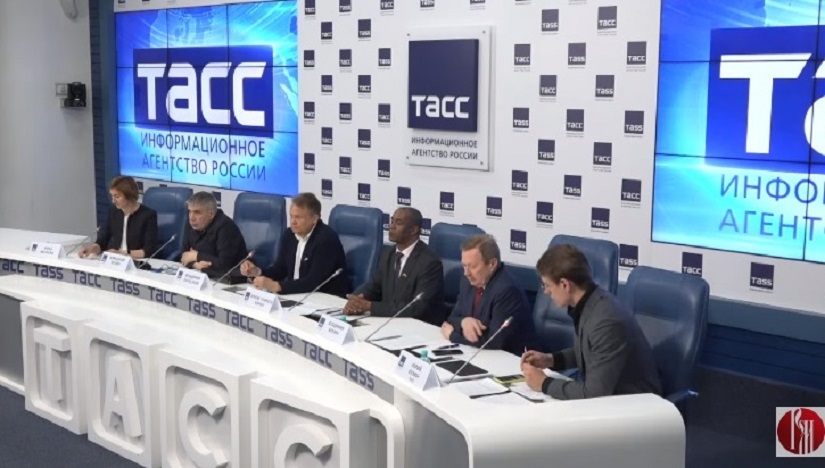
As part of the activities marking Africa Day, (historically celebrated May 25), the Russian Association for International Cooperation (RAMS), the Russkiy Mir Foundation and the Association for Economic Cooperation with African States (AECAS) held a snapshot videoconference under the title, “Russia – Africa in the Mirror of the Media” at the offices of TASS News Agency.
The roundtable discussion was devoted to mapping out strategies on how to inform effectively the African public about Russia and the Russian public about Africa. Nearly all the participants acknowledged the important role media can play in strengthening economic and cultural cooperation between Russia and Africa.
With Russia speedily entering a new phase in consolidating multifaceted relations with Africa, the participants noted that Russian state media needs to make more efforts in getting information to the African public and Russian authorities also have to support African media broadly interested in Russian affairs.
For a successful return of Russia to Africa, it is necessary to expand information cooperation in order, among other things, to destroy negative myths on both sides, and prospects of information interaction between the media in the coverage of Russia on the African continent and Africa in Russia. The media can and indeed must be a decisive factor in building effective ties.
Over the years, many experts and academics have said, during different meetings, conferences and forums, that in African countries as a whole, in the local media market, there is an acute shortage of information about Russia. As a result, the task now could be facilitated by the creation of an Association of Russian-speaking journalists and bloggers in Africa.
But this media cooperation, in practical terms and in the past years, has not been prioritized by authorities. European and Western media brands, such as British Broadcasting Corporation, Cable News Network, Associated Press, Reuters, Agence France Press, Quartz, Al-Jazeera, Bloomberg, Xinhua News Agency et cetera, are active with their African partners, while the Russian media are largely invisible.
Besides the roundtable fixed in the building of TASS News Agency, other participants spoke about culture and education-related topics, on how to tackle existing challenges as well as the continent’s media landscape from Morocco, Egypt, Mauritania, Tanzania, Ethiopia, Cameroon and Nigeria via video communication.
Over the years, many experts and researchers have offered their observations and made several recommendations. Russia has all the institutional tools, such as Russia Today, Sputnik, Voice of Russia, Interfax Information Service and TASS News Agency and many others, to create its own positive image in Africa. Instead, Russia has been critical of western media in Africa, often speak about anti-Russia propaganda and information war.
In addition, the Department of Information and Press of the Russian Ministry of Foreign Affairs holds the responsibility for accreditation of foreign media. It has granted accreditation to only two African media from Morocco and Egypt. Both are from the Maghreb region. Within the foreign policy in Africa, without doubt, North Africa is highly considered a strategic region for Russia.
That, however, the prospects for collaboration in the information sphere in Africa, in November 2018, the State Duma, the lower house of parliamentarians, during a special session on Africa unreservedly called for an increased Russian media presence in sub-Saharan Africa.
Vyacheslav Volodin, the Chairman of the State Duma, told Ambassadors of African countries in the Russian Federation, said “it is necessary to take certain steps together for the Russian media to work on the African continent. You know that the Russian media provide broadcasting in various languages, they work in many countries, although it is certainly impossible to compare this presence with the presence of the media of the United States, United Kingdom and Germany.”
In an email conversation a decade ago, Fyodor Lukyanov, Editor-in-Chief of the Journal Russia in Global Affairs and Chairman of the Presidium of the Council on Foreign and Defense Policy, wrote “Soft power has never been a strong side of Russian policy in the post-Soviet era. Russian media write very little about Africa, economic and political dynamics in different parts of the continent.”
“Russian media write very little about Africa, what is going on there, what are the social and political dynamics in different parts of the continent. Media and NGOs should make big efforts to increase the level of mutual knowledge, which can stimulate interest for each other and lead to increased economic interaction as well,” according to him.
As far back as 2014, Olga Kulkova, Research Fellow at the Centre for Studies of Russian-African Relations, noted that “in the global struggle for Africa, Russia is sadly far from outpacing its competitors. In terms of stringency of strategic outlook and activity, Russia is seriously lagging behind key global players in Africa.”
Kulkova further argued: “Africa needs broader coverage in Russian media. Leading Russian media agencies should release more topical news items and quality analytical articles about the continent, and on-the-spot TV reports in order to adequately collaborate with African partners and attract Russian business to Africa.”
Professor Vladimir Shubin, from the Institute for African Studies, explained in an interview with me ten years ago, that political relations between Russia and Africa as well as the economic cooperation would attract more and more academic discussions, and such scholarly contributions, in essence, would help deepen understanding of the problems that impede building solid relationship or partnership with Russia.
In order to maintain the relationship, both Russia and Africa have to pay high attention to and take significant steps in promoting their achievements and highlighting the most development needs in a comprehensive way for mutual benefits using the media, according to the academic professor.
“African leaders do their best in developing bilateral relations,” he added. “Truly and passionately, they come to Russia more often than ten years ago, but a lot still has to be done; both Russian and African media, in this case, have a huge role to play.”
While highlighting the key obstacles facing the development of Russia-African ties during a session at the Urals-Africa economic forum in Yekaterinburg, the Special Representative of the President of the Russian Federation for the Middle East and Africa, Deputy Minister of Foreign Affairs of Russia, Mikhail Bogdanov, assertively remarked: “One must admit that the practical span of Russian companies’ business operations in Africa falls far below export capabilities, on one hand, and the huge natural resources of the continent, on the other.”
According to him, one major obstacle has been insufficient knowledge of the economic potential, on the part of Russian entrepreneurs, needs and opportunities of the African region. “Poor knowledge of the African markets’ structure and the characteristics of African customers by the Russian business community remains an undeniable fact. The Africans in their turn are insufficiently informed on the capabilities of potential Russian partners,” Bogdanov stressed.
The past few years are marked by a noticeable re-activation of the whole complex of relations between Russia and Africa, Professor Irina Abramova, Director of the Institute for African Studies under the Russian Academy of Sciences, explicitly noted in an exclusive interview with me in May 2016.
The media should more actively inform Russians about the prospects for the development of the African continent, its history and culture. Unfortunately, the Russian man, in the street, does not know much about Africa. There has to be active work in the information sphere with the African Diaspora in the Russian Federation.
For Africans, so far, Russia is associated with the Soviet Union, although a majority of Africans still have very warm feelings towards Russia. But that aside, the Russian Federation in Africa and Africa in the Russian Federation are very poorly represented in the media, according to Abramova.
“It is a direct challenge – to move from declarations to deeds by bringing together government, diplomatic, scientific, economic and financial resources in order to promote Russian business on the continent. I think and will strongly suggest that Russia should take the lead in preserving the balance of interests on the African continent as it seeks cooperation on the full range of African issues,” she added.
On the other hand, Professor Abramova explained that Africans are poorly informed about the possibilities of Russian partnership. Interest in quality-enhancing economic ties, including the line of private enterprises, with a tendency of growth. To do this, first of all, it is absolutely necessary to establish effective exchange of information about the investment potential of the business, to focus efforts on expanding various partnerships.
A number of Moscow- based African ambassadors and senior diplomats have also acknowledged in separate interviews with me that the weak media connectivity between the two regions is one of the deep cracks or potholes in the post-Soviet diplomacy, most especially now when Russia is making efforts at strengthening its relations with the continent. Admittedly, Russians always refer to Africa as a priority region.
In their objective observations, despite prospects for strengthening relations, even as outlined during the first Russia-Africa summit held in 2019, African media and their representatives are hardly supported and encouraged to work in the Russian Federation. The second Russia-Africa summit is planned for 2022 in Addis Ababa, the capital of Ethiopia.
Kester Kenn Klomegah is a versatile researcher and a passionate contributor, most of his well-resourced articles are reprinted elsewhere in a number of reputable foreign media.
World
Russia Renews Africa’s Strategic Action Plan
By Kestér Kenn Klomegâh
At the end of an extensive consultation with African foreign ministers, Russian Foreign Minister, Sergey Lavrov, has emphasized that Moscow would advance its economic engagement across Africa, admittedly outlining obstacles delaying the prompt implementation of several initiatives set forth in Strategic Action Plan (2023-2026) approved in St. Petersburg during the Russia-Africa Summit.
The second Ministerial Conference, by the Russian Foreign Ministry with support from Roscongress Foundation and the Arab Republic of Egypt, marked an important milestone towards raising bilateral investment and economic cooperation.
In Cairo, the capital city of the Arab Republic of Egypt, Lavrov read out the final resolution script, in a full-packed conference hall, and voiced strong confidence that Moscow would achieve its strategic economic goals with Africa, with support from the African Union (AU) and other Regional Economic blocs in the subsequent years. Despite the complexities posed by the Russia-Ukraine crisis, combined with geopolitical conditions inside the African continent, Moscow however reiterated its position to take serious steps in finding pragmatic prospects for mutual cooperation and improve multifaceted relations with Africa, distinctively in the different sectors: in trade, economic and investment spheres, education and culture, humanitarian and other promising areas.
The main event was the plenary session co-chaired by Russian Foreign Minister Sergey Lavrov and Egyptian Minister of Foreign Affairs, Emigration, and Egyptians Abroad Bashar Abdelathi. Welcome messages from Russian President Vladimir Putin and Egyptian President Abdelhak Sisi were read.
And broadly, the meeting participants compared notes on the most pressing issues on the international and Russian-African agendas, with a focus on the full implementation of the Russia-Africa Partnership Forum Action Plan for 2023-2026, approved at the second Russia-Africa Summit in St. Petersburg in 2023.
In addition, on the sidelines of the conference, Lavrov held talks with his African counterparts, and a number of bilateral documents were signed. A thematic event was held with the participation of Russian and African relevant agencies and organizations, aimed at unlocking the potential of trilateral Russia-Egypt-Africa cooperation in trade, economic, and educational spheres.
With changing times, Africa is rapidly becoming one of the key centers of a multipolar world order. It is experiencing a second awakening. Following their long-ago political independence, African countries are increasingly insisting on respect for their sovereignty and their right to independently manage their resources and destiny. Based on these conditions, it was concluded that Moscow begins an effective and comprehensive work on preparing a new three-year Cooperation and Joint Action Plan between Russia and Africa.
Moreover, these important areas of joint practical work are already detailed in the Joint Statement, which was unanimously approved and will serve as an important guideline for future work. According to reports, the Joint Statement reflects the progress of discussions on international and regional issues, as well as matters of global significance.
Following the conference, the Joint Statement adopted reflects shared approaches to addressing challenges and a mutual commitment to strengthening multifaceted cooperation with a view to ensuring high-quality preparation for the third Russia-Africa Summit in 2026.
On December 19-20, the Second Ministerial Conference of the Russia-Africa Partnership Forum was held in Cairo, Egypt. It was held for the first time on the African continent, attended by heads and representatives of the foreign policy ministries of 52 African states and the executive bodies of eight regional integration associations.
World
TikTok Signs Deal to Avoid US Ban
By Adedapo Adesanya
Social media platform, TikTok’s Chinese owner ByteDance has signed binding agreements with United States and global investors to operate its business in America.
Half of the joint venture will be owned by a group of investors, including Oracle, Silver Lake and the Emirati investment firm MGX, according to a memo sent by chief executive, Mr Shou Zi Chew.
The deal, which is set to close on January 22, 2026 would end years of efforts by the US government to force ByteDance to sell its US operations over national security concerns.
It is in line with a deal unveiled in September, when US President Donald Trump delayed the enforcement of a law that would ban the app unless it was sold.
In the memo, TikTok said the deal will enable “over 170 million Americans to continue discovering a world of endless possibilities as part of a vital global community”.
Under the agreement, ByteDance will retain 19.9 per cent of the business, while Oracle, Silver Lake and Abu Dhabi-based MGX will hold 15 per cent each.
Another 30.1 per cent will be held by affiliates of existing ByteDance investors, according to the memo.
The White House previously said that Oracle, which was co-founded by President Trump’s supporter Larry Ellison, will license TikTok’s recommendation algorithm as part of the deal.
The deal comes after a series of delays.
Business Post reported in April 2024 that the administration of President Joe Biden passed a law to ban the app over national security concerns, unless it was sold.
The law was set to go into effect on January 20, 2025 but was pushed back multiple times by President Trump, while his administration worked out a deal to transfer ownership.
President Trump said in September that he had spoken on the phone to China’s President Xi Jinping, who he said had given the deal the go ahead.
The platform’s future remained unclear after the leaders met face to face in October.
The app’s fate was clouded by ongoing tensions between the two nations on trade and other matters.
World
United States, Russia Resolving Trade Issues, Seeking New Business Opportunities
By Kestér Kenn Klomegâh
Despite the complexities posed by Russia-Ukraine crisis, United States has been taking conscious steps to improve commercial relations with Russia. Unsurprisingly, Russia, on the other hand, is also moving to restore and normalise its diplomacy, negotiating for direct connections of air-routes and passionate permission to return its diplomats back to Washington and New York.
In the latest developments, Kirill Dmitriev, Chief Executive Officer of the Russian Direct Investment Fund (RDIF), has been appointed as Russian President’s Special Envoy to United States. This marked an important milestone towards raising bilateral investment and economic cooperation. Russian President Vladimir Putin tasked him to exclusively promote business dialogue between the two countries, and further to negotiate for the return of U.S. business enterprises. According to authentic reports, United States businesses lost $300+ bn during this Russia-Ukraine crisis, while Russia’s estimated 1,500 diplomats were asked to return to Moscow.
Strategically in late November 2025, the American Chamber of Commerce in Russia (AmCham) has awarded Kirill Dmitriev, praised him for calculated efforts in promoting positive dialogue between the United States and Russia within the framework decreed by President Vladimir Putin. Chief Executive Officer of Russian Direct Investment Fund (RDIF) Kirill Dmitriev is the Special Representative of the Russian President for Economic Cooperation with Foreign Countries. Since his appointment, his primary focus has been on United States.
“Received an American Chamber of Commerce award ‘For leadership in fostering the US-Russia dialogue,’” Dmitriev wrote on his X page, in late November, 2025. According to Dmitriev, more than 150 US companies are currently operating in Russia, with more than 70% of them being present on the Russian market for over 25 years.
In addition, Chamber President Sergey Katyrin and American Chamber of Commerce in Russia (AmCham) President Robert Agee have also been discussing alternatives pathways to raise bilateral business cooperation. Both have held series of meetings throughout this year, indicating the the importance of sustaining relations as previously. Expectedly, the Roscongress Foundation has been offered its platforms during St. Petersburg International Economic (SPIEF) for the American Chamber of Commerce (AmCham).
On December 9, Sergey Katyrin and Robert Agee noted that, despite existing problems and non-economic obstacles, the business communities of Russia and the United States proceed from the necessity of maintaining professional dialogue. Despite the worsening geopolitical conditions, Sergey Katyrin and Robert Agee noted the importance of preserving stable channels of trade and pragmatic prospects for economic cooperation. These will further serve as a stabilizing factor and an instrument for building mutual trust at the level of business circles, industry associations, and the expert community.
The American Chamber of Commerce (AmCham) will be working in the system of the Chamber of Commerce and Industry (CCI) in the Russian Federation, which currently comprises 57,000 legal entities, 130 regional chambers and a combined network of representative offices covering more than 350 points of presence.
According to reports obtained by this article author from the AmCham, promising sectors for Russian-American economic cooperation include healthcare and the medical industry, civil aviation, communications/telecom, natural resource extraction, and energy/energy equipment. The United States and Russia have, more or less, agreed to continue coordinating their work to facilitate the formation of a more favorable environment for Russian and American businesses, reduce risks, and strengthen business ties. Following the American-Russian Dialogue, a joint statement and working documents were adopted.
-
Feature/OPED6 years agoDavos was Different this year
-
Travel/Tourism9 years ago
Lagos Seals Western Lodge Hotel In Ikorodu
-
Showbiz3 years agoEstranged Lover Releases Videos of Empress Njamah Bathing
-
Banking7 years agoSort Codes of GTBank Branches in Nigeria
-
Economy3 years agoSubsidy Removal: CNG at N130 Per Litre Cheaper Than Petrol—IPMAN
-
Banking3 years agoFirst Bank Announces Planned Downtime
-
Banking3 years agoSort Codes of UBA Branches in Nigeria
-
Sports3 years agoHighest Paid Nigerian Footballer – How Much Do Nigerian Footballers Earn