

General
EEDC Operations and the Invitation by Abia House of Assembly

By Okechukwu Keshi Ukegbu
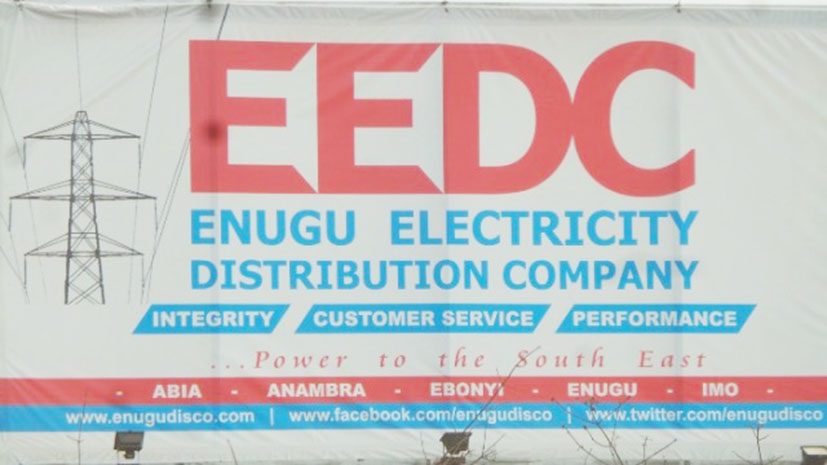
Recently, the Abia House of Assembly invited the management of Enugu Electricity Distribution Company (EEDC) to explain its poor power supply to the consumers and other operations.
The invitation came on the heels of a matter of urgent importance by the Speaker of the House, Mr Chinedum Orji, and was provoked by the company’s shoddy operations in the region which includes poor power supply and estimated billing system which is a ploy designed by the company to exploit its consumers.
On the increasing list of the company’s misdemeanours is that it does not repair or replace its faulty facilities. This leaves consumers stranded for a lingered period in their struggles to replace these faulty facilities.
The overwhelming acceptance of the matter received in the House and the hues and cries generated by the public over the periods indicate that EEDC has not fared well in its operations.
There have been several metamorphoses of organisations and bodies governing the use and distribution of electricity in Nigeria. The Electricity Corporation of Nigeria (ECN) ordinance No. 15 came into force in 1950 with the mandate to integrate electricity power development and make it effective. The advent of the ordinance collapsed the electricity department and all those undertakings into one body.
ECN underwent a further metamorphosis in April 1972 when it was merged with the Niger Dam Authority (NDA) to become the National Electric Power Authority (NEPA) with effect from 1 April 1972. The actual merger came into force in January 1973 when the first general manager was appointed.
NEPA was granted the statutory function of developing and maintaining an efficient co-ordinate and economical system of electricity supply throughout the Federation. The decree further states that the monopoly of all commercial electric supply shall be enjoyed by NEPA to the exclusion of all other organisations. Within the metamorphosis circle in the late 2000s, NEPA became a public limited company (NEPA plc). The name was later changed from NEPA plc to the Power Holding Company of Nigeria (PHCN).
Despite this multiple metamorphoses and the huge cash investment by the federal government in this sector, the stories of NEPA, PHCN, and what have you, have been that of woes and incessant cries of disappointment from their numerous consumers.
The awful situation elevated incessant power outages to the status of the norm instead of an aberration. The disappointing situations clothed the organizations with numerous and derogatory metaphors such as Never Expect Power Always (NEPA), No Electrical Power at All; Please Light Candle (NEPA plc), and Please Hold a Candle Now (PHCN), among others.
Perennial power outages, unstable services by these bodies regulating the use of energy in the country informed the radical action by the Nigerian government which gave birth to the Electric Power Sector Reform Act of 2005. This Act called for the unbundling of the national power utility company into a series of 18 successor companies: six generation companies, 12 distribution companies covering all 36 Nigerian states, and a national power transmission company.
The further stipulation made by the act includes that ownership of these companies is granted to the Bureau of Public Enterprises. The unbundling paved the way for an ambitious privatization program to be carried out by the Bureau of Public Enterprises in Nigeria.
PHCN’s existence came to a halt in September 2013, following the privatization programme of Goodluck Jonathan’s administration.
The Nigerian Electricity Regulatory Commission (NERC) was formed as an independent regulatory agency and was guaranteed by the Electric Power Sector Reform Act of 2005 to monitor and regulate the Nigerian electricity industry; issuing licences to market participants; and ensuring compliance with market rules and operating guidelines.
The 2013 divestiture of the federal government from PHCN, divided it into separate companies called Local Electric Distribution Companies or Local Distribution Companies (LDC) with each company responsible for handling electricity distribution in each state or region. The present structure consists of 11 distribution companies, six generating companies, and one transmission company.
Some key arguments reigned supreme at the height of the privatization process. Analysts were of the strong view that key public corporations embedded in critical sectors of the economy such as power are not privatized to protect the citizens against exploitation. It is elementary economics that one of the essences of a public corporation is to provide essential services to the public at a subsidized rate.
Again, if the underlying motive of privatizing PHCN was to break the monopoly, that motive is good as useless. For example, in Aba where the multi-billion Geometric Power Project could have provided a better and strong alternative, the project was highly sabotaged in a manner that strongly is not devoid of politics.
It is incontrovertible that were Geometric allowed to come on stream, residents of Aba, the latest Small and Medium Enterprises-hub would have been rescued from the terrible claws of EEDC, which holds sway in the South East.
The activities of EEDC in Aba are both despicable and exploitative. It is highly inimical to the commercial and artisanship spirits of the town. The attitude of the field workers of the establishment- who are arguably permanent staff- is irritating.
They are impunity epitomized: disconnecting consumers at will even when there is clear evidence of payment of bills; failure to; issue disconnection notices; indiscriminate re-connection charges without the issuance of receipts as evidence of payment. These field workers are lords unto themselves and you dare not question their authority.
The billing system is nothing to write home about. They implement what is called an “estimated or crazing billing system” and the irony of the entire episodes is that consumers may go some months without electricity but are duty-bound to pay bills. It is common knowledge that the payment for products is to derive utility, which is the satisfaction derived from consuming a product. For EEDC, “utility” is a “strange concept”.
The rural communities are not spared in this madness. They are under what is called “the bulk billing system” which runs upwards of N600,000 per month.
Pundits are yet to terms with why rural communities- where it crystal clear that energy consumption is very low because there are no; industrial activities or gadgets that should scale up energy consumption- should be awarded such outrageous bills.
More worrisome is the fact that these rural communities are peopled by predominantly peasant farmers whose means of livelihood are too inadequate to sustain them. The situation has forced communities and individuals to drag EEDC to court.
But this option is as well frustrating because of the delay associated with our judicial system. Some communities that do not consider legal actions as viable options have resorted to self-help by physically manhandling EEDC staff.
On the other hand, the situation has provoked peaceful protests in some major locations in Aba as well some civil society groups are gearing for a showdown with EEDC in form of court actions. Some individuals are agitating for the Enugu State model to be replicated here.
It will be recalled that Enugu State House of Assembly sometimes ago resolved to send the Enugu Electricity Distribution Company, EEDC, out of the state. The quit notice was informed by various allegations by electricity consumers in the state that resulted in protests to the state legislature.
The motion for EEDC to leave the state was moved by Chinedu Nwamba, representing Nsukka East state constituency on behalf of 22 others. It was alleged numerous unwarranted activities of EEDC in the provision of electricity services to the people of the state which he said had reached an alarming and unbearable stage.
The motion was preceded by scores of protests by electricity consumers in Enugu to the state House of Assembly over incessant power outage, outrageous billing, alarming tariff among other forms of alleged exploitative activities by EEDC.
The Nigerian Electricity Regulatory Commission (NERC) is empowered by the Electric Power Sector Reform (EPSR) Act, 2005 to ensure an efficiently managed electricity supply industry that meets the yearnings of Nigerians for a stable, adequate and safe electricity supply. The Act mandates the Commission to ensure that electricity Operators recover costs on prudent investment and provide quality service to customers.
It is pertinent to note here that electricity consumers are privileged to the following rights: all new electricity connections must be done strictly based on metering before connection.
That is, no new customer should be connected by a DISCO without a meter first being installed at the premises; all customers have a right to electricity supply in a safe and reliable manner; all customers have a right to a properly installed and functional meter; all customers have a right to properly informed and educated on the electricity service; all customers have a right to transparent electricity billing; all Un-metered customers should be issued with electricity bills strictly based on NERC’s estimated billing methodology; it is the customer’s right to be notified in writing ahead of disconnection of electricity service by the DISCO serving the customer in line with NERC’s guidelines; all customers have a right to refund when over billed; all customers have a right to file complaints and to the prompt investigation of complaints; all complaints on electricity supply and other billing issues are to be sent to the nearest business unit of the DISCO serving the customer; if a complaint is not satisfactorily addressed, customers have a right to escalate the issue to the NERC Forum Office within the coverage area of the DISCO; customers have the right to appeal the decision of the NERC Forum Office by writing a petition to the commission; it is the customer’s right to contest any electricity bill; any un-metered customer who is disputing his or her estimated bill has the right not to pay the disputed bill, but pay only the last undisputed bill as the contested bill go through the dispute resolution process of NERC; it is not the responsibility of electricity customer or community to buy, replace or repair electricity transformers, poles and related equipment used in the supply of electricity.
It is on this note that a strong is sounded to EEDC to rejig their activities in Aba as not to constitute a clog in the wheel of progress of the city as an SME hub of the nation.


