Economy
Petroleum Act: Sylva Charges Team to Transform Sector
By Adedapo Adesanya
The Minister of State for Petroleum Resources, Mr Timipre Sylva, has charged the Steering Committee to do a stellar job in the implementation of the Petroleum Industry Act (PIA).
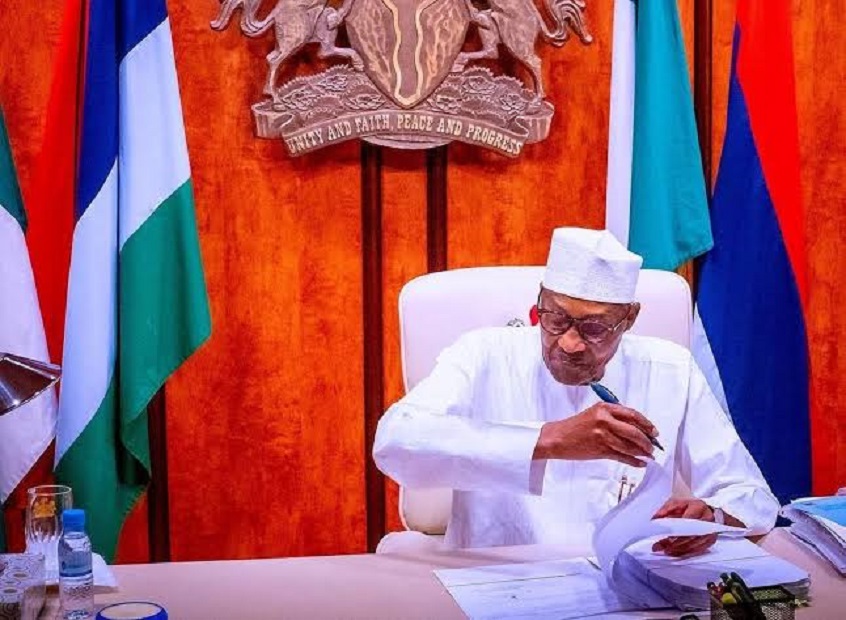
The Minister gave this task to the team headed by him at the inauguration ceremony in Abuja following the approval of President Muhammadu Buhari to form a panel with a directive to immediately commence the implementation of the PIA.
Speaking on Thursday, he said “To get us started on this all-important assignment, I hereby inaugurate the Steering Committee, as well as the Implementation Working Group/Coordinating Secretariat, and wish us all success in our collective quest to change the face of the Nigerian petroleum industry, to position it as a proactive catalyst for spurring sustainable economic growth of our beloved country,” the minister told members of the committee.
“Given the timeline set by Mr President and the urgency of the implementation requirement, there is no gainsaying in the fact that total commitment to this assignment is a critical success factor.
“Undoubtedly, members of the steering committee possess the capacity to contribute to the transformation of the petroleum industry and unlock the potentials that are replete in the entire value chain.”
Mr Sylva urged members of the panel to live up to their responsibility, saying a lot was expected of them from Nigerians and foreign stakeholders.
He stressed the need to do all that it takes to deliver on the assignment, in a manner that best achieves the collective vision for bringing the anticipated gains to the country.
According to the Minister, the implementation working group/coordinating secretariat on the petroleum act has the onerous task of developing the briefs that will be presented to the committee for consideration and approval.
He explained that the briefs would cover all the relevant subject matters contemplated by the law, including the design of the institutions, personnel movements, development of procedures and processes for the institutions, model contracts and regulations, and generally providing legal advice on implementation matters.
Mr Sylva went on to reveal that the implementation working group/coordinating secretariat has been organised into four workstreams to position the committee to get quality briefs.
He listed the functionalities to include legal, coordination and planning, communications and stakeholder management, as well as administration and finance.
“Each of these workstreams has distinct mandates and expected outcomes which will be presented to the steering committee for consideration and possible approval,” the Minister said.
While approving the constitution of the committee, President Buhari had also directed that it has 12 months for the assignment.
He had decried that the lack of political will has hampered the growth of the industry, saying this has led to a loss of about $50 billion for the country in the last 10 years.
The members of the committee include – the Group Managing Director of the Nigerian National Petroleum Corporation (NNPC), Mele Kyari; Executive Chairman of Federal Inland Revenue Service (FIRS), Muhammad Nami; President Buhari’s Senior Special Assistant on Natural Resources, Dr Nuhu Habib.
Others include Mr Olufemi Lijadu – a lawyer – who will serve as the External Legal Adviser, while the Executive Secretary of Petroleum Technology Development Fund (PTDF), Mr Bello Aliyu Gusau will serve as Head of the Coordinating Secretariat and the Implementation Working Group.
The other members include the Permanent Secretary of the Ministry of Petroleum Resources, Dr Sani Gwarzo as well as representatives of the Ministry of Justice, and the Ministry of Finance, Budget, and National Planning.
Economy
Financial Stocks crumble Nigerian Exchange by 0.66%
By Dipo Olowookere
The Nigerian Exchange (NGX) Limited shed 0.66 per cent on Thursday, driven primarily by sell-offs in financial stocks.
During the session, the insurance counter depreciated by 2.26 per cent, the banking space dropped 2.04 per cent, the consumer goods index tumbled by 1.18 per cent, and the industrial goods sector gave up 0.70 per cent. They offset the 0.01 per cent leap recorded by the energy segment at the close of business.
Consequently, the All-Share Index (ASI) moderated by 1,617.91 points to 245,362.26 points from the previous day’s 246,980.17 points, and the market capitalisation retreated by N1.005 trillion to N158.340 trillion from Wednesday’s N159.345 trillion.
The worst-performing equity was Tripple Gee, which crashed by 10.00 per cent to N2.88. Lasaco Assurance declined by 9.92 per cent to N2.18, C&I Leasing slumped by 9.84 per cent to N5.50, Mutual Benefits depreciated by 9.80 per cent to N3.22, and Trans-Nationwide Express decreased by 9.03 per cent to N2.82.
The best-performing equity was Legend Internet, which chalked up 8.64 per cent to close at N4.40. DAAR Communications advanced by 7.32 per cent to N1.76, Sterling Holdings grew by 6.67 per cent to N8.00, Sovereign Trust Insurance expanded by 5.73 per cent to N2.03, and Royal Exchange soared by 4.69 per cent to N1.34.
Trading activity yesterday improved when compared with midweek’s, with the volume of trades up by 176.72 per cent to 2.1 billion shares from the 758.9 million shares recorded a day earlier. The value of transactions increased by 582.84 per cent to N230.8 billion from N33.8 billion, and the number of deals shrank by 12.71 per cent to 48,231 deals from the 55,251 deals executed on Wednesday.
First Holdco was the busiest stock for the day, with a turnover of 1.6 billion units valued at N196.2 billion, Access Holdings sold 37.4 million units for N998.5 million, Sterling Holdings exchanged 36.0 million units worth N286.8 million, Ellah Lakes transacted 34.8 million units for N297.8 million, and Zenith Bank traded 33.1 million units valued at N4.0 billion.
Economy
Oil Market Falls as Saudi-Led Red Sea Security Plan Calms Markets
By Adedapo Adesanya
The oil market settled lower by 1 per cent on Thursday as traders digested proposed plans for a Saudi Arabia-led maritime coalition to boost defence cooperation around the Red Sea.
Brent futures slipped by $1.71 or 1.88 per cent to $89.03 a barrel, while the US West Texas Intermediate (WTI) crude futures declined by 87 cents or 1.03 per cent to trade at $83.59 per barrel.
Saudi Arabia seeks to lead a coalition to boost defence cooperation in the Bab El-Mandeb Strait, the Red Sea and the Gulf of Aden.
The Saudi defence ministry said 14 states, including Turkey, Pakistan, Egypt, Sudan and Djibouti, have issued a joint statement in support of the proposed multinational maritime defence coalition.
This comes after Iran-aligned Houthi militants in Yemen declared a naval blockade last week on Saudi Arabia, threatening the Red Sea route for its oil exports, an alternative to the largely blockaded Strait of Hormuz. The strait, which normally handles around a fifth of global oil and liquefied natural gas flows, has remained a focal point for oil markets since the US and Israel launched the war on Iran on February 28.
Houthis had attacked Saudi Arabia this week from Iraqi territory in coordination with Iraqi armed groups, reflecting growing coordination among Iran-aligned militias, two officials in the region said. The attacks included strikes on oil facilities in Saudi Arabia’s eastern province, the kingdom’s main crude hub.
Iran and Oman also continued talks on the management of the Strait of Hormuz, after Iran previously ruled out Oman’s proposal for regional joint management of the waterway.
It also denied that it is negotiating with US officials and gave no sign that it was ready to make new concessions over its effective closure of the strait.
Meanwhile, the US military said it had hit dozens of Islamic Revolutionary Guard Corps (IRGC) targets in Iran in an operation launched after it fired ballistic missiles at U.S. forces in the Middle East.
Fresh supply worries also emerged after tankers loading at the Caspian Pipeline Consortium (CPC) terminal headed away from the Black Sea after a vessel was hit during loading at the terminal on Thursday.
A Ukrainian drone attack caused a fire at Lukoil’s Perm refinery that damaged and forced the shutdown of one of its crude distillation units.
Economy
Success of Domestic Investors Sends Positive Signals to Foreign Investors—Dangote
By Modupe Gbadeyanka
The federal government has been urged to give all the necessary support to indigenous investors, as they remain Nigeria’s most important drivers of employment, foreign exchange generation and long-term economic resilience.
This advice was given by foremost businessman, Mr Aliko Dangote, when he welcomed the Minister of State for Industry, Mr John Owan Enoh, to the Dangote Petroleum Refinery and Petrochemicals in Lagos recently.
The business mogul noted that efforts must be made to place industrialisation at the centre of the government’s economic strategy, insisting that no nation has attained prosperity without a strong manufacturing base.
“If Nigeria is to achieve sustainable growth and become a trillion-dollar economy, industrialisation must be the foundation. Indigenous investors remain the strongest catalysts for that transformation,” Mr Dangote stated.
He further stated that, “There is no way to create jobs and prosperity without industrialisation,” declaring that, “The greatest attraction for foreign investors is the success of domestic investors. When local investors thrive, they send a powerful signal that the environment is conducive for investment.”
In his remarks, the Minister promised deeper collaboration with the private sector to accelerate industrialisation, job creation and economic transformation.
He also pledged that the Ministry and its agencies would remain strong advocates of the refinery and the broader industrialisation agenda, adding that the government would continue to engage Dangote Industries Limited through the Industrial Revolution Work Group and ministerial roundtables to address challenges facing manufacturers, particularly access to affordable long-term financing.
Mr Enoh described the integrated industrial complex as one of the most significant investments in Africa and a model for the type of industrial development required to drive Nigeria’s economic growth aspirations.
“This facility matters because of what it represents for Nigerian industry, for our people and for the realisation of President Bola Tinubu’s vision of a one trillion-dollar economy,” he stated, noting that the refinery has emerged as a powerful symbol of value addition, industrial competitiveness and Nigeria’s growing manufacturing capability.
The Minister noted that the refinery has fundamentally changed global perceptions of Nigeria by helping to transform the country from a major importer of refined petroleum products into an exporter serving international markets.
“When global supply disruptions occurred, Nigeria was able to export petroleum products to markets in the Middle East and beyond. That is an extraordinary achievement and one that deserves recognition,” he added.