

Economy
6 Important Things to Consider Before Trading Forex

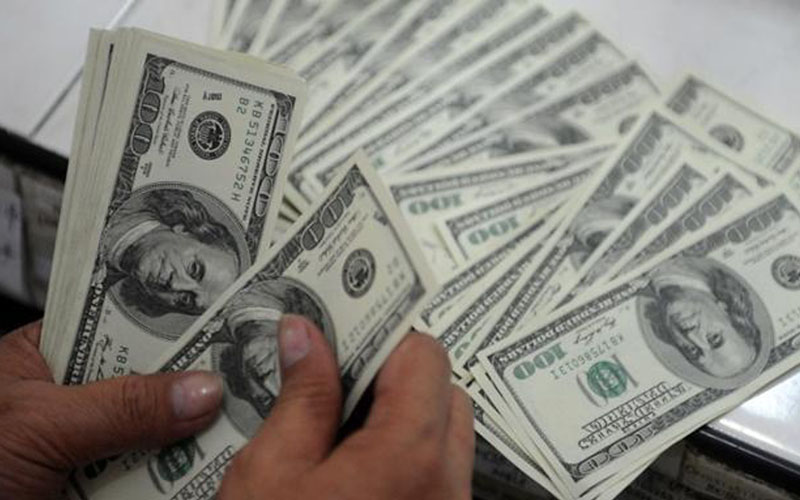
Forex or foreign exchange is the largest capital market in the world. The average daily trading volume of the forex market is more than 6.6 trillion USD. This is much more than the average daily trading volume of global stock markets.
The significant rise in the number of forex traders since the start of the COVID-19 pandemic has boosted the trading figures remarkably, with most of the brokers have reported their highest trading volumes in 2020 & 2021.
Nigeria, South Africa, and Kenya are countries that have witnessed the highest increase in participation from retail traders in Africa.
One of the main reasons for growth is the ease of access with which these Trading apps are available. A major percentage of the young traders have traded forex & other instruments via mobile apps.
Forex currency pairs are available to trade in Nigeria through various online forex brokers. These brokers offer easy-to-use trading platforms & apps for newbies with an interface that encourages trading. This is not really a good situation as it promotes reckless trading too.
Also, due to a substantial rise in the demand for online forex brokers, the scammers and conmen have also utilized the opportunity to scam the uninformed and inexperienced traders. Forex trading scams are at an all-time high throughout Africa and traders need to consider certain aspects before choosing a forex broker in Nigeria.
Here are some things to consider before you trade forex.
1. Regulation
Retail forex trading via online brokers is unregulated in Nigeria.
The Securities and Exchange Commission of Nigeria (SEC) has issued several warnings about the risk involved in trading forex. However, it is not illegal to trade CFDs & forex online in Nigeria.
Trading forex in Nigeria is not illegal but traders are doing so at their own risk. As forex is not yet regulated in Nigeria, individuals involved in forex trading need to take more precautionary measures and choose wisely.
No local regulatory authority in Nigeria regulates or overlooks the forex market and the activities of the forex brokers. Some of the major forex brokers in Nigeria have regulations from top-tier authorities like FCA of the UK, FSCA of South Africa, and ASIC of Australia. However, some forex brokers in Nigeria do not have any regulatory license or are only licensed through offshore regulators. Such Offshore brokers with no licenses are more likely to be fake and must be avoided.
In case of lack of regulation in Nigerian, Broker’s regulation from top-tier regulatory authorities ensures the safety of your funds. Any malpractice or complaint against a regulated broker can be reported to the regulatory authority.
Past records of registered complaints can also be checked for the regulated brokers. Every regulatory license of the forex broker will have a license number that can also be cross-checked from the regulatory authority for authenticity.
Trading forex in Nigeria via an offshore broker can be very risky as no complaint can be registered in case of deceit. This increases the third-party risk substantially making forex trading even riskier.
2. Scams Related to Forex & Investments
It is important to have a look at the types of scams that have been committed against investors in Nigeria. The recent scam MBA Trading Limited had estimated to have cost unsuspecting investors Billions of Naira.
Most of these scams in general have nothing to do with the forex & other capital markets but are scammers and conmen taking duping inexperienced investors.
Scams related to the forex and cryptocurrency market are at an all-time high in Nigeria. Traders need to take every possible measure to avoid falling into the traps of scammers.
Many fake agents or brokers may reach you with unsolicited investment advisory and force you to make quick deposits. They may gain your interest by promising unrealistic returns and illogically low-risk factors. Traders and investors must know where their hard-earned money is going and what are the risks associated with it.
Traders and investors in Nigeria must ensure the authenticity of the regulatory license held by the broker. The chosen forex broker must have at least one top-tier regulatory license. This greatly reduces the chances of scams by the broker and ensures safety.
Besides checking the license, traders must also stay aware and look out for red flags that signal a scam. Common red flags include delaying withdrawal, forcing to buy or sell, changing fees, asking for too many documents, etc.
3. Currency Pairs
Forex trades can only be executed with a pair of currencies. One currency in the pair is bought and sold while the other is exchanged in return for the purchase or sale of the pair.
For example, in EUR/USD currency pair, EUR can be bought or sold in return for USD. Or vice versa.
The price movement in each of the currency pairs depends on different factors which need to be analyzed fundamentally and technically. All the factors that can affect the prices of currency pairs need to be well understood before dealing with them.
The micro and macro-economic factors, geopolitical factors, inflation, and many more aspects of the countries need to be looked out before trading any currency.
Many newcomers in the market seek for the most volatile currency pairs to make quick returns or the ones that are traded the most or suggested by someone. Currency pairs in forex trading must only be selected after detailed inspection and analysis of price movement. Trading with unknown instruments without analysis or understanding is similar to gambling that includes a high risk of losing.
4. Leverage and Margin Trading
Leverage is a feature offered by forex brokers that allow traders to open bigger position with a smaller deposit. This allows them to gain high returns but if the price moves against the anticipation, the loss can be much severe.
In many situations, traders can lose all the deposited amounts due to high leverage. The amount required in the account to open a position is called margin money.
For example, a broker offers a leverage of 1:500 in Nigeria. To open a buy position on 1 standard lot (i.e., 100,000 units), the trader requires only $200. If the price moves up by 10 pips, profits will be $100 but if it moves down by 10 pips then the loss will be $100, which is 50% of your capital.
Some brokers offer negative balance protection in which positions are automatically closed if the account balance reaches zero. Trading with brokers that do not offer negative balance protection is riskier as the account balance can go in negative.
Higher leverage can increase profits with lower deposits but it also increases the risk factor exponentially. Leverage in forex trading should only be used with the proper understanding of its consequences, and you must never use more than 1:20 leverage on forex.
5. Trading Strategy and Planning
Forex trading requires planning and a lot of research. Experienced traders always follow a trading strategy and keep improvising it to increase success rates, and their wins when they are correct in their analysis.
Trading without a plan and strategy is similar to searching for treasure without a map. Trading without planning is gambling with very high risk due to leverage.
The analysis of forex price movement can be done fundamentally and technically. Using analysis techniques can provide better trading ideas and increase success rates in trading.
Traders in Nigeria should make a financial plan with a realistic objective and develop strategies that can help in achieving the objective. Most of the new traders unlike experienced traders lack the discipline to follow a particular trading strategy or plan.
Traders must remain emotionally strong and take decisions according to financial objectives and analytical judgment. Trading decisions driven by emotion or unsolicited advisory must be avoided.
You should not choose the broker or trading instrument just because your friend or a family member has chosen it.
6. Demo Account
The strategies can be developed and tested before implementation with real currency.
Most forex brokers and fintech websites offer a demo forex trading account where new as well as experienced traders can test their strategies with virtual currency.
These demo accounts are available for free and can also allow traders to know which market or instrument is good for them. The demo account can also help you learn & understand basic terminologies, use Risk management features like stop-loss, limit order, etc.
The risk involved in the capital markets and the possible amount that can be gained or lost can also be calculated.


