Connect with us

Economy

Nigeria—No be Juju be this?

Published

on

No be Juju be this

By Prince Charles Dickson PhD

This is not just primitive rural superstition; [juju] is practised by all kinds of people, from illiterate herd boys to multi-degreed university professors. If you don’t understand the power of this belief, you will never truly grasp the rich albeit often incomprehensible spirituality of Africa. Lawrence Anthony, The Elephant Whisperer.

Nobody respects the law of Nigeria. Judges don’t. Police don’t. Lawyers don’t. Politicians don’t. Citizens don’t. Why? Because there are no consequences. Those who fear the laws are the downtrodden who have no godfathers. That is why stealing a goat is more dangerous than stealing billions. Nigeria is a country of absurdities. J. S. Okutepa. (SAN)

No be juju be this…

So, wetin be or what is juju?

juju; plural noun: jujus.

A charm or fetish, especially of a type used by some West African peoples. Supernatural power attributed to a charm or fetish. “Juju and witchcraft”.

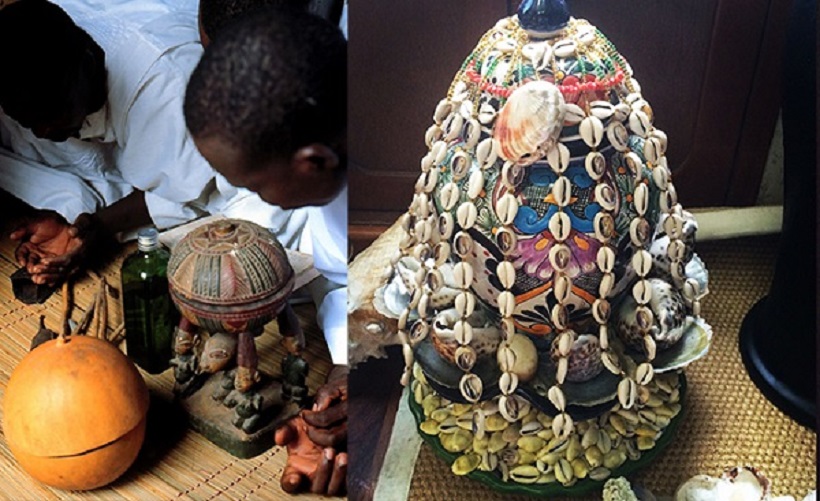
Juju, an object that has been deliberately infused with magical power or the magical power itself; it also can refer to the belief system involving the use of juju. Juju is practised in West African countries such as Nigeria, Benin, Togo, and Ghana, although its assumptions are shared by most African people.

Juju comes from the traditional African religion popularly known as voodoo. Juju refers specifically to objects used in conjunction with spells or curses, and like any practice or belief, it can be manipulated to create power over people.

Witches and juju things are absolutely fascinating—they can fly on broomsticks, do magic spells with their wands and stir up incredible potions in their cauldrons. They can ask for and do the unimaginable. In Nigeria, it is just about the unthinkable things they can and cannot do or are held liable for doing or not allowing to happen.

The Harry Potter books for example have made witches (and wizards) really cool recently – who wouldn’t want to be as smart as Hermione Granger, as brave as Ginny Weasley or play Quidditch as well as Cho Chang? However, in Nigeria, it is about child rights abuse and killings.

This admonition is not about juju or witchcraft but it is about juju and the witchcraft ‘worrying’ Nigeria. Kindly follow me for the next few paragraphs and then we can share thoughts.

Almost eight years and the government could not get one refinery working at full capacity, providing employment and serving Nigerians in a land blessed with the resources. A nation of all typologies of expertise in the oil sector and still cannot simply have an agreement on whether there is subsidy or not and what to do with it—no be juju be that!

Police follow PHCN abi DisCo officials to disconnect electricity from another police station. Meanwhile, DisCo is indebted to the Water Board and the Water Board is indebted to local contractors that supply purifying chemicals and the contractors cannot pay local tax because they are indebted to the local electrician who repairs household electronics destroyed as a result of terrible electricity current supplied to homes. We have changed names, balkanized the utility company, privatized it, funded it yet the energy problem persists, it is one hellish vicious cycle—No be juju be that!

How many times have you seen policemen wear protective gloves, or collect forensic evidence? Do we have a data bank? A country of different data capture for NIN, another for driver’s licence, another for BVN, even another set of data for ‘unavailable’ Nigerian passports (printed in another country). Yet, there’s ‘no-go-to’ data bank, wait…have you seen a desktop in a local police station, not-to-talk of a laptop, apart from the ‘big boys’—No be juju be that!

We close factories to build places of worship and then pray for jobs, every national celebration has an interdenominational service and Juma’at prayers as accompaniment, yet we are a religiously wicked people. Every Christian with his personal juju-man, and every Muslim her own ‘boka-man’. We do interfaith prayers at official events, meetings and steal afterwards, and then do thanksgiving; saying ‘na God ooo’—No be juju be that!

A government official builds a hospital and calls it world-class, and yet he goes to another country for healthcare. They commission schools they describe as world-class and yet they are kids, are schooling in puppet colleges in other climes. They live in villages and build castles in the US, and beg these dudes for aid and loans—no be juju be that!

We are venting on power relations across balance of the geographical spread called Nigeria. In other words, we want power to go the South, the North has had its share, we are talking Muslim-Muslim ticket, and can’t say Christian-Christian ticket. No one is talking about the Ogboni-Krishna ticket.

Sadly, we are stuck with if the President is from here the Vice must be from there in the only nation with the aberrations such as South-South, North East, North West, South East and too many juju-like political expediency laced necessities such as federal character, catchment area, indigene and non-indigene, educationally disadvantaged; still no way, In fact, historically, we have no history so we cannot agree on who is at fault or what the solution is—No be juju be that!

Who remembers in 2015, the Witches and Wizards Association of Nigeria (WITZAN) announced that it had endorsed Goodluck Jonathan as its candidate for the 2015 presidential election.

“We just held a meeting of witches in Kogi State where it was revealed to me that Jonathan would win the presidential election. He has the support of all witches to continue in office,” said a certain Dr Iboi, the President of the association.

Well, we can see that WITZAN’s pick ended up not winning the race. The following year, WITZAN made a cry for help, as the association released a statement for Nigerians to stop persecuting them, we are waiting for them towards 2023—no be juju be that!

Last week in the news, brother and mother colluded to murder a sibling. Another son attempted to kill his mother. Young lads ate their ‘poo’ in public and in the same week, three lads, the oldest being 20, beheaded the girlfriend of one of them, all for money ritual. A trend that has seen a scary rise in the last two years, and being the pretentious people that we are, acting like it’s new, only a few years back it was ‘panties stealing’ and till date, nobody has been arrested, prosecuted, convicted, and jailed—no be juju be that!

Our Federal Road Safety Corps Officers only work during the day and close by 5:00 pm and the roads can be left unsafe at night. Nigerians cannot be ‘de-jujulized’ by praying, by big grammar, by protests, the juju has to be engaged, the gatekeepers of power and resources in Nigeria are not up to 5000 but their juju is strong and is holding the nation down.

It is a sad reality that 2023 really does not offer much if we refuse to address the witchcraft that has beset the motherland if we refuse to see that all is not well and keep behaving like a bewitched people, a big storm is not far away, and if we don’t act, the disaster that looms—Only time will tell.


Advertisement
Click to comment

Leave a Reply

Your email address will not be published. Required fields are marked *

Economy

Adedeji Urges Nigeria to Add More Products to Export Basket

Published

on

nigeria Export Basket

By Adedapo Adesanya

The chairman of the Nigeria Revenue Service (NRS), Mr Zacch Adedeji, has urged the country to broaden its export basket beyond raw materials by embracing ideas, innovation and the production of more value-added and complex products

Mr Adedeji said this during the maiden distinguished personality lecture of the Faculty of Administration, Obafemi Awolowo University (OAU), Ile-Ife, Osun State, on Thursday.

The NRS chairman, in the lecture entitled From Potential to Prosperity: Export-led Economy, revealed that Nigeria experienced stagnation in its export drive over three decades, from 1998 to 2023, and added only six new products to its export basket during that period.

He stressed the need to rethink growth through the lens of complexity by not just producing more of the same stuff, lamenting that Nigeria possesses a high-tech oil sector and a low-productivity informal sector, as well as lacking “the vibrant, labour-absorbing industrial base that serves as a bridge to higher complexity,” he said in a statement by his special adviser on Media, Dare Adekanmbi.

Mr Adedeji urged Nigeria to learn from the world by comparative studies of success and failure, such as Vietnam, Bangladesh, Indonesia, South Africa, and Brazil.

“We are not just looking at numbers in a vacuum; we are looking at the strategic choices made by nations like Vietnam, Indonesia, Bangladesh, Brazil, and South Africa over the same twenty-five-year period. While there are many ways to underperform, the path to success is remarkably consistent: it is defined by a clear strategy to build economic complexity.

“When we put these stories together, the divergence is clear. Vietnam used global trade to build a resilient, complex economy, while the others remained dependent on natural resources or a single low-tech niche.

“There are three big lessons here for us in Nigeria as we think about our roadmap. First, avoiding the resource curse is necessary, but it is not enough. You need a proactive strategy to build productive capabilities,” he stated, adding that for Nigeria, which is at an even earlier stage of development and even less diversified than these nations, the warning is stark.

“Relying solely on our natural endowments isn’t just a path to stagnation; it’s a path to regression. The global economy increasingly rewards knowledge and complexity, not just what you can dig out of the ground. If we want to move from potential to prosperity, we must stop being just a source of raw materials and start being a source of ideas, innovation, and complex products,” the taxman stated.

He added that President Bola Tinubu has already begun the difficult work of rebuilding the economy, building collective knowledge to innovate, produce, and build a resilient economy.

Continue Reading

Economy

Nigeria Inaugurates Strategy to Tap into $7.7trn Global Halal Market

Published

on

Halal Market

By Adedapo Adesanya

President Bola Tinubu on Thursday inaugurated Nigeria’s National Halal Economy Strategy to tap into the $7.7 trillion global halal market and diversify its economy.

President Tinubu, while inaugurating the strategy, called for disciplined, inclusive, and measurable action for the strategy to deliver jobs and shared prosperity across the country.

Represented by Vice-President Kashim Shettima, he described the unveiling of the strategy as a signal of Nigeria’s readiness to join the world in grabbing a huge chunk of the global halal economy already embraced by leading nations.

“As well as to clearly define the nation’s direction within the market, is expected to add an estimated $1.5 billion to the nation’s Gross Domestic Product (GDP) by 2027. It is with this sense of responsibility that I formally unveil the Nigeria National Halal Economy Strategy.

“This document is a declaration of our promise to meet global standards with Nigerian capacity and to convert opportunity into lasting economic value. What follows must be action that is disciplined, inclusive, and measurable, so that this Strategy delivers jobs, exports, and shared prosperity across our nation.

“It is going to be chaired by the supremely competent Minister of Industry, Trade and Investment.”

The president explained that the halal-compliant food exports, developing pharmaceutical and cosmetic value chains would position Nigeria as a halal-friendly tourism destination, and mobilising ethical finance at scale,” by 2030.

“The cumulative efforts “are projected to unlock over twelve billion dollars in economic value.

“While strengthening food security, deepening industrial capacity, and creating opportunities for small-and-medium-sized enterprises across our states,” he added.

Allaying concerns by those linking the halal with religious affiliation, President Tinubu pointed out that the global halal economy had since outgrown parochial interpretations.

“It is no longer defined solely by faith, but by trust, through systems that emphasise quality, traceability, safety, and ethical production. These principles resonate far beyond any single community.

“They speak to consumers, investors, and trading partners who increasingly demand certainty in how goods are produced, financed, and delivered. It is within this broader understanding that Nigeria now positions itself.”

Tinubu said many advanced Western economies had since “recognised the commercial and ethical appeal of the halal economy and have integrated it into their export and quality-assurance systems.”

President Tinubu listed developed countries, including the United Kingdom, France, Germany, the Netherlands, the United States, Canada, Australia, and New Zealand.

“They are currently among the “leading producers, certifiers, and exporters of halal food, pharmaceuticals, cosmetics, and financial products.”

He stated that what these developed nations had experienced is a confirmation of a simple truth, that “the halal economy is a global market framework rooted in standards, safety, and consumer trust, not geography or belief.”

The president explained that the Nigeria national halal economy strategy is the result of careful study and sober reflection.

He added that it was inspired by the commitment of his administration of “to diversify exports, attract foreign direct investment, and create sustainable jobs across the federation.

“It is also the product of deliberate partnership, developed with the Halal Products Development Company, a subsidiary of the Saudi Public Investment Fund.

“And Dar Al Halal Group Nigeria, with technical backing from institutions such as the Islamic Development Bank and the Arab Bank for Economic Development in Africa.”

The Minister of Industry, Trade and Investment, Mrs Jumoke Oduwole, said the inauguration of the strategy was a public-private collaboration that has involved extensive interaction with stakeholders.

Mrs Oduwole, who is the Chairperson, National Halal Strategy Committee, said that the private sector led the charge in ensuring that it is a whole-of-government and whole-of-country intervention.

The minister stressed that what the Halal strategy had done for Nigeria “is to position us among countries that export Halal-certified goods across the world.

The minister said, “We are going to leverage the African Continental Free Trade Area (AfCFTA) to ensure that we export our Halal-friendly goods to the rest of Africa and beyond to any willing markets; participation is voluntary. “

She assured that as the Chairperson, her ministry would deliver on the objectives of the strategy for the prosperity of the nation.

The Chairman of Dar Al-Halal Group Nigeria L.td, Mr Muhammadu Dikko-Ladan, explained that the Halal Product Development Company collaborated with the group in developing the strategy.

“In addition to the strategy, an export programme is underway involving the Ministry of Trade and Investment, through which Nigerian companies can be onboarded into the Saudi Arabian market and beyond.£

Mr Dikko-Ladan described the Strategy as a landmark opportunity for Nigeria, as it creates market access and attracts foreign direct investment.

Continue Reading

Economy

UK, Canada, Others Back New Cashew Nut Processing Plant Construction in Ogun

Published

on

Cashew Nut Processing Plant

By Adedapo Adesanya

GuarantCo, part of the Private Infrastructure Development Group (PIDG), has provided a 100 per cent guarantee to support a $75 million debt facility for Robust International Pte Ltd (Robust) to construct a new cashew nut processing plant in Ogun State, Nigeria.

GuarantCo, under the PIDG is funded by the United Kingdom, the Netherlands, Switzerland, Australia, Sweden and Canada, mobilises private sector local currency investment for infrastructure projects and supports the development of financial markets in lower-income countries across Africa and Asia.

Nigeria is one of Africa’s largest cashew producers of 300,000 tonnes of raw cashew nuts annually, yet currently less than 10 per cent are processed domestically. Most raw nuts are exported unprocessed to Asian and other countries, forfeiting up to 80 per cent of their potential export value and adding exposure to foreign exchange fluctuations.

According to GuarantCo, this additional plant will more than double Robust’s existing cashew processing capacity from 100 metric tonnes per day to 220 metric tonnes per day to help reduce this structural gap.

The new plant will be of extensive benefit to the local economy, with the procurement of cashew nuts from around 10,000 primarily low-income smallholder farmers.

There is an expected increase in export revenue of up to $335 million and procurement from the local supply chain over the lifetime of the guarantee.

Furthermore, the new plant will incorporate functionality to convert waste by-products into value-added biomass and biofuel inputs to enhance the environmental impact of the transaction.

It is anticipated that up to 900 jobs will be created, with as many as 78 per cent to be held by women. Robust also has a target to gradually increase the share of procurement from women farmers, from 15 per cent to 25 per cent by 2028, as it reaches new regions in Nigeria and extends its ongoing gender-responsive outreach programme for farmers.

Terms of the deal showed that the debt facility was provided by a Symbiotics-arranged bond platform, which in turn issued notes with the benefit of the GuarantCo guarantee. These notes have been subscribed to in full by M&G Investments. The transaction was executed in record time due to the successful replication of two recent transactions in Côte d’Ivoire and Senegal, again in collaboration with M&G Investments and Symbiotics.

Speaking on the development, the British Deputy High Commissioner, Mr Jonny Baxter, said: “The UK is proud to support innovative financing that mobilises private capital into Nigeria’s productive economy through UK-backed institutions such as PIDG. By backing investment into local processing and value addition, this transaction supports jobs, exports and more resilient agricultural supply chains. Complementing this, through the UK-Nigeria Enhanced Trade and Investment Partnerships and the Developing Countries Trading Scheme, the UK is supporting Nigerian businesses to scale exports to the UK and beyond, demonstrating how UK-backed partnerships help firms grow and compete internationally.”

Mr Dave Chalila, Head of Africa and Middle East Investments at GuarantCo, said: “This transaction marks GuarantCo’s third collaboration with M&G Investments and Symbiotics, emphasising our efforts to bring replicability to everything we do so that we accelerate socio-economic development where it matters most. The transaction is consistent with PIDG’s mandate to mobilise private capital into high-impact, underfinanced sectors. In this case, crowding in institutional investors in the African agri-processing value chain.

“As with the two recent similarly structured transactions, funding is channelled through the Symbiotics institutional investor platform, with the notes externally rated by Fitch and benefiting from a rating uplift due to the GuarantCo guarantee.”

Adding his input, Mr Vishanth Narayan, Group Executive Director at Robust International Group, said: “As a global leader in agricultural commodities, Robust International remains steadfast in its commitment to building resilient, ethical and value-adding supply chains across origin and destination markets. This transaction represents an important step in advancing our long-term strategy of strengthening processing capabilities, deepening engagement with farmers and enhancing local value addition in the regions where we operate. Through sustained investment, disciplined execution and decades of operating experience, we continue to focus on delivering reliable, high-quality products while fostering inclusive and sustainable economic growth.”

For Ms María Redondo, director at M&G Investments, “The guarantee gives us the assurance to invest in hard currency, emerging market debt, while supporting Robust’s new cashew processing plant in Nigeria. It’s a clear example of how smart credit enhancement can unlock institutional capital for high-impact development and manage currency and credit risks effectively. This is another strong step in channelling institutional capital into meaningful, on‑the‑ground growth.”

Also, Ms Valeria Berzunza, Structuring & Arranging at Symbiotics, said: “We are pleased to continue our collaboration with M&G Investments, GuarantCo, and now with Robust through a transaction with a strong social and gender focus, demonstrating that well-structured products can boost commercially attractive, viable, and impactful investments.”

Continue Reading

Trending