By Modupe Gbadeyanka
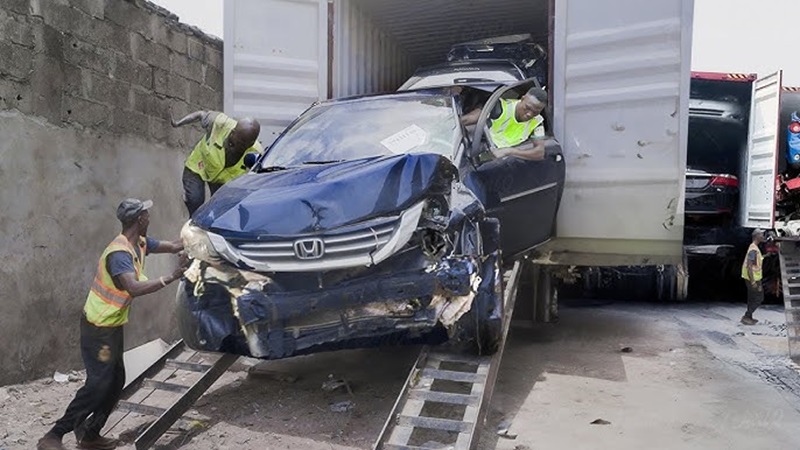
Reactions have continued to trail the decision of the federal government to stop the importation of accidented vehicles into Nigeria by car dealers and others.
On Tuesday, the government declared that it would no longer accept the importation of vehicles without prior certification, noting that it was worried at the influx of substandard automobiles into the country.
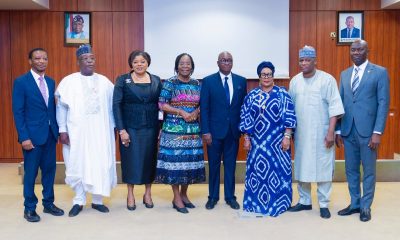
The Minister of State for Industry, Trade, and Investment, Mr John Enoh, said the no certification, no entry policy tagged the Standard Organisation of Nigeria–National Automotive Design and Development Council Vehicle Conformity Assessment Programme was now fully implemented with immediate effect, noting that any vehicle that fails to meet the requirements would be denied entry into the country.
“I want to clarify again that this is not a proposal or a pilot. This has become government policy and takes immediate effect upon commencement,” he declared at a meeting in Abuja, stressing that vehicles coming into the nation must obtain pre-shipment certification.
“So, the endorsement integrates vehicle safety into Nigeria’s economic policy framework. It aligns fiscal instruments, foreign exchange import financing, and revenue systems with safety and standards objectives.
“It also strengthens the long-standing work of the Standard Organisation of Nigeria and NADDC within a coordinated whole-of-government approach.
“I think that with effect from the commencement of this SON-NADDC VehCAP, all new and used vehicles and automotive products entering Nigeria must obtain pre-shipment certification on that VehCAP before form M approval, before customs valuation, before power processing, before import clearance, and before market entry,” he stated.
“No vehicle or automotive product shall be imported, cleared, registered or licensed without valid certification. Any non-compliant import shall be subject to refusal of clearance, seizure, or sanctions under applicable laws,” he added.
Mr Enoh disclosed that, “We did not arrive here by accident. Too many Nigerians have died from accidents caused by vehicles that fell short of required standards. Nigeria deserves better, and this government is determined to deliver better.”
While he admitted that some Nigerians may not be able to afford new vehicles, the government cannot fold its arms and allow its citizens to die because of substandard cars.
“I think that without taking an extreme position, we must find a middle ground. There are economic challenges, there is purchasing power, and there is also the capacity of local assemblers to meet demand.
“But at the very minimum, if we adhere strictly to existing regulations, such as limits on the age of imported vehicles, our problem will not be nearly as bad as it is,” he said.
“A vehicle that is non-compliant at the federal level must not be registered at the state level. For the FCCPC, you are expected to treat VehCAP certification as a baseline for consumer protection enforcement for vehicles. State governments, because we run a federation with federal units, state governments are expected to align vehicle registration systems with VehCAP requirements. Most importantly, let me acknowledge the very profound role that was played by the Minister of Finance and Coordinating Minister of the Economy, Wale Edun, for approving the VehCAP initiative,” he warned.
While some Nigerians applaud this initiative, others believe citizens would be exploited by government officials and make the price of fairly used cars more expensive. Some dealers have been accused of bringing in accidented cars, refurbishing them and selling to unsuspecting customers at exorbitant prices.