Auto
Volkswagen Invests $513m in South Africa
By Dipo Olowookere
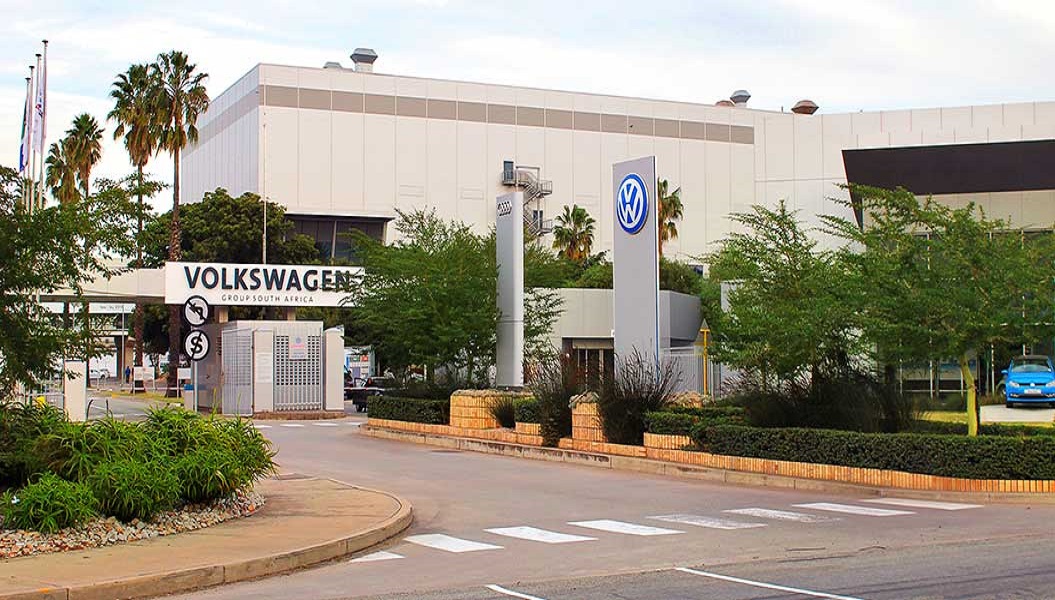
Volkswagen has launched its new Polo and showcased the R6.1 billion ($513 million) investment in its plant and new products, in the presence of Eastern Cape Phumulo Masualle, the Deputy Minister Bulelani Magwanishe of the DTI, media representatives and key stakeholders.
In August 2015, VWSA Chairman and Managing Director, Thomas Schaefer announced an investment of around R4.5 billion rand in new product and facilities. The total investment exceeded R6.1 billion rand, which is partially due to exchange rate fluctuations and the approval of additional plant investments.
The majority of the investment spend was on Capital Expenditure for production facilities, local content tooling, quality assurance and manufacturing equipment as well as Information Technology upgrades.
Localisation remains a key priority for VWSA, with the new models at a 60% local content level, with on-going plans to achieve higher levels.
Volkswagen introduces the innovative One-line Concept for the first time as part of the investment; traditionally vehicles are assembled on unique production lines.
It has always been possible to build derivatives of the same platform on one line, but to build two completely different platforms on one line is a technical challenge, highly complex and requires new thinking and training for the employees.
The introduction of the one line concept also includes a new integrated logistics concept. Whilst there are no short term financial benefits there are synergies and efficiencies as well as people benefits that come about as the result of the one line concept.
Volkswagen is the only vehicle manufacturer which has the words “car” and “people” in its name. This remains relevant and true today. In line with being a socially responsible employer VWSA did not release any employees as the production volumes decreased during the ramp up, but rather retained them in training pools until the third shift commences in April, this year.
VWSA produced 110 000 cars last year, this will increase to 133 000 for 2018 of which 83 000 will be exported to markets around the world. This will include not only right hand drive markets but also to some left hand drive markets, especially for the Polo GTI. Maximum annual plant capacity is expected to be reached with a 3 shift operation of some 160 000 vehicles, in 2019.
Basic economic fundamentals and an investor friendly legislative framework within a reasonably stable economic environment are essential when making major investment decisions for Volkswagen, as is a stable and attractive automotive policy. “The South African Government must be complimented, firstly for the introduction of the MIDP, which gave confidence to the industry and provided a stable base for the successor programme; the APDP which has also been successful in ensuring a future for the automotive sector in South Africa. The Automotive Sector of the South African economy accounts for approximately 7.4% of the GDP and accounts for the direct employment of 113 000 people. I am convinced that the next phase of the APDP will continue in the same vein and allow for continued automotive investment,” said Thomas Schaefer, Chairman and Managing Director of Volkswagen Group South Africa.
The Premier of the Eastern Cape Phumulo Masualle said ”The automotive sector is one of the key sectors in our provincial economy mix, which we believe, alongside the Oceans Economy, Agriculture and Energy, if correctly leveraged, can see the Eastern Cape Province not only grow the regional economy and contribute towards further national economic growth but also become a leader in the drive to modernise and re-skill our work force. We are particularly encouraged by Volkswagen South Africa’s commitment to not only their continued and expanding investment in the South African economy, but also bold initiatives such as the announcement of an R86 million grant to SMMEs located in the manufacture and distribution space of automotive parts. This is a clear signal of the private sector accepting that South Africa’s future prosperity will depend on the societal effort all of us are prepared to invest, not just Government. We hope to continue our partnership to undertake a skills revolution in our province by jointly entering into training ventures so that we may be able to improve our skills base as an economy but also increase the employability and entrepreneurial prospects of our people.”
Deputy Minister Bulelani Magwanishe of the DTI commented “As the government, our commitment to local vehicle production is supported in our Industrial Policy Action Plan (IPAP); with a prime focus on adding value in the manufacturing and industrial sector. Export promotion, job creation and inclusive growth remain as the fundamentals of this policy. It is a privilege to commend VWSA on the launch of its new Polo and its investment of R6,1 billion. Therefore, this investment is particularly relevant to ensure expansion, socio-economic impact and the inclusion of Black Industrialists.”
“We also believe in the long term future of South Africa and Africa, for this reason the Volkswagen Group has created its fourth international region; the Sub Saharan Africa Region with VWSA being fully responsible for the region which will have substantial benefits for our company in South Africa. I believe that there are truly unique opportunities for us as an industry that we need to grasp, specifically here. As the automotive industry goes through radical change with electrification, autonomous driving, digitalisation etc. we must be ready to grasp these opportunities in Sub Saharan Africa”. added Mr Schaefer
The Volkswagen Group retained its number one position in the passenger market for the 7th consecutive year in 2017, achieving a 21.8% market share. One in every 5 cars bought by South Africans last year is either a Volkswagen or an Audi. The Volkswagen brand in the run-out year, of its volume models, the Polo and Polo Vivo achieved a share of 18.9% meaning that the Volkswagen Brand was the passenger market leader, even without its sister brand Audi.
The Polo Vivo and Polo have also been ranked the best selling cars in South Africa since launch in 2010. That is for 7 consecutive years. They are being replaced by the new Polo launched at the event and the new Polo Vivo which will be launched next month. “No doubt these will fare even better in the market in 2018 which we see increasing slightly too some 375 000 passenger cars from the 368 000 in 2017”, commented Thomas Schaefer.
Auto
NRS Denies Introduction of New Vehicle Tax from July 1
By Modupe Gbadeyanka
The Nigeria Revenue Service (NRS) refuted reports making the rounds on social media that the federal government plans to introduce a new tax on vehicles from July 1, 2026.
Mr Dare Adekambi, who serves as the Special Adviser to the NRS Chairman, Mr Zach Adedeji, and spokesperson for the organisation, said in a statement that the government was not planning to introduce the vehicle tax as claimed.
He described a viral infographic purporting the policy as false and misleading, urging members of the public to disregard it.
Mr Adekambi advised citizens to only rely on information from the NRS, urging them to follow the company its official handles on all social media platforms and its website for accurate information about tax and its activities.
In the infographic, motorists were directed to pay an unspecified vehicle tax rate online or at approved banks and agencies. The website listed as NRS’s was the old one, http://www.firs.gov.ng and not the new http://www.nrs.gov.ng created after it was rebranded.
“The NRS wishes to state categorically that the information did not emanate from the service or any government agency.
“Citizens are, therefore, advised to disregard the fabricated messages designed to mislead the public and instead rely on official government channels for information on government policies,” Mr Adekambi said in the statement.
Auto
Court Restrains Police, FRSC from Imposing Car Insurance Fines Without Court Order
By Adedapo Adesanya
The Federal High Court in Abuja has restrained the Nigeria Police Force and the Federal Road Safety Corps (FRSC) from imposing fines on motorists for third-party motor vehicle insurance violations without a court order.
The ruling followed a suit marked FHC/ABJ/CS/291/2025 filed by activist-lawyer, Mr Deji Adeyanju, against the Inspector-General of Police, the Attorney-General of the Federation and the FRSC.
Delivering judgment on Friday, Justice Hauwa Yilwa held that while both the police and the FRSC have the power to enforce compliance with third-party motor insurance, they lack the legal authority to impose fines on alleged offenders.
The suit was initiated through an originating summons, brought pursuant to Section 17 of the Motor Vehicles (Third Party Insurance) Act, 1950, Sections 68(3) and (4) of the Insurance Act, 2003, as well as provisions of the Federal Road Safety Commission (Establishment) Act, 2007.
Mr Adeyanju had asked the court to determine whether the police could enforce third-party insurance, impose fines without judicial backing, and whether such enforcement during routine stop-and-search operations violated constitutional rights.
He also sought a declaration on whether the power to enforce third-party motor insurance lies exclusively with the FRSC.
In addition to the declaratory relief, the applicant requested orders of perpetual injunction restraining the police from enforcing third-party insurance and from imposing fines without judicial backing.
He further urged the court to hold the Attorney-General of the Federation accountable for providing legal guidance on the scope of police powers under the relevant statutes.
However, in its judgment, the court drew a distinction between enforcement and sanctioning powers.
Counsel to the applicant, Mr Marvin Omorogbe, said the court upheld the authority of both the police and the FRSC to ensure compliance with motor vehicle insurance laws, but firmly ruled against the imposition of fines by either agency.
According to him, the court held that “the police and the road safety may enforce” compliance but “outrightly lack the powers to impose fines on third parties or vehicle owners” in the course of such enforcement.
“The court went further to restrain the IGP, the Police Force and all their officers, including the FRSC, from imposing fines on motor vehicle users or Nigerian citizens,” Mr Omorogbe said.
Reacting to the judgment, Mr Adeyanju expressed satisfaction, noting that the central objective of the suit had been achieved.
“The sole reason why we came to court is that we wanted the court to make a positive declaration that the police and the road safety do not have the right to impose fines on any Nigerian over motor vehicle insurance. And we have succeeded,” he said.
He argued that the ruling would curb what he described as a pattern of extortion by enforcement agencies and restore confidence among motorists.
Mr Adeyanju added that although the court declined to grant all the reliefs sought—particularly the request to strip the police entirely of enforcement powers—it nonetheless made a significant pronouncement on the limits of those powers.
He also urged Nigerians to take advantage of the judgment to assert their rights and seek legal remedies where necessary.
On the other hand, counsel to the defendants, Mr Victor Okoye, said the judgment was only partly favourable to the police and signalled plans to challenge it at the Court of Appeal.
Mr Okoye disclosed that the defence had raised a preliminary objection questioning the jurisdiction of the court to entertain the suit, arguing that the originating summons was incompetent and unsuitable for resolving contentious issues.
He relied on appellate authorities to stress that jurisdiction is fundamental to adjudication and must be determined before any substantive issues.
Despite this, he noted, the court proceeded to deliver judgment.
Auto
Pamtech Issues Public Disclaimer on Popular Auto Influencer Juliet Ibekwe
By Modupe Gbadeyanka
A public disclaimer has been issued on two former representatives of Pamtech Group, Mr Somiari Lucky and Ms Juliet Ibekwe, who is a popular auto influencer.
In the notice signed by the chief executive of Pamtech, Mr Chidomere Ndubuisi, on Tuesday, members of the public were informed that the duo no longer work with the organisation.
Mr Ndubuisi, who did not disclose why he disengaged the duo, however, emphasised that Mr Lucky and Ms Ibekwe are “not authorised to act on behalf of, represent, negotiate, or enter into any business dealings in the name of Pamtech Media Ltd or Pamtech Group.”
Ms Ibekwe rose to fame by creating content on how to make vehicles work efficiently. She became a notable auto content creator in Nigeria and garnered more fans for her car care tips.
In the disclaimer today, Pamtech warned “the general public, our valued clients, partners, and stakeholders” that doing business with Ms Ibekwe and Mr Lucky is “at their own discretion and risk, and such engagements do not involve Pamtech Group in any capacity.”
“Any business transactions, agreements, or engagements entered into with the above-mentioned individuals are strictly personal to them; Pamtech Group shall not be held liable or responsible for any commitments, representations, or obligations made by them after their exit from the company,” another part of the notice stressed.
The Owerri, Imo State-based firm further noted that, “Any use of the Pamtech name, brand, platform, or reputation by them without written authorisation is unauthorised and not recognised by the company.”
The company urged its clients, partners, and members of the public to verify all engagements directly with Pamtech Group official channels, and also ensure that all payments and communications are made only through verified company accounts and representatives.”
Pamtech expressed its commitment to delivering excellence, integrity, and professionalism across all its services in media, automobile, and business solutions.
-
Feature/OPED6 years agoDavos was Different this year
-
Travel/Tourism10 years ago
Lagos Seals Western Lodge Hotel In Ikorodu
-
Showbiz3 years agoEstranged Lover Releases Videos of Empress Njamah Bathing
-
Banking8 years agoSort Codes of GTBank Branches in Nigeria
-
Economy3 years agoSubsidy Removal: CNG at N130 Per Litre Cheaper Than Petrol—IPMAN
-
Banking3 years agoSort Codes of UBA Branches in Nigeria
-
Banking3 years agoFirst Bank Announces Planned Downtime
-
Sports3 years agoHighest Paid Nigerian Footballer – How Much Do Nigerian Footballers Earn