Connect with us

Banking

CBN Delists Non-Compliant Bureaux De Change Operators

Published

on

cbn rate cut

By Adedapo Adesanya

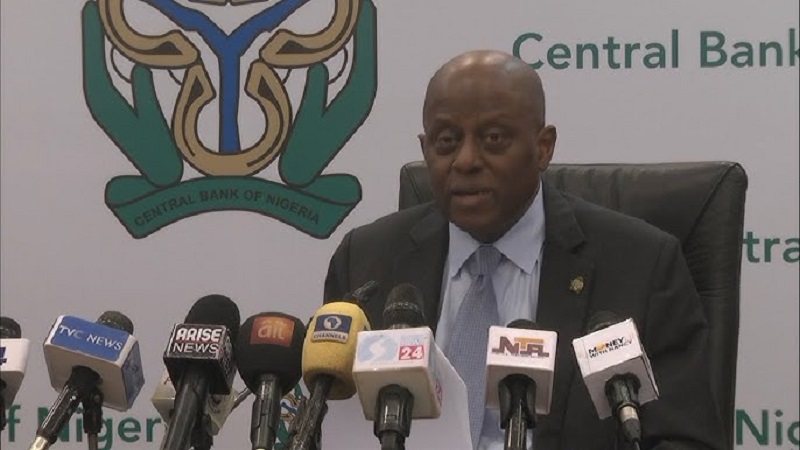
The operating licences of all legacy Bureau De Change (BDC) operators who failed to meet the new licensing requirements have been revoked by the Central Bank of Nigeria (CBN).

This happened after the central bank streamlined the BDCs to 82 in order to sanitise the foreign exchange (FX) market in the country.

The latest development was revealed by the apex bank in its Frequently Asked Questions document on the current reform of the bureau de change, published on its website on Tuesday.

According to the document, the CBN has now enforced the final cutoff, declaring that any BDC that did not meet the requirements by the end of November is no longer recognised.

“The guidelines provided a transition timeline of six months from the effective date, 3 June 2024, with a deadline of 3 December 2024, for all existing BDCs to meet the requirement of the new Guidelines or lose their licence(s). However, the management of the CBN graciously extended this deadline by another six months, which ended 3 June 2025, to give ample time for as many legacy BDCs desirous of meeting the new requirements to do so.

“Consequently, any legacy BDC that failed to meet the requirements of the new Guidelines as of 30 November 2025 has ceased to be a BDC, as its licence no longer exists. Please visit the CBN website for the updated list of existing BDCs in Nigeria,” the apex bank said.

According to the CBN, before its latest decision, an extended compliance window was granted under the revised BDC Guidelines. Existing operators were initially given six months, June 3 to December 3, 2024, to satisfy the new regulatory conditions.

The CBN later granted an additional six-month extension, which elapsed on June 3, 2025, to allow more operators to align with the updated standards.

The new measures form part of broader efforts by the CBN to strengthen transparency, compliance, and stability within Nigeria’s foreign exchange market.

The new CBN regulatory framework for BDCs, introduced in February 2024, mandated BDC operators to meet higher capital requirements. Tier-1 operators are required to meet a minimum capital requirement of N2bn, while Tier-2 operators must meet N500m as MCR.

The bank added that it would continue to receive applications on its Licensing, Approval and Requests Portal from prospective promoters, and those that meet the criteria will be considered for a license.

However, the CBN said it reserves the right to discontinue the licensing of BDCs at any time.

Adedapo Adesanya is a journalist, polymath, and connoisseur of everything art. When he is not writing, he has his nose buried in one of the many books or articles he has bookmarked or simply listening to good music with a bottle of beer or wine. He supports the greatest club in the world, Manchester United F.C.

Banking

CBN Warns Public Against Increase in Impersonation Scams

Published

on

CBN’s N75trn Credit private sector

By Adedapo Adesanya

The Central Bank of Nigeria (CBN) has issued an alert about the spread of fraudulent messages, emails, and online communications falsely bearing the identity of the bank, to scam unsuspecting members of the public.

The apex bank warned that the fake materials are designed to hack personal accounts and mislead Nigerians on matters of bank leadership, licensing, and policy.

In a notice signed by Mrs Hakama Sidi-Ali, the Acting Director of Corporate Communications, the lender said the fraudulent communications are already in circulation and are prompting recipients to click embedded links, which is the primary mechanism through which the attackers seek to gain unauthorised access to private accounts and personal data.

The bank laid out three clear directives for members of the public. First, Nigerians are advised to refrain from clicking links or providing personal information on any website they cannot confirm as legitimate.

Second, it stated that all communications purporting to come from the CBN must be verified through the bank’s sole official website — www.cbn.gov.ng — or through recognised media organisations.

Thirdly, it warned that anyone who encounters a suspected fraudulent site, email, or message is urged to report it to law enforcement authorities without delay.

“The CBN remains fully committed to safeguarding the Nigerian financial system and continues to strengthen its cybersecurity frameworks in collaboration with relevant agencies to protect the public against digital fraud.”

Continue Reading

Banking

CBN, NCC Set up Committees to Protect Consumers Against Fraud

Published

on

CBN NCC

By Modupe Gbadeyanka

In a bid to ensure consumer safety across the telecommunications and financial services sectors, the Central Bank of Nigeria (CBN) and the Nigerian Communications Commission (NCC) have decided to work together.

On Monday, both organisations sealed a Memorandum of Understanding (MoU) for the establishment of joint committees for the protection of consumers against fraud in the sectors.

The two teams set up by the CBN and the NCC include the Joint Committee on Payment Systems and Consumer Protection, and the Joint Committee on Telecoms Identity Risk Management System (TIRMS) Portal.

Through the TIRMS portal, which aggregates data on churned (recycled) phone numbers, as well as numbers flagged within the financial services sector, it will now have enhanced visibility into the status of phone numbers, one of the most widely utilised resources in the sector, although regulated by the NCC.

With this, according to the chief executive of NCC, Mr Aminu Maida, financial institutions will be able to determine when a line is active, when it has been swapped, when it has been disconnected due to inactivity and reassigned to a new subscriber, and when it has been flagged for suspicious or fraudulent activity. “This ensures that our financial services industry is better equipped with timely and relevant information to effectively combat e-fraud, particularly those perpetuated using phone numbers, in the country,” he stated.

It was stated that the partnership between the two parties will reduce electronic fraud, which has become increasingly pervasive, with significant implications for the integrity of the digital economy.

In his remarks, the Governor of the CBN, Mr Yemi Cardoso, said the MoU will strengthen coordination on approvals, technical standards, and innovation trials, including sandbox testing that supports market-led solutions, while safeguarding stability.

“Going forward, the CBN remains fully committed to working with the NCC to deliver a safer, more resilient, and more inclusive digital financial system that supports national productivity, protects consumers, and strengthens trust in Nigeria’s digital economy,” the central bank chief said.

Continue Reading

Banking

Wema Bank Looks to Deepen Role as Catalyst for Growth, Market Presence

Published

on

wema-bank-logo

By Aduragbemi Omiyale

Mid-level Nigerian lender, Wema Bank Plc, has set its eyes on expanding its market presence and supporting the government in achieving its $1 trillion economy by 2030.

In a statement, the financial institution said it hopes to achieve these and others through its recently recapitalisation exercise, which saw its capital base rise to about N265 billion, well above the N200 billion-threshold set by the Central Bank of Nigeria (CBN) for its category of licence.

Wema Bank operates with a national licence, and based on the regulator’s requirement, the capital base must be at least N200 billion.

Before the March 31, 2026-deadline set be the CBN, banks were required to have at least N25 billion, but to meet up with the 2030 target of the federal government, this threshold was raised, with banks operating branches out the country asked to have at least N500 billion, while regional banks were told to have a minimum of N50 billion.

To comply with the new directive, Wema Bank embarked on a strategic capital raise through the stock market, successfully strengthening its shareholder base and securing the required capital through strong participation from existing investors.

Its N150 billion rights issue, which opened on April 14, 2025, and closed on May 21, 2025, marked a significant step in this journey. This was subsequently complemented by a N50 billion special placement later in the year, ensuring the bank not only met but exceeded the regulatory threshold well ahead of schedule.

“The successful completion of our recapitalisation exercise is a defining moment for Wema Bank. It is a strong validation of our strategy, our performance, and the enduring confidence our shareholders and stakeholders have in our vision.

“We have not only met the CBN’s requirements; we have exceeded them, reinforcing our position as a National Bank with the scale, strength, and stability to compete and lead,” the chief executive of Wema Bank, Mr Moruf Oseni, stated.

“Looking ahead, we remain focused on deepening our market presence, driving customer-centric innovation, and strengthening our role as a catalyst for growth across retail, SME, and corporate segments.

“This is not just about retaining our license; it is about building a bigger, stronger, and more impactful Wema Bank,” the bank executive further stated.

Continue Reading

Trending