
Banking
Diamond Bank Shareholders Panic Over New Revelation


By Dipo Olowookere
In recent times, Diamond Bank Plc has been in the news mostly for the wrong reasons, which has left many people wondering what will happen to their investment in the financial institution.
This fear worsened yesterday when a reputable business platform, Proshare Nigeria, published a letter purportedly written by the former Chairman of the bank, Mr Oluseyi, Bickerstheth, to key shareholders and stakeholders in the industry.
The letter detailed how some directors, who were later forced out of the firm, kicked against alleged corporate governance abuse by some key elements of Diamond Bank, including its CEO, Mr Uzoma Dozie.
Mr Bickerstheth even said there was an initial agreement for Mr Dozie to resign from the company from January 3, 2019, to allow a new management team, but that he refused to honour this alleged agreement.
He further said contrary to the denials, there were actually moves to allow Access Bank to take over Diamond Bank.
Already, the revelations made by the Chairman have sparked new reactions from shareholders of Diamond Bank, who want the relevant authorities to quickly take decisive steps to avert another loss of investment like what happened a few months ago with the defunct Skye Bank, which was nationalised to Polaris Bank.
Those who spoke with Business Post said the Central Bank of Nigeria (CBN), the Nigerian Stock Exchange (NSE) and the Securities and Exchange Commission (SEC) must not allow the sweat of many investors to go down the drain again.
“The relevant agencies must act fast to avert another crisis,” an investor in the stock market told us on Tuesday.
“Though the chairman did not really say anything new to us, he only confirmed what some of us have been saying about the crisis in Diamond Bank,” another investor said.
Below is the unedited letter purportedly written by Mr Bickerstheth.
RECENT DEVELOPMENTS AT DIAMOND BANK PLC –NEED FOR URGENT ACTION
This letter is written without prejudice and is intended as an instructive, unvarnished, and factual rendition of the truth, for posterity sake. My overall and irrevocable interest remains ensuring the reversal of the declining fortunes of DIAMONDBNK, as well as ensuring that no party, however and wherever placed, threatens the survival of Diamond Bank and the integrity of the Nigerian financial system. It is my hope that all concerned remain faithful to the objective requirements and fiduciary obligations of their positions of stewardship.
I speak on behalf of myself as chairman of DIAMONDBNK and 3 other non-executive directors (NEDs) of the Bank namely Mr Rotimi Oyekanmi, Mrs Juliet Anammah and Mrs Aisha Oyebode. As individuals and as a group of professionals with direct knowledge of the events captured below, I state emphatically our dissociation from any dangerous abuses of office highlighted below, and insist that proper governance be maintained in this, and all other cases. I assume that the CBN did not have all the facts prior to now; if so, it is my assessment that it is not too late for the CBN to do the correct thing by insisting on the Board oversight of the underlying matters, as referenced in our prayer in this letter.
We are all technically independent directors of DIAMONDBNK as we do not represent the interest of any specific shareholder but the interest of all the stakeholders especially those whose investments have made Diamond Bank what it is today as a systemically important bank in Nigeria.
As Independent non-executive directors, we are all very concerned and motivated particularly by concerns of a bank that now appears to be adrift with no direction and leadership, exacerbated by misinformation and counter information within the media. The most recent being the assertions in the media on Monday November 12, 2018 that the bank is to be acquired by Access Bank only for that to be denied by Access Bank, which has now totally dissociated itself from any such transaction. Also DIAMONDBNK has also dissociated itself from the assertions in the media. I have elected to ignore comments from various quarters that the Access Bank transaction is favored by the CEO, and the very loud boasts by the CEO himself that the Access Bank transaction has been endorsed by our regulator, to the exclusion of all other options being considered by the board; as I have also chosen not to speculate on the incentives and motivation for his haste and the evident abuse that will be perpetuated if any such deal is allowed to go through without following due process.
1. Our Position
DIAMONDBNK’s performance has continued to decline. Current forecasts indicate the bank will close 2018 on significantly lower profit (or even a loss situation) than planned. Management was not able to attend the Q3 Analysts call and we are aware that S&P has downgraded the bank’s credit rating. The bank had neither declared nor paid any dividend since 2013 and the Bank was only meeting the CBN Capital Adequacy Ratio (CAR) by the grace of CBN forbearance and the current financial position of the Bank does not show any signs of improvement.
The Bank is in dire need of recapitalization. Nonetheless, the Board remains the foremost governing body of the bank with the fiduciary responsibility to protect the interests of all shareholders, thus, all recapitalization proposals including potential acquisitions can only be by a full Board for consideration and approval.
The Diamond Bank Board has 5 “independent” NEDs and the action of the CEO in now attempting to remove 4 of these 5 NEDs, after the fact, was prejudiced and selectively done to undermine the independence of the NEDs. The insertions and “acceptance” of their purported resignation, contrary to the decision of the full board in a meeting, to rescind the decision, was in bad faith and is ultra vires and of no consequence and effect. This attitude of the CEO in fact aligns with the CBN examiners’ observation referenced in paragraph 3 below regarding corporate governance where the management takes actions either without notifying the Board or without securing Board approval as has been seen even in matters concerning the investment vehicle of the CEO’s family.
Further, according to CAMA and SEC Rules, only the Board can accept/approve the resignation of a director. Thus, an acceptance by an executive such as the CEO being null and void and illegal suggests that an acceptance by the CBN based on this illegal action by the CEO appears to have been done hastily.
Indeed, the said resignation of the 4 NEDs never came into effect in law and the Bank through its Board at the meeting of October 22 2018 continued to hold them out as Directors with no dissent from any director. The 4 NEDs remain on the board of Diamond Bank unless and until they have tendered their valid letters of resignations and the Board has accepted same.
2. Background and Context
Following several directors reaching their expiration of tenor in 2016/2017, the board decided in alliance with international best practice to have a more professional and independent membership, and, therefore, brought in additional professionals to help steer the Bank. These board members are myself, Mr Rotimi Oyekanmi, Mrs Juliet Anammah, Mr. Dele Babade, Mr Idris Mohammed, Mr. Chris Ubosi and Mrs Aisha Oyebode. And the board recently recommended Mr. Oghogho Akpata to the board awaiting confirmation from the CBN
The board identified the need to inject equity into the bank. In addition, the bank had several financial obligations due in 2019, which the board insisted the funding should be in place by end 2018 (before the Nigerian elections). To improve the viability of the bank, the board had approved the sale of its subsidiaries outside Nigeria as this would be expecting to lead to, subject to the CBN approval, a reduction in the minimum CAR from 15% to 10% upon conversion of the bank to a National Bank (from International Bank).
The board then discussed the options for raising capital and one of the key shareholders indicated interest in injecting more equity into the bank but on condition of a change in management. Observing the issues of performance, the board then decided to first determine the capital requirement by appointing advisers to review the loan book. The result of this evaluation was expected at the end of October 2018 and we presume this has been received by the bank
The Central Bank examiners, in August 2018, had highlighted potential gaps in corporate governance based on transactions which, from their assessment, executive management had not disclosed to the board as it ought to have. Specifically, the examiners highlighted the new corporate head office which was under construction and observed that the progress in terms of cost and status of progress was not captured in any board minutes and indeed was not discussed nor was any budget approval for cost increase discussed or presented to the board.
With the examiners’ concerns, new capital being contemplated and declining performance of the bank in the past 4 years, the Non-executive directors (NEDs) critically assessed the quality of executive leadership of the Bank and the need to strengthen the leadership. A key shareholder CSSAF DBN Holdings demanded an immediate removal of management principally the CEO but the Board favored a less drastic approach to minimize disruption and also enable the Board secure new leadership.
After several discussions, the CEO, of the Bank who is also a representative of the second largest shareholder Kunoch Ltd agreed to resign effective January 3, 2019 but would not tender his letter to confirm his verbal notification. In response, the representative of CSSAF DBN Holdings therefore at the Board meeting held on October 18, 2018 put forward a motion for the removal of the CEO with immediate effect. This was despite continuous negotiations and attempts by members of the Board, to provide an amicable solution to this impending shareholder fight and reaching several tentative agreements, which were frustrated by both parties. Nonetheless due to technical reasons and reluctance of board members regarding an immediate removal of the CEO, the vote for the removal of the CEO was postponed, pending legal clarifications, which could not be provided by the Company Secretary.
The CEO, at the October 18 2018 meeting, had a financial adviser appointed by the executive management without reference to the board to present to the board various strategic options for recapitalization either through an internal rights issue or possible merger with other Tier 1 banks. While the board stated that this was to have been presented to the board capital raising committee, it allowed the presentation to be made. The presentation, though based on 2017 financials was still very high level and, was well received by the Board and the board directed that the recommendation be passed on to the capital raising committee of the bank to evaluate this along with all other options being considered – new injection of capital by the shareholders, merger with a local bank or position to partner with an international bank not currently operating in Nigeria
On Friday October 19, 2018, due to the lack of clarity on the motion for immediate removal of the CEO, the representative of CSSAF DBN Holdings informed board members that as a majority shareholder CSSAF DBN Holdings would call for an Extraordinary General Meeting to remove the CEO since the board had not voted on the matter. The 4 NEDs then decided that it was becoming a shareholder fight, which they felt could have been averted either by the CEO tendering a letter indicating his resignation effective January 3, 2019 or by CSSAF DBN Holdings accepting to give the Board the responsibility of ensuring the issue is resolved amicably. Purely on this basis, the 4 NEDs wrote to resign their appointments immediately by emails to the Company Secretary to allow the 2 shareholders resolve the impasse
The action of the 4 NEDs had the desired purpose of forcing the key shareholders, with the intervention of the CBN, to resolve the impasse. The CEO eventually wrote the letter indicating he would resign from the bank effective January 3, 2019. This letter was written on Diamond bank corporate letter head, addressed to the CBN Governor and forwarded to the Bank Chairman (who had purportedly resigned.). With the letter and the substantive matter seemingly resolved, the 4 NEDs, after tremendous pressure by all parties concerned to rescind their resignation including the representatives of CSSAF DBN Holdings, Kunoch Limited and the CEO himself, on Sunday October 21 2018 sent emails to the Company Secretary notifying her of their decision to rescind their resignation given that the impasse had been resolved.
Another positive and significant outcome was the delivery, by the majority shareholder, of its intent to inject further capital into the bank since their condition that the CEO be removed had been met (by his resignation notice)
The CEO then called for an emergency board meeting on Monday October 22, 2018 to request a mandate for the CEO and executive management to review and conclude on a potential strategic merger as an option for recapitalization. The company secretary sent formal notices to all the 13 board members and all 13 board members (including the 4 NEDs who had previously and purportedly resigned and rescinded their resignation) were on the call. It was most disturbing when the CEO, who was on his way out, vigorously sought exclusive powers to negotiate and conclude the terms for the alleged acquisition of Diamond Bank by Access Bank, a development that had never been tabled before the Board, and which, (if and whenever received) like other expressions of interest, should be subjected to objective evaluation by the Board and its Advisers. This sought mandate was not given to the CEO for the reasons stated above.
The CEO’s resignation letter was also discussed and the CEO stated his preference thatthe letter be regarded as a private letter and excluded from board minutes.
The Chairman stated that given the implications of its content for the bank which had been discussed by the Board, it had to be included in Board minutes. Immediately after the meeting the Chairman sought the legal advice of the Company secretary who confirmed that given the NSE listing rules, the letter was material and the NSE should be formally notified. The Chairman then asked the Company Secretary and the Chairman of the Board Governance and Personnel Committee to review the Rules, following which the Company Secretary was to proceed in compliance them. The further action of the CEO on October 24th truncated this process and as of writing, the minutes of the October 22nd meeting have not been circulated and it is not certain if the bank has formally notified the NSE of the CEO’s impending resignation on January 3rd 2019.
The strategic option was again referred to the Capital-Raising Committee, which met immediately after the board call; the committee is made of 4 NEDs and 3 Executive Directors (including the CEO).
The Capital-Raising Committee agreed to consider 5 Advisers. It was further agreed that the Terms of Reference would be drafted by one of the members and the Advisers were to be contacted within 48 hours of the meeting.
It came as a total surprise to all the NEDs of the bank to read in the media on October 24th that 4 NEDs had resigned to create room for a potential investor planning to invest in the bank. This was patently untrue. These deceptive and invalid media stories have amplified in volume and tone, with the latest being a convenient and self-serving story in the November 12th, 2018 edition of The Nation newspaper, wherein the position long canvassed by the outgoing CEO was portrayed as the position of the Board and Bank.
For emphasis, the Board has never received any expression of interest by Access Bank for any form of merger or acquisition involving both Diamond Bank and Access Bank. If and when that is received, our principled position remains that the criteria must be defined by the Board; all valid and competent interests objectively assessed, and a determination made in the transparent and fiduciary cause of protecting and preserving the legitimate interests of the shareholders, depositors, staff, and other stakeholders of the bank.
Further to this media article, on October 25th the CEO further sent letters to the 4 NEDs purporting to accept their resignation. The Company Secretary also posted a notification of the resignation of the 4 NEDs on the NSE issuers’ portal and finally the CEO sent a letter from the CBN which was addressed to him and in which the CBN accepted the resignation of the 4 NEDs and instructed the CEO to find replacements.
Since then there have been media reports with varying renditions of the facts.
This letter has been necessitated by the following:
The seeming lack of regulatory / procedural clarity regarding the purported resignation of four directors to which it is important that the three regulators; CBN, SEC and NSE jointly or severally make a pronouncement directly to the bank on these matters having now been apprised of the facts in the foregoing and other consultation they may have had.
The need to maintain corporate governance in the bank and protect the interest of all the shareholders of the bank.
Our Prayers
That all regulatory bodies copied in this letter objectively review the foregoing and address this matter promptly in a manner that restores confidence not only in Diamond bank as an entity but in the financial system as a whole.
That the said regulatory bodies continue to support the Board of Diamond Bank in discharging its fiduciary responsibility in protecting the interests of all shareholders and stakeholders.
That the Board be allowed to convene the Board strategic meeting as planned for Q4 2018 to discuss the above matters and decide the way forward.
We trust that at this particularly crucial time, the Central Bank of Nigeria and indeed all the regulatory bodies copied in this letter will take necessary steps to prevent the manifest erosion of corporate governance in any bank, as this could very easily have negative and far reaching systemic effects.
Yours Sincerely,
SEYI BICKERSTHETH
CHAIRMAN, DIAMOND BANK PLC
cc:
· President, Nigerian Stock Exchange
· Director General, Securities and Exchange Commission
· Chairman, CSSAF DB Holdings
· Chairman, Kunoch Limited
· Chairman, African Capital Alliance



By Adedapo Adesanya
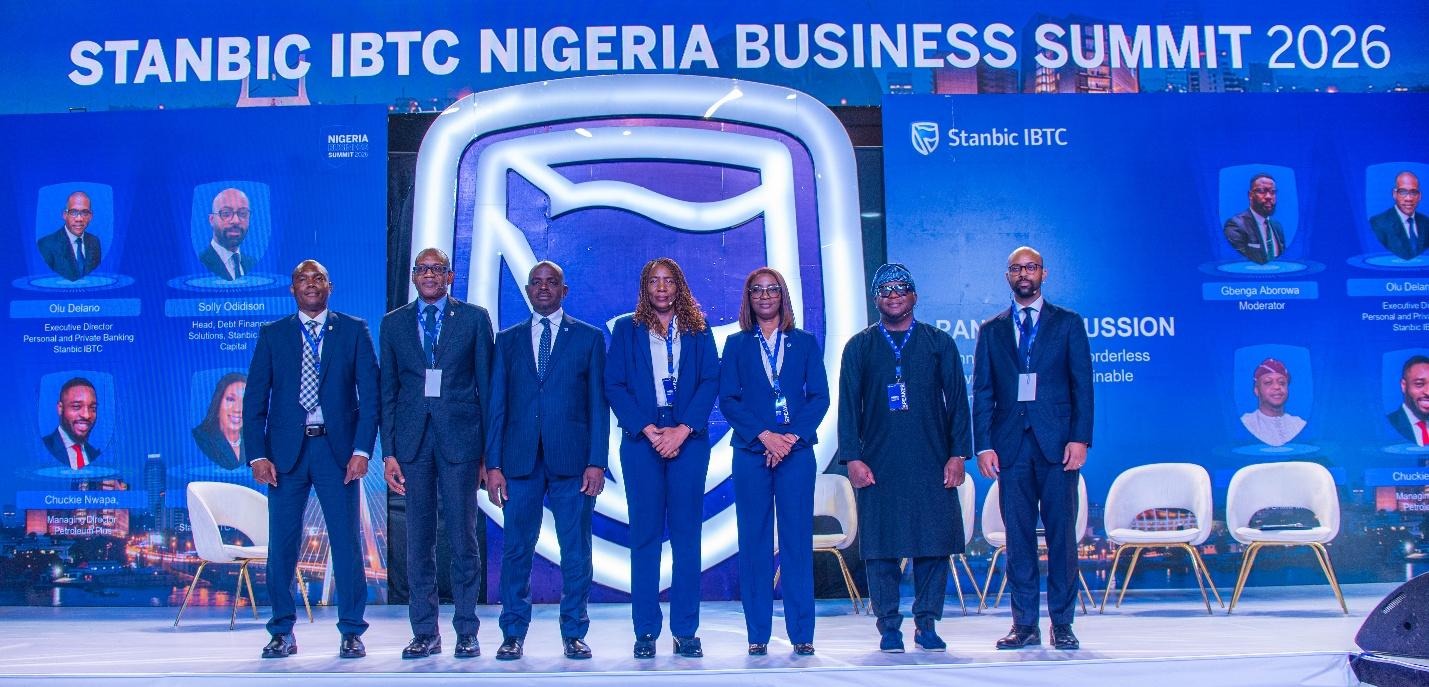
Top financial services provider in Nigeria, Stanbic IBTC, has reiterated its commitment to empowering businesses, strengthening key sectors and positioning Nigeria as a competitive player in the global economy.
This came on the back of the 2026 edition of the Nigeria Business Summit from Wednesday, April 1 to Thursday, April 2, 2026, at the Landmark Event Centre, Victoria Island, Lagos. The two-day summit brought together industry leaders, policymakers, entrepreneurs and stakeholders across multiple sectors to explore sustainable business practices, foster economic growth and unlock global trade opportunities.
With the theme, Nigeria Means Business: Powering Sectors, Growing Sustainable SMEs & Unlocking Global Trade, the summit addressed critical issues across key sectors, including agribusiness, renewable energy, trade and Africa–China banking, as well as ICT and telecommunications. Additional sessions covered areas such as family business sustainability, artificial intelligence, employee value banking, insurance, pension and wealth management.
The event featured a keynote address by the Minister of Finance and Coordinating Minister of the Economy, Mr Wale Edun, who emphasised the urgent need for Nigeria to reposition itself as a leading export-driven economy to achieve sustained growth.
“Our true potential lies in becoming a leading export economy,” Edun stated. “Increased participation in regional and global trade will be critical to diversifying foreign exchange earnings and driving inclusive growth.”
He noted that while Nigeria’s GDP growth has improved to approximately 4 per cent, it remains below the level required to significantly reduce poverty. According to him, the country’s economic strategy is now shifting from stabilisation to growth acceleration, with trade expansion playing a central role.
Mr Edun highlighted ongoing reforms, including improved foreign reserves, rising non-oil revenues and renewed investor confidence, as indicators of a more resilient economy. However, he stressed that enhancing trade competitiveness would require continued investment in infrastructure, logistics and policy coordination.
He also highlighted the importance of small and medium-sized enterprises (SMEs), which account for over 90 per cent of businesses, noting that inclusive growth will depend on stronger collaboration between the public and private sectors.
Participants engaged in a rich line-up of activities, including expert presentations, panel discussions and high-level networking opportunities. Highlights of the summit included the Africa Trade Barometer presentation, client testimonial showcases and insightful discussions on the state of the African economy and intra-African trade opportunities.
Breakout sessions on agribusiness, ICT and healthcare, Africa-China banking and trade, as well as renewable energy, provided attendees with deeper, practical insights into some of the most critical sectors driving Nigeria’s economic future.
Speaking at the event, Mr Chuma Nwokocha, chief executive of Stanbic IBTC Holdings, represented by the organisation’s Chief Finance and Value Management Officer, Mr Kunle Adedeji, emphasised the importance of collaboration and innovation in driving sustainable growth.
“This summit has reinforced the importance of creating platforms where ideas can flourish, and businesses can grow sustainably. By working together, we can unlock new opportunities and drive economic advancement across Nigeria and the African continent,” he said.
The summit also spotlighted practical strategies for integrating sustainability into business operations, encouraging organisations to adopt environmentally conscious practices while maintaining profitability and competitiveness.
Mr Remy Osuagwu, Executive Director, Business & Commercial Banking, expressed satisfaction at the level of interest from participants, a critical element for a successful summit.
“From our conversations on energy and healthcare to the deep dives into trade, Africa-China relations, and agribusiness, Day 1 has offered perspectives that were both insightful and practical. I believe we’re all leaving with a stronger understanding of the opportunities emerging across our industries,” he said.
He acknowledged the level of engagement, questions, contributions and willingness of participants to share experiences, describing this as the real power of the Nigeria Business Summit, and a solid foundation for tomorrow.
The Chief Executive of Stanbic IBTC Bank, Mr Wole Adeniyi, who was represented by Mrs Bunmi Dayo-Olagunju, Deputy Chief Executive of Stanbic IBTC Bank, opened Day Two of the Nigeria Business Summit by highlighting the focus of the summit’s SME Day.
“Today, we build on Day One’s momentum with conversations that are equally critical for the future – from the dynamics of family businesses to the growing influence of artificial intelligence; the evolution of insurance, and the emerging space of electric vehicle banking.”
She further added, “Our goal on Day Two is simple: to explore what’s next. To understand how these developments will shape our businesses and how we can position ourselves ahead of the curve.”
By Dipo Olowookere
Tech enthusiasts interested in participating in the Take on Squad Hackathon, organised by Guaranty Trust Holding Company (GTCO) Plc, can now enter the contest via the official portal at https://squadco.com/hackathon.
The programme enters its third edition in 2026, and the theme for this year is Smart Systems: The Intelligent Economy, according to a statement issued by the organisers.
The hackathon brings together developers, designers and entrepreneurs across Nigeria in a collaborative environment to build practical solutions across key sectors, including financial services, healthcare, commerce and digital inclusion.
Participants are challenged to design and build intelligent, data-driven solutions that transform how communities engage with money.
It is part of the organisation’s commitment to fostering innovation, empowering talent, and supporting the development of technology-driven solutions that address real-world challenges across Africa.
“Today’s dynamic, digitally driven world demands continuous innovation, which is shaping how economies grow, how businesses scale, and how societies evolve.
“Through Take on Squad Hackathon, we are deliberately investing in the ideas and talent that will define the future.
“Our objective is not simply to encourage innovation, but to enable its translation into scalable solutions that deliver real and measurable impact.
“This reflects GTCO’s role as a financial services platform that connects capital, capability, and creativity to drive sustainable progress,” the Managing Director of HabariPay, Ms Eduofon Japhet, stated.
The social coding event remains a cornerstone of HabariPay’s mission to foster creativity and problem-solving among emerging tech talents. Competing teams will leverage Squad’s advanced APIs to create scalable digital tools that address everyday challenges faced by businesses and individuals.
Through initiatives such as this, GTCO continues to position itself at the intersection of finance, technology and enterprise, actively shaping the future of digital transformation in Africa.
By Dipo Olowookere
Banking services will not be interrupted throughout the Easter public holidays, from Friday, April 3, to Monday, April 6, 2026, for any reason, Ecobank Nigeria has assured its customers.
In a message over the weekend, the member of Africa’s leading pan-African banking group, Ecobank Transnational Incorporated, said customers would continue to enjoy quality service delivery during the period.
It noted that its secure and robust digital platforms would remain fully operational to support financial activities during the festive period.
All digital channels, including the Ecobank Mobile App, Ecobank Business App, USSD *326#, Ecobank Online, OmniPlus, Omnilite, EcobankPay, Ecobank Cards, ATMs, PoS terminals, and over 35,000 Ecobank Xpress Point agent locations nationwide, will remain accessible throughout the holiday, the financial institution further said, urging customers to conveniently conduct transactions at any time using this wide range of digital solutions.
Ecobank customers were encouraged to maximise the bank’s alternative channels for transfers, bill payments, airtime purchases, card services, and account management.
They were also advised to stay vigilant by shopping only on trusted websites; avoiding the sharing of PINs, passwords, and one-time passwords (OTPs); refraining from banking on public Wi-Fi networks; being cautious of urgent or emotionally charged messages; and regularly monitoring their account activity.
“Customers will continue to enjoy a full bouquet of services during the holiday, including local and international funds transfers, bill payments, airtime top-ups, merchant payments, balance enquiries, account statements, and cardless cash withdrawals via ATMs,” the Head of Products & Analytics, Consumer & Commercial Banking at Ecobank Nigeria, Mr Victor Yalokwu, stated.
“We understand that festive seasons come with increased financial activity, and our priority is to ensure our customers enjoy fast, reliable, and secure banking wherever they are.
“Our digital channels are designed to support uninterrupted transactions, and we have strengthened our systems to guarantee optimal performance throughout the Easter break,” he added.
Mr Yalokwu noted that, “Ecobank remains committed to providing innovative financial solutions and exceptional customer service. We wish all our customers and partners a peaceful and joyful Easter celebration.”
-
 Feature/OPED6 years ago
Davos was Different this year
-
Travel/Tourism10 years ago
Lagos Seals Western Lodge Hotel In Ikorodu
-

 Showbiz3 years ago
Estranged Lover Releases Videos of Empress Njamah Bathing
-
 Banking8 years ago
Sort Codes of GTBank Branches in Nigeria
-

 Economy3 years ago
Subsidy Removal: CNG at N130 Per Litre Cheaper Than Petrol—IPMAN
-

 Banking3 years ago
Sort Codes of UBA Branches in Nigeria
-

 Banking3 years ago
First Bank Announces Planned Downtime
-

 Sports3 years ago
Highest Paid Nigerian Footballer – How Much Do Nigerian Footballers Earn