

Connect with us

Banking

First Bank Stops Use of Naira Cards for International Transactions

Published

on

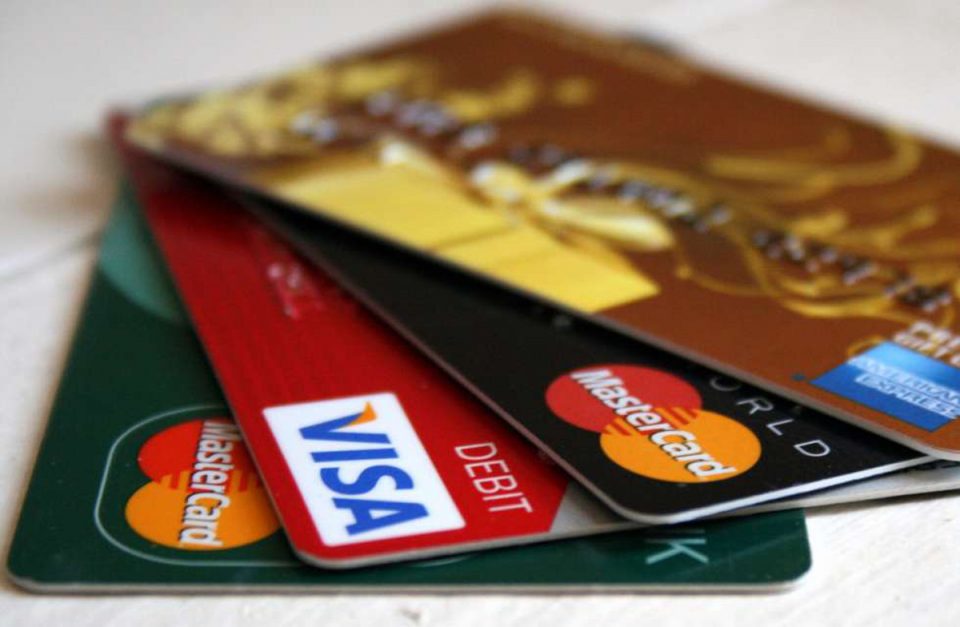
Naira Cards for International Transactions
By Dipo Olowookere

From Friday, September 30, 2022, customers of First Bank will no longer be able to use their Naira cards for international transactions, Business Post reports.

This development is triggered by the scarcity of foreign exchange (forex) in Nigeria, the financial institution confirmed in a message to its customers on Wednesday.

The lender disclosed that for customers to complete their offshore transactions, they would have to obtain multicurrency cards, which allow them to spend up to $10,000.

Nigerian banks have struggled to meet the FX demands of their customers because of a shortage in supply despite the prices of crude oil rising in the global market.

The government had blamed attacks on oil facilities in the Niger Delta region of the country as well as oil theft as the reason for low crude oil output.

It was reported that last month, the oil production of Nigeria went down below one million barrels, making it difficult for the nation to earn more from crude oil sales.

On Tuesday, Business Post reported that commercial banks in the country now opt for electronic transfer of forex into accounts of forex users instead of cash disburse due to a shortage in supply.

“Due to current market realities on foreign exchange, you will no longer be able to use the Naira Mastercard, Naira Credit Card, our Virtual card and Visa Prepaid Naira card for international transactions. This will take effect on September 30, 2022.

“Please use your Visa Debit Multicurrency Card, Visa Prepaid (USD) Card and Visa Gold Credit Card to continue transacting abroad with limits of up to $10,000,” the message sent by First Bank to its customers today stated.

Despite the apparent FX supply crisis in the country, the Central Bank of Nigeria (CBN) has maintained that those who genuinely need forex should go through the official market, which is primarily the commercial banks.

The apex bank had maintained that sourcing FX through the black market was illegal. It also described the platform as insignificant in the FX market, saying it only accounts for 5 per cent of the landscape.


Banking

Spending Limit on GTBank Naira Card Now $20,000

Published

on

GTBank Naira Card

By Aduragbemi Omiyale

The international spending limit on the GTBank Naira card has now been increased to $20,000 per quarter, a notice from the financial institution disclosed.

In an email message to customers sighted by Business Post on Tuesday, the lender said the Dollar limit is applicable to POS and online transactions carried out with the debit card.

The increase in the spending limit on the GTBank Naira card for offshore transactions comes as Nigeria continue to experience stability in the foreign exchange (FX) market.

A few years ago, Nigerians were unable to use their Naira cards to conduct financial transactions online for operations outside the country. This frustrated many consumers, who could not buy things online from other jurisdictions.

However, after some forex reforms by the Central Bank of Nigeria (CBN) under the leadership of Governor Yemi Cardoso, these restrictions were removed.

“The Dollar limit on your GTBank Naira Card is now $20,000 quarterly,” the notice read.

The increase in the spending limit to $20,000 per quarter will give GTBank Naira cardholders an opportunity to make more transactions online with ease, as before now, it was pegged at $15,000.

Continue Reading

Banking

FairMoney Unveils Asset Financing Solution for Mobility Entrepreneurs

Published

on

FairMoney

By Aduragbemi Omiyale

A new product known as Asset Financing Solution, tailored for those in the Nigerian transportation and logistics sector, has been introduced by a technology-enabled financial institution, FairMoney Microfinance Bank.

This initiative marks a significant expansion of FairMoney’s product ecosystem, moving beyond personal and working capital loans into commercial asset financing. By helping entrepreneurs build a verifiable credit history through vehicle repayments, the company is supporting financial inclusion and participation within the formal economy.

Asset Financing Solution forms part of the lender’s broader commitment to responsible lending and structured financing for eligible operators, as it expands access to asset financing for mobility entrepreneurs across the country through an application process subject to credit assessment and eligibility requirements.

The sector continues to record sustained market activity with reported growth rates of approximately 9.87 per cent–10.1 per cent in late 2025.

As road freight and passenger transport remain the nation’s dominant modes of transit, FairMoney’s new initiative aims to improve access to structured asset financing for thousands of transporters and delivery merchants. By providing access to business-use transport assets, the product helps address limited access to structured financing for micro-SMEs and supports activities within Nigeria’s logistics and mobility sector.

Mobility entrepreneurs seeking to acquire vehicles can now access flexible repayment plans through an application process that is subject to credit assessment and eligibility requirements.

Leveraging its technology-enabled onboarding and risk assessment capabilities, applicants can move through a structured onboarding and evaluation process.

Repayment structures are specifically tailored to the daily and weekly cash-flow realities of mobility businesses, supporting operational continuity and business growth within structured repayment arrangements.

The programme is open to eligible applicants via the FairMoney Business platform and through designated partner hubs across major cities.

“Our mission has always been to increase financial inclusion and create income opportunities by supporting individuals and small business operators in growing their businesses.

“With this solution, we are focused on supporting small business operators and mobility entrepreneurs who contribute significantly to transportation and commercial activity. The solution is designed to provide structured asset financing for eligible operators,” the Managing Director of FairMoney MFB, Mr Henry Obiekea, stated.

Speaking further, he said, “The intra-state transportation sector in Nigeria is experiencing sustained demand and market activity, offering opportunities for mobility and transport operators. The Asset Financing Solution ensures that costs are spread into manageable instalments, thereby supporting small business operations and broader economic participation.”

Continue Reading

Banking

Court Convicts Ex-Access Bank Staff for Unauthorised Withdrawals on 305 Customers’ Account

Published

on

Obadofin Daniel Bamise Hadiza Oyiza Yakubu Access Bank Staff

By Modupe Gbadeyanka

Two former employees of Access Bank Plc, identified as Mr Obadofin Daniel Bamise and Ms Hadiza Oyiza Yakubu, have been convicted and sentenced by Justice A.A. Bello of the Kaduna State High Court for theft.

The convicts were found guilty of a separate one-count charge of theft against them by the Kaduna Zonal Directorate of the Economic and Financial Crimes Commission (EFCC).

They carried out unauthorised withdrawals on the accounts of 305 customers of Access Bank, who were beneficiaries of the federal government’s Palliative Scheme, totalling N7.8 million. They posted the unauthorised withdrawals to the Palliative Scheme’s coordinators’ accounts.

After pleading “guilty” to the charges against them, Justice Bello convicted and sentenced both of them to seven years imprisonment each, with an option of a N50,000 fine each.

According to a statement from the EFCC, the charge against Mr Bamise was, “That you, Obadofin Bamise Daniel sometime between the 5th of November, 2024 and 23rd of January, 2025 in Kaduna, within the jurisdiction of this Honourable Court, while being an employee of Access Bank Plc did in your capacity as an employee committed theft in the sum of N433.000 being property in possession of Access Bank Plc and you thereby committed an offence contrary to Section 274 of the Kaduna State Penal Code Law, 2017 and punishable under same Law.”

The charge against Ms Yakubu was, “That you, Hadiza Oyiza Yakubu sometimes between the 5th of November, 2024 and 23rd of January, 2025 in Kaduna, within the jurisdiction of this Honourable Court, while being an employee of Access Bank Plc did in your capacity as an employee committed theft in the sum of N806,000 being property in possession of Access Bank Plc and you thereby committed an offence contrary to Section 274 of the Kaduna State Penal Code Law, 2017 and punishable under same Law.”

Continue Reading

Trending
