Connect with us

Banking

Union Bank to Grow Retail Customer Base Despite N5.9tr Legal Battle

Published

on

union bank nigeria

By Dipo Olowookere

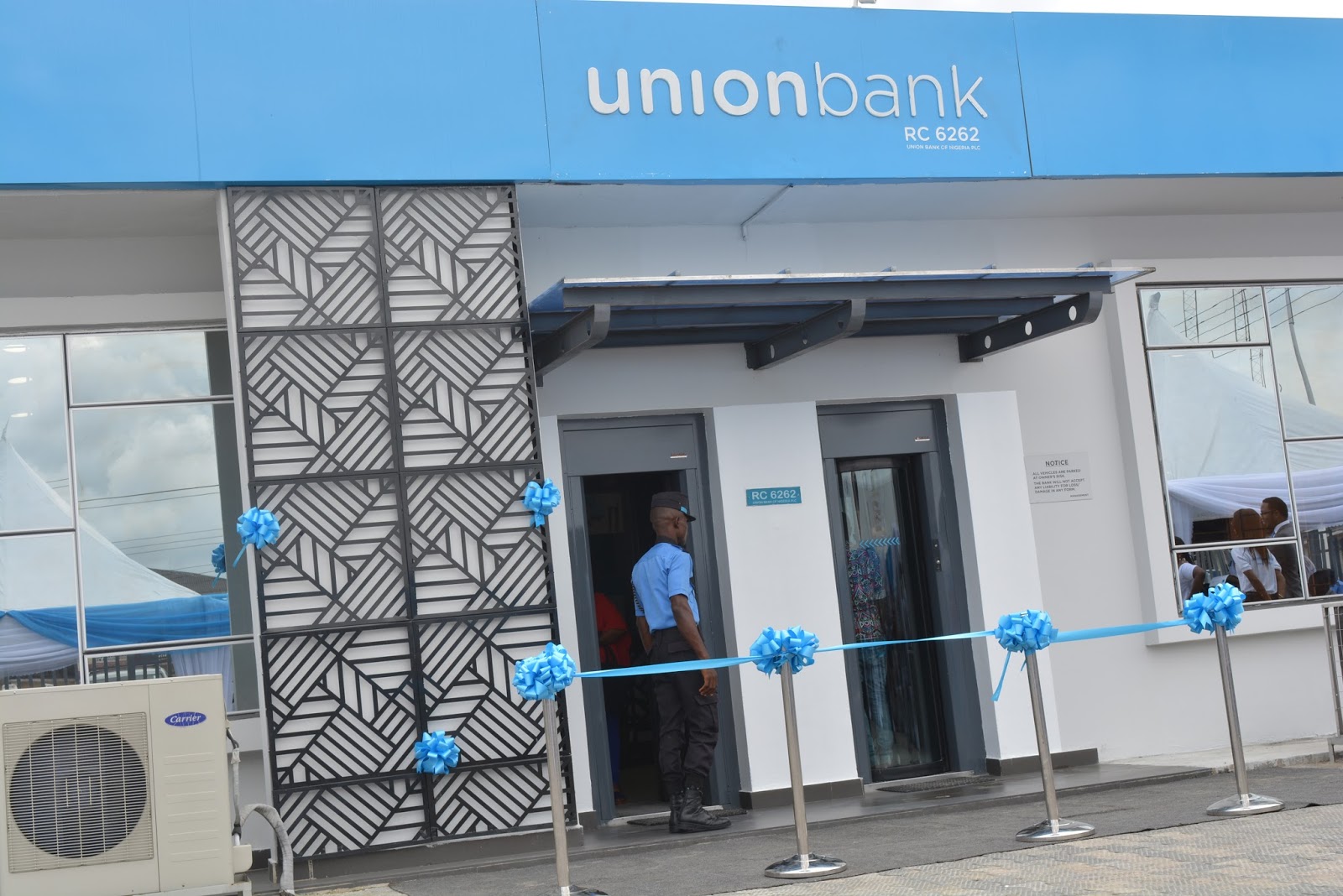
Tier-2 lender, Union Bank of Nigeria, has expressed its desire to focus more on improving its retail customer base as it forges ahead in the year.

Managing Director of the financial institution, Mr Emeka Emuwa, while speaking at the firm’s 49th Annual General Meeting (AGM) at the International Conference Centre (ICC), Abuja on Tuesday, disclosed that Union Bank was now in pole position to execute its growth agenda from 2018 onwards.

According to him, “Strengthening our capital base through the Rights Issue was key for the bank in 2017.

“Notwithstanding the challenges a tightened economy presented, the rights issue was 20 percent oversubscribed.”

He attributed this overwhelming success to “strong shareholder and investor confidence in Union Bank’s immediate and longer-term plans.”

The bank chief said, “With sufficient capital buffers, we are now in pole position to execute our growth agenda from 2018 onwards.”

“Operationally, we continued to focus on growing our retail customer base and optimising customer experience with simpler, smarter banking solutions,” he added.

“We launched an upgraded suite of digital channels including UnionMobile, UnionOnline and our unique USSD banking code *826#, driving an increase in active subscribers above 100 percent on the mobile app and online banking platforms.

“Union Bank’s alternative banking platform remains the fastest growing in the industry. We continue to attract broad segments of new customers, adding 90 percent more new-to bank customers in 2017 compared to 2016,” Mr Emuwa said further.

A breakdown of Union Bank’s results for the 2017 financial year showed that the lender reported a profit before tax (PBT) of N15.5 billion and a profit after tax of N14.6 billion.

The bank also achieved gross earnings of N163.8 billion with the operating expenses increasing to N65.1 billion from N62 billion in 2016 due to inflationary pressures and the impact of devaluation on technology and network investments.

Furthermore, interest income grew by 25 percent to N124.5 billion from N99.7 billion in 2016, as a result of the impact of Naira devaluation on the foreign currency denominated loan book, government securities yields and loan book repricing.

Non-interest revenue also moved up by 31 percent to N39.3 billon from N29.9 billion in 2016, driven by improved fee and commission income, trading income and a more effective debt recovery machine.

In addition, gross loans grew by five percent to N560.7 billion compared with N535.8 billion in 2016, while customer deposits rose by 22 percent to N802.4 billion from N658.4 billion in 2016, continuing its upward trajectory since 2016.

The growth was led by investments in customer-led products, recently upgraded alternate channels, along with a strengthened brand.

Union Bank’s annual report showed that the bank has a non-performing loan ratio of 19.78 percent of a total N517.1 billion at the end of the financial year under review.

Meanwhile, Chairman of Union Bank, Mr Cyril Odu, who presented the financial institution’s report to shareholders, said the lender was involved in 850 litigation cases with the amount claimed to total N220.26 billion.

However, he added that the total amount claimed in cases instituted by Union Bank in court amounted to N77.17 billion.

According to him, “A total provision of N2.98 billion has been made based on the advice of professional legal counsel.”

In its financial statements, Union Bank said, “There are three cases with total claim of N5.921 trillion of which judgement was awarded against the Bank in conjunction with other parties and provisions were not recognised in the financial statements.

“Management is of the view that a high level of success is expected at the Court of Appeal based on professional legal advice and that the likelihood of outflow of economic resource is considered remote.

“The Directors are of the opinion that none of the aforementioned cases is likely to have a material adverse effect on the Bank and are not aware of any other pending or threatened claims and litigations besides those included in the above number.”


Dipo Olowookere is a journalist based in Nigeria that has passion for reporting business news stories. At his leisure time, he watches football and supports 3SC of Ibadan. Mr Olowookere can be reached via [email protected]

Banking

Zenith Bank Launches Côte d’Ivoire Subsidiary

Published

on

zenith bank plc

By Aduragbemi Omiyale

A Côte d’Ivoire subsidiary of Zenith Bank Plc will be launched on Wednesday, April 29, 2026, after obtaining an operating licence in December 2025 from the country’s Ministry of Finance and Budget.

The country’s subsidiary will operate from its headquarters at SCI Wall Street, Avenue Noguès, Plateau, Abidjan.

Zenith Bank is in Côte d’Ivoire to deepen its presence in Francophone West Africa and strengthen financial intermediation within the West African Economic and Monetary Union (WAEMU).

Positioned as a gateway for cross-border trade and investment, Zenith Bank Côte d’Ivoire will focus on corporate banking, trade finance, local and offshore banking services, and structured financial solutions tailored to businesses operating across Africa and internationally.

Expected at the official opening ceremony tomorrow are senior government officials and regulators from Nigeria and Côte d’Ivoire, continental business leaders, and members of the diplomatic community, highlighting the strategic economic ties and investment opportunities between the two markets.

The Côte d’Ivoire launch forms part of Zenith Bank’s broader continental growth strategy. In addition to the Anglophone countries where it currently operates, and in line with the expansion into the Francophone market, the bank has commenced its entry process into the CEMAC (Central African Economic and Monetary Community) region, with Cameroon as the focal point.

It was gathered that the new subsidiary will be headed by Mr Cédric Tano, a seasoned banking executive with over two decades of experience.

“We are proud to establish Zenith Bank’s presence in Côte d’Ivoire at a time of strong economic growth in the country and increasing regional integration.

“Our focus is to showcase the Zenith brand as a customer-centric institution that combines global best practices with deep local insight.

“We are well-positioned to support businesses with innovative financing solutions, facilitate cross-border trade, and contribute meaningfully to the growth of the Ivorian economy and the wider WAEMU region,” Mr Tano commented.

Also speaking, the chief executive of Zenith Bank, Ms Adaora Umeoji, said, “From the very beginning, our founder and chairman, Mr Jim Ovia, set out to build a truly global brand with a strong presence across Africa and key international markets.

“The launch of Zenith Bank Côte d’Ivoire is a bold step in realising that vision; opening a strategic corridor into Francophone West Africa and reinforcing our commitment to facilitating trade, investment, and enterprise growth across the continent.

“As we continue to expand thoughtfully and strategically, we remain focused on delivering world-class banking solutions that connect African businesses to global opportunities.”

Continue Reading

Banking

Ecobank, DHL Organise Programme to Unlock Fresh Possibilities for SMEs

Published

on

Ecobank DHL Fresh Possibilities for SMEs

By Modupe Gbadeyanka

Some entrepreneurs across diverse sectors recently completed a three‑week intensive capacity‑building programme organised by Ecobank Nigeria, in partnership with DHL.

The event was put together to equip Small and Medium Enterprises (SMEs) with the skills, tools, and insights required to scale beyond local markets and compete globally.

The focus was on critical growth enablers such as cross‑border trade, e‑commerce opportunities, logistics, customs procedures, and international shipping—key pillars for sustainable expansion in today’s increasingly connected global marketplace.

In one of the sessions, titled Trade and Grow Beyond Borders: Welcome to E‑commerce, the Relationship Channel Manager for DHL Customers/Global Express, Mr Charles Eke, underscored logistics as a critical success factor for SMEs, identifying key challenges such as access to finance, markets, and efficient logistics.

He also provided practical guidance on customs processes, international shipping, documentation, and shipment tracking, while emphasising the immense opportunities e‑commerce presents for cross‑border expansion.

According to him, international markets often offer greater growth potential than domestic markets for well‑positioned SMEs.

The Head of SMEs, Partnerships and Collaborations at Ecobank Nigeria, Mrs Omoboye Odu, described the programme as a catalyst for meaningful growth and mindset change.

“Over the past three weeks, something truly powerful has taken place. This programme has gone far beyond knowledge sharing—it has inspired new thinking and unlocked fresh possibilities for our SMEs. The message is clear: no business should be limited by geography,” she said.

Mrs Odu reiterated Ecobank’s deliberate focus on SMEs as key drivers of Africa’s economic development, saying, “Beyond building capacity, we are intentionally opening doors by connecting businesses to new markets and opportunities. With our presence in over 30 African countries, coupled with integrated payment, trade finance, and e‑commerce solutions, Ecobank is uniquely positioned as the Pan‑African bank enabling seamless cross‑border trade.”

One of the participants, Ms Dolapo Fatoki of Debsfray, a Lagos-based fashion brand, described the initiative as impactful, practical, and transformative.

“The sessions were highly informative. I gained a deeper understanding of documentation and pricing, two areas that previously posed major challenges for me. The collaboration between DHL and Ecobank has been exceptional and truly beneficial,” she noted.

Similarly, the Creative Director of FC Accessories, Mr Tosin Olukuade, described the programme as “an eye‑opener,” adding that it reshaped his approach to business growth.

“The insights I gained will help me scale my business exponentially. I am grateful to Ecobank and DHL for creating this opportunity,” he said.

Reflecting on the programme’s digital focus, the chief executive of Needle Point, Mrs Theresa Onwuka, highlighted how the sessions broadened her outlook on growth and innovation.

“The class was so good—it got my mind thinking of possibilities. My main takeaway is clear: digitalisation is the way forward,” she remarked.

Continue Reading

Banking

Banks to Submit Monthly Reports on Failed Digital Transactions

Published

on

cbn gov. banks recapitalisation

By Adedapo Adesanya

The Central Bank of Nigeria (CBN) has directed banks and other financial institutions to submit monthly reports on failed electronic transactions across digital channels, as part of new compliance measures introduced in its revised Guide to Charges.

The directive was contained in a circular titled Exposure Draft of the Guide to Charges by Banks and Other Financial Institutions in Nigeria, 2026 (The Guide) and signed by the Director of the Financial Policy and Regulation Department, Mrs Rita Sike.

According to the apex bank, Chief Compliance Officers and Heads of Information Technology in financial institutions are required to jointly render electronic reports of all failed transactions conducted via Automated Teller Machines, Point of Sale terminals, mobile channels, web platforms, and other electronic systems.

The circular read, “The Chief Compliance Officer and Head Information Technology shall jointly render monthly reports electronically, of all failed electronic transactions via various e-channels (ATM, PoS, mobile, web/internet and related channels) that originate or terminate in the institution.”

The reports are to be submitted to designated CBN email addresses, reinforcing the regulator’s push for stricter monitoring of service failures across the banking system.

Beyond the reporting requirement, the CBN also introduced broader accountability measures, placing responsibility on top management of financial institutions to ensure strict adherence to the new guide.

Executive Compliance Officers or Managing Directors are mandated to cascade compliance expectations across all business units and ensure that banking systems are configured to apply only approved charges.

Specifically, the regulator directed that Heads of Information Technology must ensure that “all systems configurations only capture and allow posting of charges as permitted and described in this Guide,” while Chief Compliance Officers are to monitor strict compliance with the framework.

The revised guide, effective May 1, 2026, replaces the 2020 version and provides a comprehensive framework for charges across banking and other financial services.

The CBN explained that the review was aimed at promoting a safe and sound financial system, encouraging innovation, and expanding financial inclusion through lower tariffs on micropayments and transactions.

It added that the revised framework would strengthen oversight and accountability, encourage the adoption of electronic payment channels, and accommodate new industry participants.

Business Post also reported that the regulator has raised ATM card fees by 50 per cent to N1,500 and scrapped the monthly maintenance charge.

Continue Reading

Trending