Connect with us

Banking

Zenith Bank Executive Director Olusola Oladipo Retires

Published

on

zenith bank plc

By Modupe Gbadeyanka

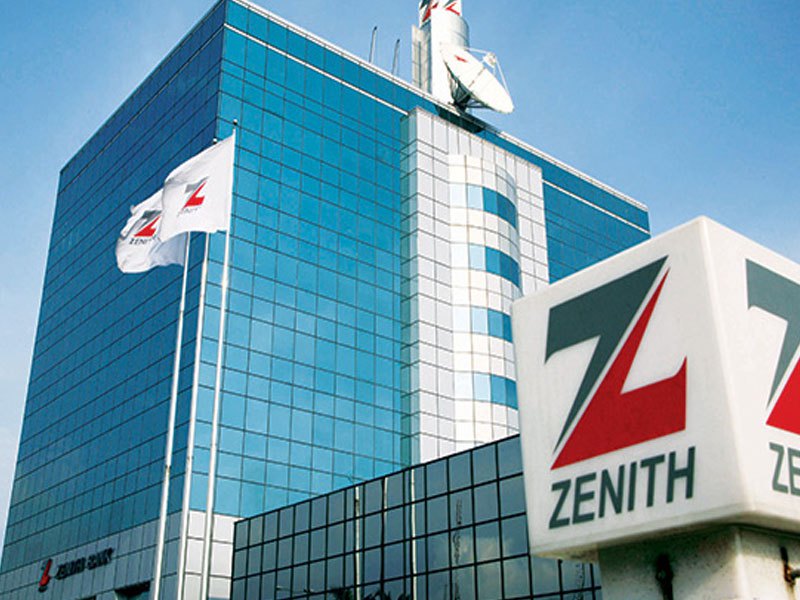
One of the Executive Directors at Zenith Bank Plc, Mr Olusola Oladipo, has retired from the board of directors of the firm.

The financial institution, in a statement signed by its scribe, Mr Michael Otu, disclosed that Mr Oladipo is retiring following “expiration of his tenure of office as Executive Director” of the top Nigerian lender.

He said Mr Oladipo’s retirement is effect from August 30, 2017 and that the board has accepted the retirement.

“We write to notify the Nigerian Stock Exchange (NSE) that Mr Olusola Oladipo has notified the board of directors of his retirement with effect from August 30, 2017.

“This followed the expiration of his tenure of office as Executive Director.

“The board has accepted the retirement.

“We request that you kindly update your records accordingly,” the statement dated August 14, 2017, disclosed.


Modupe Gbadeyanka is a fast-rising journalist with Business Post Nigeria. Her passion for journalism is amazing. She is willing to learn more with a view to becoming one of the best pen-pushers in Nigeria. Her role models are the duo of CNN's Richard Quest and Christiane Amanpour.

Banking

Wema Bank Looks to Deepen Role as Catalyst for Growth, Market Presence

Published

on

wema-bank-logo

By Aduragbemi Omiyale

Mid-level Nigerian lender, Wema Bank Plc, has set its eyes on expanding its market presence and supporting the government in achieving its $1 trillion economy by 2030.

In a statement, the financial institution said it hopes to achieve these and others through its recently recapitalisation exercise, which saw its capital base rise to about N265 billion, well above the N200 billion-threshold set by the Central Bank of Nigeria (CBN) for its category of licence.

Wema Bank operates with a national licence, and based on the regulator’s requirement, the capital base must be at least N200 billion.

Before the March 31, 2026-deadline set be the CBN, banks were required to have at least N25 billion, but to meet up with the 2030 target of the federal government, this threshold was raised, with banks operating branches out the country asked to have at least N500 billion, while regional banks were told to have a minimum of N50 billion.

To comply with the new directive, Wema Bank embarked on a strategic capital raise through the stock market, successfully strengthening its shareholder base and securing the required capital through strong participation from existing investors.

Its N150 billion rights issue, which opened on April 14, 2025, and closed on May 21, 2025, marked a significant step in this journey. This was subsequently complemented by a N50 billion special placement later in the year, ensuring the bank not only met but exceeded the regulatory threshold well ahead of schedule.

“The successful completion of our recapitalisation exercise is a defining moment for Wema Bank. It is a strong validation of our strategy, our performance, and the enduring confidence our shareholders and stakeholders have in our vision.

“We have not only met the CBN’s requirements; we have exceeded them, reinforcing our position as a National Bank with the scale, strength, and stability to compete and lead,” the chief executive of Wema Bank, Mr Moruf Oseni, stated.

“Looking ahead, we remain focused on deepening our market presence, driving customer-centric innovation, and strengthening our role as a catalyst for growth across retail, SME, and corporate segments.

“This is not just about retaining our license; it is about building a bigger, stronger, and more impactful Wema Bank,” the bank executive further stated.

Continue Reading

Banking

Nigeria to Invest $75m in Flutterwave’s IPO Drive

Published

on

flutterwave IndusInd Bank India

By Adedapo Adesanya

President Bola Tinubu has given approval for the investment of $75 million in Flutterwave, as part of the payments company’s efforts to raise $250 million through an Initial Public Offering (IPO).

The investment is expected to be executed through the Ministry of Finance Incorporated (MoFI), according to reports on Monday.

Since its founding in 2016, Flutterwave has rapidly expanded and now has a presence in about 30 African countries. The company’s valuation is at $3 billion.

According to the reports, the fintech company approached the federal government last year to participate in the offer, which has been in motion since it was first touted as far back as 2022.

Flutterwave’s IPO has been delayed by its lack of sustained profitability, earlier governance and misconduct scandals, and unfavourable global market conditions.

It was gathered that MoFI engaged two of the Big Four global accounting and auditing firms to carry out a detailed review of the company’s financial statements and operations, in a move aimed at ensuring due diligence and strengthening investor confidence.

Citing sources, the newspaper said Flutterwave brought Nigerian government participation to secure sovereign backing and reinforce confidence in Nigeria’s growing technology sector.

According to the sources, the move was also intended to project Nigeria’s potential on the global stage, adding that the company is also using the IPO to widen ownership and allow more Nigerians to invest in its growth.

The paper also reported that the IPO would expand ownership, giving more Nigerians the opportunity to invest in one of Africa’s leading fintech companies.

Market interest in the offer is said to be strong, with existing investors indicating plans to increase their stakes, while new institutional players are also positioning to participate.

This development is coming after the Central Bank of Nigeria (CBN) granted Flutterwave a license to operate microfinance banking services in Nigeria. The license enables the company to hold funds and deposits directly, strengthening its financial infrastructure across its largest market and enabling more efficient financial services and settlement flows for consumers, businesses and enterprises.

Continue Reading

Banking

5 Smart Saving Hacks Nigerian Freelancers Need to Survive Rising Living Costs

Published

on

Margaret Banasko Smart Saving Hacks

By Margaret Banasko

Nigeria is at the forefront of Africa’s digital labour shift. According to the World Bank, the country leads a cohort of 17.5 million online gig workers across sub-Saharan Africa, with over 65% of the population under age 35 who make up the digital-native workforce. According to recent data from 2023, the Nigerian Bureau of Statistics (NBS) indicated that approximately 87.3% of employed Nigerians are primarily self-employed, reflecting a deep-seated culture of entrepreneurship.

The Nigerian freelancer’s life isn’t without its hurdles. Between the biting impact of inflation, a volatile exchange rate, and the soaring costs of power and data, many digital professionals are finding their margins squeezed like never before. Surviving this economic climate requires more than just hard work; it demands a shift in mindset. Success now hinges on thinking outside the box and maintaining the discipline to save.

Here are 5 actionable saving hacks that prove that financial discipline is the ultimate hedge against uncertainty. Whether you’re saving a little or a lot, consistency is the key to surviving in a volatile market.

  1. Build a “Dry Month” Emergency Fund

In the world of freelancing, some months are lucrative while others are quiet. A dedicated ‘Dry Month’ fund is your insurance against the unpredictable nature of client work. By automating your savings until you have a three-to-six-month cushion, you’re essentially paying your future self in advance. Treating this fund as a fixed monthly expense creates a rock-solid safety net, ensuring that a slow season never dictates your professional worth.

  1. Work From Home to Cut Fuel and Transport Costs

With the removal of fuel subsidies and the subsequent hike in transport fares, commuting to co-working spaces or client offices every day can drain your profits. Transitioning to a fully remote setup—or limiting outings to a single ‘errand day’—can save you tens of thousands of Naira monthly. Consistently diverting that transport money into a FairSave account will help you build a substantial buffer for a rainy day.

  1. Replace Physical Meetings with Virtual Calls

Beyond the transport cost, physical meetings consume your most valuable resource – time. Transitioning to video conferencing tools allows you to manage multiple clients across different time zones without leaving your desk. If a face-to-face meeting isn’t strictly necessary for closing a deal, opt for a virtual touchpoint. The data cost of a 30-minute video call is a mere fraction of the cost of a cross-town ride.

  1. Automate Your Savings

Manual saving rarely wins against the temptation of daily spending. Switching to FairMoney’s digital tools changes the game. By using FairSave for accessible interest or FairLock to secure a lump sum at a fixed rate, protecting your funds from impulsive spending. For goals like a new laptop or certification, FairTarget automates your progress toward the finish line. Letting money sit idle in an inflationary economy is a cost in itself; putting it into high-yield accounts ensures your money keeps pace with your hustle.

  1. Leverage Group Subscriptions

Internet data is the lifeblood of the digital professional, but as overheads rise, collective bargaining becomes a strategy. Many telecommunications providers now offer “family” or “group” data plans that are significantly cheaper per gigabyte than individual monthly subscriptions. By partnering with a few trusted fellow freelancers to share a large data pool, you can slash your monthly “office” overhead. It’s a simple collaborative hack that keeps everyone online for less.

In Nigeria’s volatile gig economy, the true measure of a freelancer’s success is not gross revenue, but capital retention. Amidst significant inflationary headwinds, these strategic financial levers serve as a critical buffer for your enterprise. By prioritising incremental, disciplined saving, digital professionals can insulate themselves against macroeconomic shocks and secure a competitive advantage in the long-term wealth game.

Margaret Banasko is the Head of Marketing at FairMoney Microfinance Bank

Continue Reading

Trending