Brands/Products
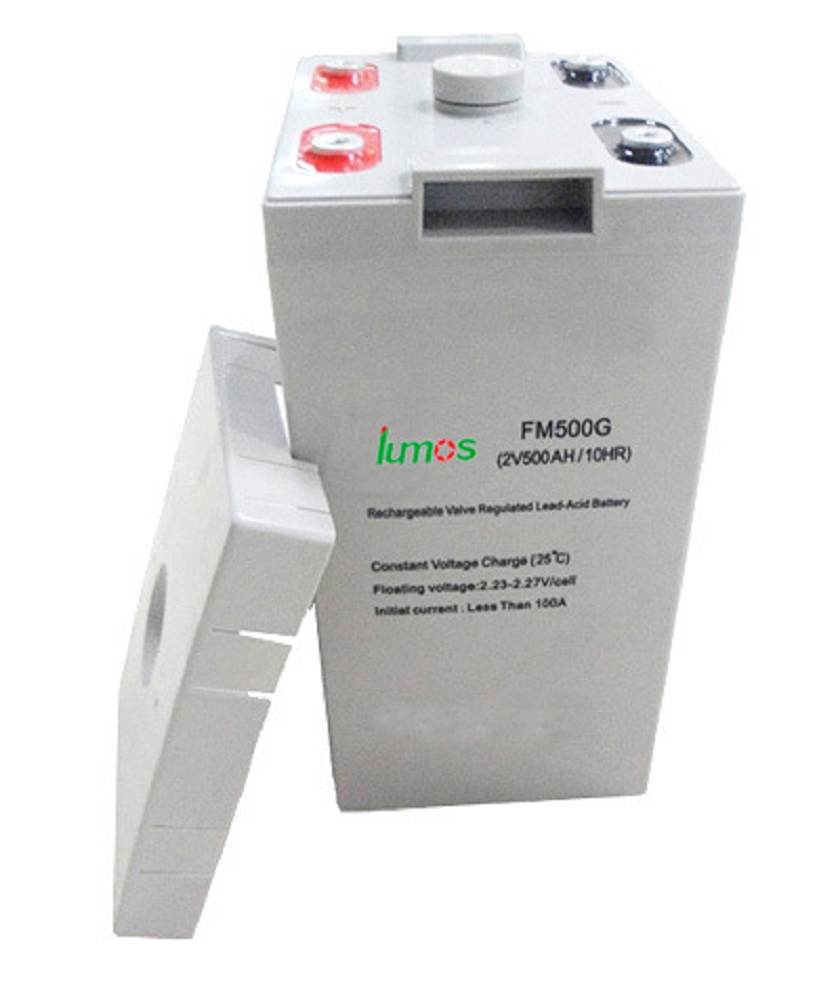
Hinckley Signs Deal to Recycle Lumos Batteries
By Dipo Olowookere
As part of its commitment to align with the United Nations Sustainable Development Goals (SDG), a market leader in home solar systems in Nigeria, Lumos, has entered into a partnership with Hinckley Recycling for the recycling of its batteries.
Lumos, which makes reliable and clean power accessible to many consumers, including low-income earners, said it took this step because of its importance to a sustainable battery supply chain.
Batteries are vital for delivering clean, reliable energy access because they enable off-grid users to optimize the consumption of solar/wind energy; and support increased reliability of power for users of weak grids.
The partnership with Hinckley has made the solar energy company become the first in its sector to recycle in Nigeria.
Recall that Lumos was the first major company to introduce lithium-ion batteries as a standard in its solar home systems, providing users with a better energy storage solution.
Today, Africa’s battery demand is forecast to increase sevenfold, from 2GW in 2015 to 15GW by 2030. Full energy access would require double the 2030 figure.
However, current battery end-of-life management across Africa is not environmentally sustainable, with limited lithium-ion recycling or repurposing as Hinckley’s Nigerian facility is one of just two examples, across the entire continent, of local re-purposing.
In a statement, the renewable energy company explained that the deal will initially see waste Lumos batteries recycled at Hinckley’s facility in Ojota.
Hinckley works with international blue-chip companies such as HP, ExxonMobil, KPMG and Nestle, and its Ojota facility has an annual capacity for 20,000 tonnes of e-waste.
Lumos has been instrumental in assisting Hinckley’s expansion. In 2019, Lumos partnered with Taisen Company and Carnegie Mellon University Africa to support Hinckley’s participation in the inaugural Global LEAP Solar E-Waste Challenge which funds innovative approaches to e-waste management in the off-grid solar sector in sub-Saharan Africa.
Nigeria is at the forefront of implementing solar energy on the African continent and the government’s commitment to invest in 5 million solar-home systems is an important development. As the Nigerian market leader, and whose core product is built on a positive impact socially and environmentally – Lumos also wants to lead by example.
“Energy is a core pillar of economic growth and will be a strong catalyst to sustainable economic recovery, post-COVID-19.
“Africa’s battery demand is growing hugely, as they are vital for the continent to achieve clean, reliable energy access. This requires a sustainable battery supply chain.
“It is extremely important, and we are proud to be the first company in our sector to take this major sustainability step,” the CEO of Lumos Group, Alistair Gordon, said.
Also commenting, the Managing Director of Hinckley Recycling, Mr Adrian Clews, stated that, “We are delighted by Lumos’ sector-leading commitment to sustainability, and we are honoured to partner with them. Lumos has been incredibly supportive of Hinckley and this partnership cements the relationship even further.”
Brands/Products
bPOWERd Launches Cheap Solar Battery Rental Service Across Lagos Mobil Stations
By Adedapo Adesanya
Clean energy tech startup, bPOWERd, has expanded into Nigeria to offer solar solutions to businesses and homes for as low as N1,500 per day.
The startup has established operational presence across seven initial sites in Lagos, Nigeria, in partnership with 11 Plc, which now operates the country’s famous Mobil service stations.
According to a statement, the bp-developed startup is utilising these locations to deliver its solar-powered battery rental “business-in-a-box” infrastructure.
It comes at a time when Nigeria continues to face a significant energy access deficit. According to the World Bank data on global energy access deficits, 43 per cent of the population lacks grid access.
According to the company, powering a small, entry-level generator (0.9 kVA to 1.2 kVA) costs Nigerians an average of N10,000 daily, but a bPOWERd battery delivers up to 12 hours of power for just N3,000, a 70 per cent cost reduction.
bPOWERd offers an on-demand, solar-powered battery rental model for urban households and small business owners. Portable, solar-charged batteries are available to rent with a refundable N15,000 deposit. Daily rates are small battery (300Wh): From N1,500 per day, with larger battery (1,000Wh): From N3,000 per day.
These units power essential appliances like lighting, TVs, fans, refrigerators, and small business equipment.
The Nigeria expansion will seek to replicate the first phase, which was launched in South Africa in 2025, where it claimed it facilitated 125,000 rentals in its first 12 months of operations.
According to the Managing Director at bPOWERd, Mr Jonathan Lule, “Small businesses sit at the centre of everyday economic activity, yet many continue to operate against the backdrop of unstable and expensive power. At a time of continued grid instability, bPOWERd is helping households and small and medium-sized enterprises access dependable pay-per-use power they can rely on”.
On his part, Mr Oluwole Ogidan, Head bp Global West Africa, said, “Our focus is on delivering diversified energy solutions that are affordable, resilient, and adaptable to how people live and work. Beyond expanding access to reliable power, this rollout also supports the growth of a local green workforce through on-site sales roles and partnerships with Nigerian solar technicians.”
Brands/Products
Court Stops Production of Pop Power Energy Drink in Current Bottle Design
By Modupe Gbadeyanka
The manufacturer of Pop Power Energy Drink, Mamuda Beverages Nigeria Limited, has been directed to stop producing the product in its current bottle design.
This directive was given by Justice Binta Nyako of the Federal High Court sitting in Abuja, in a trademark infringement case brought before the court by Rite Foods Limited, makers of Fearless Energy Drink.
This ruling on Mamuda’s notice of preliminary objection and Rite Foods’ motion for interlocutory injunction was delivered on Friday, May 22, 2026, in the suit number FHC/ABJ/CS/705/2025.
At the proceeding of the day, Mamuda’s objection was refused and dismissed based on abuse of court process, while Rite Foods’ application for injunctive reliefs prohibiting Mamuda from further trademark infringement was granted, as it was held that the company’s present complaint of infringement of its intellectual property was distinct from an earlier suit between the parties, wherein Rite Foods had complained about a different act of infringement.
The court further held that it appears on its face that Mamuda’s newly introduced bottle design, manufactured, still bears a striking resemblance to Rite Foods’ established Fearless Energy Drink product. Therefore, the court granted an order restraining Mamuda from further production of its Pop Power Energy Drink product, pending the final determination of the suit.
Accordingly, the court ordered Mamuda to cease production of the product forthwith, destroy all existing products, and directed the court bailiff, in conjunction with the parties, to undertake an inventory of the products slated for destruction and file the same.
The court further ordered that the injunction shall remain in force until the end of the year or pending the determination of the substantive suit.
Consequently, the court adjourned the suit to Wednesday, September 23, 2026, for the hearing of the substantive suit.
This order follows an earlier suit against Mamuda in January 2025, where Rite Foods sued the company for infringing on the trademark and design of its iconic Fearless Energy Drink through the launch of a lookalike product, Pop Power Energy Drink.
However, Mamuda, in an apparent admittance of guilt, sought a settlement, and terms of settlement were agreed and filed, and the court entered the same as its consent judgment. Some of the terms of settlement included that Mamuda would desist from further violation of Fearless Energy Drink’s trademark and identity pass-off. It also agreed to destroy all infringing products and pledged to change its design and avoid any form of identity imitation.
In an unexpected turn, Mamuda subsequently reintroduced Pop Power into the market, with only cosmetic adjustments to its appearance. Rite Foods maintains that these changes are minor and do little to address the original issues of consumer confusion.
Reports from the market indicate that the new Pop Power continues to be informally referred to as “small Fearless,” reinforcing concerns that the revised product may not only breach the spirit of the earlier agreement but could also undermine consumer clarity and brand differentiation.
While reaffirming its position, Rite Foods stressed its continued commitment to protecting its brand and the principles of innovation and fair competition in Nigeria’s marketplace.
Brands/Products
Lagos Raises Alarm Over Circulation of Contaminated Palm Oil
By Adedapo Adesanya
The Lagos State Consumer Protection Agency (LASCOPA) has raised concerns over the circulation of adulterated palm oil in markets across the state, warning residents to be cautious when purchasing the product.
General Manager of LASCOPA, Mr Afolabi Solebo, said complaints from consumers and market surveillance operations revealed that some traders were selling contaminated and artificially enhanced palm oil to unsuspecting buyers.
According to him, the adulterated products may contain harmful substances such as candle wax, chemicals, dyes and other impurities capable of causing serious health complications.
Mr Solebo warned that consumption of such products could lead to food poisoning, stomach disorders, tissue and liver damage, as well as other long-term health risks.
He advised consumers to examine palm oil carefully before purchase by checking for unusual colour, offensive odour, excessive thickness, sediments or any suspicious appearance that may suggest contamination.
The LASCOPA boss also urged residents to patronise only trusted vendors and insist on quality products at all times, according to a statement shared on X (formerly known as Twitter).
While reaffirming the state government’s commitment to consumer protection, Mr Solebo disclosed that the agency had sealed a shop allegedly selling adulterated palm oil at Idutafa Lane, off Oluwa Street near Amodu Tijani Oluwa Mosque in Lagos Island Local Government Area.
He warned traders and distributors involved in the sale of adulterated palm oil to desist immediately or face sanctions in line with consumer protection laws in the state.
The agency further appealed to members of the public to report suspected cases of adulterated food products, deceptive trade practices and other consumer rights violations through its official communication channels for investigation and enforcement action.
LASCOPA added that it would continue market monitoring and consumer sensitisation efforts to ensure residents have access to safe and quality products across the state.
-
Feature/OPED6 years agoDavos was Different this year
-
Travel/Tourism10 years ago
Lagos Seals Western Lodge Hotel In Ikorodu
-
Showbiz3 years agoEstranged Lover Releases Videos of Empress Njamah Bathing
-
Banking8 years agoSort Codes of GTBank Branches in Nigeria
-
Economy3 years agoSubsidy Removal: CNG at N130 Per Litre Cheaper Than Petrol—IPMAN
-
Banking3 years agoSort Codes of UBA Branches in Nigeria
-
Banking3 years agoFirst Bank Announces Planned Downtime
-
Sports3 years agoHighest Paid Nigerian Footballer – How Much Do Nigerian Footballers Earn