Brands/Products
Starbucks, Alibaba Partner to Satisfy Coffee Customers in China
By Dipo Olowookere
A partnership aimed to transform the coffee industry in China has been signed between Starbucks Coffee Company and Alibaba Group Holding Limited.
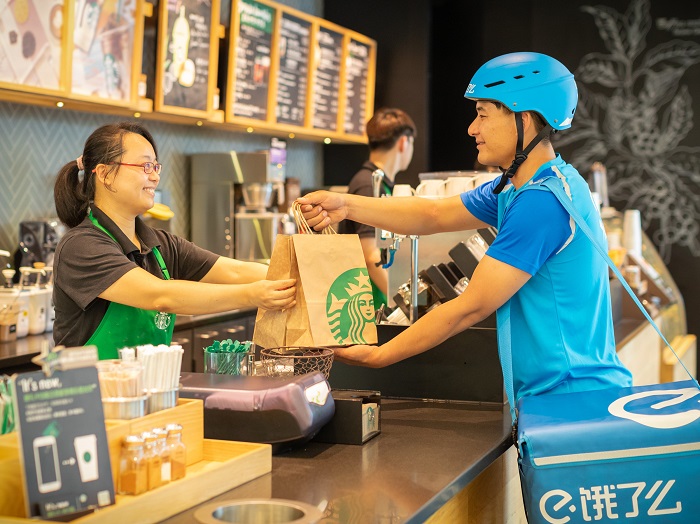
The strategic “New Retail” partnership will enable a seamless Starbucks Experience in China allowing the firm use the Alibaba ecosystem, including Ele.me, Hema, Tmall, Taobao and Alipay, to offer delivery services beginning September 2018.
This will allow the company establish “Starbucks Delivery Kitchens” for delivery order fulfilment and integrate multiple platforms to co-create an unprecedented virtual Starbucks store – an unparalleled and even more personalized online Starbucks Experience for Chinese customers.
The announcement marks a historic moment as two iconic, global companies build on their distinct retail and technology strengths to revolutionize the customer experience. Leveraging the Alibaba ecosystem and New Retail infrastructure, Starbucks will be able to further unify a seamless Starbucks Experience between its stores and online for customers.
“Thanks to the elevated customer experience delivered by our over 45,000 partners, Starbucks is growing and innovating faster in China than anywhere else in the world,” said Kevin Johnson, president and chief executive officer, Starbucks Coffee Company. “Our transformational partnership with Alibaba will reshape modern retail, and represents a significant milestone in our efforts to exceed the expectations of Chinese consumers. Starbucks China is one to watch, and I have full confidence in the team that will bring the new innovation behind the Starbucks Experience to life.”
Daniel Zhang, Chief Executive Officer of the Alibaba Group, said, “Starbucks is more than a destination for premium coffee and we share the same vision to pioneer a new coffee culture and lifestyle through innovation and technology. Alibaba is thrilled to expand our existing partnership with Starbucks by leveraging our cutting-edge New Retail infrastructure and digital power to enable an unprecedented experience for consumers. This partnership is again a testament to the success of our New Retail strategy.”
The strategic partnership is part of Alibaba’s broader New Retail push, which aims to transform how commerce is conducted by merging online and offline experiences. New Retail was introduced by Alibaba in 2016 and has since become a hallmark strategy of the retail industry.
Creating an Unparalleled Order and Delivery Experience Powered by the Alibaba Ecosystem
Best-in-class coffee delivery service through Ele.me
Working with Ele.me, China’s leading on-demand food delivery platform with 3 million registered delivery riders, Starbucks will pilot delivery this September in 150 stores located in key trade zones in Beijing and Shanghai with plans to accelerate and expand its delivery program to more than 2,000 Starbucks stores across 30 cities by the end of calendar year 2018.
Both Starbucks and Ele.me collaborated to develop a unique, customized delivery infrastructure that has been meticulously determined each step along the way, including dedicated Ele.me delivery riders, precise delivery time, and custom carriers. Both companies have created a tailored order-to-delivery Starbucks program that upholds the unparalleled experience and quality that customers have come to expect in Starbucks retail stores. Through this delivery partnership, Starbucks and Ele.me have pioneered a best-in-class coffee delivery service standard for Chinese customers.
“Ele.me has a robust infrastructure for on-demand delivery in China. We are pleased to partner with Starbucks to launch these reliable and trusted delivery services to satisfy customers’ needs and capitalize on the delivery sector’s great potential. It is an important milestone for Ele.me to deepen our collaboration with retail chains and further expand our penetration in the food delivery sector,” said Wang Lei, Chief Executive Officer of Ele.me.
Distinct Fulfillment and Delivery Capabilities through Hema Supermarkets
In addition, Starbucks will partner with Hema supermarkets to be the first retail brand to establish dedicated “Starbucks Delivery Kitchens” within their locations. The “Starbucks Delivery Kitchens” will utilize Hema’s distinct fulfillment and delivery capabilities to complement the delivery of handcrafted Starbucks coffee and tea beverages offered through existing Starbucks stores. Starbucks will also leverage Hema’s highly effective consumer insights and unique fulfillment expertise to further penetrate and better serve the needs of individuals and families in communities across China.
This intentional strategy will inform the future network planning for new Starbucks stores, combined with “Starbucks Delivery Kitchen” locations, to further expand the scale and reach of Starbucks delivery services, while enabling our partners (employees) to continue to elevate the third-place experience for the customer. Starbucks will open “Starbucks Delivery Kitchens” in selected Hema supermarkets in Shanghai and Hangzhou as soon as September 2018, with plans to expand its presence to other cities over time.
“Our Chinese customers have a high expectation of their Starbucks Experience and we are proud to introduce a premium delivery experience that reflects the same service and quality they’ve come to love and expect from us in our stores – we will never compromise,” said Belinda Wong, chief executive officer, Starbucks China. “More significantly, through our partnership with Alibaba, we are breaking the physical and virtual barriers between the home, office, in-store and digital space, making China the first Starbucks market to deliver a seamless Starbucks Experience across all facets of our customers’ lives and further reflecting the uniqueness and strategic importance of the market.”
Digital Innovations Transforming the Retail Industry
A key strategic initiative under the partnership is the development of a pioneering, first-of-its-kind virtual Starbucks store in China. This digital partnership will see Alibaba develop a centralized online management hub, with the unique capabilities to integrate and deliver a consistent Starbucks Experience across multiple digital platforms. This innovation will transcend the traditional limitations of a single-app visit by providing the consumer an elevated, and even more personalized Starbucks digital experience across the Starbucks app and Alibaba’s customer-facing mobile apps, including Taobao, Alipay, Tmall and Koubei.
This latest innovation will revolutionize the traditional offline-to-online model by effectively extending the reach of the Starbucks Experience into the everyday lifestyle ritual of the Chinese consumer, regardless of time or place. Whether it is at home or in the office, within a Starbucks store or online, Starbucks customers will be able to access and enjoy a one-stop Starbucks Experience when purchasing merchandise online, buying a Starbucks handcrafted beverage to be delivered to a friend or sending a Starbucks gift of love on the “Say it with Starbucks” social gifting platform. Starbucks will progressively integrate its Starbucks Rewards (SR) membership platform onto the centralized system to leverage its consumer insights to deliver a truly personalized experience to its customers, while establishing a strong foundation for the future development of Starbucks digital experiences in China.
Starbucks and Alibaba are trusted business partners who share common values in the spirit of innovation and the unrelenting pursuit of product and service excellence. This deepened partnership is a significant step as both companies partner together to elevate the customer experience across China.
Brands/Products
NAFDAC Declares Bon Bread Safe for Consumption
By Modupe Gbadeyanka
The National Agency for Food and Drug Administration and Control (NAFDAC) has declared that Bon Bread, which had created a controversy after a review by a consumer over a month ago, is safe to consume.
In a statement signed on Sunday by the Director General of NAFDAC, Mrs Mojisola Adeyeye, it was stated that investigations conducted on the safety of the product confirmed that it was not harmful.
A woman named Ms Love Dooshima had posted a video on social media last month claiming that one of the breads in her possession remained free from mould for some weeks, questioning this abnormally.
In her video, she did not mention the name of the bread, but Bon Bread claimed she liked comments mentioning its name in the post, triggering a lawsuit.
In the statement on Sunday night, NAFDAC said it conducted an inspection of the company’s bakery facility in Abuja and collected bread samples from both the production site and the open market for laboratory analysis.
It was revealed that the bread contained calcium propionate, an approved preservative commonly used in bread production, within the permissible limits specified by the Codex Alimentarius, the internationally recognised food standards framework.
According to the agency, the manufacturer of Bon Bread, Food & Food Integrated Company Limited, is in compliance with regulatory standards.
It was stated that although the complainant did not identify the brand, the manufacturer of Bon Bread responded publicly, stating that the product in question was theirs and that the allegation was misleading.
“Laboratory analysis further confirmed that the bread samples did not contain objectionable substances, including bromate or non-nutritive sweeteners.
“NAFDAC also confirmed that the company has maintained regulatory compliance since commencing operations in 2006 and has successfully undergone several licence renewals without penalties or product recalls,” parts of the statement read.
NAFDAC assured “the public that Food & Food Integrated Company Limited is not in violation of any NAFDAC regulation,” encouraging consumers “to report concerns relating to regulated products through any NAFDAC office nationwide or call the agency’s call centre to enable prompt and evidence-based investigation of complaints.”
Brands/Products
Tony Elumelu-Backed Redtech Ranks 32nd in FT Africa Fastest Growing Companies List
By Adedapo Adesanya
Redtech, a technology company backed by Heirs Holdings, has been named in the Financial Times (FT) Africa’s Fastest Growing Companies 2026 list.
The Tony Elumelu-backed startup ranked 32nd out of 130 high-growth companies and also secured a position among Africa’s top 15 fastest-growing fintech companies in its debut appearance on the annual FT/Statista ranking.
Produced by the FT in research partnership with Statista, the ranking identifies Africa’s fastest-growing companies based on compound annual growth rate (CAGR) in revenue between 2021 and 2024. Companies also had to meet additional criteria, including minimum revenue thresholds, independence and primarily organic growth. Redtech’s inclusion provides independent validation of its growth as an African payment infrastructure company.
The recognition comes as Redtech’s flagship platform, RedPay, continues to scale across physical and digital payment channels. Through RedPay, the company enables businesses to collect, process, confirm, reconcile, disburse, and manage funds through secure, scalable technology built for African commerce.
Last week, the company announced a rare fintech-bank-telco alliance with MTN’s mobile fintech unit and UBA, to expand cardless payment access for consumers and merchants across Nigeria.
Speaking on the development, Mr Elumelu, the Group Chairman of Heirs Holdings, said, “Africa’s next growth era will be powered by entrepreneurs, enterprises, and the infrastructure that enables them to succeed. Redtech’s recognition among Africa’s fastest-growing companies demonstrates what is possible when we invest in solutions built for Africa’s realities. Through RedPay, Redtech is helping merchants, fintechs, and financial institutions transact with greater speed, security, intelligence, and control. This is Africapitalism in action: building profitable, sustainable businesses that create prosperity across Africa.”
The numbers have also backed up Redtech’s growth. This is visible across four strategic areas, including a boost in transaction as the company processed $27 billion (N37.2 trillion) to date, more than three times the over $8.9 billion (N12 trillion) processed by the end of 2024; it has deployed 55,000 RedPay POS terminals within 16 months across merchant locations in Nigeria, supporting payment acceptance across sectors including hospitality, energy, banking, fintech, retail, utilities, and enterprise services; while its infrastructure supports payments in five UEMOA countries – Benin, Burkina Faso, Côte d’Ivoire, Mali, and Senegal.
Redtech operates with key regulatory approvals, including licences from the Central Bank of Nigeria as a Payment Terminal Service Provider (PTSP), Payment Solution Service Provider (PSSP), and Super Agent, enabling the company to provide POS, payment gateway, and agency banking services. The company also holds relevant Nigerian Communications Commission (NCC) authorisation for communications-enabled value-added services.
As part of its growth roadmap, Redtech is working to expand its payment infrastructure capabilities across African markets, with a long-term ambition to support merchant collections and financial technology services in 29 African countries within the next year.
Adding his input, Mr Emmanuel Ojo, CEO of Redtech, said: “Redtech’s inclusion in the Financial Times Africa’s Fastest-Growing Companies ranking recognises the infrastructure we are building and the African businesses that rely on it every day. At Redtech, growth is not only about transaction value or market reach; it is tied to a belief that when African businesses have payment systems they can trust, they are better placed to trade, serve customers and expand with confidence.
“That is the Heirs Holdings Africapitalism philosophy in practice – private-sector execution building the rails for African prosperity. Our focus is on strengthening the infrastructure that allows businesses across the continent to collect, pay, and grow.”
Brands/Products
FCCPC, NAFDAC to Tackle Unsafe Products, Unfair Market Practices
By Adedapo Adesanya
The Federal Competition and Consumer Protection Commission (FCCPC) and the National Agency for Food and Drug Administration and Control (NAFDAC) have signed a Memorandum of Understanding (MoU) aimed at closing regulatory gaps and strengthening enforcement against unsafe products and unfair market practices.
The agreement, signed in Abuja on Wednesday, is expected to deepen collaboration between both agencies in areas such as product safety, consumer protection, and enforcement of standards.
The deal also introduced a structured system for information exchange between both regulators, aimed at eliminating delays that often hinder investigations and enforcement.
Speaking at the event held at the commission’s corporate headquarters, the Executive Vice Chairman of FCCPC, Mr Tunji Bello, said the pact marks a deliberate step towards coordinated regulation in Nigeria’s consumer market.
He said, “This event marks a deliberate step towards strengthening collaboration in the service of Nigerian consumers, particularly in areas where product safety and consumer protection overlap and require coordinated action.
“The mandates of the FCCPC and the National Agency for Food and Drug Administration and Control NAFDAC, are clearly set out in law, although their functions increasingly overlap in practice.”
Mr Bello explained that while both agencies have distinct legal mandates, their responsibilities increasingly intersect in practice, especially in dealing with substandard goods, unsafe pharmaceuticals, and misleading product claims.
According to him, “FCCPC focuses on protecting consumers from unfair, deceptive, or exploitative market behaviour. It also promotes competition, investigates complaints, and enforces remedies where consumer welfare has been undermined. NAFDAC’s responsibilities are more product-specific.
“It regulates the manufacture, importation, distribution, advertisement, and use of food, drugs, cosmetics, medical devices, chemicals, and packaged water. Its central concern is safety and quality, ensuring that regulated products meet required standards both before and after they enter the market.”
Mr Bello acknowledged that their regulatory functions increasingly overlap in practice, particularly in areas affecting both product safety and consumer rights.
He noted that issues such as misleading product claims, substandard goods, unsafe pharmaceuticals, and deceptive advertising often cut across the mandates of both agencies, requiring coordinated intervention.
He further explained that a harmful product in the market is not only a public health concern under NAFDAC’s jurisdiction, but also a consumer protection issue that falls within the enforcement scope of the FCCPC.
Similarly, cases involving false or misleading advertising of regulated products typically demand joint action from both institutions.
Against this backdrop, the agencies said the newly signed MoU provides a structured framework to address these overlaps, enabling more effective collaboration, clearer responsibilities, and improved regulatory outcomes.
The FCCPC boss stated, “In reality, the work of both agencies often converges. Issues such as misleading product claims, substandard goods, unsafe pharmaceuticals, and deceptive advertising raise questions that fall within both product safety and consumer protection. For instance, a harmful product that reaches the market is not only a public health concern under NAFDAC’s remit, but also a consumer protection issue for FCCPC.
“The same applies to false advertising of regulated products, which typically requires input from both bodies. Given this overlap, a formal Memorandum of Understanding provides a practical basis for cooperation. The MoU being executed today, therefore, establishes a clearer and more workable framework for collaboration between the two institutions.”
He added that the new framework would eliminate confusion for consumers and improve response time to complaints.
“Rather than leaving consumers to decide which agency to approach, complaints can now be received and reviewed in one place, and then directed through clearly defined channels. This will make the system more efficient and more responsive,” Mr Bello said.
The FCCPC boss also disclosed that the agreement provides for data sharing, joint investigations, and coordinated enforcement actions, as well as capacity building through training and technical collaboration.
He stressed that the ultimate goal is to build trust in the market.
“Effective regulation is not just about enforcement. It builds confidence. When consumers trust that products are safe and their rights are protected, markets function more efficiently,” he added.
In a stern warning to violators, Mr Bello said the collaboration would strengthen oversight and deter non-compliance.
“This will send shivers down the spine of those who are mischievous in our society, those who try to circumvent the rules. The message is clear: enforcement will be stronger and more coordinated,” he said.
On her part, the Director-General of NAFDAC, Mrs Mojisola Adeyeye, described the agreement as critical to protecting Nigerians from harmful products and ensuring that consumer rights are upheld.
She said the partnership goes beyond documentation and must translate into action.
“This MoU is extremely important for the nation. But beyond the document, what matters is action. We do not need theory when it comes to consumer protection; we need results,” she said.
Mrs Adeyeye recounted instances where FCCPC responded swiftly to complaints she personally raised as a consumer, leading to immediate corrective actions by erring businesses.
“The two times that I complained, he responded almost immediately, and the enterprise made amends. That is the way it is supposed to be. That is the kind of leadership we need,” she said.
She emphasised that while NAFDAC ensures product safety and quality, FCCPC plays a critical role in protecting the rights of consumers who use those products.
“NAFDAC is about the safety and efficacy of products, but it is people who use those products. That is where FCCPC comes in. Consumers have the right to complain, and we must ensure those complaints lead to action,” she added.
The NAFDAC boss further noted that the collaboration would strengthen enforcement tools, including sanctions against violators, while enhancing public awareness through coordinated communication.
She said, “NAFDAC has the mandate to act against violators, FCCPC will fight for the consumer, and together we will ensure that Nigerians are protected. For the people who are watching us. Because this will be televised, just know that you are on our minds.
“In terms of product quality, safety and efficacy. In terms of your rights as a consumer to complain. We are watching your back.”
The MoU is expected to streamline complaint handling, improve regulatory coordination, and ensure faster resolution of consumer issues, while also creating a more predictable compliance environment for businesses.
The move comes at a time when Nigeria is battling the proliferation of substandard products, fake drugs, and deceptive advertising, all of which have continued to undermine consumer confidence and public health.
With both agencies now working under a unified framework, stakeholders say the success of the agreement will depend on sustained implementation and consistent enforcement.
-
Feature/OPED6 years agoDavos was Different this year
-
Travel/Tourism10 years ago
Lagos Seals Western Lodge Hotel In Ikorodu
-
Showbiz3 years agoEstranged Lover Releases Videos of Empress Njamah Bathing
-
Banking8 years agoSort Codes of GTBank Branches in Nigeria
-
Economy3 years agoSubsidy Removal: CNG at N130 Per Litre Cheaper Than Petrol—IPMAN
-
Banking3 years agoSort Codes of UBA Branches in Nigeria
-
Banking3 years agoFirst Bank Announces Planned Downtime
-
Sports3 years agoHighest Paid Nigerian Footballer – How Much Do Nigerian Footballers Earn