Economy
African Exchanges Should Focus on Smaller Businesses

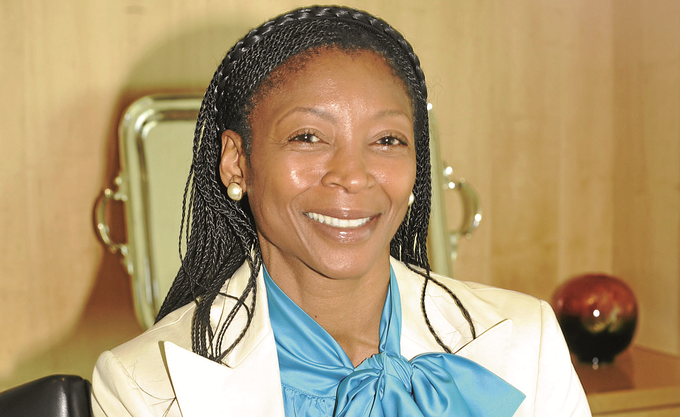
By Nonkululeko Nyembezi-Heita
The African growth story is no longer a fairy tale. Over the past decade multinational companies, private equity funds and infrastructure development programmes have channelled capital to the continent as they began to realise the true potential it holds, but like most emerging market regions, Africa is no longer the ‘flavour of the month’.
Yet those of us who run Africa’s Capital Markets have to admit that only a small portion of global investment flows to this region come through our platforms. Although there are 29 stock exchanges located across 27 African countries, many still do not offer enough liquidity to attract meaningful levels of investment.
This is a difficult obstacle to overcome, as a lack of liquidity can only be addressed through higher levels of investment on our exchanges.
Many of our exchanges also still need to realise the importance of providing accurate and timely market information. This lack of information makes investors much more hesitant about investing on the continent and perpetuates the view that Africa is still the dark continent.
More liquidity, better access to information and enabling regulation will generate more interest from foreign market participants because as a continent we are competing with other emerging and frontier markets for both local and international investment flows.
The role of African stock exchanges is far greater than providing foreign investors with a potential entry point to the continent. Our markets provide platforms for companies to raise capital to fund their growth and expansion and can therefore play a vital role in fostering and sustaining economic growth.
However, for Capital Markets to truly make a meaningful difference to economic growth and development we must be truly inclusive in our approach. Our markets cannot be accessible to only large companies.
While big companies make important contributions to an economy, they do not represent it in its entirety. Share price trends of these Groups often do not truly reflect the economic reality that most Africans experience and in which they are trying to build their businesses.
The JSE’s answer to this challenge has been to move down the continuum of funding to also provide capital-raising platforms for small and medium-sized businesses which form the true engine driving many developing economies.
In 2003, the JSE created the AltX platform to enable companies to grow within the framework of a highly reputable market place, while also providing investors with exposure to these businesses in a regulated environment.
At present, there are 61 companies listed on the AltX, with a total market capitalisation of R39.19 billion as at 21 November 2016. Since the inception of the AltX 13 years ago, more than 29 companies have migrated to the JSE’s Main Board, demonstrating that the AltX is a catalyst for growth.
We are also working on a project to assist even smaller companies than those on our AltX board to raise capital. This will provide these companies with the opportunity to expand their roles in the real economy.
The development of platforms for small to medium-sized businesses to list across African capital markets will also allow private equity investors to consider listing as an effective way to realising the return on their investments.
This means that the development of stock exchanges will not only encourage further investment through the exchanges themselves, but also in the broader real economy. The listing process can also contribute to a company’s development through encouraging greater transparency and stronger corporate governance.
How to bring stock exchanges and smaller businesses together will be one of the key topics discussed this month at the Annual African Securities Exchanges Association (ASEA) Conference and General Meeting.
The theme of this year’s conference, taking place in Kigali Rwanda, is The Road to 2030: Making the African Capital Markets Relevant to the real economy. This key annual event in Africa’s Capital Markets sector enables markets to discuss how African securities exchanges can become more effective so that they can play a bigger role in mobilising capital for African businesses to drive our economies onto the global economic stage.
We cannot deny that Africa is currently experiencing uneven levels of economic growth, but there are some markets that are showing consistently good growth which we need to take advantage of. The world is facing challenges on multiple fronts as the U.S. Federal Reserve continues its monetary tightening, Europe is struggling to manage migrant and debt crisis, China’s financial stability is in doubt – all weighing on emerging economies.
Most of these influences fall outside our control. But what is left within Africa’s control is the ability to create an environment in which small and medium-sized businesses can thrive. The shift in focus from large corporates to smaller enterprises is but a natural progression in the evolution of capital markets as these are the businesses which are creating jobs, fostering innovation and pushing the African economy forward despite stronger headwinds like lower global growth and depressed commodity prices.
Nonkululeko Nyembezi-Heita is the Chairman, Johannesburg Stock Exchange (JSE)
Economy
NASD Exchange Falls 0.22% After Investors Lose N4.8bn
By Adedapo Adesanya
The NASD Over-the-Counter (OTC) Securities Exchange weakened by 0.22 per cent on Tuesday, April 28, with the market capitalisation down by N4.8 billion to N2.420 trillion from N2.425 trillion, and the NASD Unlisted Security Index (NSI) down by 9.01 points to 4,044.96 points from 4,053.97 points.
During the session, the price of Central Securities Clearing System (CSCS) Plc went down by N1.82 to N767.05 per share from N78.87 per share, while FrieslandCampina Wamco Nigeria Plc appreciated by N1.90 to N100.00 per unit from N98.10 per unit.
According to data, the value of trades increased by 265.7 per cent to N27.1 million from N7.4 million units, and the volume of transactions surged by 305.2 per cent to 1.3 million units from 319,831 units, while the number of deals decreased by 6.9 per cent to 27 deals from 29 deals.
Great Nigeria Insurance (GNI) Plc remained the most traded stock by value on a year-to-date basis, with the sale of 3.4 billion units valued at N8.4 billion, followed by CSCS Plc with 59.8 million units exchanged for N4.0 billion, and Okitipupa Plc with 27.8 million units traded for N1.9 billion.
GNI Plc also finished as the most traded stock by volume on a year-to-date basis, with a turnover of 3.4 billion units worth N8.4 billion, trailed by Resourcery Plc with 1.1 billion units transacted for N415.7 million, and Infrastructure Guarantee Credit Plc with 400 million units sold for N1.2 billion.
Economy
Naira Crashes to N1,380/$ at Official Market, N1,390/$1 at Black Market
By Adedapo Adesanya
Pressure is beginning to mount on the Nigerian Naira in the different segments of the foreign exchange (FX) market despite an oil windfall triggered by the Middle East crisis.
On Monday, April 27, the domestic currency further weakened against the United States Dollar in the Nigerian Autonomous Foreign Exchange Market (NAFEX) by N16.47 or 1.2 per cent to N1,380.71/$1 from the previous day’s N1,364.24/$1.
It was not different against the Pound Sterling in the same market window, as it lost N16.04 to trade at N1,863.76/£1 versus Monday’s closing rate of N1,847.72/£1, and against the Euro, it slipped by N12.72 to close at N1,615.01/€1 versus N1,602.29/€1.
The Naira also depreciated against the Dollar at the black market yesterday by N5 to quote at N1,390/$1 compared with the previous price of N1,385, and at the GTBank forex counter, it further crashed by N9 to settle at N1,379/$1 compared with the preceding session’s N1,370/$1.
The continued decline of the Naira comes as traders increasingly seek other safe-haven currencies amid continued global disruptions.
The benefit awash in the global market is making foreign portfolio investors stay short in Nigerian markets. Despite this, the daily FX publication released showed that interbank turnover rose to $98.829 million across 78 deals, up from $76.65 million.
Meanwhile, the cryptocurrency market remained cautious, with Bitcoin (BTC) trading at $77,216.66 despite surging oil prices and geopolitical tensions over a potential extended US naval blockade of the Strait of Hormuz.
Analysts say the supply overhang has finally dried up, and the sellers who were spooked by macro shifts or quantum fears have already exited, leaving the market much thinner on the sell-side.
Investors will await decisions made by central banks this week. The US Federal Reserve will announce its rate decision later on Wednesday, while the European Central Bank (ECB) follows on Thursday.
Ethereum (ETH) gained 1.5 per cent to trade at $2,324.59, Dogecoin (DOGE) chalked up 1.4 per cent to sell for $0.1016, Solana (SOL) appreciated by 0.6 per cent to $84.85, Cardano (ADA) grew by 0.5 per cent to $0.2483, and Binance Coin (BNB) advanced by 0.2 per cent to $627.15.
However, TRON (TRX) depreciated by 0.6 per cent to $0.3224, and Ripple (XRP) lost 0.03 per cent to sell at $1.39, while the US Dollar Tether (USDT) and the US Dollar Coin (USDC) were unchanged at $1.00 each.
Economy
Oil up 3% as Hormuz Disruption Outweighs UAE OPEC Exit
By Adedapo Adesanya
Oil was up by nearly 3 per cent on Tuesday as persistent worries about supply constraints from the closed Strait of Hormuz continued, with Brent futures for June rising by $3.03 or 2.8 per cent to $111.26 a barrel, and the US West Texas Intermediate (WTI) crude futures growing by $3.56 or 3.7 per cent to $99.93 a barrel.
An earlier round of negotiations between the United States and Iran collapsed last week after face-to-face talks failed.
Ship-tracking data showed significant disruptions in the region, with six Iranian oil tankers forced to turn back due to the US blockade, but some traffic is still moving.
Prices trimmed some of the advances after the United Arab Emirates (UAE), the fourth-largest producer in the Organisation of the Petroleum Exporting Countries (OPEC), said on Tuesday it would exit the group on this Friday, May 1, 2026.
This dealt a blow to the oil-exporting group and its de facto leader, Saudi Arabia.
The UAE could quickly add between 1 million and 1.5 million barrels per day of output. However, with the Strait of Hormuz effectively closed, analysts said that there’s nowhere for that supply to go.
The UAE joined OPEC in 1967, but tension with Saudi Arabia over production quotas has been building for years.
Under the OPEC+ deal, the country has been held to roughly 3 million barrels per day while sitting on capacity above 4 million. It has been pushing toward 5 million barrels per day by 2027, and that target is hard to achieve with quotas built around someone else’s view of the market.
The war in Yemen broke whatever was left of diplomatic patience.
President Donald Trump said he was unhappy with the latest Iranian proposal to end the war. The proposal would avoid addressing the nuclear programme until hostilities cease and Gulf shipping disputes are resolved.
The Idemitsu Maru, a Panama-flagged tanker carrying 2 million barrels of Saudi oil, and an LNG tanker managed by the Abu Dhabi National Oil Company (ADNOC) crossed the Strait on Tuesday, shipping data showed.
Vortexa data showed that the amount of crude oil held around the world on tankers that have been stationary for at least seven days rose to 153.11 million barrels as of April 24.
The American Petroleum Institute (API) estimated that crude oil inventories in the United States fell by 1.79 million barrels in the week ending April 24. The official data from the US Energy Information Administration (EIA) will be released later on Wednesday.
-
Feature/OPED6 years agoDavos was Different this year
-
Travel/Tourism10 years ago
Lagos Seals Western Lodge Hotel In Ikorodu
-
Showbiz3 years agoEstranged Lover Releases Videos of Empress Njamah Bathing
-
Banking8 years agoSort Codes of GTBank Branches in Nigeria
-
Economy3 years agoSubsidy Removal: CNG at N130 Per Litre Cheaper Than Petrol—IPMAN
-
Banking3 years agoSort Codes of UBA Branches in Nigeria
-
Banking3 years agoFirst Bank Announces Planned Downtime
-
Sports3 years agoHighest Paid Nigerian Footballer – How Much Do Nigerian Footballers Earn