Connect with us

Economy

As MPC Meeting Begins Today, IMF Tells CBN to Raise Rate

Published

on

Monetary Policy Rate

By Adedapo Adesanya

The International Monetary Fund (IMF), via its mission to Nigeria, has called on the Central Bank of Nigeria (CBN) to increase the monetary policy rate (MPR) from the current 15.5 per cent to fight the rising inflation.

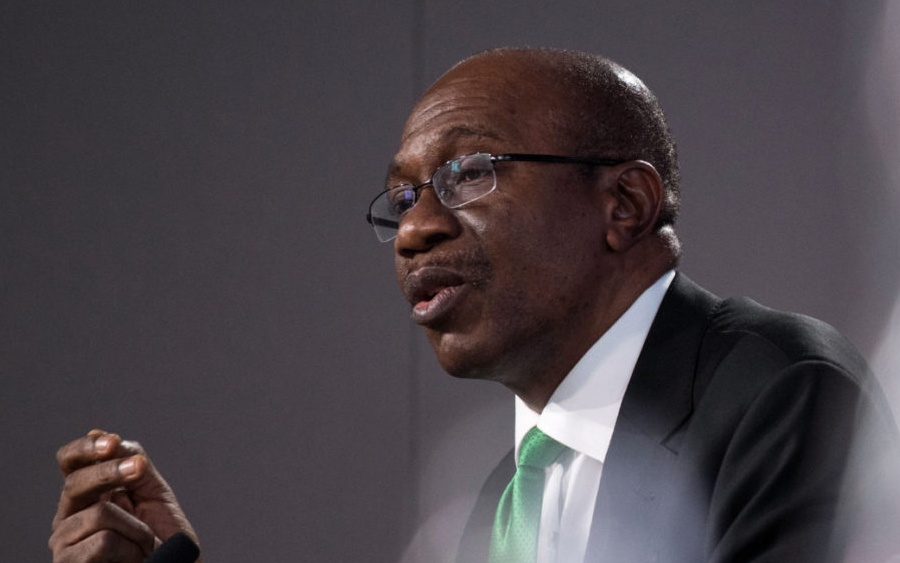
It called on the nation’s monetary policy authority to “stand ready to further increase the MPR to send a tightening signal” at the Monetary Policy Committee (MPC) meeting, which kicked off on Monday, November 21, with the outcome expected to be given on Tuesday, November 22, 2022, by the Governor of the CBN, Mr Godwin Emefiele.

Nigeria’s inflation topped a fresh 17-year high of 21.09 per cent in October on the back of disruption in the supply of food, an increase in the cost of importation due to the persistent currency depreciation leading to a rise in the cost of production.

The mission welcomed measures taken by CBN to tighten liquidity and curb inflationary pressures by increasing the MPR by a cumulative 400 basis points and raising the cash reserve ratio (CRR) at its September 2022 meeting.

It, however, said overall conditions remain accommodative since the MPR is below inflation. It also lauded the financing provided to the budget and the CBN’s directed lending schemes continue to drive strong monetary expansion.

The global lender said a decisive and effective monetary policy tightening is a priority to prevent risks of de-anchoring of inflation expectations.

It noted that given the multiplicity of monetary policy tools, market segmentation and weak interest rate transmission, some measures need to be taken to tighten the monetary policy stance effectively.

It also called on the Nigerian government to “fully sterilize the impact of CBN’s financing of fiscal deficits on the money supply.”

The IMF tasked Nigeria to continue phasing out CBN’s credit intervention programs, which expanded rapidly during the pandemic, to support the economy.

The mission welcomed progress in the securitization of the CBN’s existing stock of overdrafts and recommended speedy finalization.

“Going forward, it would be important to limit reliance on CBN overdrafts for fiscal financing to the statutory limit of 5 per cent of the previous year’s revenues by pursuing fiscal consolidation, better budgetary planning and resorting to supplementary budgets in case of financing shortfalls,” the statement recommended.

The mission also reiterated its previous recommendations to modernize the 2007 CBN ACT to establish price stability as its primary objective. It also recommended enhancing transparency through the timely publishing of audited financial statements.


Adedapo Adesanya is a journalist, polymath, and connoisseur of everything art. When he is not writing, he has his nose buried in one of the many books or articles he has bookmarked or simply listening to good music with a bottle of beer or wine. He supports the greatest club in the world, Manchester United F.C.

2 Comments

Leave a Reply

Your email address will not be published. Required fields are marked *

Economy

Dangote Offers East African Governments 30% Stake in Proposed Refinery

Published

on

Dangote refinery petrol

By Adedapo Adesanya

African business mogul, Mr Aliko Dangote, has offered some East African countries a combined 30 per cent equity stake in his proposed oil refinery in Kenya, potentially giving regional investors access to about $1.5 billion worth of the project.

Mr David Ndii, economic adviser to Kenyan President William Ruto, disclosed this on Thursday at a capital markets forum in Nairobi.

Mr Ndii said Kenya would take a 10 per cent stake in the proposed refinery, valued at about $500 million, while Ethiopia and Rwanda had also expressed interest in participating in the project.

“The total for the region is about $1.5 billion,” Mr Ndii said, adding that Mr Dangote was prepared to support the project if some participating countries were unable to commit as crude off-takers.

The proposed refinery is expected to be developed in Lamu, a coastal town in southeastern Kenya, after Dangote initially proposed building the facility in Tanga, Tanzania.

Business Post had reported that the decision to relocate the project to Kenya was based on commercial and technical considerations.

The planned refinery would mark an expansion of Dangote’s refining operations beyond Nigeria and provide East African countries with direct equity participation in a major energy infrastructure project, alongside potential access to refined petroleum products.

The project was initially announced for Tanzania, where Dangote had proposed building a refinery in Tanga similar to his 700,000-barrel-per-day facility in Lagos.

Mr Dangote announced the Tanzania plan during a panel session at the Africa Finance Corporation summit in Nairobi, where he appeared alongside President Ruto and Ugandan President Yoweri Museveni.

The project was subsequently shifted from Tanga to Lamu, with Dangote citing commercial and technical considerations for the change. Also, the Tanzanian government said it wasn’t consulted before the decision was announced.

The anticipated refinery and associated infrastructure on Kenya’s coast could cost about $17 billion and take approximately five years to complete.

The proposed 30 per cent regional stake is expected to provide East African investors with significant participation in the development of the refinery while broadening Dangote’s refining footprint across the continent. It will also help shield against shocks like the disruptions in the Middle East.

Continue Reading

Economy

BudgIT Urges FG to Address Fiscal Transparency Gaps

Published

on

BudgIT 40-year bonds

By Adedapo Adesanya

Civic-tech organisation, BudgIT, has called on the federal government to urgently address persistent weaknesses in budget execution, public auditing and procurement disclosure ahead of the 2027 budget cycle.

BudgIT, in a reaction to the United States Department of State’s 2026 Fiscal Transparency Report, said the assessment exposed significant gaps in Nigeria’s management and disclosure of public finances and should serve as a catalyst for comprehensive reforms ahead of the 2027 budget cycle.

The American report, which assessed Nigeria’s fiscal transparency practices between January 1 and December 31, 2025, placed the country among 67 of the 140 governments and entities reviewed that failed to meet minimum fiscal transparency requirements. Of the 67 governments that failed to meet the requirements, only 14 were assessed to have made significant progress in addressing identified deficiencies. Nigeria was not among those countries.

BudgIT said although the Fiscal Transparency Report focused specifically on fiscal disclosure and should not be regarded as a comprehensive assessment of all public financial management reforms being undertaken in Nigeria, its findings raised serious concerns about the credibility and accessibility of government financial information.

According to the organisation, the assessment reinforced longstanding concerns surrounding the quality of budget implementation reports, the independence and effectiveness of Nigeria’s audit institutions and the availability of public procurement information.

BudgIT said these shortcomings went beyond technical issues because they directly affected citizens’ ability to understand how government raises, allocates and spends public resources.

One of the major concerns identified in the US assessment was the inability of Nigeria’s budget documents to provide a substantially complete picture of government revenues and expenditures.

The report also found that actual government revenues and expenditures did not reasonably correspond with the enacted budget, raising questions about the credibility of the budget as a framework for fiscal planning and accountability.

BudgIT argued that a budget should not merely be an annual statement of government intentions but should provide a credible framework through which government communicates its fiscal priorities and commits public resources.

The organisation expressed particular concern that, despite the federal government’s continued publication of budget documents, actual budget implementation reporting remains inadequate.

BudgIT noted that publishing approved budget figures was not enough, stressing that the government must provide timely, consolidated and comprehensive information on actual revenue collection and expenditure.

It also pointed to Nigeria’s adoption of the International Public Sector Accounting Standards (IPSAS) since 2016, arguing that the principles of transparency and accountability embedded in internationally accepted public-sector financial reporting should be reflected in the quality, timeliness and completeness of Nigeria’s fiscal reports.

The organisation also highlighted weaknesses in the country’s audit architecture. The US assessment found that the Office of the Auditor-General for the Federation does not meet international standards of independence and has not published substantive audit reports as required.

BudgIT said an effective supreme audit institution is essential to ensuring accountability because it independently assesses how public resources have been utilised and whether government spending complies with approved appropriations and applicable laws.

It warned that without adequate institutional independence and the timely publication of audit findings, the National Assembly, civil society organisations and citizens would be deprived of an important mechanism for scrutinising public expenditure.

BudgIT therefore called for the completion of long-overdue reforms to Nigeria’s audit framework, stressing that the continued reliance on an outdated legal framework for public auditing constrains the Auditor-General’s ability to operate with the independence, authority and institutional capacity required in a modern public financial management system.

The US report also found that accessible information on public procurement contracts was not sufficiently available to the public.

BudgIT said citizens should be able to follow the procurement process from the publication of procurement opportunities through bidding, contract award, execution and completion.

Commenting on the report, BudgIT’s Head of Research and Policy Advisory, Mrs Adejoke Akinbode, said the federal government should use Nigeria’s second consecutive failure to meet the US minimum fiscal transparency requirements as an opportunity to undertake a comprehensive review of the country’s fiscal disclosure architecture ahead of the 2027 budget cycle.

Continue Reading

Economy

Again, CSCS Crashes NASD Index by 1.11%

Published

on

NASD Unlisted Securities Index

By Adedapo Adesanya

The Central Securities Clearing System (CSCS) Plc again pulled down the NASD Over-the-Counter (OTC) Securities Exchange on Thursday, August 20, by 1.11 per cent.

The securities depository company further lost N5.93 during the trading session to close at N82.20 per share versus the midweek closing price of N88.12 per share.

As a result, the NASD Security Index (NSI) slid by 48.25 points to 4,284.84 points from 4,333.09 points, and trimmed the bourse’s market capitalisation by N28.96 billion to N2.571 trillion from N2.60 trillion.

During the trading day, the price of Afriland Properties Plc went up by 50 Kobo to N20.50 per unit from N20.00 per unit.

Yesterday, the volume of securities transacted by investors slumped by 85.1 per cent to 112,218 units from 747,429 units, the value of securities fell by 95.2 per cent to 4.6 million from 9.4 million, and the number of deals decreased by 40.5 per cent to 25 deals from 42 deals.

Great Nigeria Insurance (GNI) Plc remained the most active stock by value on a year-to-date basis, with 3.4 billion units valued at N8.4 billion, trailed by Infrastructure Credit Guarantee (Infracredit) Plc with 2.3 billion units exchanged for N6.5 billion, and CSCS Plc with 79.9 million units worth N5.8 billion.

GNI Plc also finished the session as the most traded stock by volume on a year-to-date basis, with 3.4 billion units transacted for N8.4 billion, followed by Infracredit Plc with 2.3 billion units traded for N6.5 billion, and Resourcery Plc with 1.1 billion units sold for N415.7 million.

Continue Reading