

Economy
Before You Fall Into Recharge Card Business Scam, Read This


By Dipo Olowookere
I have read several times about some Nigerians lamenting being scammed by fraudsters who claim they can go into recharge business by selling in bulk with as low as N10,000.
Each time I read or hear about victims crying about being scammed, I say to myself that they fell for it because they were ignorant and failed to do at least a bit of research before parting away with their hard-earned money.
The purpose of this article is to educate you on some basics of the recharge card business so that no one can fool you next time about it.
It is important I state that recharge card business is capital intensive, especially if you want to make huge profit.
First, none of the GSM network provider sells recharge cards in bulk directly to individuals or small scale sellers. They sell their recharge card pins directly to dealers, who have registered with them and must have millions of Naira to invest into the business.
In some cases, if not most, banks stand in as guarantor for these dealers because dealers are given targets to meet each month. Some networks, like MTN, give their dealers N1 billion turnover per month.
Now, when dealers buy these recharge card pins, which are then printed in cards and papers, they sell to those called the sub-dealers. Dealers also sell the recharge card pins to sub-dealers as Virtual Top Up (VTU).
In some cases, some of these sub-dealers buy recharge cards worth N10-50 million daily from dealers to resell to those who hawk the cards to retailers (those who sell the product under umbrellas by the roadsides, shops and others).
Recharge Card Prices
The prices of recharge cards are influenced by demand and supply. When there is a huge demand for a network’s recharge card, the price goes up because it is scarce in the market. However, when there is less demand for it, the price drops.
In most cases, the prices of recharge cards go up at the beginning of the month and drops at the end of the month. This is because at the end of the month, most dealers are after meeting their targets and would sell at a lower rate in order to get the commission network providers give to dealers who meet their targets.
But MTN, which is the market leader, has somehow stabilised its price at the market unlike in the past.
From my investigation, MTN sells its N100 recharge card to dealers at N96 and it expects them to sell to sub-dealers and retailers at N96.50k. It came up with this policy so as to stop the sale of its cards above the face value like it happened in the past where the N100 voucher was sold for N110.
For Airtel, the price ranges from N94.50k to N95.50k, depending on who is selling it and the volume being purchased.
For Etisalat, the price ranges from N94 to N95, while Glo goes for N90 to N92.
In recharge card business, the prices of other card denominations are calculated using the price of the N100 cards.
If anyone approaches you to say he can get you recharge cards of any network at rates about N3-5 below the above prices, you should raise a red flag.
Also, if anyone says you can start printing recharge cards as low as N10,000, you should raise an eyebrow because no network sells their recharge card pins to sub-dealers or retailers, but dealers alone, who are like partners in the business with them. In fact, the network providers call their dealers Trade Partners.
If you require further information or clarification, please feel free to use the comment box.



By Aduragbemi Omiyale
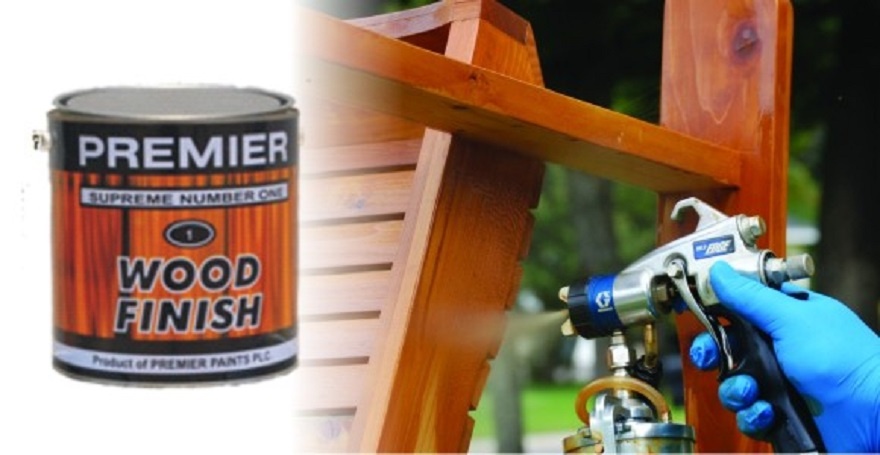
One of the paint makers in Nigeria, Premier Paints Plc, is currently in talks with a new investor, Xenergi Limited, for the purchase of 51 per cent stake in the company.
Xenergi Limited intends to acquire shares of Clover Global Resources Limited and TGHL Capital Limited in the organisation.
Business Post gathered that the new investor will buy 39.02 per cent from Clover Global Resources Limited and 15.20 per cent from TGHL Capital Limited.
The deal, according to a regulatory notice issued on Tuesday on the Nigerian Exchange (NGX) Limited, will involve about 63 million shares of Premier Paints.
At the current share price of the paint producer, this should be about N630 million as it closed at N10.00 per unit on NGX on December 16, 2025.
“Subject to obtaining required regulatory approvals, the transaction is expected to close before January 31, 2026.
“The company will continue to inform the public of the progress of the transaction,” the disclosure signed by the company secretary, Alozie Nwokoro, said.

By Adedapo Adesanya
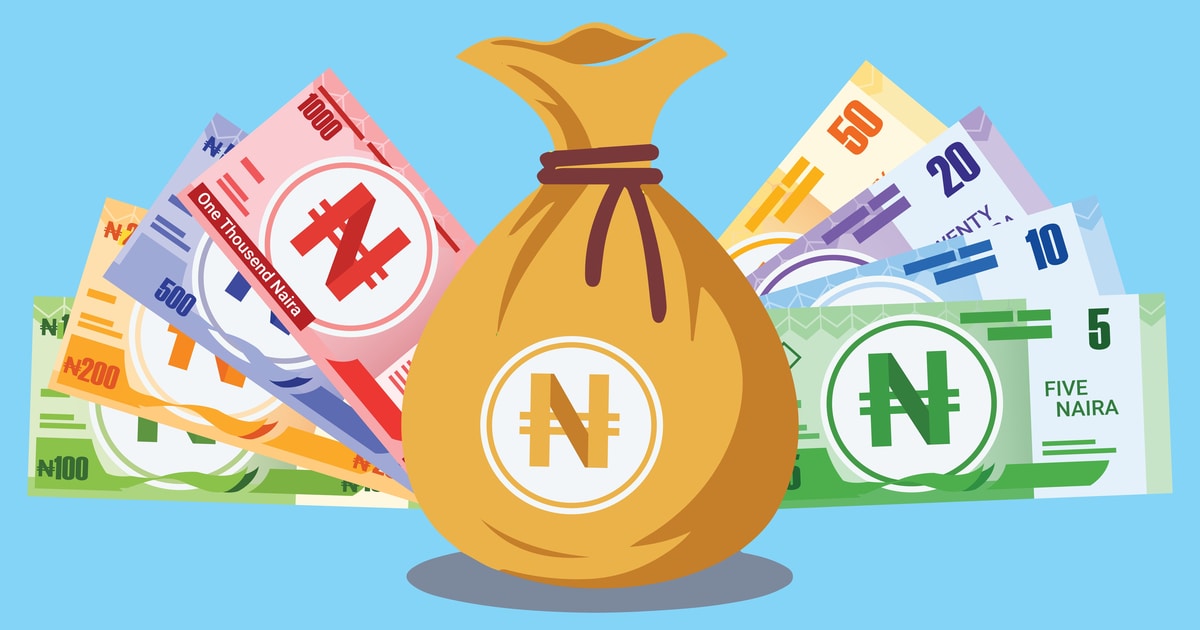
The Naira was flat against the US Dollar in the Nigerian Autonomous Foreign Exchange Market (NAFEX) on Tuesday, December 16, retaining the previous closing value of N1,451.82/$1.
In the same vein, the local currency saw no movement against the Pound Sterling and the Euro in the spot market during the session at N1,943.98/£1 and N1,705.74/€1, respectively.
Also, the Nigerian Naira remained unchanged in the black market yesterday at N1,475/$1 and was N1,460/$1 at the GTBank forex counter.
The Central Bank of Nigeria (CBN) has strengthened US Dollar supply with $250 million to authorised dealer banks at the official window cumulatively as foreign portfolio investors, exporters and non-bank corporate supply dripped.
The spread between official and other non-regulated markets decreased to N30.59$/1 from N44.57/$1, from the previous week, research subsidiary of Coronation Merchant Bank Limited said in a report.
FX analysts said foreign exchange inflows through the Nigerian Foreign Exchange Market decreased to $716.3 million from $844.70 million in the previous week , a 15 per cent drop in a week.
Foreign portfolio investors accounted for the highest share of inflows at 32.98 per cent, followed by exporters at 30.84 per cent, the CBN (17.36 per cent), Non-bank Corporates (16.94 per cent), others (0.72 per cent) and Individuals (0.63 per cent).
On Monday, Nigeria’s headline inflation rate eased to 14.45 per cent in November 2025, down from 16.05 per cent recorded in October, according to the latest Consumer Price Index (CPI) report released by the National Bureau of Statistics (NBS), representing a decrease of 1.6 percentage points month-on-month and marks a significant moderation compared to the same period last year.
As for the cryptocurrency market, there was some recoveries after overall capitalization falling below $3 trillion for the third time in a month. Large-cap assets, particularly those with Exchange Traded Fund (ETF) exposure, are experiencing selling pressure as institutional investors reassess risk.
Ripple (XRP) appreciated by 1.5 per cent to $1.92, Litecoin (LTC) expanded by 1.5 per cent to $78.91, Dogecoin (DOGE) rose by 0.8 per cent to $0.1308, Solana (SOL) went up by 0.4 per cent to $127.60, Binance Coin (BNB) grew by 0.3 per cent to $865.40, and Bitcoin (BTC) gained 0.2 per cent to sell at $86,735.17.
On the flip side, Cardano (ADA) depreciated by 1.0 per cent to $0.3802 and Ethereum (ETH) slumped by 0.4 per cent to $2,935.85, while the US Dollar Tether (USDT) and the US Dollar Coin (USDC) were flat at $1.00 each.
By Dipo Olowookere
A marginal 0.01 per cent rise was recorded by the Nigerian Exchange (NGX) Limited on Tuesday. This was different from the flattish mode of the market the previous day.
Investor sentiment remained bullish as Customs Street finished with 31 price gainers and 26 price losers, implying a positive market breadth index.
Aluminium Extrusion topped the gainers’ log after it improved its price by 10.00 per cent to N9.35, Guinness Nigeria appreciated by 9.98 per cent to N263.40, Multiverse expanded by 9.95 per cent to N12.15, MeCure Industries also soared by 9.95 per cent to N45.85, and Sovereign Trust Insurance advanced by 9.89 per cent to N4.11.
Conversely, Haldane McCall led the losers’ chart after it shed 9.93 per cent to settle at N3.72, Veritas Kapital lost 9.09 per cent to close at N1.60, LivingTrust Mortgage Bank also declined by 9.09 per cent to N3.50, and Linkage Assurance depreciated by 5.71 per cent to N1.65.
During the trading day, the All-Share Index (ASI) went up by 21.23 points to 149,459.11 points from the previous day’s 149,437.88 points and the market capitalisation increased by N14 billion to N95.281 trillion from N95.267 trillion.
Yesterday, traders transacted 1.0 billion equities for N21.8 billion in 23,701 deals compared with the 553.1 million equities valued at N13.3 billion traded in 28,907 deals on Monday, representing a decline in the number of deals by 18.01 per cent, and a surge in the trading volume and value by 80.80 per cent and 63.91 per cent apiece.
Access Holdings traded 385.8 million stocks worth N7.7 billion, Champion Breweries transacted 111.8 million shares valued at N817.8 million, Sterling Holdings exchanged 85.5 million equities for N589.9 million, FCMB sold 74.7 million shares valued at N791.5 million, and First Holdco transacted 51.9 million equities worth N1.8 billion.











-
 Feature/OPED6 years ago
Davos was Different this year
-
Travel/Tourism9 years ago
Lagos Seals Western Lodge Hotel In Ikorodu
-

 Showbiz3 years ago
Estranged Lover Releases Videos of Empress Njamah Bathing
-
 Banking7 years ago
Sort Codes of GTBank Branches in Nigeria
-

 Economy3 years ago
Subsidy Removal: CNG at N130 Per Litre Cheaper Than Petrol—IPMAN
-

 Banking3 years ago
First Bank Announces Planned Downtime
-

 Banking3 years ago
Sort Codes of UBA Branches in Nigeria
-

 Sports3 years ago
Highest Paid Nigerian Footballer – How Much Do Nigerian Footballers Earn