
Economy
Cash Scarcity: Former NBS Chief Yemi Kale Projects Reduction in Nigeria’s Q1 GDP

By Adedapo Adesanya
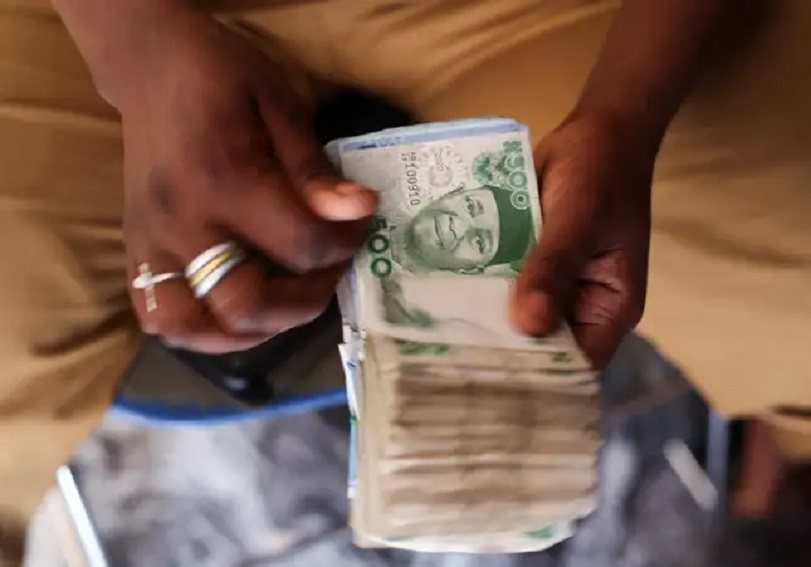
Nigeria’s former statistician general, Dr Yemi Kale, says the biting cash crunch in the country will lead to a reduction in the country’s nominal gross domestic product (GDP) numbers for the first quarter of 2023 by up to 15 trillion.
In a series of tweets, the new Partner/Chief Economist and Head of Research at KPMG Nigeria said this is because a large chunk of the country’s informal sector is cash dependent just as one-third of the formal sector is.
“I am estimating a reduction in Q1 2023 nominal GDP by between N10-15 trillion due to challenges sourcing cash in Q1 2023.
“This is because about 40% of Nigeria’s N198tn GDP in 2022 is informal of which about 90% is cash-based. Further 30% of formal sector GDP is cash-based. This means N106.9tn of total GDP is cash-based,” he wrote.
He added that “Of the 46 economic activities, agriculture, some manufacturing activities (especially food & beverage, textiles, apparels), trade, arts entertainment & recreation, accommodation & food services, road, and water transport and other services expected to be the most affected.”
Speaking on the currency redesign, he noted that there is nothing new or wrong about currency redesign or cashless policy, “if done for the right reasons [and] at the right time,” putting forth that every policy will have pros and cons while benefiting some but not others.
“There is no policy that won’t affect someone negatively. Or that won’t have costs. The idea is to do a cost-benefit analysis looking at the overall impact of any policy & how and when it is to be implemented across the economy and not just in one or a few areas and deciding if overall, the benefits outweigh the costs.
“If yes, then the costs are acceptable. Then a policy maker can or should introduce palliatives to make the costs bearable to those that will be negatively affected by its implementation,” he advised.
Dr Kale said the government, after its analysis then decides to implement the policy and it turns out to be more detrimental to the entire system than beneficial even if it benefits a particular area or sector,” then it clearly isn’t a good idea to go ahead.”
He also projected a marginal drop in inflation for the month of February from the current 21.82 per cent based lack of cash to chase more of the same amount of goods that contribute to the price rise.
In his words, “Inflation though might slow down not because of an increase in output of goods & services above available cash to spend but because of lack of cash to chase more of the less same amount of goods. The CPI is about 50% food of which several are perishable in the absence of storage.”
“Assuming there is a decline in inflation rate which I anticipate (though marginal) when [NBS] publishes their inflation report, we can then compare if the gains in inflation in Q1 2023 outweighs the expected decline in GDP &possibly other macro & socio-economic variables.”
He also painted a dour picture of the country’s already high unemployment reality.
“Recall employment is also tied to GDP growth- a slowdown in growth will have a negative impact on employment. On the other hand, both a reduction in inflation and growth in GDP can improve poverty rates.
“So it will be interesting to see which dominates overall economic wellbeing,” he concluded.
However, in the inflation data released today, the National Bureau of Statistics (NBS) said the average price of goods and services in Nigeria rose by 21.91 per cent last month.








By Adedapo Adesanya
The Centre for the Promotion of Private Enterprise (CPPE) has projected relative stability for the Naira exchange rate in the second quarter of the year, supported by improved foreign reserves and liquidity, but cautioned that volatility risks remain.
In its Q1 2026 Economic Review and Q2 Outlook: Macro Stability Gains Amid Persistent Cost Pressures and Rising Geopolitical Risks report released on Sunday, the think-tank’s chief executive, Mr Muda Yusuf, said exchange rate conditions also improved significantly as the Naira, which experienced substantial volatility during the reform transition period, stabilised within a relatively narrow band of about N1,340–N1,430 per Dollar in the official market during Q1 2026.
“This stability has helped to moderate imported inflation and restore a measure of business confidence. External reserves strengthened considerably, rising above $50 billion in early 2026,” he stated.
The group said that the Nigerian economy in the first quarter of 2026 reflected a blend of improving macroeconomic stability and persistent structural constraints.
It said that proof of a more stable macroeconomic environment is increasingly evident, underpinned by the cumulative gains from foreign exchange reforms, a sustained period of monetary tightening, and the gradual normalisation of key economic indicators.
However, it noted that these improvements continue to coexist with significant headwinds, adding that the country’s economic growth will remain positive in the next three months, but the pace of expansion may slow due to mounting downside risk
The report also warned of a growing risk of stagflation, as persistent cost pressures combine with fragile growth conditions. It added that rising political activities ahead of the 2027 general elections could weaken reform momentum and distract from economic management.
The CPPE noted that rising global crude oil prices, triggered by the ongoing Middle East conflict, pose a major threat to Nigeria’s fragile disinflation process. While higher oil prices could boost export earnings and government revenue, the think tank stressed that the domestic impact would be adverse.
“The cost pass-through effect poses a significant threat to the fragile disinflation process, potentially reversing recent gains in price stability, weakening real incomes, and further exacerbating the cost-of-living pressures facing households and businesses,” the organisation said.
Highlighting monetary policy concerns, CPPE said the current inflationary trend is largely driven by structural and cost-related factors rather than excess demand, observing that, “Additional monetary tightening would have limited effectiveness in addressing the underlying drivers of inflation, while potentially exacerbating constraints on investment, credit expansion, and overall economic growth.”
The CPPE further raised concerns over the implementation of the proposed N68 trillion 2026 budget, citing weak revenue performance, delays in capital releases, and growing political influence on spending priorities.
“As political pressures intensify, there is a risk of weakening fiscal discipline, with greater emphasis on recurrent and politically expedient spending,” the group stated, advising businesses to shift focus towards resilience and efficiency, urging firms to prioritise cost containment, adopt alternative energy sources, and strengthen foreign exchange risk management strategies.
It also called on policymakers to take urgent steps to safeguard economic stability and protect vulnerable groups.
“Policy priorities should therefore focus on consolidating macroeconomic stability, addressing structural bottlenecks, and implementing targeted measures to protect vulnerable populations,” it noted.
The CPPE concluded that while macroeconomic stability gains recorded in the first quarter of 2026 are notable, the outlook for the second quarter remains cautiously positive but increasingly uncertain due to geopolitical tensions, fiscal risks, and domestic political dynamics.
By Adedapo Adesanya
The Organisation of the Petroleum Exporting Countries and its allies (OPEC+) agreed to raise its oil output quotas by 206,000 barrels per day for May.
Eight members of OPEC+, comprising Saudi Arabia, Russia, Iraq, the UAE, Kuwait, Kazakhstan, Algeria, and Oman, agreed to the increase in May quota at a virtual meeting on Sunday, OPEC+ said in a statement.
However, the rise will be in theory, as its key members are unable to raise production due to the US-Israeli war with Iran, which has affected production.
The war has effectively shut the Strait of Hormuz, the world’s most important oil route, since the end of February and cut exports from some OPEC+ members, including Saudi Arabia, the UAE, Kuwait and Iraq. These are the only countries in the group which were able to significantly raise production even before the conflict began.
Besides the disruptions affecting Gulf members, others, such as Russia, are unable to increase output due to Western sanctions and damage to infrastructure inflicted during the war with Ukraine. For Nigeria, even as Africa’s largest producer, it has not been able to keep production quotas steady.
The OPEC+ quota increase of 206,000 barrels per day represents less than 2 per cent of the supply disrupted by the Hormuz closure, but it signals readiness to raise output once the waterway reopens.
Also meeting on Sunday, a separate OPEC+ panel called the Joint Ministerial Monitoring Committee (JMMC), expressed concern about attacks on energy assets, saying they were expensive and time-consuming to repair and so have an impact on supply.
May’s OPEC+ increase is the same as the eight members had agreed for April at their last meeting held on March 1, just as the war began to disrupt oil flows.
A month later, the largest oil supply disruption on record is estimated to have removed as many as 12 to 15 million barrels per day or up to 15 per cent of global supply.
The eight OPEC+ members have raised production quotas by about 2.9 million barrels per day from April 2025 through December 2025, before pausing increases for January to March 2026. The sub-group holds its next meeting on May 3.
Market analysts have warned that oil prices could hit $150 per barrel if the closure of the strait is prolonged and continues, due to damage to energy assets across the critical Middle East region.
As of the time of this report, Brent crude is trading at $108 per barrel, below the US West Texas Intermediate (WTI) crude at $109 per barrel.
By Adedapo Adesanya
Workers at Seplat Energy will resume work after a strike action that impacted production was called off by the Petroleum and Natural Gas Senior Staff Association of Nigeria (PENGASSAN) over the weekend, with the company issuing written commitments on pay rises.
Top employees began an indefinite strike last Friday as talks over a collective bargaining agreement and staff welfare issues broke down. The action came at a time when Nigeria is seeking to maximise production amid rising global oil prices.
According to Reuters, in an April 4 letter to the chief executive of Seplat Nigeria, Mr Roger Brown, PENGASSAN said it had directed members at the local energy firm to immediately suspend industrial action after negotiations resumed with the Nigerian National Petroleum Company (NNPC) Limited. Other less-skilled workers are covered by the Nigeria Labour Congress (NLC) and did not partake in the strike with PENGASSAN.
The union said talks on a 2026 collective bargaining agreement would continue, with the aim of concluding outstanding issues by April 13. However, according to the publication, the union did not disclose more details about its financial demands.
“We can confirm that the union has suspended its notice of industrial action to allow negotiations to conclude on outstanding items within an agreed framework,” Seplat spokesperson, Mr Ogechukwu Udeagha, said, adding that “operations are recommencing at our various locations.”
Seplat Energy’s group production averaged 131,506 barrels of oil equivalent per day in 2025, according to its latest audited results. That is the equivalent of around 7 per cent–9 per cent of Nigeria’s total liquids production.
The company expects output to rise to 155,000 barrels of oil equivalent per day, making any sustained disruption particularly sensitive for Nigeria’s supply outlook. This comes as it seeks to scale production while remaining a major supplier of gas to Nigeria’s domestic power market.
With the company’s output expected to rise, any prolonged disruption would have significantly impacted Nigeria’s oil supply and fiscal outlook.
-
 Feature/OPED6 years ago
Davos was Different this year
-
Travel/Tourism10 years ago
Lagos Seals Western Lodge Hotel In Ikorodu
-

 Showbiz3 years ago
Estranged Lover Releases Videos of Empress Njamah Bathing
-
 Banking8 years ago
Sort Codes of GTBank Branches in Nigeria
-

 Economy3 years ago
Subsidy Removal: CNG at N130 Per Litre Cheaper Than Petrol—IPMAN
-

 Banking3 years ago
Sort Codes of UBA Branches in Nigeria
-

 Banking3 years ago
First Bank Announces Planned Downtime
-

 Sports3 years ago
Highest Paid Nigerian Footballer – How Much Do Nigerian Footballers Earn