Economy
Kuda Urges Users to Upgrade App as Old Version Stops January 9
By Aduragbemi Omiyale
Customers of Kuda, a digital banking platform, have been advised to upgrade their mobile application to the latest version to enable them to enjoy the new features embedded in the app.
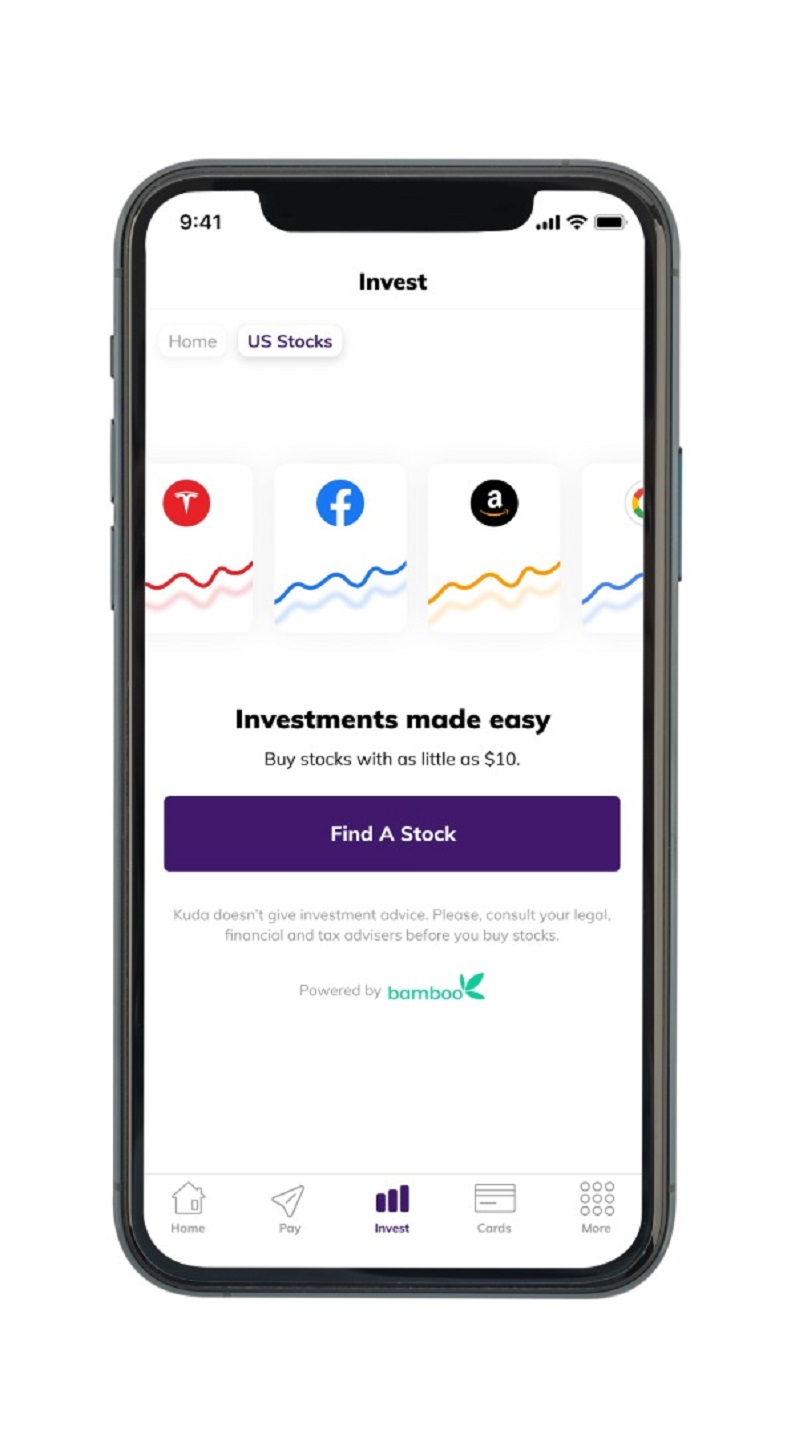
A statement from the company said the additions to the recently upgraded app make it easier for users to have more access to financial products and services, including investments and UK-to-Nigeria transfers.
It said the newly-launched money app for Africans in Nigeria and the UK offers convenient, easy access to frictionless and affordable financial services for users as transactions can be done faster and seamlessly.
To enjoy the new service, an existing account holder have to upgrade their Kuda App via the Play Store or App Store on their smartphone to download the new version of the Kuda App.
Thereafter, customers need to sign in to the app with their registered email address and their old Kuda password once and then create a new password. Once this is done, the old version of the Kuda App will be disabled automatically, and the upgraded version with the new features will be installed.
New customers can also onboard by downloading the Kuda App from Play Store or App Store and register by following the registration prompts on the App.
It is important to note that the old app will no longer be supported after January 9, 2023, so updating/downloading the new App is crucial to have continued access to the Kuda range of services.
Some of the new features on the Kuda App are currently not available in the older app.
The new version offers users investment opportunities as those in Nigeria can now buy stocks in some of the world’s most successful companies and rising startups at a fraction of the usual cost. In a few minutes, customers can take a step away from local inflation toward financial freedom.
In addition, the new Kuda app makes it easier to save rainy days with Pockets. This is because the upgraded app makes the Spend+Save, a popular feature of the Kuda app, automatically save a preset fraction of card payments.
Furthermore, the new app is a straightforward UK account, as with a valid government-issued UK ID and proof of a UK address, anyone in the UK can open a Kuda UK account to send money to any UK bank account (and receive money) directly.
Lastly, Kuda users in the UK can also send up to £10,000 to Nigeria daily at a transaction fee of just £3, and their Nigerian beneficiaries can receive the money as a transfer or pick up cash at one of several banks in Nigeria.
Economy
Bellwether Equities Shrink Nigerian Stock Market by 2.35%
By Dipo Olowookere
The Nigerian stock market crashed by 2.35 per cent on Wednesday after some bellwether equities performed badly as a result of profit-taking in them.
BUA Cement, Dangote Cement, and Geregu Power lost 10.00 per cent each to settle at N340.20, N963.00, and N917.40, respectively. Custodian Investment shrank by 9.97 per cent to N73.15, and Academy Press weakened by 9.88 per cent to N28.12.
On the flip side, SAHCO gained 9.92 per cent to trade at N171.20, International Energy Insurance grew by 9.66 per cent to N6.70, Tantalizers improved by 6.98 per cent to N4.60, Omatek added 5.70 per cent to close at N2.04, and AIICO Insurance increased by 5.19 per cent to N4.26.
At the close of business, the Nigerian Exchange (NGX) Limited recorded 10 appreciating stocks and 21 depreciating stocks.
Data from the activity log revealed that 488.1 million shares worth N20.9 billion exchanged hands in 46,239 deals at midweek compared with the 564.9 million shares valued at N39.4 billion traded in 49,230 deals on Tuesday, representing a fall in the trading volume, value, and number of deals by 13.60 per cent, 46.95 per cent, and 6.08 per cent, respectively.
On top of the activity chart yesterday was First Holdco, which sold 57.4 million equities for N3.5 billion. Chams transacted 42.3 million shares valued at N166.9 million, Access Holdings traded 36.1 million stocks worth N831.1 million, Linkage Assurance exchanged 32.0 million equities for N49.4 million, and Sterling Holdings traded 29.4 million shares valued at N224.8 million.
Business Post observed that the bears dominated Customs Street during the trading day, resulting in all the major sectors closing in the red.
The industrial goods space suffered the heaviest loss, 8.31 per cent, as a result of the sell-offs in cement stocks. The insurance counter shed 0.97 per cent, the banking segment declined by 0.71 per cent, the consumer goods landscape gave up 0.29 per cent, and the energy sector crumbled by 0.11 per cent.
Consequently, the All-Share Index (ASI) retreated by 5,668.65 points to 235,074.54 points from 240,743.19 points, and the market capitalisation moderated by N3.637 trillion to N150.847 trillion from N154.484 trillion.
Economy
Nigeria’s Inflation Outlook Improves as US-Iran Tensions Ease
By Adedapo Adesanya
Easing tensions between the US and Iran in the Middle East is expected to offer more respite to the Nigerian economy in the coming months.
Analysts at Comercio Partners noted in a report that there is an increased likelihood of a gradual moderation in inflation from July into the third quarter of 2026.
The analysts opined that the near-term outlook for inflation “has become less tilted to the upside” following the peace deal reached by the warring parties in the Middle East conflict and the sharp decline in global oil prices.
The report read in part: “May inflation data showed that price pressures remain sticky, but the near-term outlook has become less tilted to the upside following the peace deal and the sharp decline in global oil prices.
“Headline inflation rose to 15.93 per cent year-on-year from 15.69 per cent in April, while food inflation climbed to 16.96 per cent and core inflation increased to 16.82 per cent, suggesting that both food and underlying non-food price pressures remain elevated.
“However, the easing in crude oil prices below $85/bbl reduces the risk of a renewed energy-led inflation shock. This is important for Nigeria, where fuel, diesel, transport, logistics, and food distribution costs are key channels through which global energy prices feed into domestic inflation.
“If lower oil prices are sustained and domestic fuel prices remain stable or decline, pressure on transport and production costs should gradually ease.”
It noted that in June, inflation may remain sticky because the pass-through of lower oil prices to consumer prices is unlikely to be immediate.
It added that food prices remain elevated, and core inflation picked up month-on-month in May, indicating that underlying price pressures have not fully faded. According to the National Bureau of Statistics (NBS), the inflation rate on a month-on-month basis was 1.75 per cent, which was 0.39 per cent lower than the rate recorded in April 2026 (2.13 per cent).
“However, the balance of risks has shifted. The likelihood of another sharp energy-driven acceleration has reduced, while the probability of gradual moderation from July into Q3 has improved.”
The analysts said in the report that while the latest CPI data, “still supports a cautious tone across rates and fixed income, as annual headline, food, and core inflation all moved higher in May,” the decline in oil prices gives the Central Bank of Nigeria (CBN) “more room to maintain a wait-and-see stance rather than respond aggressively to external energy-price risks, provided domestic prices begin to reflect the easing in global crude markets.”
Economy
All On Invests $1m in Eja-Ice Nigeria Limited to Strengthen Cold-Chain Infrastructure in Off-Grid Markets
All On, an impact investing company focused on expanding access to renewable energy solutions in Nigeria, has announced a $1 million investment in Eja-Ice Nigeria Limited, a provider of solar-powered refrigeration and cold chain infrastructure.
The investment will support Eja-Ice’s manufacturing and operational scale-up as the company enters its next phase of growth. It is expected to enable the expansion of its cold-chain solutions and improve access to reliable cooling services for households, small businesses, and institutions operating in off-grid and weak-grid environments.
Access to dependable cold storage remains a significant constraint across Nigeria, particularly in coastal and rural communities where limited energy infrastructure contributes to post-harvest losses and income instability for small-scale agro-producers.
By delivering energy-efficient refrigeration systems, Eja-Ice is helping to address these challenges while supporting the preservation of perishable goods and strengthening local value chains.
“All On’s investment in Eja-Ice reflects our approach of supporting solutions that improve energy access while enhancing livelihoods, reducing costs, and enabling businesses to grow. Strengthening cold-chain infrastructure is an important step towards building more resilient local economies and expanding opportunities in underserved markets,” the chief executive of All On, Ms Caroline Eboumbou, commented on the investment.
Eja-Ice’s integrated cold-chain model allows for greater control over product design, operational efficiency, and service delivery, ensuring that its solutions are tailored to the needs of underserved markets. The company’s systems are already supporting micro enterprises, cooperatives, and community-level infrastructure, particularly in areas where reliable electricity remains limited.
Also commenting, the founder and chief executive of Eja-Ice Nigeria Limited, Mr Yusuf Bilesanmi, said, “This capital raise is a huge step forward in our vision to power homes and businesses with products designed, assembled, and optimised right here on the continent. It’s not just about access to electricity—it’s about dignity, productivity, and opportunity for the over 600 million people across sub-Saharan Africa who are still off-grid.”
Through this investment, All On continues to advance its mission of closing Nigeria’s energy access gap by supporting the renewable energy ecosystem and businesses that deliver sustainable, market-driven solutions.

-
Feature/OPED6 years agoDavos was Different this year
-
Travel/Tourism10 years ago
Lagos Seals Western Lodge Hotel In Ikorodu
-
Showbiz3 years agoEstranged Lover Releases Videos of Empress Njamah Bathing
-
Banking8 years agoSort Codes of GTBank Branches in Nigeria
-
Economy3 years agoSubsidy Removal: CNG at N130 Per Litre Cheaper Than Petrol—IPMAN
-
Banking3 years agoSort Codes of UBA Branches in Nigeria
-
Banking3 years agoFirst Bank Announces Planned Downtime
-
Sports3 years agoHighest Paid Nigerian Footballer – How Much Do Nigerian Footballers Earn