Connect with us

Economy

Lagos Considers Sale of N185bn Bond at Lower Coupon Rate

Published

on

Lagos N185bn bond sale

By Modupe Gbadeyanka

The Lagos State government is considering selling N185 billion bond to investors at the Nigerian debt capital market, the Permanent Secretary, Debt Management Office (DMO), Mr Olujimi Ige, has said.

This is coming a few days after the Commissioner for Finance, Mr Rabiu Olowo, said at an event in Abuja last week that the state government was planning to borrow N125 billion from bond sales as it did in January 2020, when it issued N100 billion 10-year bonds at 12.25 per cent coupon rate.

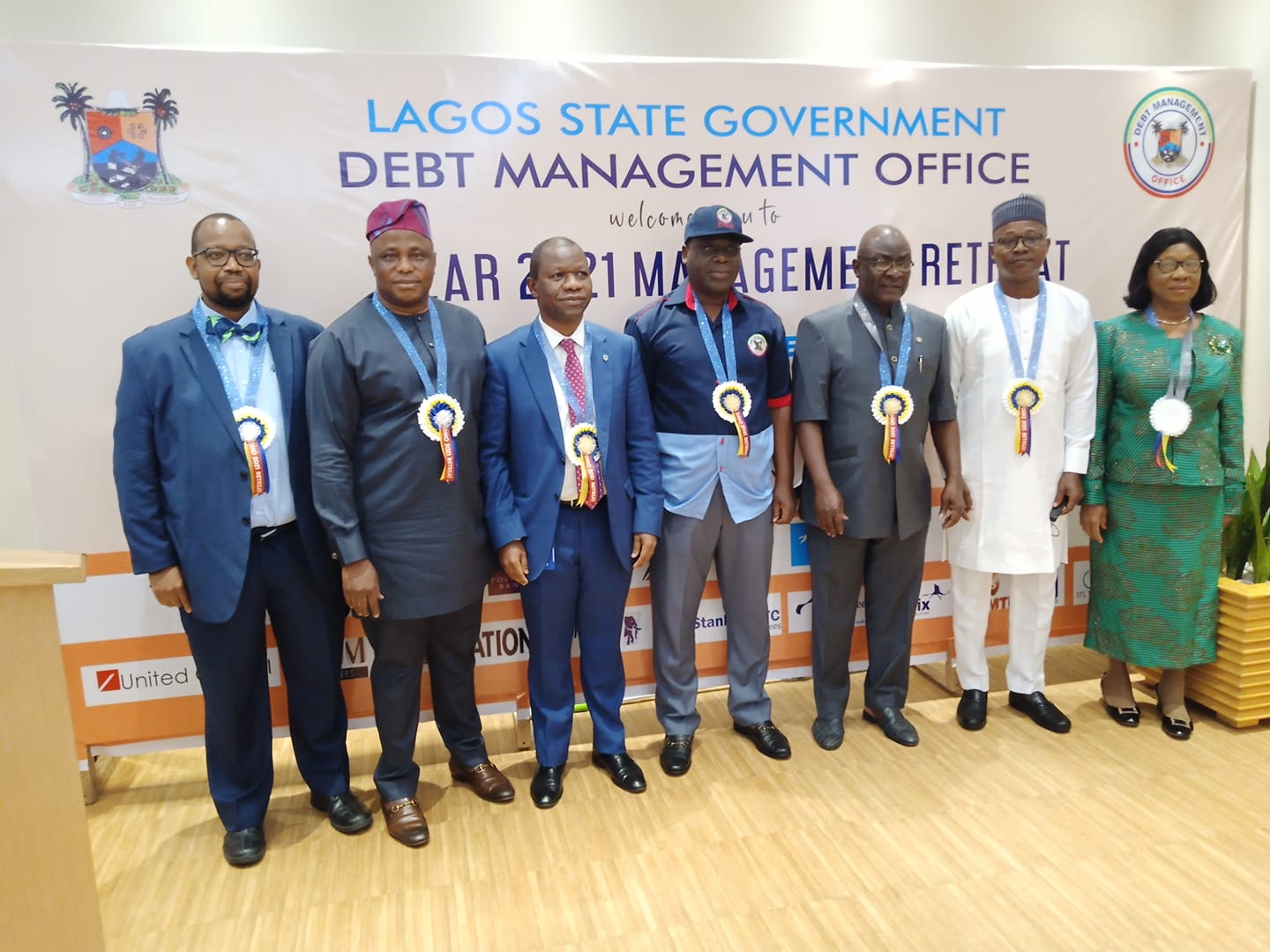
Speaking at the DMO retreat at the Lagos Sheraton Hotel, Ikeja Lagos, Mr Ige said subscription to the N100 billion bond of last year lent credence to the credibility of Lagos State with its listing on the FMDQ Exchange and Nigerian Exchange (NGX) Limited.

“This has also given greater visibility to the State, ensured transparency as well as increased the Bond Holder’s confidence.

“It has also enhanced the state’s ratings as Fitch, GCR and Agusto had accorded the state A+ and B+ respectively, and alerted investors to the value of our bond issuance programme,” he said at the retreat themed with the theme Sustaining Lagos State Debt Beyond Global Pandemic.

Mr Ige disclosed that the N185 billion bond would be used to fund various projects and replace the recalled bonds at a lower coupon rate.

On his part, the Commissioner for Finance, represented by the Accountant-General, Dr Abiodun Muritala, reiterated the resilience of Lagos State during the advent of COVID-19 and the #EndSARS protest, which did untold damage to infrastructure and lives.

He expressed the belief that the incidents have made the state stronger and more resolute in its quest to give Lagosians infrastructure and services, noting that the influx of people trooping into the city every hour has overstretched its resources and presents a daunting challenge, maintaining that the present administration was determined to confront all issues arising from the rural-urban migration.

He explained that the new bond would be used to further provide dividends of democracy to residents of the metropolis in fulfilment of the promise of Governor Babajide Sanwo-Olu.

In his presentation, the Head of Service (HoS), Mr Hakeem Muri-Okunola, who was represented by the Permanent Secretary, Public Service Office (PSO), Mr Samson Ajibade, said that public administrators must keep abreast of international best practices while taking full advantage of the latest technologies in the performance of their duties and responsibilities.

“In fact, the place of technology in today’s workplace has become absolutely non-negotiable. As such, to do otherwise would not be in our character,” he said.


Modupe Gbadeyanka is a fast-rising journalist with Business Post Nigeria. Her passion for journalism is amazing. She is willing to learn more with a view to becoming one of the best pen-pushers in Nigeria. Her role models are the duo of CNN's Richard Quest and Christiane Amanpour.

Click to comment

Leave a Reply

Your email address will not be published. Required fields are marked *

Economy

Asharami, LexOil, Eyre Energy, 28 Others Win NUPRC’s 2025 Licensing Round

Published

on

Asharami Energy

By Aduragbemi Omiyale

Thirty-one companies on Tuesday emerged as winners of the 2025 licensing round of the Nigerian Upstream Petroleum Regulatory Commission (NUPRC).

The energy firms competed to take control of 50 oil and gas blocks put on offer by the Nigerian government.

They were among the 143 companies that submitted 200 bids for the oil facilities drawn from diverse terrains, including the Niger Delta Onshore, Niger Delta Shallow Water, Niger Delta Deep Offshore, Benin Basin Onshore, Anambra Basin Onshore, Chad Basin Onshore and Benue Trough.

Business Post gathered that investors, however, were only interested in 37 out of the 50 oil blocks put up for sale by the NUPRC. This is the first time in Nigeria’s energy history that frontier basins would attract such a level of investor interest.

The organisations that won the bids include SSonic Petroleum Limited (PPL 2A29), CFP Pipeline and Flowlines (2A30), Dutchford E&P Limited (2A32), Attabanson Global Company Limited (2A33 and PPL 901), Rosem Energy Limited (2A38), Pivot-GIS Limited (2A39), Network E&P (2A40), Asharami (2A41), LexOil (2A42), BVOF (2A43), GupscoEnergy Limited (2A44 and 2A51), Saratoga (2A45), Volante (2A46), Concept-Reel Petroleum Services Limited (2A47 and 2A55), Clinton Oil Field (2A48 and 2A62) and Nuway Oaklane Limited (2A49).

Others are Ramec (2A50), Italia (2A53), Blueridge E&P (2A54), Up Energies Limited (2A56), AYM Shafa (2A57), Blackrock Holdings Limited (2A58), Funtay Integrated Business Limited (2A59), Riparian Development and Production Limited (2A60), Nikstallis (2A61 and PPL 900), Stardeep Petroleum (PPL 2010), Dakoda & U Limited (PPL308 and PPL 800), Southborne Oil and Gas Limited (PPL 902), Lanaka Petroleum (PPL 903) HighbanResources Limited (PPL 700), Eyre Energy Limited (PPL 801).

Continue Reading

Economy

Brent Tops $91 as Middle East Tensions Stoke Supply Fears

Published

on

brent crude oil

By Adedapo Adesanya

Oil prices rose roughly 2 per cent on Tuesday as investors reacted to mounting concerns that escalating hostilities between the United States and Iran and threats by Yemen’s Houthis to blockade Saudi Arabia could disrupt global energy supplies.

Brent futures rose $1.79 or 2.0 per cent to $91.01 a barrel, while the US West Texas Intermediate (WTI) crude gained $1.68 or ​2.0 per cent to settle at $84.91 per barrel.

US forces bombed targets in the south and west of Iran while Iran targeted American sites in Bahrain, ​Kuwait and Jordan and at least one tanker was hit in the Strait of Hormuz.

Supply concerns resurfaced with the Strait essentially closed again and tanker traffic at multi-month lows, to the level from before the ceasefire between the US and Iran, which appears to be over at the moment.

Prices could go much higher if the renewed conflict drags on for a few more months, as the world has now drained a lot of the buffers that had kept oil surges in check between March and May.

Drained strategic and commercial inventories in many key oil-consuming economies, including the US, are setting the stage for further oil price rallies during the busiest oil demand season.

The just-declared Houthi blockade on Saudi maritime shipping has already begun to witness ill-effects, as reports emerge of two oil tankers having made U-turns while initially en route toward the Suez Canal. It was reported that their crews received threats from Houthi militants in Yemen.

The two oil tankers, which loaded Saudi crude for China and India, made U-turns in the Red Sea and headed toward ‌the Suez following the warning from the militia.

Meanwhile, Kuwait’s power and desalination plants caught fire for a second straight day as US and Iran traded strikes for a tenth day.

As Russia’s war with Ukraine ​expands beyond Ukraine’s borders, the Caspian ​Pipeline Consortium (CPC) has stopped receiving ⁠oil from Kazakhstan after suspending loadings on Monday due to attacks on oil tankers at its Black Sea terminal.

Continue Reading

Economy

Senate Passes Bill to Rename NAICOM as Insurance Regulatory Commission

Published

on

Nigerian insurance industry

By Adedapo Adesanya

The Senate has passed a bill to repeal and re-enact the law establishing the National Insurance Commission (NAICOM), paving the way for the regulatory agency to be renamed the Insurance Regulatory Commission (IRC).

The legislation, titled the Insurance Regulatory Commission (Establishment) Bill, 2026, was passed after the Senate considered and adopted the report of its committee on banking, insurance and other financial institutions.

The Chairman of the committee, Mr Adetokunbo Abiru, the senator representing Lagos East, who presented the report, stated that the proposed legislation was necessary because the existing National Insurance Commission Act of 1997 had become outdated and no longer reflected the realities of Nigeria’s evolving insurance industry or global regulatory standards.

According to the Senate, the decision to change the Commission’s name was informed by the need to eliminate confusion associated with the existing designation and to better reflect the institution’s regulatory mandate within Nigeria’s insurance industry.

The bill also provides legal protection for the commission and its officers against adverse claims arising from the lawful execution of their statutory duties.

However, he noted that the commission’s enabling law had become obsolete, exposing significant regulatory gaps that required urgent legislative intervention.

‘The current National Insurance Commission Act 1997 is outdated and does not adequately address the emerging economic growth, needs and development of the insurance business,” the lawmaker said.

He explained that the new legislation seeks to strengthen the independence of the commission by empowering it to make regulatory decisions without undue influence in the country’s insurance sector.

According to him, the bill also enhances the commission’s authority to exchange information and collaborate with domestic and international regulatory bodies, issue regulations, guidelines, standards and directives on insurance-related matters, and intervene more effectively in financially distressed insurance companies to protect policyholders and preserve financial stability.

This marks yet another move to strengthen the country’s insurance sector following the enactment of the Nigerian Insurance Industry Reform Act (NIIRA) of 2025 and the industry-wide recapitalisation exercise, which will wrap up by July 31.

Continue Reading