Economy
Nigerian Stock Market Bleeds as NASS Saga Scares Investors
By Dipo Olowookere
The invasion of the National Assembly (NASS) by security operatives on Tuesday morning took its toll on the Nigerian stock market today.
The situation dominated the blogosphere and polity today as some lawmakers were prevented from gaining access into the complex because officials of the Department of State Services (DSS) mounted the main gate to the parliament.
Later in the day, the Director General of the DSS, Mr Lawal Daura, was fired by the Acting President, Professor Yemi Osinbajo, over the issue.
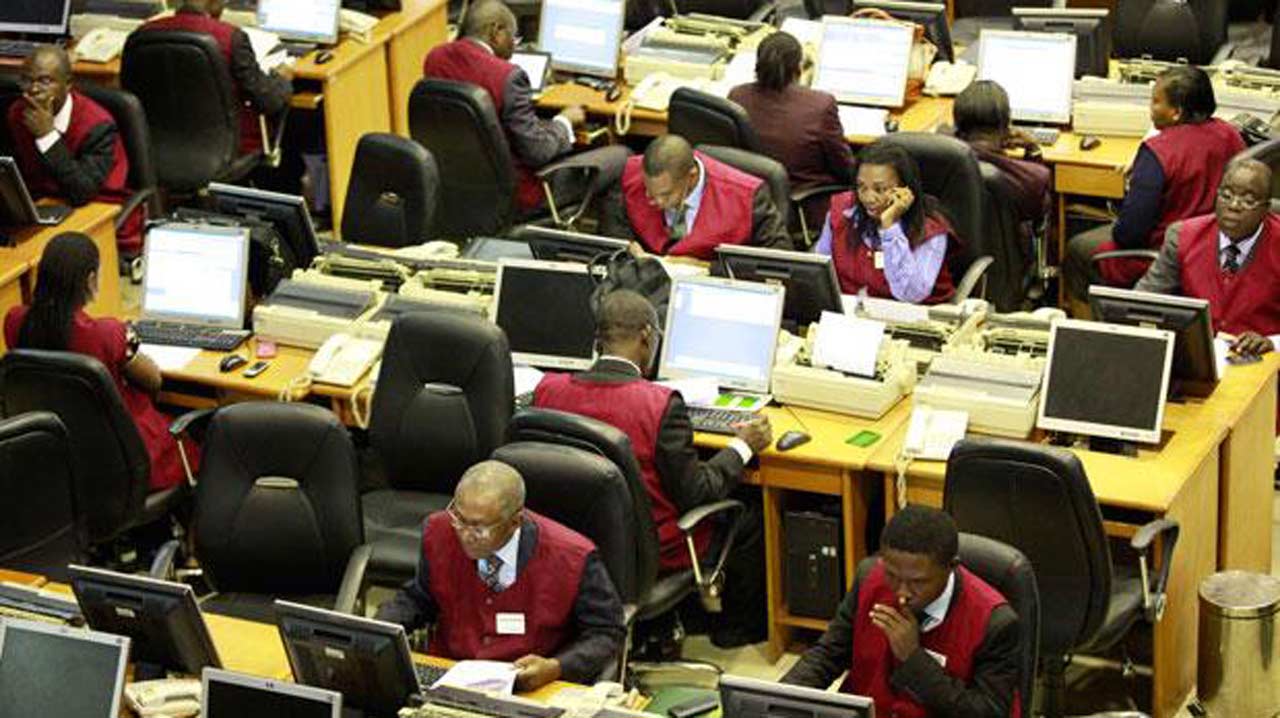
Business Post reports that at the Nigerian Stock Exchange (NSE), it was all red from when the market opened for business till when it closed for the day.
During the day’s trading, some investors, who were keeping tabs on happenings in Abuja, were selling off their stocks for cash, while few were stocking up their portfolio, taking advantage of the very low price they were getting the shares from panicking sellers.
At the close of transactions, the stock market suffered a 0.40 percent loss, leaving the Year-to-Date (YtD) gain to -4.99 percent.
Business Post reports further that the banking sector as well as the oil and gas sector suffered huge losses today. While the banking index declined by 1.08 percent, the oil and gas index depreciated by 4.69 percent.
Overall, the All-Share Index (ASI) lost 145.62 points to close at 36,333.80 points, while the market capitalization reduced by N53 billion to settle at N13.262 trillion.
However, the market breadth ended positive today with the stock market closing with 23 price gainers and 21 price losers.
The price gainers’ chart was led on Tuesday by Nigerian Breweries after its shares rose by N2.10k to settle at N103 per share.
It was followed by Flour Mills, which increased by 90 kobo to finish at N25.50k per share, and Newrest ASL Nigeria, which grew by 45 kobo to end at N4.95k per share.
Cadbury Nigeria also garnered 45 kobo to close at N9.95k per share, while United Capital appreciated by 28 kobo to settle at N3.08k per share.
On the flip side, Seplat recorded the highest price depreciation today with N60 of its share value lost to close at N650 per share.
CAP declined by N3.15k to finish at N28.35k per share, while GTBank lost 85 kobo to settle at N39.15k per share.
Lafarge fell by 60 kobo to end at N29.90k per share, while Forte Oil went down by 55 kobo to close at N23 per share.
Business Post reports that the volume of shares transacted by investors today increased by 36.07 percent, while the value of trades rose by 10.43 percent.
At the close of business, a total of 248.1 million shares were sold for N2.3 billion compared with the 182.3 million equities traded yesterday for N2 billion.
A further look at the transactions showed that the Financial Services sector led the activity chart with 207.2 million shares traded for N1.6 billion, while the Healthcare sector followed with 14.7 million equities sold for N7 million.
A deeper look at the activity chart showed that Wema Bank shares emerged the most traded, selling a total of 53.5 million units worth N37.5 million.
It was followed by GTBank, which transacted 23.4 million units for N925.1 million, and United Bank for Africa, which exchanged 22.2 million shares worth N214 million.
Diamond Bank traded 16.9 million equities valued at N21.2 million, while United Capital sold 14.2 million shares worth N43.2 million.
Investors will only hope that a calmer atmosphere tomorrow will have a positive effect on the market. Also, investors will hope that GTBank and other three other lenders release their half year earnings to lift the stock market.
Economy
APM Terminals to Invest $600m in Nigeria’s Maritime Sector
By Modupe Gbadeyanka
The Nigerian maritime sector may soon witness the inflow of $600 million in investment from APM Terminals.
On the sidelines of the ongoing Africa CEO Forum in Kigali, Rwanda, the Regional President of APM Terminals for Africa-Europe, Mr Igor van den Essen, informed President Bola Tinubu that his company was interested in deepening its investment in Nigeria.
According to a statement issued by the Special Adviser to the President of Information and Strategy, Mr Bayo Onanuga, the investment would be deployed in Apapa port modernisation, logistics infrastructure, and long-term private-sector investment in Nigeria’s maritime sector.
President Tinubu welcomed the investments, emphasising that Nigeria is repositioning itself for greater competitiveness through ongoing economic reforms and infrastructure modernisation.
He said the country is determined to move beyond structural bottlenecks and outdated systems, stressing the need for advanced technology, faster cargo processing, and improved operational efficiency across the nation’s ports.
He emphasised that Nigeria possesses the market scale, talent base, and economic potential to support globally competitive maritime and logistics infrastructure investments and called on other investors to take advantage of Nigeria’s reform outcomes.
Earlier, Mr Igor van den Essen lauded President Tinubu’s reform agenda and policy direction, which had strengthened investor confidence and created renewed momentum for long-term infrastructure investments.
He described Nigeria as a strategic stronghold within its African operations, referencing over 20 years of collaboration and substantial existing investments in the country’s port ecosystem.
He reaffirmed his company’s commitment to expanding investments in Nigeria and disclosed plans to support the development of world-class terminal infrastructure and technology-driven port operations.
He also commended Mr Tinubu for establishing the National Single Window (NSW), which has streamlined trade procedures, improved Customs coordination, and reduced delays in cargo clearance.
Economy
Dangote Sues FG Over Fuel Import Licences
By Adedapo Adesanya
Dangote Petroleum Refinery has filed a new lawsuit against the federal government over the fuel import licences issued to marketers and the Nigerian National Petroleum Company (NNPC) Limited.
Last week, the Nigerian Midstream and Downstream Petroleum Regulatory Authority (NMDPRA) issued licences to six marketers for the importation of 720,000 metric tonnes of Premium Motor Spirit, known as petrol.
The marketers are NIPCO, AA Rano, Matrix, Shafa, Pinnacle, and Bono. The development comes amid claims by the NMDPRA that the Dangote Petroleum Refinery now supplies over 90 per cent of Nigeria’s daily petrol consumption.
Dangote said in the filing that the licences issued undermine its operations and contravene the law, which it argues allows imports only when domestic supply falls short.
Named in the suit against the country is the Attorney General and Minister of Justice, Mr Lateef Fagbemi. The federal government can only be sued via his office.
The case signals renewed tensions almost a year after Dangote withdrew an earlier lawsuit challenging similar licences. That case sought to nullify import permits issued to the NNPC and several traders.
The new filing asks the Federal High Court in Lagos to set aside import permits issued or renewed by the NMDPRA, arguing they breach an earlier order to maintain the status quo.
Dangote ended the earlier lawsuit in July 2025 without explanation, leaving unresolved questions over competition and supply in one of Africa’s largest fuel markets.
Nigeria has long relied on petrol imports due to underperforming state refineries. However, Dangote’s 650,000 barrels per day capacity refinery was touted to end that dependence.
Despite the presence of the facility, imports have continued to cover supply gaps as the refinery ramps up output.
The NMDPRA did not issue a single import licence in the first quarter of 2026 because the Dangote refinery had the capacity to meet Nigeria’s petrol demand.
Business Post gathered that only upon intervention by President Bola Tinubu were the licenses granted for the second quarter by the NMDPRA.
Economy
Nigeria’s Inflation Rises to 15.69% in April as Middle East Crisis Persists
By Adedapo Adesanya
The Nigeria Bureau of Statistics (NBS) has revealed that Nigeria’s headline inflation rate in April 2026 rose to 15.69 per cent, beating analysts’ expectations of 15.95 per cent, as the fallout from the Iran war continued to affect the global economy.
The statistical office on Friday showed the headline inflation rate for April on a month-on-month basis was 2.13 per cent, while the food inflation rate in the review month was 16.06 per cent on a year-on-year basis.
The rise in prices comes as an energy price shock stemming from the continued conflict in the Middle East, which stoked food prices and affected relative exchange rate stability.
According to the NBS, “this can be attributed to the rate of change in the average prices of the following products: Millet whole grain, yam flour, ginger (Fresh), beef, garri, tam tuber, pepper (Fresh), cray fish, cassava tuber, Beans, Irish Potatoes, tomatoes (fresh), wheat grain (Sold loose), soya beans, guinea corn, plantain, carrots (Fresh) etc.”
“The average annual rate of food inflation for the twelve months ending April 2026, relative to the previous twelve-month average, was 17.55%, which was 17.05% points lower than the average annual rate of change recorded in April 2025 (34.60%),” the NBS said.
Analysts at Coronation Research had earlier projected that the inflation rate in Nigeria would be at 15.95 per cent on a year-on-year basis in April 2026. It added that the expected inflation rate signals a return toward the underlying disinflation trajectory and could be a pivotal data point in shaping Monetary Policy Committee (MPC) deliberations at the next policy meeting.
It also expects food inflation to further ease, as food and non-alcoholic beverages remain the dominant contributor to headline CPI, accounting for about 40 per cent of the Consumer Price Index (CPI) basket.
The MPC of the Central Bank of Nigeria (CBN) will meet this month, the first since the Iran War started in late February, to review core monetary policies and possibly make adjustments.
The committee reduced the Monetary Policy Rate (MPR) by 50 basis points from 27.0 per cent to 26.5 per cent at its 304th Monetary Policy Committee (MPC) meeting in February.
-
Feature/OPED6 years agoDavos was Different this year
-
Travel/Tourism10 years ago
Lagos Seals Western Lodge Hotel In Ikorodu
-
Showbiz3 years agoEstranged Lover Releases Videos of Empress Njamah Bathing
-
Banking8 years agoSort Codes of GTBank Branches in Nigeria
-
Economy3 years agoSubsidy Removal: CNG at N130 Per Litre Cheaper Than Petrol—IPMAN
-
Banking3 years agoSort Codes of UBA Branches in Nigeria
-
Banking3 years agoFirst Bank Announces Planned Downtime
-
Sports3 years agoHighest Paid Nigerian Footballer – How Much Do Nigerian Footballers Earn