
Economy
NSE 2016 Market Recap and Outlook for 2017



By Dipo Olowookere
2016 Global Economic Summary
The global economy remained sluggish in 2016 with a forecast of 3.1% in global GDP growth according to the International Monetary Fund (IMF), compared to 3.4% originally projected, and 3.2%1 achieved in 2015.
Uncertainty took centre stage during the year, as global economies grappled with unpredictable geopolitical developments, ranging from Brexit referendum in June to the result of US presidential elections in November.
The vast disparity between forecasted outcomes and actual results left several emerging and frontier economies, and their respective capital markets, in peril as the movement of international capital stalled in anticipation of global policy direction.
This was also compounded by the continued decline in global commodity prices, with crude dropping below the $30/barrel mark (the lowest level in 12 years), intrinsically creating hardships for commodity dependent countries like Venezuela, Russia and Nigeria (with their impact on foreign reserves being primarily negative).
Recapping on the year 2016, the global landscape was primarily shaped by some of the following factors:
- The anticipated impact the UK’s “Yes” vote would have on Europe’s 2nd largest economy;
- China’s shift towards growing its middle class via organic economic growth, restructuring the economy away from resource import dependency, towards a resource investment strategy;
- Election of US President-Elect Donald Trump and uncertainty around national policy direction (i.e. global trade implications of nationalism, immigration reforms, etc.);
- Continued geopolitical tension in the Middle East (i.e. continued Syrian turmoil, ISIS insurgence) and other hot spots; and
- Reemergence of the US Federal Reserve rate hike as a policy tool to curb economic overheating.

According to the IMF, growth in Emerging Market and Developing Economies is projected to edge up to 4.2% in 2016, 0.2 percentage points higher than the previous year.
This projection, however, represents mixed expectations for economies within the region. Robust growth in EMD Asian economies like India and strong recovery in the MENAP and CIS regions were offset by economic stagnation in areas like Latin America, the EMD EU, China and SSA.
In SSA, growth in 2016 is expected to fall to 1.4% from 3.4% in 2015, primarily due to weak growth in its three largest economies, being Nigeria, South Africa and Angola, as they struggle to adjust to the “new oil order”, while attempting to rectify structural deficiencies in their respective economies.
In the case of Nigeria, despite a challenging economic environment in 2016, the country remains the economic powerhouse of Africa with an expected GDP of $415.08B
Global Capital Market Recap
Global capital markets experienced their slowest start to the year in over a decade in 2016, as the World Federation of Exchanges (WFE) reported that value traded in cash equity markets declined by 24% in H1’2016.
However, pre-election volatility gave way to post-election enthusiasm as advanced economies saw their capital markets rally in anticipation of stronger growth in the US buoyed by tax reforms and expansionary fiscal policies proposed by the Trump transition team.
By Q4’16, advanced capital markets had picked up significant momentum, with major indexes such as the Dow Jones Industrial Average Index reaching record highs. Amid signs of a US recovery, the US Federal Reserve (the Fed) raised rates by 0.25% in its final meeting of the year.
However, there was a contra-impact in Emerging and Developing Markets, as global investors shifted capital flows back to advanced economies in search of low price and low risk assets with increasing yields.
According to the Wall Street Journal, “Global investors’ appetite for emerging-market stocks and bonds slumped to its lowest level since the global financial crisis last year (2016), with the biggest hit to inflows coming after Donald Trump’s victory in the U.S. presidential election”.
Accordingly, “foreign investors sent just $28 billion into emerging markets in 2016…90% lower than the average from 2010 to 2014”.
NSE Capital Market Recap
The bottoming out of crude oil prices and a drastic decline in domestic oil output curtailed crude oil export proceeds, which accounts for roughly 90% and 70% of Nigeria’s FX earnings and government revenue respectively.
This resulted in foreign exchange liquidity challenges during the year, as the supply side of FX into the Central Bank of Nigeria (CBN) dropped by over 70%4 , despite heavy domestic demand. Accordingly, the oil price shocks and associated prolonged FX dilemma, coupled with challenges to policy implementation, drove the Nigerian economy into its first recession in over twenty (20) years by Q2’16.
Capital markets tend to act as barometers of any economy, and in Nigeria’s case, the prolonged economic downturn directly impacted an array of products and asset classes on the Nigerian Stock Exchange (NSE or The Exchange).
The NSE Industrial Index recorded the steepest drop of the year at 26.37%, a result of severe difficulties faced by companies in accessing capital for imported raw materials. In the Exchange Traded Funds (ETFs) market, tracking to this methodology, the Vetiva Industrial ETF recorded the largest price decline in 2016 of 20.51% when compared to ETFs in other sectors.
On the flip side, the NSE’s NewGold ETF saw a sharp increase, as its value climbed 94.73% during the year, a clear indication of investor’s flight to safety sentiments.
Generally, we saw 19.41% increase in ETF AUM listed on The Exchange from 2015 to 2016, primarily due to the listing of the Vetiva S&P Nigerian Sovereign Bond ETF.
Further indication of the equity market’s link to economic dynamics is reflected in the drop in NSE Oil/Gas Index which declined 12.31%, mimicking the 22.01%5 decline in real GDP growth of the oil sector by Q3’16 driven by output and distribution complications.
Real Estate Investment Trusts (REITs) declined by 49.48% and 47.10% in value and volume traded, respectively, reflecting the macro-economic impact of the real estate sector which declined by 7.37%5 in terms of GDP.
Inflation had a converse-effect on activity in the fixed income market during the year. Inflation spiked above 18% by Q4’16, driven by rising prices of imports and structural deficiencies in power, transportation, and production.
The high rate of inflation forced the CBN to raise interest rates to 14% in July 2016. Consequently, the value of bonds in the market depreciated, increasing investors’ appetite for portfolio diversification via interest rate products selling at discounts.
This resulted in a 137% increase in the value of bonds traded on the NSE in 2016, admittedly from a low base. We also saw a 31.17% improvement in bond issuance during the year.

After peaking at 31,071.25 in June 2016, an increase of 8.48% over the 2015 closing value, the NSE All Share Index (NSE ASI) began to retreat to negative territory as total foreign inflow dropped 45% between June (N42.46Bn) and July (N23.43Bn) due to i) loss of confidence in the implementation of an announced free floating FX regime; ii) weak corporate performance; and iii) 2 nd consecutive quarter of negative economic growth in the period resulting in the economy entering into a recession.
Accordingly, we witnessed the lowest levels of foreign portfolio and domestic trading activity post the global financial crisis, with a Y-O-Y decline of 69.79% and 56.79%6 respectively.
This trend is consistent with the inverse correlation observed between the value traded on the NSE’s equity market and the spread between the parallel and interbank FX market rates (see Chart 4), suggesting that both domestic and foreign investors seek stability in monetary policy.
In addition to sluggish performance in secondary markets, primary market activity was nonexistent as there were no IPOs for the year, although there was one (1) new company listed by introduction7 in the period.

However, the Nigerian capital market did experience some resilience by year-end as the NSE Premium Board Index ended 2016 in positive territory, advancing 6.98%, while the NSE Banking Index inched up by 2.17%.
Furthermore, after declining by 21.60% to a low of 22,456.32 in Q1’16, the NSE ASI rebounded by 19.68% from its January low to close the year down by 6.17% mirroring the 6.12% decline in the equity market capitalization (approx. 40%8 in USD terms).

NSE Strategy Execution in 2016
Building on the successes achieved in 2015, the NSE remained steadfast in the execution of its strategy despite the challenging environment. We also ramped up our engagement with Government at various levels to advocate for market friendly policies and initiatives that can drive economic recovery. Highlighted below are milestones achieved in 2016:
Business Development
- Demutualization: Concluded due diligence process, established member relations desk and credible member register, and developed a roadmap to demutualization. We have had several engagements with key stakeholder groups (eg: Exchange members, SEC, NASS, CAC, etc.).
- Derivatives: Established corporate vehicle for a Central Counterparty clearing house (CCP), engaged legal and financial advisers to support launch of the CCP, and engaged extensively with key stakeholder groups (NASS, CBN, SEC, CSCS, Bankers’ Committee, Dealing members, etc.), and started derivatives product development.
- Monetization of Market Services Suite: Launched thirteen (13) new products and implemented the first market data conference in Nigeria, with additional plans to onboard first set of clients for the regulatory consulting services business.
- Competitive Price Structure: A pilot fee structure for fixed income products was launched and the development of a market wide framework has reached an advanced stage.
Domestic/ Foreign Investor Drive
- Product Launch: Launched a Vetiva S&P Nigerian Sovereign Bond ETF.
- Workshop Events: World-class workshops for fixed income, ETFs and market data products.
- Stakeholder Engagement Events: Held a number of key stakeholder events including two (2) NSE/LSE dual listings conferences in Lagos and London with key policymakers in attendance; CEO roundtable in collaboration with Bloomberg; and Nigerian Capital Market Information Security Forum.
- International Events: Hosted the Building African Financial Markets (BAFM) capacity building seminar held outside South Africa for the first time; the Nigerian capital market sustainability seminar in partnership with the Global Reporting Initiative (GRI) and Ernst and Young (EY); and the International Executive Development Program (IEDP).
Investor Protection
- SMARTs Technology: Launched SMARTs solution for efficient/effective market surveillance.
- Minimum Operating Standards (MOS): 94% of Dealing Member firms achieved NSE’s MOS.
- Investor Protection Fund: 83 claims valued at N27.8Mn approved for payment in 2016.
- Compliance Status Indicator (CSI): Launched CSI symbols for near real-time tracking of compliance status of listed companies.
- Corporate Governance Rating System (CGRS): Rolled out CGRS to all listed companies.
- Direct Cash Settlement (DCS): Played key role in implementation of DCS for the market.
Corporate Citizenship
- Essay Competition: 7,400 entries from over 250 schools and over N3.2Mn won in prizes.
- Global Money Week: Reached 2,433 students from 24 secondary schools.
- Corporate Challenge: Held the third edition with over 700 participants and N30.5Mn raised.
- NSE Employee Volunteering Scheme & Give-Back: In its 2nd year, employees donated time and resources to upgrade Wesley School for the hearing impaired children, and other charities across the country.
- International Women’s Day: Symposium held with the Deputy Governor, Lagos State, Mrs Idiat Adebule.
- Financial Literacy Tour: Reached 15,413 beneficiaries (7,456 students) through 151 programs.
Awards and Recognition
In recognition of the NSE’s continued thrust to enhance the investor experience and transcend the dynamics of the Nigerian market, The Exchange received a number of key awards and recognitions during the year 2016.

2017 Outlook
Global Economic Outlook
Global economic growth is projected to reach 3.4% in 2017 according to the IMF, while Goldman Sachs’s chief economist puts this estimate at a range of 3.0% to 3.5%. Accordingly, all estimates suggest that there will be positive global growth in 2017.
From the NSE’s perspective, we believe there are specific factors that will determine the pace of global economic activity in the coming year. These include: 1) political developments in the West under the emerging “new world order”, as populist sentiment towards nationalism and protectionist economic policies take effect on global trade and immigration; 2) pace of global fiscal and monetary policy implementation; 3) oil price averaging $55 per barrel as forecasted by the World Bank following the decision of OPEC to limit output and a subsequent improvement in the outlook for commodity exporters; and 4) continued growth in Asia’s largest economies (i.e. China, India, Japan, etc.) and recovery of other emerging and developing economies (i.e. SSA).

Nigerian Capital Market Outlook
Nigeria is expected to recover from its recession in 2017 with a modest GDP growth forecast of 0.6%9 driven by: i) vigor of fiscal policy implementation, with a keen focus on articulation of desired goals; ii) lower rates of disruptions to oil infrastructure from resolution of the Niger Delta conflict, thereby increasing FX inflows; iii) crude oil prices remaining above the FGN’s benchmark of $42.5/barrel; iv) positive impact of the war against corruption manifested in ease of doing business improvement; and v) policies aimed at boosting economic productivity (ex: improved budgetary allocation to capital expenditures, exit from JV Cash Call arrangements with IOCs by the FGN, which is expected to save the country $2Bn annually, etc.).
Notwithstanding the forgoing, the Nigerian capital market will have to do a better job at promoting its unique value proposition to both global and domestic investors. Monetary policy will continue to play a vital role in determining activity in the market.
With forecasts for inflation expected to moderate due to the base effect, we believe that all things equal, monetary authorities will have more flexibility with respect to interest rates and FX regime. Hence good coordination between fiscal and monetary policy should result in resolution of aforementioned structural deficiencies and drive economic growth.
We expect investors to continue to keep a close eye on the divergence between the interbank FX rate and other exchange rates in the country. Accordingly, a convergence of FX rates in the country and the performance of listed corporates will determine the level of market activity in the short term.
NSE Strategic Outlook
Cognizant of the ever evolving economic realities on ground, the NSE will take an adaptive approach to strategy execution in 2017. In the immediate future, the NSE will focus on achieving its goal of becoming a more agile and demutualized exchange and will fast track efforts towards developing innovative products such as exchange traded derivatives to provide investors with tools to better weather economic realities in 2017.
We intend to strengthen our thought leadership efforts with policymakers to drive policies that will free up the system and promote the ease of doing business in Nigeria. We believe that i) incentive schemes for sectors of the economy that can support a pivot to export led economy will be beneficial, and ii) systematic removal of impediments to doing business and therefore reduction of leakages will attract private sector investments.
From a capital market liquidity standpoint, we will enhance our cross-border integration efforts via African Securities Exchange Association’s (ASEA) African Exchange Linkage Project (AELP) model and the West African Capital Market Integration (WACMI) program. We will also continue our engagement efforts with the Government to promote the listing of privatized state owned entities (SOEs), as well as engage with the Private sector issuers for listings across all of our product categories.
We anticipate that secondary market activity will be challenged initially as the impact of various policy measures work their way through the system. However, we expect to see a revival of supplementary listings, return of the new issuance market, and potentially one IPO since the equity market is a forward indicator of the economy. We are cautiously optimistic, as consensus estimates suggest a moderate recovery for Nigeria in 2017, provided that policy makers implement the right combination of policy measures.




By Adedapo Adesanya
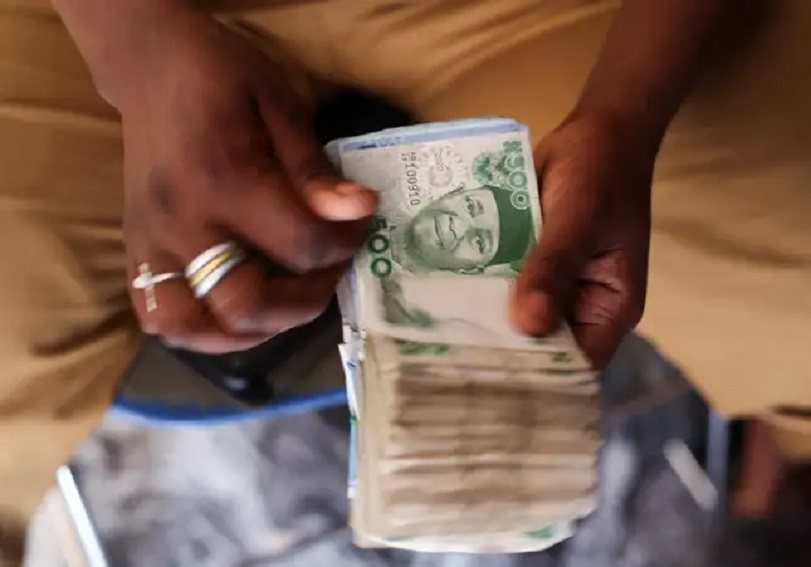
The Centre for the Promotion of Private Enterprise (CPPE) has projected relative stability for the Naira exchange rate in the second quarter of the year, supported by improved foreign reserves and liquidity, but cautioned that volatility risks remain.
In its Q1 2026 Economic Review and Q2 Outlook: Macro Stability Gains Amid Persistent Cost Pressures and Rising Geopolitical Risks report released on Sunday, the think-tank’s chief executive, Mr Muda Yusuf, said exchange rate conditions also improved significantly as the Naira, which experienced substantial volatility during the reform transition period, stabilised within a relatively narrow band of about N1,340–N1,430 per Dollar in the official market during Q1 2026.
“This stability has helped to moderate imported inflation and restore a measure of business confidence. External reserves strengthened considerably, rising above $50 billion in early 2026,” he stated.
The group said that the Nigerian economy in the first quarter of 2026 reflected a blend of improving macroeconomic stability and persistent structural constraints.
It said that proof of a more stable macroeconomic environment is increasingly evident, underpinned by the cumulative gains from foreign exchange reforms, a sustained period of monetary tightening, and the gradual normalisation of key economic indicators.
However, it noted that these improvements continue to coexist with significant headwinds, adding that the country’s economic growth will remain positive in the next three months, but the pace of expansion may slow due to mounting downside risk
The report also warned of a growing risk of stagflation, as persistent cost pressures combine with fragile growth conditions. It added that rising political activities ahead of the 2027 general elections could weaken reform momentum and distract from economic management.
The CPPE noted that rising global crude oil prices, triggered by the ongoing Middle East conflict, pose a major threat to Nigeria’s fragile disinflation process. While higher oil prices could boost export earnings and government revenue, the think tank stressed that the domestic impact would be adverse.
“The cost pass-through effect poses a significant threat to the fragile disinflation process, potentially reversing recent gains in price stability, weakening real incomes, and further exacerbating the cost-of-living pressures facing households and businesses,” the organisation said.
Highlighting monetary policy concerns, CPPE said the current inflationary trend is largely driven by structural and cost-related factors rather than excess demand, observing that, “Additional monetary tightening would have limited effectiveness in addressing the underlying drivers of inflation, while potentially exacerbating constraints on investment, credit expansion, and overall economic growth.”
The CPPE further raised concerns over the implementation of the proposed N68 trillion 2026 budget, citing weak revenue performance, delays in capital releases, and growing political influence on spending priorities.
“As political pressures intensify, there is a risk of weakening fiscal discipline, with greater emphasis on recurrent and politically expedient spending,” the group stated, advising businesses to shift focus towards resilience and efficiency, urging firms to prioritise cost containment, adopt alternative energy sources, and strengthen foreign exchange risk management strategies.
It also called on policymakers to take urgent steps to safeguard economic stability and protect vulnerable groups.
“Policy priorities should therefore focus on consolidating macroeconomic stability, addressing structural bottlenecks, and implementing targeted measures to protect vulnerable populations,” it noted.
The CPPE concluded that while macroeconomic stability gains recorded in the first quarter of 2026 are notable, the outlook for the second quarter remains cautiously positive but increasingly uncertain due to geopolitical tensions, fiscal risks, and domestic political dynamics.
By Adedapo Adesanya
The Organisation of the Petroleum Exporting Countries and its allies (OPEC+) agreed to raise its oil output quotas by 206,000 barrels per day for May.
Eight members of OPEC+, comprising Saudi Arabia, Russia, Iraq, the UAE, Kuwait, Kazakhstan, Algeria, and Oman, agreed to the increase in May quota at a virtual meeting on Sunday, OPEC+ said in a statement.
However, the rise will be in theory, as its key members are unable to raise production due to the US-Israeli war with Iran, which has affected production.
The war has effectively shut the Strait of Hormuz, the world’s most important oil route, since the end of February and cut exports from some OPEC+ members, including Saudi Arabia, the UAE, Kuwait and Iraq. These are the only countries in the group which were able to significantly raise production even before the conflict began.
Besides the disruptions affecting Gulf members, others, such as Russia, are unable to increase output due to Western sanctions and damage to infrastructure inflicted during the war with Ukraine. For Nigeria, even as Africa’s largest producer, it has not been able to keep production quotas steady.
The OPEC+ quota increase of 206,000 barrels per day represents less than 2 per cent of the supply disrupted by the Hormuz closure, but it signals readiness to raise output once the waterway reopens.
Also meeting on Sunday, a separate OPEC+ panel called the Joint Ministerial Monitoring Committee (JMMC), expressed concern about attacks on energy assets, saying they were expensive and time-consuming to repair and so have an impact on supply.
May’s OPEC+ increase is the same as the eight members had agreed for April at their last meeting held on March 1, just as the war began to disrupt oil flows.
A month later, the largest oil supply disruption on record is estimated to have removed as many as 12 to 15 million barrels per day or up to 15 per cent of global supply.
The eight OPEC+ members have raised production quotas by about 2.9 million barrels per day from April 2025 through December 2025, before pausing increases for January to March 2026. The sub-group holds its next meeting on May 3.
Market analysts have warned that oil prices could hit $150 per barrel if the closure of the strait is prolonged and continues, due to damage to energy assets across the critical Middle East region.
As of the time of this report, Brent crude is trading at $108 per barrel, below the US West Texas Intermediate (WTI) crude at $109 per barrel.
By Adedapo Adesanya
Workers at Seplat Energy will resume work after a strike action that impacted production was called off by the Petroleum and Natural Gas Senior Staff Association of Nigeria (PENGASSAN) over the weekend, with the company issuing written commitments on pay rises.
Top employees began an indefinite strike last Friday as talks over a collective bargaining agreement and staff welfare issues broke down. The action came at a time when Nigeria is seeking to maximise production amid rising global oil prices.
According to Reuters, in an April 4 letter to the chief executive of Seplat Nigeria, Mr Roger Brown, PENGASSAN said it had directed members at the local energy firm to immediately suspend industrial action after negotiations resumed with the Nigerian National Petroleum Company (NNPC) Limited. Other less-skilled workers are covered by the Nigeria Labour Congress (NLC) and did not partake in the strike with PENGASSAN.
The union said talks on a 2026 collective bargaining agreement would continue, with the aim of concluding outstanding issues by April 13. However, according to the publication, the union did not disclose more details about its financial demands.
“We can confirm that the union has suspended its notice of industrial action to allow negotiations to conclude on outstanding items within an agreed framework,” Seplat spokesperson, Mr Ogechukwu Udeagha, said, adding that “operations are recommencing at our various locations.”
Seplat Energy’s group production averaged 131,506 barrels of oil equivalent per day in 2025, according to its latest audited results. That is the equivalent of around 7 per cent–9 per cent of Nigeria’s total liquids production.
The company expects output to rise to 155,000 barrels of oil equivalent per day, making any sustained disruption particularly sensitive for Nigeria’s supply outlook. This comes as it seeks to scale production while remaining a major supplier of gas to Nigeria’s domestic power market.
With the company’s output expected to rise, any prolonged disruption would have significantly impacted Nigeria’s oil supply and fiscal outlook.
-
 Feature/OPED6 years ago
Davos was Different this year
-
Travel/Tourism10 years ago
Lagos Seals Western Lodge Hotel In Ikorodu
-

 Showbiz3 years ago
Estranged Lover Releases Videos of Empress Njamah Bathing
-
 Banking8 years ago
Sort Codes of GTBank Branches in Nigeria
-

 Economy3 years ago
Subsidy Removal: CNG at N130 Per Litre Cheaper Than Petrol—IPMAN
-

 Banking3 years ago
Sort Codes of UBA Branches in Nigeria
-

 Banking3 years ago
First Bank Announces Planned Downtime
-

 Sports3 years ago
Highest Paid Nigerian Footballer – How Much Do Nigerian Footballers Earn