
Economy
Oil Prices Slightly Rise as OPEC+ Pauses Output Increase from Next Quarter

By Adedapo Adesanya
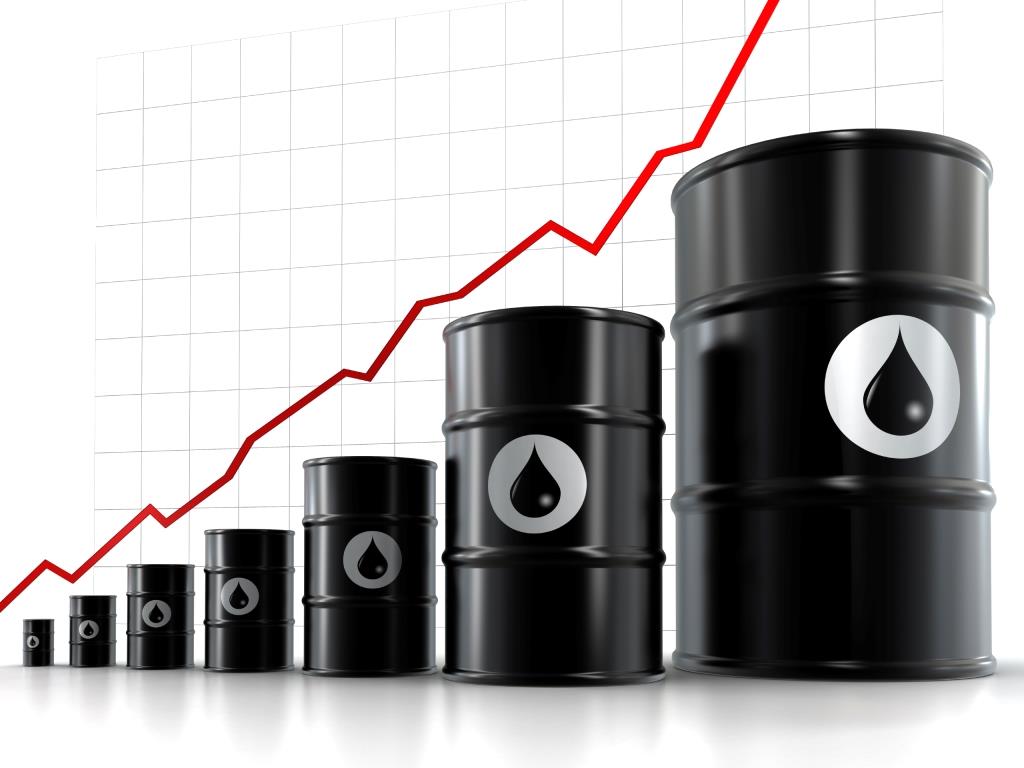
Oil prices were marginally up on Monday as the market balanced the latest Organisation of the Petroleum Exporting Countries and its allies (OPEC+) supply increase with plans to pause output increases in the first quarter of 2026, along with fears of an oil supply glut and weak factory data in Asia.
Brent crude futures rose by 12 cents or 0.2 per cent to settle at $64.89 per barrel and the US West Texas Intermediate (WTI) crude expanded by 7 cents or 0.1 per cent to trade at $61.05 a barrel.
“Beyond December, due to seasonality, the eight countries also decided to pause the production increments in January, February, and March 2026,” the group said in a statement.
The development followed its moderating plans to regain market share due to rising fears of a supply glut.
The alliance has raised output targets by around 2.9 million barrels per day or around 2.7 per cent of global supply since April, but slowed the pace from October amid predictions of a looming oversupply.
The group had been reducing output for several years until April, and cuts had peaked in March, amounting to 5.85 million barrels per day in total.
Market analysts noted that any negative price implications from OPEC’s furtherance of this quarter’s 137,000 barrels per day production increase were offset by the cartel’s suggested pause in output advances after the end of this year.
Morgan Stanley analysts raised its Brent crude forecast for the first half of 2026 to $60 a barrel from $57.50, citing the decision by OPEC+ to pause quota hikes in the first quarter of next year and recent on Russian oil assets.
Last month, the International Energy Agency (IEA) said the global oil market faces a surplus next year of as much as 4 million barrels per day. OPEC expects global oil supply and demand to balance next year.
Pressure also came from a strong US Dollar which weighed on oil prices by making crude more expensive for buyers using other currencies. The greenback hovered at a three-month high against a basket of peers.





By Adedapo Adesanya
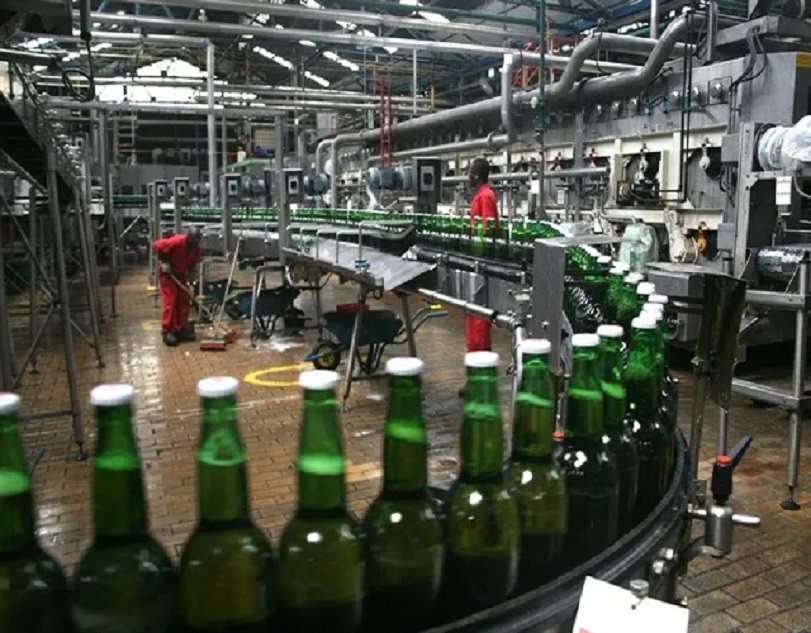
The Manufacturers Association of Nigeria (MAN) is seeking protection from the federal government amid rising concerns over the impact of escalating Middle East tensions on Nigeria’s manufacturing sector, particularly risks linked to disrupted global shipping routes, volatile energy markets, and supply chain bottlenecks.
MAN noted, “Its vigilance regarding the escalating military tensions involving the United States, Israel, and Iran. These events have significant implications for the global macroeconomic landscape, which can indirectly impact Nigeria.”
The director-general of MAN, Mr Segun Ajayi-Kadir, expressed that this situation arises at a pivotal moment when Nigeria has seen its annual inflation rate positively ease to 15.10 per cent, and manufacturing capacity utilisation has begun to exceed the 60 per cent mark, saying, however, the current geopolitical turbulence poses challenges that require careful navigation to protect the economic progress achieved.
“Although these conflicts are occurring far from our shores, their economic consequences may directly influence the Nigerian economy.
“We are particularly attentive to issues surrounding global shipping disruptions, fluctuating energy markets, and potential supply chain bottlenecks that could challenge local production,” Ajayi-Kadir stated.
Mr Ajayi-Kadir further explained that the recent hostilities in the Middle East are reshaping the global energy and logistics environment.
“With critical disruptions in the Strait of Hormuz, the global markets have become unsettled, reflected in rising Brent crude prices exceeding $84.50 per barrel, and increased global freight and war-risk insurance premiums as vessels seek safer routes,” he stated.
For Nigerian manufacturers, MAN DG added that the implications of these developments are immediate and significant, increasing production costs, saying that historically, disruptions in the U.S. and the Middle East have reverberated throughout the global economy, and Nigeria is no exception.
He noted that “while a rise in global oil prices could theoretically benefit Nigeria by bolstering foreign exchange reserves and contributing to the stability of the Naira, the current reality presents a complex challenge. Nigeria’s domestic crude production hovers around 1.3 to 1.4 million barrels per day due to ongoing structural challenges, limiting the ability to fully leverage potential gains.”
He disclosed that in terms of trade relations, the United States remains one of Nigeria’s most vital partners, stating that given the existing conflict, disruptions in this crucial trade relationship could lead to increased costs for global freight forwarding and longer lead times for imported raw materials, potentially resulting in imported inflation.
According to him, the manufacturing sector is poised to face a variety of immediate and complex challenges, including rising energy costs, which are particularly relevant given that manufacturers depend heavily on gas and diesel for effective operations.
“Additionally, increasing freight costs and longer shipping times are making it more expensive to procure raw materials. Furthermore, heightened costs for essential goods could diminish consumer purchasing power, presenting manufacturers with the challenge of rising production costs amid stagnant or declining sales.”
In identifying the sectors most likely to be affected, MAN emphasised that the impact of global conflicts is not uniformly distributed, adding that “while the entire real sector is likely to feel the pressure, specific groups such as the Chemical and Pharmaceuticals Sector and the Basic Metals, Iron, and Steel Sector may encounter unique challenges.

By Dipo Olowookere
The Nigerian Exchange (NGX) Limited witnessed 47 price gainers last week, marginally lower than the 48 recorded in the preceding week.
This occurred as the All-Share Index (ASI) and the market capitalisation depreciated by 0.12 per cent on a week-on-week basis to 200,913.06 points and N128.969 trillion apiece due to profit-taking.
Similarly, all other indices finished lower except the main board, insurance, AFR Div Yield, energy, Lotus II, growth and commodity indices, which appreciated by 1.53 per cent, 2.22 per cent, 1.36 per cent, 1.93 per cent, 1.61 per cent, 2.31 per cent and 2.77 per cent, respectively, while the sovereign bond index closed flat.
Business Post reports that in the week, 45 equities shed weight compared with 43 equities in the previous week, while 56 stocks closed flat versus 57 stocks a week earlier.
The best-performing stock last week was Zichis, which gained 60.72 per cent to trade at N13.79. Premier Paints appreciated by 60.25 per cent to N37.50, John Holt rose by 59.92 per cent to N18.95, Legend Internet grew by 25.00 per cent to N7.50, and McNichols increased by 20.65 per cent to N7.42.
As for the worst-performing stock for the week, it was Livestock Feeds, which declined by 11.73 per cent to N7.15, Fidson depreciated by 9.97 per cent to N94.85, Cadbury Nigeria dropped 9.94 per cent to N63.00, Austin Laz stumbled by 9.89 per cent to N4.01, and Learn Africa lost 9.09 per cent to settle at N8.50.
A look at the activity chart showed that 3.950 billion shares worth N201.312 billion exchanged hands in 359,642 deals in the five-day trading week, in contrast to the 8.761 billion shares valued at N267.253 billion traded in 193,473 deals a week earlier.
Financial stocks dominated with 2.881 billion units sold for N102.259 billion traded in 139,093 deals, contributing 72.94 per cent and 50.80 per cent to the total trading volume and value apiece.
ICT equities transacted 230.539 million units worth N45.172 billion in 52,669 deals, and agriculture shares traded 191.927 million units valued at N6.626 billion in 16,471 deals.
Wema Bank, Access Holdings, and UBA were the busiest, with 1.448 billion units worth N43.191 billion in 28,436 deals, contributing 36.65 per cent and 21.45 per cent to the total trading volume and value, respectively.
By Dipo Olowookere
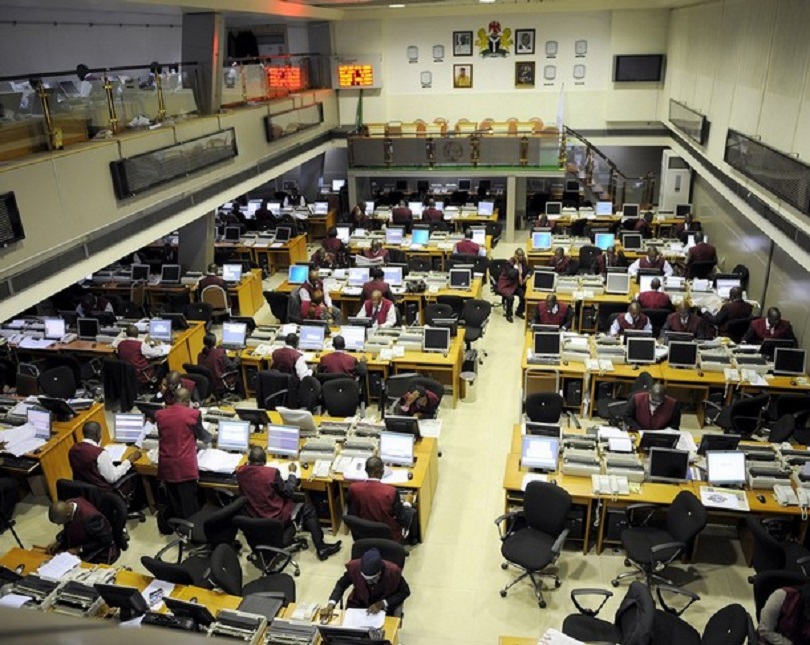
Nigerian stocks shrank by 0.02 per cent as a result of renewed selling pressure, after the consumer goods index crumbled by 0.89 per cent, and the banking space contracted by 0.23 per cent.
Business Post reports that the Nigerian Exchange (NGX) Limited weakened yesterday despite the energy sector closing 1.78 per cent higher, the insurance segment increasing by 0.31 per cent, and the industrial goods counter closing flat.
The All-Share Index (ASI) eased by 44.83 points to 200,913.06 points from 200,957.89 points, and the market capitalisation decreased by N29 billion to N128.969 trillion from N128.998 trillion.
eTranzact lost 10.00 per cent to trade at N20.70, Abbey Mortgage Bank declined by 10.00 per cent to N9.90, Cadbury Nigeria retreated by 10.00 per cent to N63.00, Eterna also fell by 10.00 per cent to N33.75, and DAAR Communications dipped by 9.50 per cent to N1.81.
Conversely, Premier Paints appreciated by 9.97 per cent to N37.50, Zichis gained 9.97 per cent to trade at N13.79, McNichols improved by 9.93 per cent to N7.42, John Holt chalked up 9.86 per cent to close at N18.95, and Trans Nationwide Express went up by 9.75 per cent to N2.59.
On the last day of the week, 595.2 million equities valued at N24.5 billion were transacted in 43,440 deals versus the 678.1 million equities worth N33.1 billion traded in 42,222 deals in the previous session.
This showed an improvement in the number of deals by 2.89 per cent, and a cut in the trading volume and value by 12.22 per cent and 25.98 per cent, respectively.
Wema Bank ended the day as the busiest stock after a turnover of 131.5 million units worth N3.5 billion, Legend Internet traded 41.6 million units valued at N339.2 million, Zichis sold 35.2 million units for N485.6 million, Access Holdings exchanged 29.4 million units worth N764.8 million, and Japaul transacted 21.5 million units valued at N74.6 million.










-
 Feature/OPED6 years ago
Davos was Different this year
-
Travel/Tourism10 years ago
Lagos Seals Western Lodge Hotel In Ikorodu
-

 Showbiz3 years ago
Estranged Lover Releases Videos of Empress Njamah Bathing
-
 Banking8 years ago
Sort Codes of GTBank Branches in Nigeria
-

 Economy3 years ago
Subsidy Removal: CNG at N130 Per Litre Cheaper Than Petrol—IPMAN
-

 Banking3 years ago
Sort Codes of UBA Branches in Nigeria
-

 Banking3 years ago
First Bank Announces Planned Downtime
-

 Sports3 years ago
Highest Paid Nigerian Footballer – How Much Do Nigerian Footballers Earn