Economy
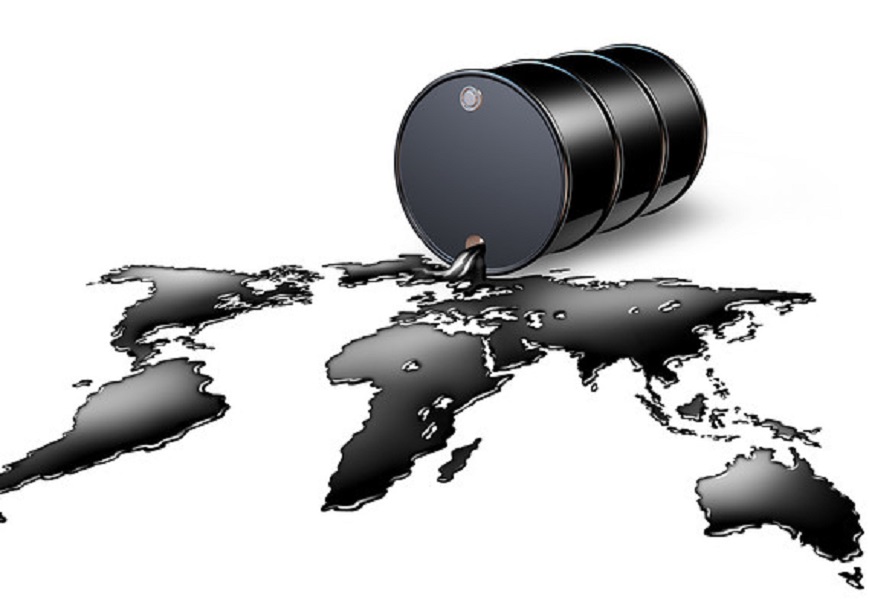
Oil Prices Worsen as Lockdown Spells Doom for Demand Recovery
By Adedapo Adesanya
Oil prices extended their 5 per cent slump from Wednesday into Thursday after it plunged by more than 3 per cent as major economies in Europe renewed lockdowns to fight the second wave of the coronavirus.
Brent crude went down to $37.56 per barrel on the back of a decline of 3.99 per cent or $1.56, while the United States’ West Texas Intermediate (WTI) crude fell by $1.30 or 3.48 per cent to close at $36.09 per barrel.
Prices had reacted to the government response to the second wave of the pandemic as oil market participants remain concerned that the return of lockdowns in Europe will significantly weigh on economic recovery and fuel demand.
Two of the largest economies in Europe, Germany, and France, announced the restriction of movements, which the market was not expecting two or three weeks ago.
Many analysts did not believe that countries would resort to another nationwide curfew. However, France did, and from Friday, October 30, people will be allowed to go out only for shopping for essential items, for medical reasons, or for an hour-long exercise. The measure will last until the end of November, French President Emmanuel Macron said.
Germany, the biggest economy in Europe, is also restoring a partial lockdown, for the month of November, restricting social gatherings and closing bars and restaurants except for takeaway.
The market is also feeling the impact of Libya’s return to the game as expectations show that production will reach 1 million barrels per day in the next few weeks, doubling from levels earlier this month.
The opening of two key oil terminals – Ras Lanuf and Es Sider following last week’s ceasefire agreement allowed the country to ramp up production to above 500,000 barrels per day.
These latest developments mean the Organisation of the Petroleum Exporting Countries and its allies (OPEC+) has some tough decisions to make on the path forward for its output curbs next month.
OPEC+ would really need to implement further production cuts, given the weak prospects for demand. The alliance is scheduled to meet on November 30 and December 1 to set policy.
It was reported that the two leaders of the OPEC+ pact, Saudi Arabia and Russia, would be inclined to favour rolling over the cut of 7.7 million barrels per day in 2021, instead of easing them by 2 million barrels per day agreed in the current OPEC+ production deal.
However, it was rumoured that Iraq, the United Arab Emirates (UAE) and Kuwait, the biggest OPEC producers behind Saudi Arabia, appear not to support a rollover of the cut of 7.7 million barrels per day because it is too deep for their economies and budget incomes to sustain.
Due to the environment, oil prices could not capitalise on the prospect of tighter short-term supply as Hurricane Zeta hits Louisiana in the US which reduced production for the day. Instead, the hurricane is forecast to weaken and the return of US production will add to existing oversupply.
Crude oil inventories in the US increased by 4.3 million barrels in the week ending October 23, the weekly report published by the US Energy Information Administration (EIA) revealed on Wednesday. Analysts estimate was for an increase of 1.2 million barrels.
Economy
Naira Further Loses 17 Kobo at NAFEX
By Adedapo Adesanya
The Naira further depreciated against the United States Dollar in the Nigerian Autonomous Foreign Exchange Market (NAFEX) on Tuesday, May 19, by 17 Kobo or 0.01 per cent to trade at N1,373.87/$1 compared to the previous day’s N1,373.70/$1.
However, the domestic currency appreciated against the Pound Sterling in the same market window by 5 Kobo to close at N1,839.61/£1 versus Monday’s rate of N1,839.66/£1, and gained N5.97 against the Euro to settle at N1,594.52/€1, in contrast to the preceding session’s N1,600.49/€1.
Data from GTBank FX bench showed that the Naira appreciated against the US Dollar yesterday by N2 to sell at N1,381/$1 versus N1,383, and at the parallel market, it remained unchanged at N1,390/$1.
The outcome across the board came as Nigeria’s external reserves have shown signs of improvement in recent weeks, which may provide some support for FX market interventions by the Central Bank of Nigeria (CBN) and broader macroeconomic stability efforts.
Currency traders and investors are expected to continue monitoring CBN policy direction, foreign portfolio inflows, crude oil earnings, and external reserve performance as key indicators influencing the naira’s trajectory in the coming months.
The Monetary Policy Committee (MPC) meeting began on Tuesday with announcements of decisions expected later on Wednesday after inflation ticked up in April.
In the cryptocurrency market, major digital coins were down as traders focused on macro data, oil prices, and inflation, while the US Senate advanced a measure that could force President Donald Trump to seek congressional approval for the Iran war.
Ripple (XRP) went down by 1.3 per cent to $1.36, Dogecoin (DOGE) slid by 0.9 per cent to $0.1034, Cardano (ADA) dropped by 0.7 per cent to $0.2499, Ethereum (ETH) declined by 0.5 per cent to $2,124.02, Solana (SOL) depreciated by 0.5 per cent to $84.67, TRON (TRX) dipped by 0.4 per cent to $0.3551, and Binance Coin (BNB) slumped 0.1 per cent to $641.39.
On the flip side, Bitcoin (BTC) appreciated by 0.3 per cent to $77,114.20, while the US Dollar Tether (USDT) and the US Dollar Coin (USDC) remained unchanged at $1.00 each.
Economy
Nigerian Bourse Gains N917bn Amid Weak Investor Sentiment
By Dipo Olowookere
The Nigerian bourse rebounded by 0.57 per cent on Tuesday despite weak investor sentiment triggered by a negative market breadth index after finishing with 26 price gainers and 31 price losers.
Customs Street was saved from a further decline due to buying interest in some mid and large-cap equities, which offset profit-taking in others.
It was observed that the insurance sector bled by 1.64 per cent and the consumer goods index depreciated by 0.93 per cent. However, the industrial goods space appreciated by 2.27 per cent, the banking counter improved by 0.98 per cent, and the energy industry rose by 0.11 per cent.
Consequently, the All-Share Index (ASI) gained 1,430.59 points to settle at 251,635.42 points compared with the previous day’s 250,204.83 points, and the market capitalisation chalked up N917 billion to close at N161.280 trillion versus the N160.363 trillion it ended a day earlier.
FTN Cocoa led the advancers’ chart after rising by 10.00 per cent to trade at N9.79, Zichis increased by 9.97 per cent to N29.13, SAHCO jumped by 9.79 per cent to N156.95, Caverton flew by 9.76 per cent to N6.75, and Japaul grew by 9.73 per cent to N3.72.
Conversely, Unilever Nigeria depreciated by 10.00 per cent to N153.00, Trans-Nationwide Express crashed by 9.92 per cent to N6.99, Sovereign Trust Insurance fell by 9.81 per cent to N2.39, McNichols slumped by 9.26 per cent to N7.25, and Austin Laz declined by 7.28 per cent to N4.20.
The busiest stock on the floor of the Nigerian Exchange (NGX) Limited yesterday was Access Holdings with 88.4 million units sold for N2.3 billion. Linkage Assurance transacted 46.2 million units valued at N83.5 million, Sterling Holdings traded 44.9 million units worth N349.3 million, Secure Electronic Technology exchanged 35.0 million units valued at N31.6 million, and Zenith Bank sold 30.4 million units for N4.0 billion.
At the close of trades, a total of 704.0 million units worth N32.2 billion were executed in 64,539 deals versus the 800.5 million units valued at N37.1 billion traded in 87,096 deals on Monday, implying a decline in the trading volume, value, and number of deals by 12.06 per cent, 13.21 per cent, and 25.90 per cent, respectively.
Economy
Oil Market Dips Amid Uncertainty Over US Military Action
By Adedapo Adesanya
The oil market edged lower on Tuesday but remained well above $100 per barrel, as investors weighed mixed signals from President Donald Trump on the resumption of military strikes against Iran.
Brent crude futures lost 0.73 per cent to trade at $111.28 per barrel, and the US West Texas Intermediate (WTI) fell 0.82 per cent to sell for $107.77 per barrel.
President Trump told reporters Tuesday that the US. might have to give Iran “another big hit” after he had previously posted that his administration would ‘hold off’ on a planned military attack, renewing the threat after he said he called off the attack scheduled for Tuesday at the request of the leaders of Qatar, Saudi Arabia and the United Arab Emirates (UAE).
The American President also said that Iran has a “limited period of time” to agree to a deal, giving options “two or three days, maybe Friday, Saturday, Sunday, something, maybe early next week.”
Iran’s latest peace proposal to the US involves ending hostilities on all fronts, including Lebanon, the exit of US forces from areas close to Iran and reparations for destruction caused by the war.
Meanwhile, the US imposed sanctions on an Iranian foreign currency exchange house and what it said were front companies overseeing transactions on behalf of Iranian banks. It also blocked 19 vessels, which it said were involved in shipping Iranian petroleum and petrochemicals to foreign customers. It also seized an oil tanker linked to Iran in the Indian Ocean overnight.
US Treasury Secretary Scott Bessent extended a sanctions waiver by 30 days to allow “energy-vulnerable” countries to continue purchasing Russian seaborne oil.
Oil markets continue to price in persistent supply disruptions in the Middle East, with analysts noting that hopes that China would help broker progress during recent Trump-Xi talks failed to materialise.
Goldman Sachs forecasts that every month the Strait of Hormuz remains closed adds $10 to the price of oil at year’s end, while ING said some shipping activity through the Strait of Hormuz has resumed, including several crude tankers and a Vietnamese-bound Iraqi oil shipment, though flows remain well below normal levels and could deteriorate quickly.
The American Petroleum Institute (API) estimated that crude oil inventories in the US fell by 9.1 million barrels in the week ending May 15. In the week prior, US crude oil inventories fell by 2.188 million barrels. Official data from the US Energy Information Administration (EIA) will be released later on Wednesday.
-
Feature/OPED6 years agoDavos was Different this year
-
Travel/Tourism10 years ago
Lagos Seals Western Lodge Hotel In Ikorodu
-
Showbiz3 years agoEstranged Lover Releases Videos of Empress Njamah Bathing
-
Banking8 years agoSort Codes of GTBank Branches in Nigeria
-
Economy3 years agoSubsidy Removal: CNG at N130 Per Litre Cheaper Than Petrol—IPMAN
-
Banking3 years agoSort Codes of UBA Branches in Nigeria
-
Banking3 years agoFirst Bank Announces Planned Downtime
-
Sports3 years agoHighest Paid Nigerian Footballer – How Much Do Nigerian Footballers Earn