
Economy
Oil Surges to $70 on Heightened Worries US Could Attack Iran

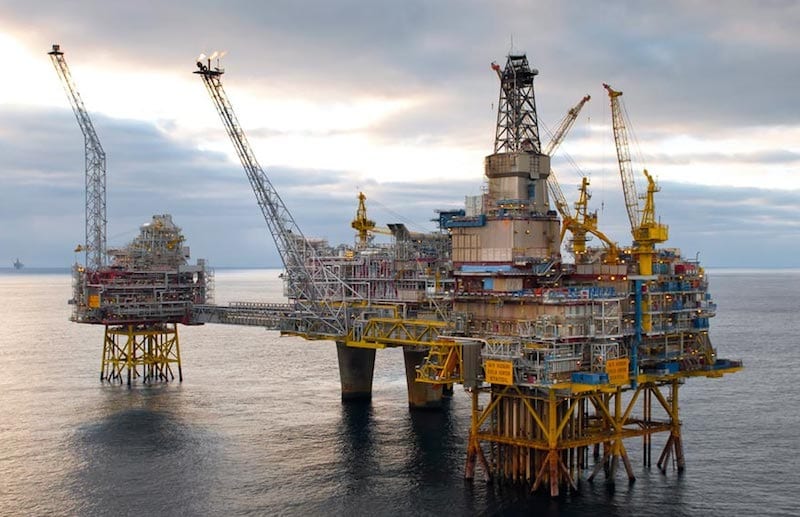
By Adedapo Adesanya
The price of surged by 3 per cent to a five-month high on Thursday on rising concerns that global supplies could be disrupted if the US attacks Iran, one of biggest crude producers in the Organisation of the Petroleum Exporting Countries (OPEC).
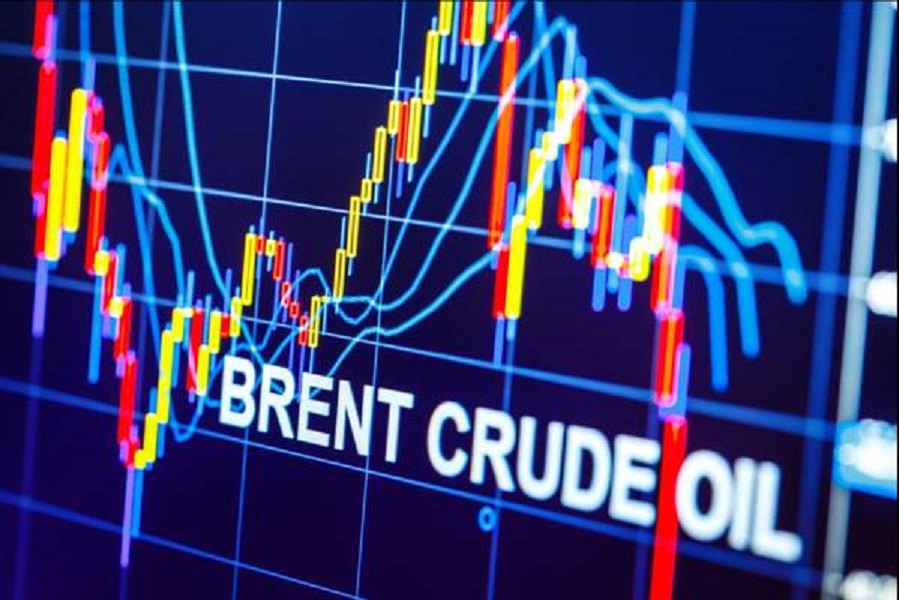
Specifically, the Brent futures rose by $2.31 or 3.4 per cent to $70.71 a barrel, while US West Texas Intermediate (WTI) crude futures gained $2.21 or 3.5 per cent to settle at $65.42 per barrel.
US President Donald Trump is weighing options against Iran that include targeted strikes on security forces and leaders to inspire protesters. It was reported that the American President wanted to create conditions for “regime change” after a crackdown crushed a nationwide protest movement earlier this month, killing thousands of people.
There is a possibility that delay is coming as Israel and Arab officials said air power alone would not topple Iran’s clerical rulers.
Earlier this week, he warned Iran that a “massive armada” of US Navy ships is headed to the Persian Gulf.
Reuters reported that in Iran, plainclothes security forces have rounded up thousands of people in a campaign of mass arrests and intimidation to deter further protests.
Iran, for its part, said that its army is ready to “immediately and powerfully” respond to any possible attack by the US.
Oil stakeholders will be weighing the consequences that a war could lead to. Market analysts say Iran may close the Strait of Hormuz shutting out around 20 million barrels per day of oil that navigates it. Iran was the third-biggest crude producer in OPEC behind Saudi Arabia and Iraq in 2025.
European Union foreign ministers adopted new sanctions on Iran on Thursday targeting individuals and entities involved in a violent crackdown on protesters. Separately, the EU designated Iran’s Revolutionary Guard as a terrorist organisation.
Russia on Thursday reiterated its invitation for Ukrainian President Volodymyr Zelenskiy to come to Moscow for peace talks as US-led efforts to reach a deal to end the nearly four-year war in Ukraine intensify.
Any peace deal that would allow Russia to export more oil should increase global supplies and decrease energy prices. Russia is the third-biggest crude producer in the world after the US and Saudi Arabia.
In the US, crude production continued to recover on Thursday after a winter storm ravaged production and losses peaked at 2 million barrels per day over the weekend.
The Dollar fell to its lowest since February 2022 against a basket of other currencies on uncertainty over US economic policies. A weaker greenback can boost oil prices by making dollar-priced oil less expensive for many global buyers.



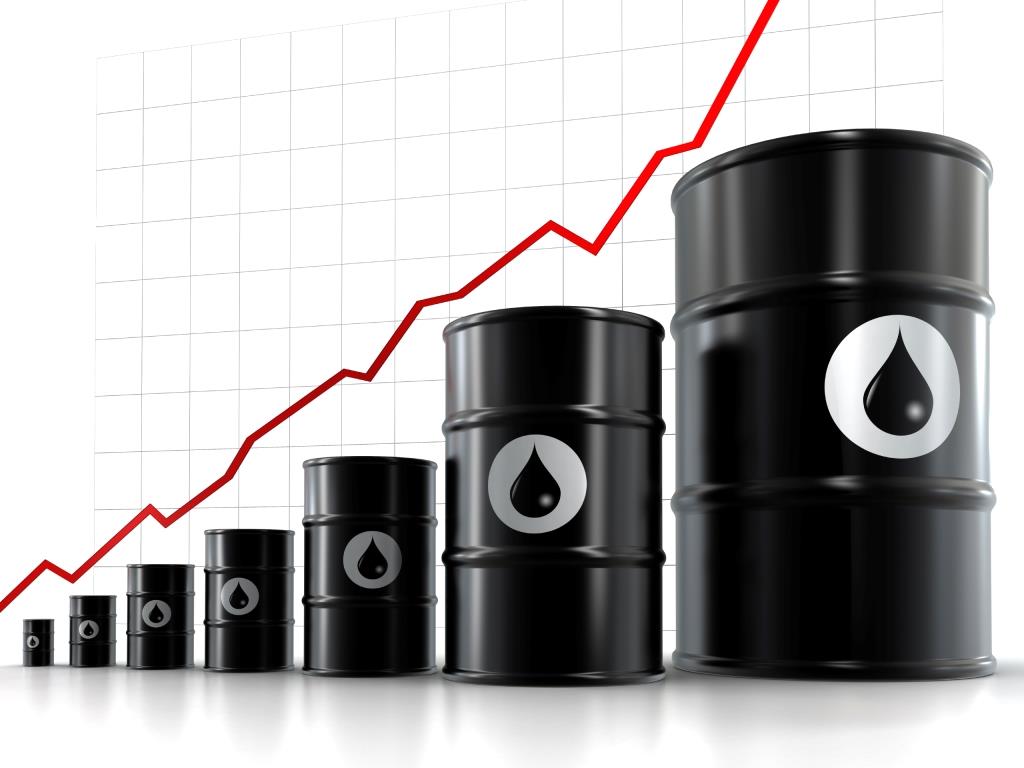
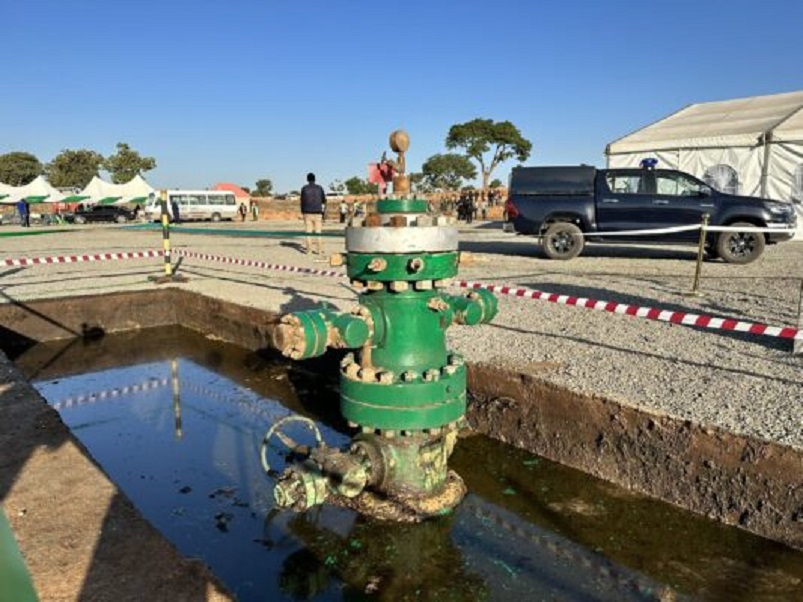

By Adedapo Adesanya
Brent crude crossed $100 a barrel again on Thursday as Iran stepped up attacks on oil and transport facilities across the Middle East, while vowing to keep the vital Strait of Hormuz shut.
The oil grade chalked up $8.48 or 9.2 per cent to trade at $100.46 a barrel, while the US West Texas Intermediate (WTI) crude settled at $95.70, up $8.48 or 9.7 per cent.
At least six vessels in the strait were damaged in incidents across the Strait of Hormuz, where about a fifth of the world’s oil and gas supplies travel.
Commercial ships sailing under the flags of Thailand, Japan, and the Marshall Islands were targeted by unknown projectiles across the Persian Gulf’s key maritime artery.
Meanwhile, Iran’s Islamic Revolutionary Guards Corps (IRGC) said it had struck a Liberian-flagged vessel in the strait that it claimed was owned by Israel.
The country has indicated it considers the ships transferring oil to the US, Israel, and “their partners” as “legitimate” targets, with its new Supreme Leader, Mojtaba Khamene,i saying on Thursday that the Strait of Hormuz should remain closed as a tool of pressure.
Oman shifted all vessels out of its main oil export terminal at Mina Al Fahal outside the Strait of Hormuz in a precautionary move.
In Iraqi waters, Iranian explosive-laden boats reportedly attacked two fuel tankers, setting them ablaze and killing one crew member, while a Japan-flagged container ship sustained minor damage from an unknown projectile 46 kilometres northwest of Ras Al Khaimah in the United Arab Emirates (UAE).
The war is causing the biggest oil-supply disruption in the history of global markets, the International Energy Agency said on Thursday, a day after approving the release of a record volume of 400 million barrels of oil from strategic stockpiles.
It also said that Middle East Gulf countries have cut total oil production by at least 10 million barrels per day – a volume equaling almost 10 per cent of world demand.
The energy watchdog warned that in the wake of the war, global oil supply is set to plunge by 8 million barrels per day in March, with curtailments in the Middle East partly offset by higher output from non-OPEC+ producers, Kazakhstan, and Russia. It added that the emergency stock release wouldn’t be able to offset a prolonged supply loss.
Meanwhile, the Group of Seven (G7) nations, consisting of the United States, Canada, Japan, Italy, Britain, Germany, and France, is exploring the possibility of escorting ships through the Gulf region, including the crucial Strait of Hormuz.

By Dipo Olowookere
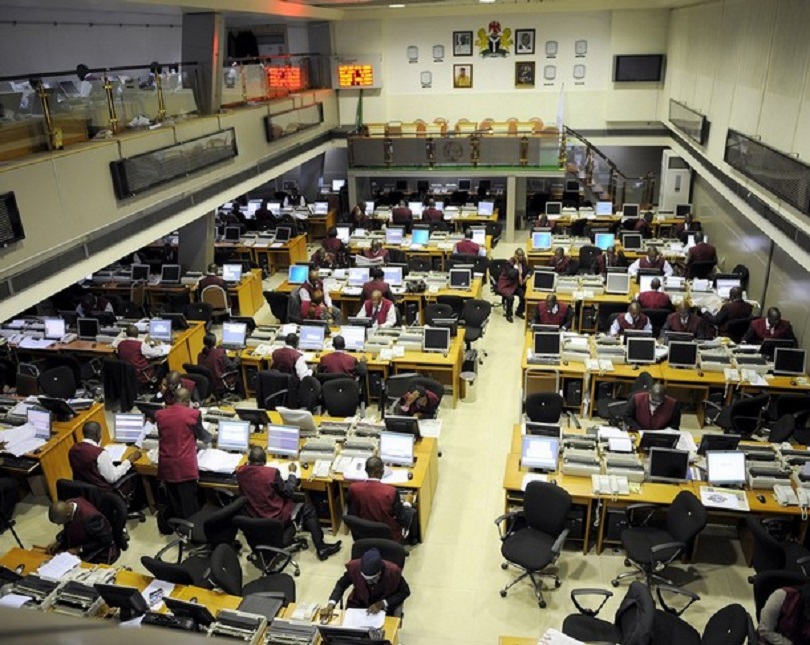
After going down for two straight trading sessions, the Nigerian Exchange (NGX) Limited returned to winning ways on Thursday, closing higher by 0.52 per cent.
Renewed bargain-hunting rescued Customs Street from the snarl of the fowler, as the bears were not ready to let go.
Data obtained by Business Post from the bourse confirmed this, as investor sentiment remained bearish after a negative market breadth index. There were 31 price gainers and 35 price decliners yesterday.
Also, the sustained selling pressure weakened three of the five indices tracked by this newspaper, with the insurance space down by 0.71 per cent, the banking counter down by 0.45 per cent, and the energy industry down by 0.29 per cent.
However, the industrial goods sector appreciated by 1.88 per cent, while the consumer goods index improved by 0.25 per cent.
As a result, the All-Share Index (ASI) went up by 1,010.23 points to 196,908.76 points from 195,898.53 points, and the market capitalisation expanded by N649 billion to N126.399 trillion from N125.750 trillion.
FTN Cocoa topped the advancers’ chart after it grew by 10.00 per cent to N6.27, Fidson surged by 9.97 per cent to N105.35, Deap Capital advanced by 9.89 per cent to N7.00, Caverton rose by 9.40 per cent to N6.40, and Livestock Feeds increased by 9.30 per cent to N7.05.
On the flip side, Eterna lost 10.00 per cent to trade at N42.30, Omatek deflated by 10.00 per cent to N2.52, SCOA Nigeria crashed by 9.94 per cent to N22.65, Fortis Global Insurance contracted by 9.24 per cent to N1.08, and Sovereign Trust Insurance slipped 9.09 per cent to N2.10.
During the session, market participants traded 549.8 million equities worth N44.7 billion in 55,465 deals versus the 671.3 million shares valued at N26.1 billion transacted in 58,792 deals on Wednesday.
This indicated that the value of transactions soared by 71.26 per cent, while the volume of trades and the number of deals decreased by 18.10 per cent and 5.66 per cent apiece.
Fortis Global Insurance finished the day as the busiest stock with 32.2 million units valued at N34.8 million, Access Holdings traded 28.1 million units worth N701.0 million, First Holdco exchanged 27.7 million units for N1.4 billion, Zenith Bank transacted 27.5 million units worth N2.6 billion, and Dangote Cement sold 26.9 million units valued at N20.7 billion.
By Dipo Olowookere
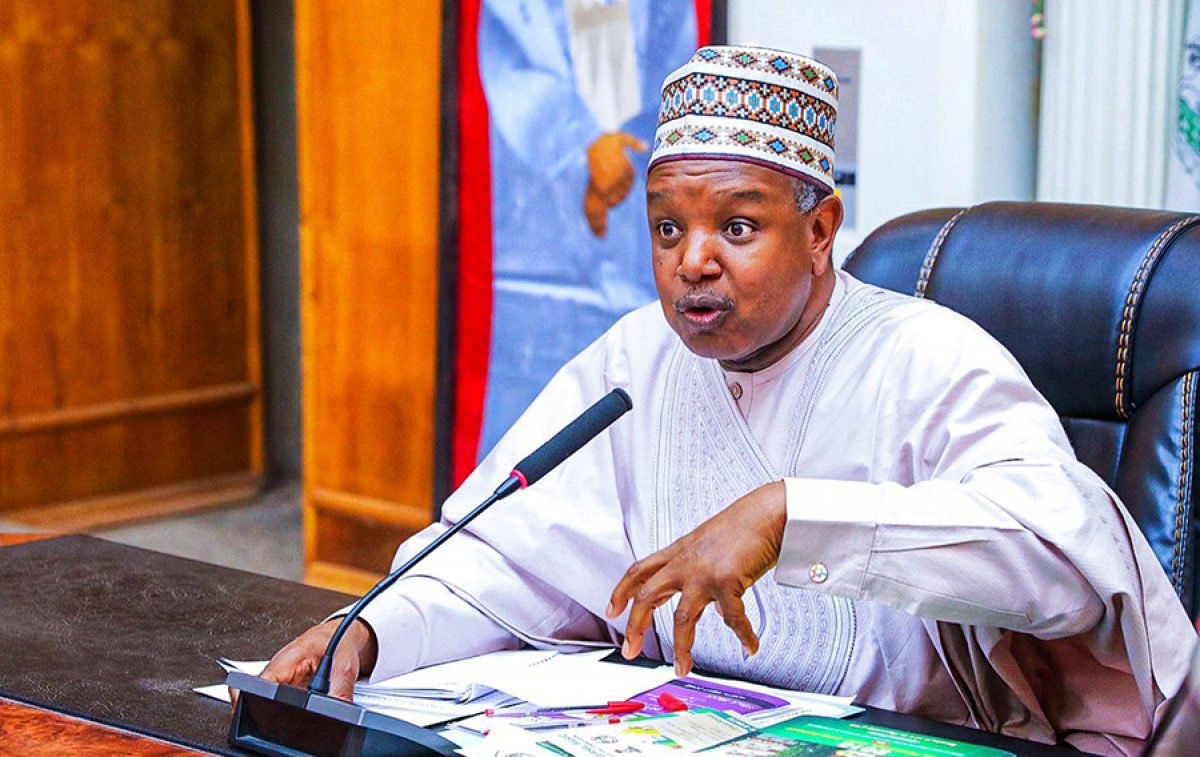
The Minister of Budget and Economic Planning, Mr Abubakar Bagudu, has stressed the key role decentralised initiatives play in unlocking economic opportunities across the country.
Speaking in Abuja on Wednesday when he received members of the Crop, Aquaculture, Livestock Farmers and Value Chain Economic Actors Association of Nigeria (CALFAN), the Minister noted that initiatives like the Renewed Hope Ward Development Programme of President Bola Tinubu concentrate development planning at the ward level, which is the lowest administrative unit in Nigeria’s governance structure.
He welcomed the decision of the farmers’ group to collaborate with the federal government to accelerate the programme’s implementation.
Mr Bagudu explained that the project aims to enable communities to identify their development opportunities rather than relying solely on a top-down approach, adding that Nigeria has 8,809 wards, each with unique economic prospects that can be accessed through targeted interventions.
Under the initiative, wards will determine their priority economic opportunities, after which the federal government, state governments, local authorities, and development partners will work together to provide the necessary support.
According to him, Nigeria’s constitutional framework assigns development responsibilities to the three tiers of government, but in practice, these roles have not always been well coordinated, often resulting in duplication, inefficiencies, and interruptions in development initiatives.
“Our belief is that every ward in Nigeria is an acre of diamonds waiting to be uncovered. Each community has its own strengths and potential, and development strategies must reflect these distinctive qualities,” he said.
In his remarks, the president of CALFAN, Mr Aliyu Abdulraheem, outlined the association’s proposal to serve as a field-level implementation partner for the Renewed Hope Ward Development Programme.
He highlighted CALFAN’s extensive grassroots structure, including Ward-Level Extension Service Offices (WESOs) and a digital platform that supports real-time beneficiary identification, community mobilisation, data collection, and monitoring of development activities.
He disclosed that the proposed platform would facilitate economic mapping of rural communities, infrastructure assessments, digital surveys, and real-time data collection to support evidence-based policy decisions and programme monitoring.
The CALFAN boss highlighted the inclusive approach that encompasses the entire agricultural value chain, including farmers, input suppliers, processors, transporters, traders, and service providers.
Unveiled in 2025 by President Tinubu, the Renewed Hope Ward Development Programme aims to reset development planning by boosting economic activities at the ward level through collaboration among the federal, state, and local governments.









-
 Feature/OPED6 years ago
Davos was Different this year
-
Travel/Tourism10 years ago
Lagos Seals Western Lodge Hotel In Ikorodu
-

 Showbiz3 years ago
Estranged Lover Releases Videos of Empress Njamah Bathing
-
 Banking8 years ago
Sort Codes of GTBank Branches in Nigeria
-

 Economy3 years ago
Subsidy Removal: CNG at N130 Per Litre Cheaper Than Petrol—IPMAN
-

 Banking3 years ago
Sort Codes of UBA Branches in Nigeria
-

 Banking3 years ago
First Bank Announces Planned Downtime
-

 Sports3 years ago
Highest Paid Nigerian Footballer – How Much Do Nigerian Footballers Earn