Economy
Pass PIB to Stabilise Oil Industry—NNPC Begs NASS

By Modupe Gbadeyanka
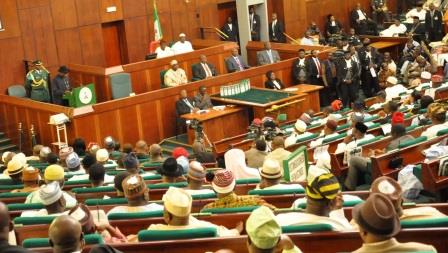
The National has been urged to pass the Petroleum Industry Bill (PIB) into law to dispel the air of uncertainty around the industry, create an enabling environment for the industry to flourish and dissuade the International Oil Companies (IOCs) from exiting the country.
This call was made by the Group Managing Director of the Nigerian National Petroleum Corporation (NNPC), Mr Maikanti Baru, while speaking on the Nigerian Television Authority (NTA) morning talk show, ‘GoodMorning Nigeria’ with the topic: ‘Nigeria Lingering LNG Projects’.
Mr Baru, who spoke on the programme on Monday in Abuja, noted that the long delay in the passage of the PIB had led to uncertainty in the fiscal terms, while the recent move by the National Assembly to amend the NLNG Act had also dampened the optimism of investors in the industry.
“The Review of the NLNG Act by the National Assembly is causing a challenge for the Federal Government and the IOCs and it is sending wrong signals to the international community about how business is done in the country,” Mr Baru stated.
The NNPC helmsman said the NLNG market was growing at a tremendous rate, disclosing that between now and 2030, it is projected that the market would grow by 65 percent.
He said the market for LNG was there and that the Federal Government would do everything to take advantage of the opportunity.
Mr Baru informed that the government would do everything to ensure the take-off of Bonny NLNG Train 7 and the Brass LNG in the months ahead after which the Olokola LNG would come on board if the fundamentals were strong.
He stated that the NNPC was refocusing on the Brass LNG and rebuilding the confidence of investors on the project after the exit of Conocophillips a few years ago, adding that Nigerians and the Federal Government would gain a lot from the project in terms of taxes, royalties and profits.
He noted that when the project comes on stream, it would create massive employment opportunities for Nigerians.
“We are refocusing on Brass LNG and rebuilding the confidence of the IOCs in the project. It has a lot to do for Nigerians as it will create employment opportunities and create more revenue opportunities for the Federal Government. We will continue to put the right enablers in place for the project to go on,” he averred.
The NNPC GMD described the Bonny NLNG as one of the biggest success stories of the Nigerian oil and gas industry since it came on stream in 1995, affirming that the project has generated $90 billion revenue, $30 billion dividends and contributed 4 per cent to the country’s Gross Domestic Product since inception.
Mr Baru noted that the focus of the industry was to ensure stable security of investment, personnel and investors and to ensure that all community issues were addressed in order to boost revenue for the government and investors from the industry.
On his part, former GMD of the NNPC, Mr Jackson Gaius Obaseki, commended the current leadership of the NNPC for its commitment to the growth and development of the oil and gas Industry, noting that the leadership has what it takes to make the Bonny NLNG Train 7, Brass LNG project and OK LNG to materialize.
Economy
Bears Overrun Stock Exchange by 0.57% as Investors Lose N557bn
By Dipo Olowookere
Selling pressure crashed the Nigerian Exchange (NGX) Limited by 0.57 per cent on Thursday, with the market breadth index turning negative after recording 37 price gainers and 39 price losers, indicating weak investor sentiment.
Customs Street was dominated by the bears yesterday after traders decided to book profit, with almost all the key segments of the bourse in red except for the commodity index, which was flat.
The insurance counter lost 1.35 per cent, the consumer goods sector was down by 1.31 per cent, the banking industry depreciated by 0.95 per cent, the industrial goods segment dropped 0.71 per cent, and the energy landscape weakened by 0.15 per cent.
Consequently, the All-Share Index (ASI) moderated by 870.23 points to 165,397.37 points from 166,267.60 points and the market capitalisation shrank by N557 billion to N105.886 trillion from N106.443 trillion.
Omatek fell by 9.40 per cent to sell for N2.12, International Energy Insurance depleted by 6.06 per cent to N3.10, International Breweries slumped by 6.00 per cent to N14.10, NEM Insurance dipped by 5.60 per cent to N32.00, and Lafarge Africa tumbled by 5.06 per cent to N150.00.
On the flip side, InfinityTrust Mortgage Bank gained 10.00 per cent to trade at N7.70, Union Homes REIT appreciated by 10.00 per cent to N64.90, John Holt also improved its value by 10.00 per cent to N7.70, NCR Nigeria jumped 10.00 per cent to N188.15, and Austin Laz expanded by 9.95 per cent to N4.09.
The busiest stock for the session was Access Holdings with 54.3 million units valued at N1.2 billion, Deap Capital sold 51.2 million units worth N300.0 million, Tantalizers traded 41.9 million units for N169.5 million, Omatek exchanged 33.5 million units worth N77.9 million, and Japaul transacted 31.5 million units valued at N80.1 million.
At the close of transactions, 768.3 million units worth N21.2 billion exchanged hands in 46,481 deals during the trading day versus the 822.7 million units valued at N24.9 billion transacted in 43,548 deals a day earlier, showing a slip in the trading volume and value by 6.61 per cent and 14.86 per cent apiece, and a spike in the number of deals by 6.74 per cent.
Economy
Crude Oil Down as Trump Dials Down on Greenland, Iran
By Adedapo Adesanya
Crude oil slid about 2 per cent on Thursday after US President Donald Trump softened threats toward Greenland and Iran, with Brent futures down by $1.18 or 1.8 per cent to settle at $64.06 a barrel and the US West Texas Intermediate (WTI) futures depreciating by $1.26 or 2.1 per cent to $59.36 a barrel.
President Trump said he has secured total and permanent US access to Greenland in a deal with North Atlantic Treaty Organisation (NATO).
He disavowed military action against Greenland but reiterated his desire for US ownership, framing it as a global security imperative.
European Union leaders are rethinking ties with the US at an emergency summit after Mr Trump’s threat of tariffs and even military action badly shook confidence in the transatlantic relationship. The European Parliament announced it was freezing work on approval of the US-EU trade deal agreed in July 2025.
The American President also said he hoped there would be no further US military action in Iran, but added the US would act if Iran resumes its nuclear programme.
Iran, operating under sanctions, is the third-biggest crude producer in the Organization of the Petroleum Exporting Countries (OPEC) behind Saudi Arabia and Iraq. With less tension around Greenland and Iran, oil prices had to head south.
There was also pressure as there was some positive movement that could lead to a solution to end Russia’s war in Ukraine.
President Volodymyr Zelenskiy of Ukraine said on Thursday after talks with President Trump in Davos that terms of security guarantees for Ukraine had been finalized, but the vital issue of territory in its war with Russia remains unsolved.
The US President has pressured Ukraine to secure peace after nearly four years of war, despite few signs Russia wants to stop fighting.
A deal to bring peace to Ukraine and lift sanctions on Russia, the world’s third-biggest crude producer, could reduce oil prices by making more fuel available on global markets.
In Venezuela, another sanctioned OPEC member, trading houses Vitol and Trafigura were exporting fuel oil under a US-backed deal following capture of Venezuelan President.
The US Energy Information Administration (EIA) said energy firms added 3.6 million barrels of crude to storage during the week ended January 16.
Economy
Focus on Nigeria’s Reforms, Not Security Challenges—Tuggar to Investors
By Adedapo Adesanya
The Minister of Foreign Affairs, Mr Yusuf Tuggar, has urged international investors to look beyond the security challenges facing Nigeria, and instead focus on the reforms.
Speaking during an interview at the ongoing World Economic Forum (WEF) in Davos, Switzerland, Mr Tuggar noted that incidents of insecurity being recorded across the country are “isolated cases” and not the reality across the country.
According to him, instability in the Sahel had spilled into Nigeria.
“We are urging investors to treat us the same way they treat other countries. The fact that there were isolated incidents in some places in the country does not mean that it’s the entire country.
“Conversations that are taking place here also have to do with risk buyers, where the issue of geopolitical risk, in particular, is over-hyped when it comes to Africa, which doesn’t apply in other parts of the world.
“It’s very important to see the conflict for what it is. It’s a regional conflict that has spilled over into Nigeria. It is not removed from the conflict in the Sahel. It’s not removed from what happened in Libya many years ago,” he told CNN on Tuesday.
“It’s not removed from the proliferation of weaponry, of fighters, and climate change issues, and so many other complex issues.”
Mr Tuggar said the government is working with international partners, including the United States, to target bandits and terrorist groups in their hideouts.
The minister also said Nigeria is actively engaging investors and pushing back against an exaggerated risk narrative around Nigeria’s economy.
“We’re urging potential investors to treat us the same way, to look at us the way that they look at other countries. The fact that there is an incident in a country of 923,000 square kilometres does not mean you write off the entire country,” he said.
Mr Tuggar highlighted a number of macroeconomic and fiscal reforms under the Bola Tinubu administration aimed at improving investor confidence, including changes to the foreign exchange regime, tax reforms, and a reduction in corporate income tax.
The minister said Nigeria’s foreign reserves had risen to about $43 billion, while reforms had eased access to foreign exchange.
“It’s very important we look at the progress that the Tinubu administration has been making with macroeconomic reforms, with the tax reforms that make it easier for investors to come into Nigeria,” he said.
On security, he said Nigeria had recorded significant gains against Boko Haram through regional cooperation, particularly the multinational joint task force, which allowed cross-border pursuit of insurgents.
Mr Tuggar warned that persistent negative framing of Nigeria’s security situation could itself worsen insecurity by encouraging extremist groups to stage attacks for attention.
“So, let us look at Nigeria holistically. Let us not continue to dwell on some of these isolated incidents and define the entire country by it,” he said.
According to him, apart from working with security agencies to safeguard lives and properties, the country has also secured the services of forest guards to militate against terrorism.
-
Feature/OPED6 years agoDavos was Different this year
-
Travel/Tourism9 years ago
Lagos Seals Western Lodge Hotel In Ikorodu
-
Showbiz3 years agoEstranged Lover Releases Videos of Empress Njamah Bathing
-
Banking8 years agoSort Codes of GTBank Branches in Nigeria
-
Economy3 years agoSubsidy Removal: CNG at N130 Per Litre Cheaper Than Petrol—IPMAN
-
Banking3 years agoFirst Bank Announces Planned Downtime
-
Banking3 years agoSort Codes of UBA Branches in Nigeria
-
Sports3 years agoHighest Paid Nigerian Footballer – How Much Do Nigerian Footballers Earn