Economy
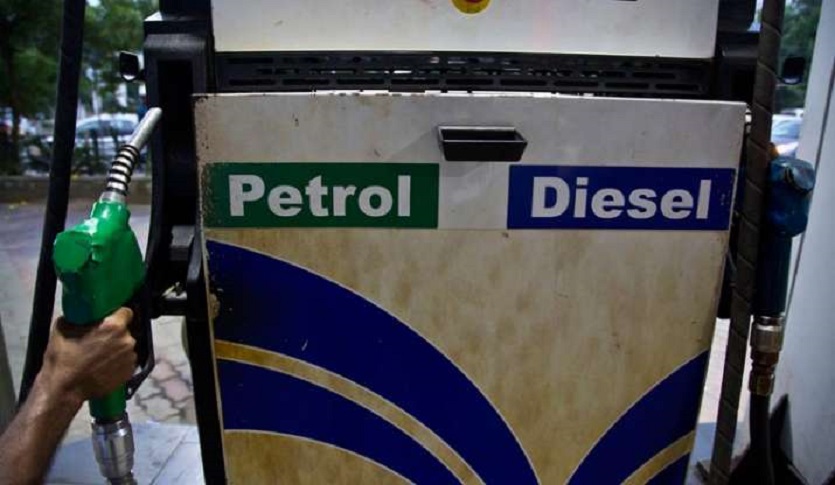
Petrol Prices Drop to N164.91/L in August
By Sodeinde Temidayo David
The average price paid by consumers for Premium Motor Spirit (PMS) popularly known as petrol experienced a calm last month as it decreased by 0.6 per cent to N164.91 per litre from N165.91 in July 2021.
However, on a year-on-year basis, the average price increased by 10.9 per cent as the value stood at N148.78 in August 2020.
Business Post gathered from the data released by the National Bureau of Statistics (NBS) in its Premium Motor Spirit (Petrol) Price Watch for August 2021 that Abia, Ebonyi and Lagos States recorded the highest average price.
It was observed that consumers in Abia bought fuel for N173.14 per litre, Ebonyi residents bought at the rate of N170.13 and Lagos petrol users paid N168.31 for every litre bought.
Meanwhile, the states with the lowest average price were Niger State at N162.00 a litre, Borno State at N161.71 per litre and Kano State at N158.75 for one litre.
In terms of the geo-political zones, the South East recorded the highest average price at N167.95 per litre, with Abia selling at N173.14 and Enugu recording the lowest at N164.62 per litre.
The South-West zone trailed at an average price of N165.48 per litre with Lagos selling at the peak price of N168.31 while Ondo state residents bought at the lowest price of N163.53 for one litre.
The average price of petrol in the South-South in August was N165.02 per litre, with Edo and Cross River States tied as the highest at N166.00 while the lowest was Rivers State at N163.41.
Business Post understands that petrol was cheaper in the northern part of the country with North West consumers buying the fuel at N163.41 for a litre in the month under review. It was followed by the North East at N164.39 and North Central traded at N164.09 per litre.
The changes in the price can be attributed to the performance of international oil prices which dropped in August due to concerns on global demand caused by the rapid spread of the Delta variant of the coronavirus.
Economy
Dangote Eyes New Investments, Acquisitions as Goldman Sachs Tours Refinery
By Adedapo Adesanya
Nigerian businessman and chief executive of Dangote Industries Limited, Mr Aliko Dangote, has unveiled plans for a new phase of investments and acquisitions as the conglomerate pushes towards its target of generating $100 billion in annual revenue by 2030.
Mr Dangote disclosed this while receiving a delegation of senior executives from global investment banking and financial services firm Goldman Sachs, led by co-chief executive of Goldman Sachs International and Global Co-Head of Investment Banking, Mr Anthony Gutman, during a tour of the Dangote Petroleum Refinery & Petrochemicals and Dangote Fertiliser Limited complex in Lagos.
Speaking after the visit, Mr Dangote said the refinery and associated industrial facilities underscore the transformative impact of long-term investment in Africa, stressing that the group’s ambitions extend beyond its current strategic plan.
“No matter how we try to explain what we have built, you cannot fully appreciate it until you see it. But this is only the beginning. We need to look beyond 2030.
“The next phase of our journey will include new investments and acquisitions as we continue to scale the business,” he said.
He added that detailed internal modelling had reinforced management’s confidence that the Group’s target of generating $100 billion in annual revenue by 2030 was achievable.
According to him, the projections were based on conservative assumptions and had strengthened the company’s conviction to pursue an even more ambitious long-term growth strategy.
Mr Dangote also revealed that the strong participation of employees in the refinery’s recent private placement reflected growing internal confidence in the company’s long-term strategy and future prospects.
The Goldman Sachs delegation, after an extensive tour of the 700,000 barrels-per-day refinery, described the project as an extraordinary achievement.
“It is extraordinary what Mr Dangote and the whole organisation have achieved. The ambition, the scale of the project, the quality of the project and the culture of the people is very impressive,” the executives said.
According to a statement issued by Dangote Group on Friday, the delegation was led by Mr Anthony Gutman and included Mr Adib N. Zouein, Co-Head of EMEA Emerging Markets Regional Sales and Head of the Middle East and North Africa region for Global Banking & Markets Public; Mr Ryad Yousuf, Global Head of FICC Sales Strats and Structuring; and Mr Jimi Adesanya, Head of Sub-Saharan Africa Sales (excluding South Africa).
The visitors were received by Dangote; Group Vice President, Oil & Gas, Mr Devakumar Edwin; Managing Director and Chief Executive Officer of Dangote Petroleum Refinery & Petrochemicals, Mr David Bird; Group Executive Director, Oil & Gas, Ms Fatima Aliko Dangote; Chief of Staff to the President/CEO, Ibrahim Dikko; Group Chief Branding and Communication Officer, Mr Anthony Chiejina; Group Chief Economist, Mr Hassan Mahmud; Group Chief Strategy Officer, Mr Aliyu Suleiman; and Head of Administration, Dangote Petroleum Refinery & Petrochemicals, Mr Musa Bala, among other senior executives.
Economy
Senate Probes N1.2trn Fuel Subsidy Deductions as NEITI Claims N1.16tn Spent in 2021
By Adedapo Adesanya
The Senate Public Accounts Committee has heard that Nigeria spent N1.16 trillion on fuel subsidy in 2021, while N1.20 trillion was deducted from federation crude oil sales proceeds during the same period.
The disclosure came from the Chairman of the Revenue Mobilisation Allocation and Fiscal Commission (RMAFC), Mr Mohammed Bello Shehu, during the committee’s ongoing investigation into the 2021 to 2023 Nigeria Extractive Industries Transparency Initiative (NEITI) audit reports on the oil and gas sector.
According to the commission, crude and petroleum product losses cost N16.2 billion, pipeline repairs accounted for N22.05 billion, while strategic stock holding attracted N6.75 billion.
The revelations come against the backdrop of Nigeria’s long-running fuel subsidy regime, which successive governments maintained to keep the pump price of petrol artificially low despite mounting fiscal pressures.
Over the years, subsidy payments consumed trillions of Naira, significantly reducing revenues available to the three tiers of government and contributing to widening budget deficits.
The issue reached a turning point in May 2023 when President Bola Tinubu announced the removal of fuel subsidy during his inauguration speech, declaring that “fuel subsidy is gone.” The decision followed years of concerns over the rising cost of the programme, allegations of fraud, and repeated recommendations by fiscal authorities and international financial institutions that the subsidy had become unsustainable.
The removal triggered a sharp increase in the pump price of Premium Motor Spirit (petrol), leading to higher transportation and living costs across the country. In response, the federal government introduced a series of palliative measures, including cash transfers, support for mass transit, and wage-related interventions, while arguing that savings from the subsidy would be redirected to infrastructure, education, healthcare, and other critical sectors of the economy.
The commission also argued that the current method of calculating the 13 per cent derivation fund undermines the constitutional intention of the policy.
Meanwhile, the committee stood down the Niger Delta Development Commission’s presentation until next Wednesday to allow lawmakers review its submission.
The committee also expressed displeasure over the absence of the Auditor-General of the Federation, warning that he must appear before lawmakers next Tuesday or face compulsory appearance through the constitutional powers of the National Assembly.
Economy
Nigerian Businesses Expect Naira to Appreciate on Dollar Till January 2027
By Adedapo Adesanya
Businesses in the country expect the Naira to gradually appreciate against the US Dollar between now and January 2027, according to the Central Bank of Nigeria’s (CBN) July 2026 Business Expectations Survey Report released on Thursday.
The report showed that the Business Confidence Index (BCI) remained positive throughout the review period despite perceived macroeconomic challenges. It noted that all sectors expressed optimism about the economy, with the electricity, gas and water sector posting the highest Business Confidence Index of 59.4 points and the strongest expansion prospects for August 2026.
According to the report, “In July 2026, the Business Confidence Index was 5.7 points, reflecting continued optimistic sentiment among formal businesses.”
It attributed the positive sentiment mainly to increased demand (22.3 per cent), economic diversification (21.4 per cent), and improved access to finance (15.0 per cent). However, respondents identified inflation (27.7 per cent), energy-related challenges (23.4 per cent), insecurity (22.4 per cent), and heightened geopolitical uncertainties (16.5 per cent) as the major factors weighing on business confidence.
On the outlook by broad sector, the central bank said confidence remained positive across all sectors in July. The Industry sector recorded a modest improvement, with its index rising to 11.5 points from 10.5 points, while the Services sector increased to 3.6 points from 2.9 points.
By contrast, the Agriculture sector recorded a significant moderation, with its index falling to 3.4 points from 12.2 points.
Despite this, the apex bank said the six-month outlook remained upbeat, with confidence indices across all sectors indicating positive expectations over the review period.
On the macroeconomic outlook by region, the report noted a divergence in sentiment, with businesses in Northern Nigeria expressing stronger confidence than their Southern counterparts in July. Nevertheless, respondents across all regions maintained positive expectations for August.