
Economy
Recession: Mall Developers, Tenants Consider Rent Renegotiation


By Maureen Ihua-Maduenyi
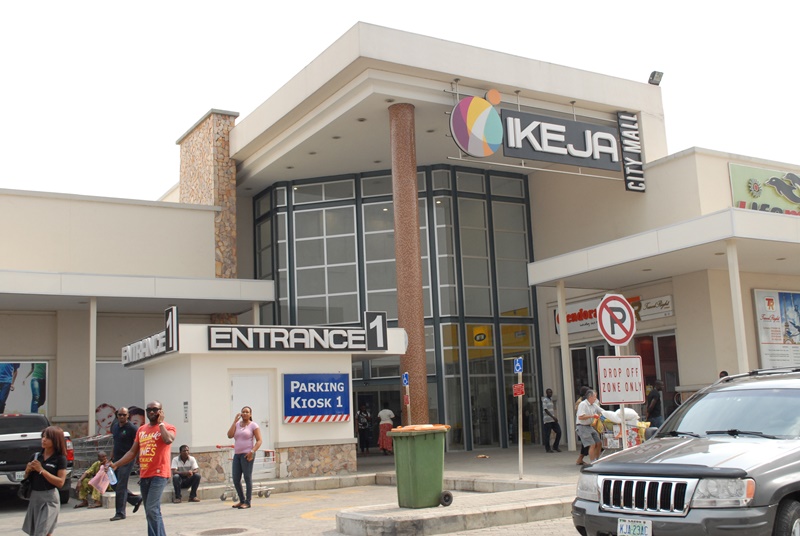
With the current economic crisis creating challenges for all sectors of the economy, the country’s rapidly growing retail sector is struggling.
Apart from a few malls, most retail facilities in the country were funded by private equity firms that got their funding mainly from foreign sources; and by virtue of this, they are currently facing a lot of challenges as many of their tenants who sell mostly foreign products, are finding it difficult to stock up or fit out in new malls due to forex scarcity.
Findings by our correspondent indicate that many tenants are no longer paying rents in some of the big and expensive malls, because the rents are high due to the naira to dollar exchange rate, and most of the retailers don’t have enough liquidity to stock up due to the forex restrictions, high costs and problems associated with importation.
According to a source, who did not want to be quoted, some tenants owe as much as 15 months’ rent and developers cannot ask them to vacate the malls as empty shops in a mall is an indication of a failed project.
Our correspondent gathered that the landlords were becoming more creative to keep their tenants in business and the malls functioning.
It was gathered that one of such creative ways was to ask tenants who owed rents to pay the service charges.
“If the rent is paid and the service charge is not paid, it becomes the landlord’s headache to settle the service charge. So, he will rather the tenants pay their service charges to keep the malls running,” a source told our correspondent.
An estate surveyor and valuer, Mr Rogba Orimolade, said majority of the functioning retail facilities were struggling to survive.
“A lot of these retailers are those who rely on not just forex, but goods that they bring in from overseas, and they are struggling. The market itself is in recession, so a lot of the malls are caught in the middle. Some of the tenants are leaving; some are trying to adjust and see what kind of local products they can stock,” he said.
According to Mr Orimolade, investors are also trying to make tough decisions such as pegging rents in such a way that tenants will not be discouraged, with some landlords already giving discounts, while some are reducing their rates against the Central Bank of Nigeria’s naira to dollar rate.
He explained, “There are so many ways that a lot of promoters of these malls are becoming creative with the way they ask tenants to pay their rents and it is only realistic they do that. From the way things are going, most of the malls that are going to be coming into the market now will source their funding locally and ensure that the rate they are charging is strictly in naira.
“Foreign investors also have to adapt, that is the reality. Sourcing for offshore funds is no longer realistic.”
He said that apart from facilities such as the Ikeja Mall and The Palms, both in Lagos, that were doing well in spite of the economic realities, because of their locations where retailers were eager to get shops, many others were groaning as a result of the economic crisis.
Mr Orimolade said, “Apart from some whose promoters who were able to read the market on time and focus more on Nigerian companies to take up spaces, many malls in Lagos and other parts of the country, especially those built with offshore funds, are struggling and have 30 to 40 per cent of their shops vacant.
“Their projections were that a lot of those foreign companies would take up space but those companies backed out, some even relocated from Nigeria.”
Rents in malls across the country go for as high as between $100 and $120 per square metre monthly; and are mostly paid quarterly, with many of the retailers taking spaces from 60 square metres upwards.
The Consultant, Retail Leasing, Broll Nigeria, Mrs Lola Toye, said business had slowed down in the retail market because of the economy and the cost of products.
She, however, said that even before the recession, some retailers had been struggling due to the kind of products they were selling.
Mrs Toye said, “Malls are not really empty, they may not be full either, but tenants not keeping up happened even when the economy was booming. There is low spending power, so people are cautious of what they spend money on. They now focus on essential things rather than non-essentials.
“Those of us that are letting offices are also experiencing this. There is an impact, but developers are still building despite this. Things are not shutting down, people believe that the economy will turn around shortly and when it does, they will be ready to take in new tenants.
“Landlords are making concessions; those who borrowed in dollars and need to pay back their loans need to do that in dollars. Landlords need to recoup their investments, while tenants also need to make money. So, both tenants and landlords are getting more creative.”
According to Mrs Toye, there is still a huge demand for shops but it is taking longer to fill the malls than it was in the past and landlords are looking at charging rents annually instead of quarterly.
“With this, they don’t have to worry about any kind of fluctuation in the currency; within 12 months, things can turn around. Some malls that are not based on dollar investment can charge in naira. We are looking at what suits the tenant and what suits the landlord. We are optimistic and very cautious too,” she added.
Malls developer and the Chief Executive Officer of Top Services Limited, Mr Tokunbo Omisore, said concession had always been considered between landlords and tenants.
“I cannot, for instance, charge rent at the rate of the parallel market and it has been on for a long time,” he said.
The Founding Partner, Bode Adediji Partnership, an estate surveying and valuation firm, Mr Bode Adediji, said the biggest problem in the retail sector remained the payment of rents in dollars.
He added, “Charging tenants on dollar basis is okay in the interim, but it is not sustainable; there will always be an impact of the rent on the income to be generated by tenants. All over the world, rental charges are based on an understanding between landlords and tenants; but in Nigeria, it is totally absent. Landlords think they matter more, the mind-set is either you can afford it or not.
“The business model for a shopping complex should never be based on the short or medium-term; it should be on a long-term basis always.”
According to Mr Adediji, the way out of the current problem is for rental and lease agreements between shopping mall tenants and landlords to be based on realistic and sustainable parameters.





By Adedapo Adesanya
The NASD Over-the-Counter (OTC) Securities Exchange extended its stay in the south territory with a decline of 0.56 per cent on Wednesday, April 2.
This brought down the market capitalisation by N13 billion to N2.417 trillion from N2.430 trillion, and downed the NASD Unlisted Security Index (NSI) by 22.57 points to 4,062.87 points from the previous session’s 4,062.87 points.
It was observed that the NASD exchange ended with three price gainers and three price losers during the trading day.
MRS Oil Plc depreciated by N19.00 to close at N171.00 per unit compared with the previous price of N190.00 per unit, NASD Plc lost N4.14 to trade at N37.36 per share compared with Wednesday’s N41.50 per share, and Central Securities Clearing System (CSCS) Plc gave up N2.00 to sell at N78.00 per unit versus N80.00 per unit.
On the flip side, FrieslandCampina Wamco Nigeria Plc appreciated by 19 Kobo to N93.00 per share from N92.81 per share, Food Concepts Plc expanded by 15 Kobo to N2.87 per unit from N2.72 per unit, and Great Nigeria Insurance (GNI) Plc improved by 2 Kobo to 52 Kobo per share from 50 Kobo per share.
Yesterday, the volume of securities dipped by 91.8 per cent to 260.2 million units from 3.2 billion units, the value of securities went down by 98.1 per cent to N154.2 million from N8.3 billion, while the number of deals soared by 53.3 per cent to 46 deals from 30 deals.
GNI Plc was the most active stock by value on a year-to-date basis with 3.4 billion units worth N8.4 billion, followed by CSCS Plc with 56.9 million units valued at N3.9 billion, and Okitipupa Plc with 27.5 million units traded for N1.8 billion.
The most traded stock by volume on a year-to-date basis was also GNI Plc with 3.4 billion units sold for N8.2 billion, trailed by Resourcery Plc with 1.1 billion units exchanged for N415.7 million, and Infrastructure Guarantee Credit Plc with 400 million units transacted for N1.2 billion.
By Adedapo Adesanya
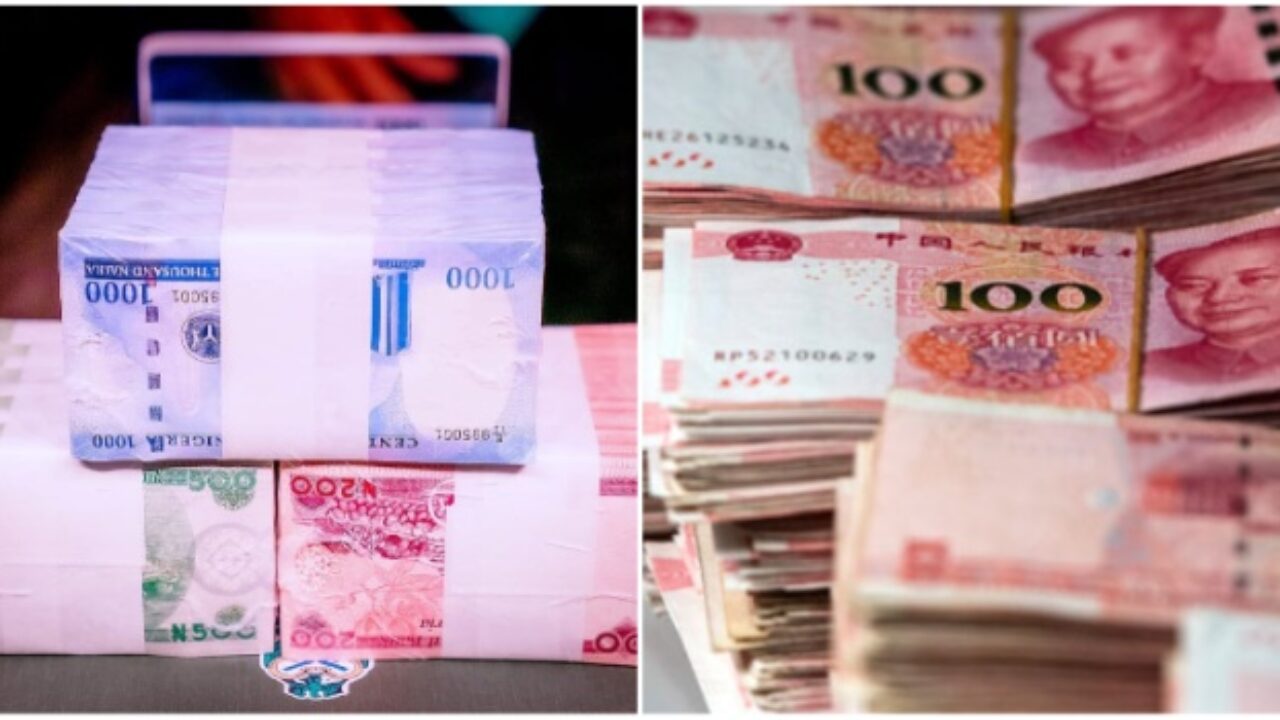
The Naira dropped N2.09 or 0.15 per cent against the United States Dollar in the Nigerian Autonomous Foreign Exchange Market (NAFEX) on Thursday, April 2, to trade at N1,380.79/$1 compared with Wednesday’s rate of N1,378.70/$1.
However, it appreciated against the Pound Sterling in the official market by N2.77 to quote at N1,824.86/£1 versus the N1,836.57/£1 it was traded at midweek, and improved its value against the Euro by N10.54 to N1,591.92/€1 from N1,602.46/€1.
Yesterday was the last trading session of the week for the local currency in the spot market, as the market will be closed on Friday and Monday for the Easter Holiday.
At the black market, the Nigerian Naira maintained stability against the greenback yesterday at N1,405/$1, but gained N8 at the GTBank FX counter to settle at N1,388/$1, in contrast to the previous session’s N1,396/$1.
Pressure eased on the domestic currency as strong policy indicators have helped calm the majority of worries within the financial systems. Particularly in the remittance segment, the apex bank has directed all International Money Transfer Operators (IMTOs) to route remittance transactions through designated Naira settlement accounts in banks, a move aimed at boosting transparency and channelling more foreign exchange into the formal market.
This helps take off pressure from the foreign reserves, which have fallen below the $50 billion mark as they are gradually decreasing rather than falling sharply.
Meanwhile, the cryptocurrency market was bullish on Thursday, as macro sentiment shifted against recent optimism after reports that Iran is drafting a protocol with Oman to manage traffic through the Strait of Hormuz, easing concerns about disruptions to a key global oil route.
The remarks came after U.S. President Trump on Wednesday night vowed to hit Iran “extremely hard” in the coming weeks and that the Strait of Hormuz would “open naturally” once the war ends.
Cardano (ADA) chalked up 1.9 per cent to trade at $0.2435, Dogecoin (DOGE) grew by 1.2 per cent to $0.0912, Ethereum (ETH) appreciated by 0.8 per cent to $2,066.37, Bitcoin (BTC) added 0.5 per cent to sell at $67,080.53, Solana (SOL) increased by 0.5 per cent to $79.91, and Ripple (XRP) jumped 0.2 per cent to $1.31.
Conversely, Binance Coin (BNB) dipped 0.7 per cent to $586.90, and TRON (TRX) depreciated by 0.3 per cent to $0.3147, while the US Dollar Tether (USDT) and the US Dollar Coin (USDC) closed flat at $1.00 each.

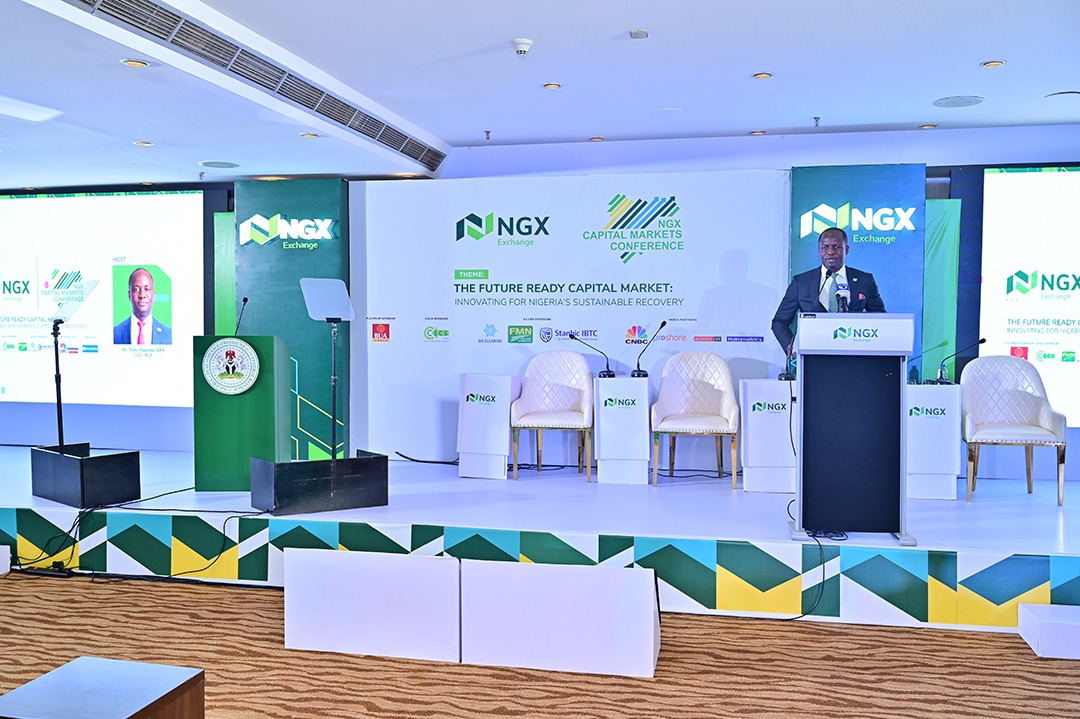
By Dipo Olowookere
The local stock market was relatively flat on Friday, as the bears and the bulls shared the spoils of war, though investor sentiment turned bullish compared with the preceding session’s bearish posture.
Data from the Nigerian Exchange (NGX) Limited showed that the All-Share Index (ASI) was marginally down by 4.66 points as it ended at 201,698.89 points versus Wednesday’s 201,703.55 points, and the market capitalisation slightly contracted by N3 billion to N129.806 trillion from N129.809 trillion.
Customs Street was shut on Friday because of the public holidays declared by the federal government today and next Monday.
Business Post reports that John Holt declined by 9.91 per cent to N15.45, Abbey Mortgage Bank shed 9.60 per cent to trade at N8.95, International Energy Insurance slipped by 6.48 per cent to N3.32, Chams shrank by 5.30 per cent to N3.75, and Tantalizers depreciated by 5.18 per cent to N4.03.
On the flip side, Unilever Nigeria improved by 10.00 per cent to N103.40, Fortis Global Insurance gained 9.82 per cent to trade at N1.23, Multiverse appreciated 9.81 per cent to N20.15, Legend Internet advanced by 9.38 per cent to N6.30, and Zichis grew by 9.02 per cent to N14.14.
The market breadth index was positive during the trading session, as there were 35 appreciating stocks and 24 depreciating stocks.
Yesterday, investors traded 560.0 million equities valued at N19.3 billion in 49,676 deals, in contrast to the 815.5 million equities worth N33.3 billion transacted in 52,641 deals in the preceding day, representing a drop in the trading volume, value, and number of deals by 31.33 per cent, 42.04 per cent, and 5.63 per cent, respectively.
Secure Electronic Technology dominated the activity log with 59.7 million shares valued at N61.1 million, Wema Bank exchanged 52.0 million equities worth N1.4 billion, VFD Group transacted 36.0 million stocks for N410.5 million, Access Holdings sold 35.3 million shares valued at N914.8 million, and Chams traded 31.0 million equities worth N115.0 million.
-
 Feature/OPED6 years ago
Davos was Different this year
-
Travel/Tourism10 years ago
Lagos Seals Western Lodge Hotel In Ikorodu
-

 Showbiz3 years ago
Estranged Lover Releases Videos of Empress Njamah Bathing
-
 Banking8 years ago
Sort Codes of GTBank Branches in Nigeria
-

 Economy3 years ago
Subsidy Removal: CNG at N130 Per Litre Cheaper Than Petrol—IPMAN
-

 Banking3 years ago
Sort Codes of UBA Branches in Nigeria
-

 Banking3 years ago
First Bank Announces Planned Downtime
-

 Sports3 years ago
Highest Paid Nigerian Footballer – How Much Do Nigerian Footballers Earn