
Economy
Tether Relocates Entity, Subsidiaries to El Salvador

By Adedapo Adesanya
Stablecoin issuer, Tether Holdings Limited, will move its corporate entity and subsidiaries to El Salvador after securing a digital asset service provider (DASP) license in the Central American nation.
According to a statement on Monday, this marks a step in Tether’s journey to foster global Bitcoin adoption banking on El Salvador’s history with cryptocurrency.
“This strengthens Tether’s position in one of the world’s most forward-thinking markets and fosters the development and implementation of cutting-edge solutions more efficiently in a dynamic environment where innovation thrives. It underscores the company’s dedication to leveraging Bitcoin’s transformative potential as it drives growth in emerging markets,” the statement said.
The company said El Salvador is rapidly establishing itself as a global hub for digital assets and technology innovation.
“By embracing blockchain technology and digital currencies, El Salvador is fostering an ecosystem that encourages innovation and attracts investment in the broader financial and technology sectors.
“This strategic positioning is helping to shape the future of financial systems, making the country a key player in the global fintech landscape,” Tether added.
Speaking on this, Mr Paolo Ardoino, CEO of Tether said, “This decision is a natural progression for Tether as it allows us to build a new home, foster collaboration, and strengthen our focus on emerging markets.
“El Salvador represents a beacon of innovation in the digital assets space. By rooting ourselves here, we are not only aligning with a country that shares our vision in terms of financial freedom, innovation, and resilience but is also reinforcing our commitment to empowering people worldwide through decentralized technologies.”
As it takes these next bold steps, the company looks forward to working closely with El Salvador’s government, businesses, and communities to shape the future of financial technology.










By Aduragbemi Omiyale
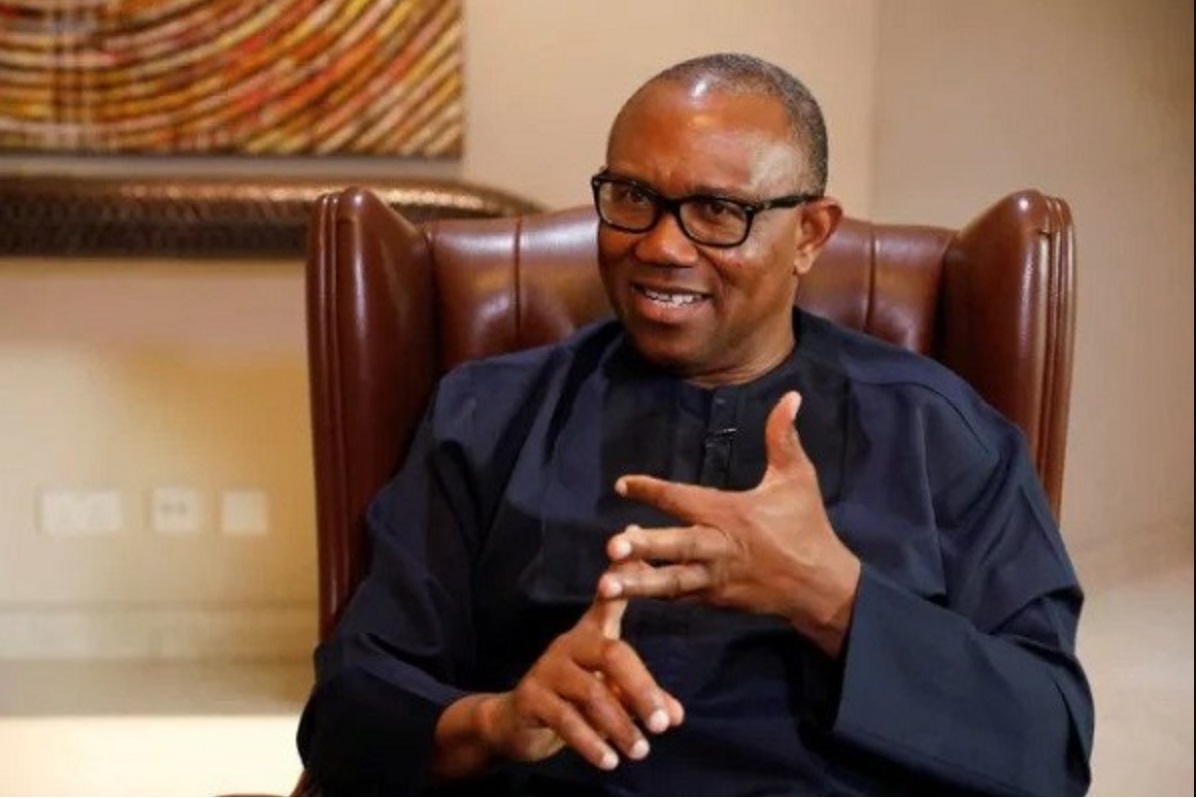
The presidential candidate of the Labour Party (LP) in the 2023 general elections, Mr Peter Obi, has blamed the federal government for the high energy costs in Nigeria.
In a post, the former Anambra State Governor said if the central government, led by President Bola Tinubu, had planned for the future, Nigerians would not be paying through their nose for premium motor spirit (PMS), otherwise known as petrol, and Automotive Gas Oil (AGO), also known as diesel.
Disruption in the supply of crude oil on the global market has caused consumers to pay more for petrol and diesel in the country.
The United States and Israel waged war against Iran, killing its Supreme Leader, Ayatollah Ali Khamenei, about two weeks ago in airstrikes.
This has triggered tension in the Middle East, with Iran firing missiles at its neighbours, and closing the Strait of Hormuz, a small water path between Iran and Oman, where one-fifth of global crude oil supply passes through.
Before the crisis, PMS was selling at N835 per litre and crude oil was below $90 per barrel. But oil rose above $100 per barrel, causing the price of petrol in Nigeria to hit over N1,200 per litre.
Reacting to the development, Mr Obi said Nigeria felt the shock despite not being attacked because the government failed to plan.
“Many people wonder why any adverse development in the global economy quickly impacts Nigeria. A recent example is the tension involving Iran, which led to an increase in global oil prices and, subsequently, a rise in petroleum prices in Nigeria.
“A few weeks ago, petrol was selling for less than N1,000 per litre, but today it costs over N1,200 per litre. Diesel, which was also priced below N1,000 per litre, is now over N1,500 per litre. These rapid increases illustrate how quickly external shocks can affect the Nigerian economy.
“The reason for this is straightforward: most countries, whether they are oil-producing or non-oil-producing, maintain strategic petroleum reserves to cushion against supply or price shocks. This means that when there is a disruption in the global oil market, they can release part of these reserves to stabilise supply. However, Nigeria lacks such a buffer, so the impact is felt almost immediately.
“The underlying issue is a lack of planning. Countries that engage in planning create buffers against shocks, while those that do not remain vulnerable to them. The old maxim remains true: when a country fails to plan, it has already planned to fail,” he wrote.
Earlier this week, the Minister of Finance, Mr Wale Edun, said the country’s economy was strong enough to absorb external shocks, saying the over 4 per cent growth in the gross domestic product (GDP) in the fourth quarter of last year was a testament to that.

By Adedapo Adesanya
The Chairman of the National Tax Policy Implementation Committee (NTPIC), Mr Joseph Tegbe, has reiterated that Nigeria’s new tax regime is designed to ease the burden on workers and small businesses while strengthening the country’s fiscal sustainability and economic competitiveness.
Speaking at the BusinessDay Tax Reform Conference 2026, themed “Navigating the New Tax Regime: What It Means for Your Wallet,” Mr Tegbe described the reforms as the most comprehensive overhaul of Nigeria’s tax architecture in decades, aimed at simplifying taxation, improving fairness, and encouraging economic growth.
According to him, the reforms, anchored on four landmark legislations: the Nigeria Tax Act, 2025, Nigeria Tax Administration Act, 2025, Nigeria Revenue Service (Establishment) Act, 2025, and the Joint Revenue Board of Nigeria (Establishment) Act, 2025, introduce targeted reliefs for individuals and small businesses.
Under the new framework, individuals earning less than N800,000 annually will pay no personal income tax, while workers can claim rent relief of up to 20 per cent, capped at N500,000, among other reliefs.
He also said small businesses will benefit significantly, with companies earning below N100 million in annual revenue and with assets under N250 million exempted from Company Income Tax (CIT), while nano-enterprises earning below N12 million annually are exempted from income tax.
He, however, underscored the importance of proper documentation of earnings and subsequent filing of returns, even for those who fall within the threshold exempted from income tax.
“These reforms are designed to make taxation simpler, fairer, and more predictable for Nigerians,” he said, adding that “For most workers and small businesses, the new regime means paying the same or even lower taxes while operating within a more transparent system.”
The reforms also strengthen Nigeria’s tax administration through improved coordination among key institutions, including the Nigeria Revenue Service, the Joint Revenue Board of Nigeria, the Tax Appeal Tribunal, and the Office of the Tax Ombudsman, while accelerating the digitalisation of tax processes.
Mr Tegbe noted that beyond improving revenue efficiency, the reforms aim to create a tax system that supports enterprise, investment, and long-term economic growth.
“The ultimate objective is to build a tax system that works for both government and citizens, one that supports development while protecting the pockets of ordinary Nigerians,” he concluded
By Adedapo Adesanya
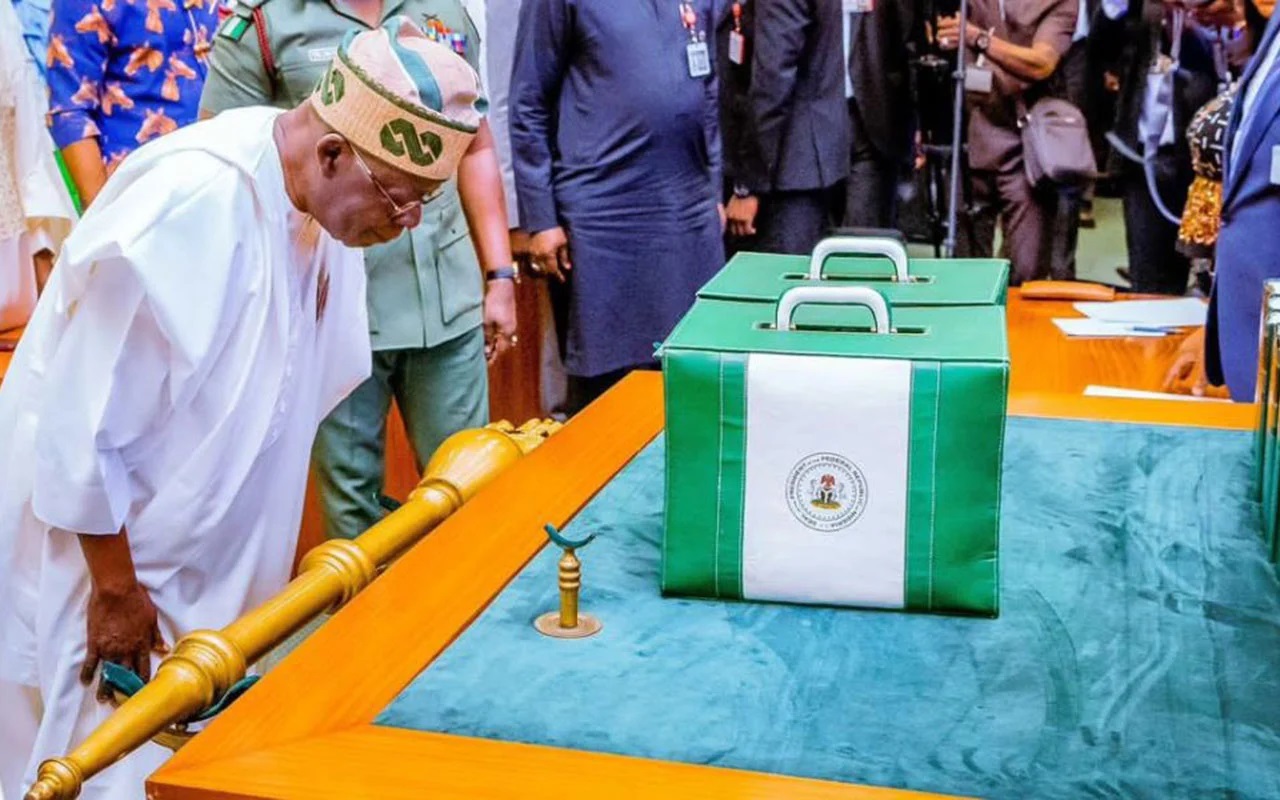
The Senate President, Mr Godswill Akpabio, has announced that the upper chamber will pass the 2026 Appropriation Bill on March 31, following a brief adjournment for the Sallah break.
Speaking before the Senate adjourned plenary, Mr Akpabio said standing committees would continue working during the recess, particularly on ongoing budget defence sessions and coordination with the Senate Committee on Appropriations.
“I hope the Leader will put pressure on the Committee on Appropriations to harmonise the report of the 2026 Appropriation Bill by that date.
“This is so that when we resume, we can try our best to pass the budget without requiring further concurrence or harmonisation.
“Leadership must work together to ensure everything is in order. The House of Representatives has already adjourned to conclude budget processes and will also reconvene on March 31.
“On that day, we hope to pass the national budget in tandem with the Senate.”
Earlier, the Senate Committee on Appropriations had tentatively fixed Tuesday, March 17, for the final consideration and passage of the N58.47 trillion 2026 Appropriation Bill.
To meet the timeline, the committee, at a special session held in January, approved February 2 to 13 for budget defence by Ministries, Departments and Agencies (MDAs) at the committee level.
As part of efforts to ensure an inclusive and transparent process, the committee also scheduled February 9, 2026, for a public hearing on the budget proposal.
President Bola Ahmed Tinubu, in December, presented the N58.47 trillion 2026 budget proposal to a joint session of the National Assembly, outlining the government’s priorities anchored on economic stability, infrastructure expansion, security and social investment.
The budget was hinged on assumptions including oil production of 1.84 million barrels per day, an oil price benchmark of $64.85 per barrel, and an exchange rate assumption of ₦1,400 to the Dollar.
Following the presentation, the Senate passed the appropriation bill for first and second readings, paving the way for detailed consideration by relevant committees.










-
 Feature/OPED6 years ago
Davos was Different this year
-
Travel/Tourism10 years ago
Lagos Seals Western Lodge Hotel In Ikorodu
-

 Showbiz3 years ago
Estranged Lover Releases Videos of Empress Njamah Bathing
-
 Banking8 years ago
Sort Codes of GTBank Branches in Nigeria
-

 Economy3 years ago
Subsidy Removal: CNG at N130 Per Litre Cheaper Than Petrol—IPMAN
-

 Banking3 years ago
Sort Codes of UBA Branches in Nigeria
-

 Banking3 years ago
First Bank Announces Planned Downtime
-

 Sports3 years ago
Highest Paid Nigerian Footballer – How Much Do Nigerian Footballers Earn