Economy
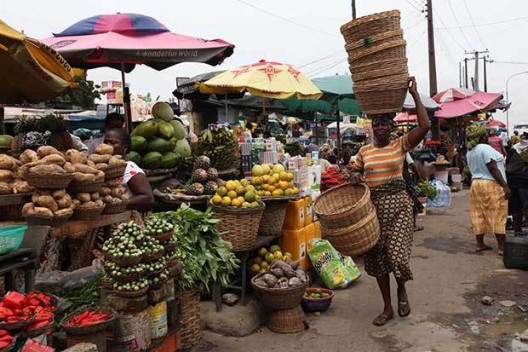
Tinubu Targets Improved Fuel, Electricity, Food Sufficiency in 2024
By Adedapo Adesanya
President Bola Tinubu has announced that priorities will be given to energy sufficiency, ranging from fuel to electricity, as well as tackling food insecurity in 2024.
In his New Year message broadcast to Nigerians at 7 am on Monday, January 1, the President urged citizens not to falter despite the tough times and difficulties they face.
He rallied Nigerians to stay united and support his administration as it works to build a better nation and a Nigerian society that cares for all citizens.
“Dear Compatriots, take this from me: the time may be rough and tough, however, our spirit must remain unbowed because tough times never last. We are made for this period, never to flinch, never to falter,” President Tinubu said.
“The socio-economic challenges of today should energize and rekindle our love and faith in the promise of Nigeria. Our current circumstances should make us resolve to work better for the good of our beloved nation.
“Our situation should make us resolve that this new year 2024, each and every one of us will commit to be better citizens.”
President Tinubu pleaded that all his policies so far including the removal of fuel subsidy as well as the float of the naira, a move aimed at the unification of the foreign exchange windows, were necessary moves to better the economy.
“Everything I have done in office, every decision I have taken, and every trip I have undertaken outside the shores of our land, since I assumed office on 29 May 2023, have been done in the best interest of our country,” the President said.
“Over the past seven months of our administration, I have taken some difficult and yet necessary decisions to save our country from fiscal catastrophe. One of those decisions was the removal of fuel subsidy which had become an unsustainable financial burden on our country for more than four decades.
“Another was the removal of the chokehold of few people on our foreign exchange system that benefited only the rich and the most powerful among us. Without doubt, these two decisions brought some discomfort to individuals, families, and businesses.”
The President also said he understands the situation relating to Nigeria’s economic and security challenges.
“From the boardrooms at Broad Street in Lagos to the main streets of Kano and Nembe Creeks in Bayelsa, I hear the groans of Nigerians who work hard every day to provide for themselves and their families,” he said.
“I am not oblivious to the expressed and sometimes unexpressed frustrations of my fellow citizens. I know for a fact that some of our compatriots are even asking if this is how our administration wants to renew their hope.”
According to the President, he has identified progress in the areas of security and believes the economy is poised for a better year.
“Silently, we have worked to free captives from abductors. While we can’t beat our chest yet that we have solved all the security problems, we are working hard to ensure that we all have peace of mind in our homes, places of work and on the roads,” he said.
President Tinubu said he expects an acceleration of the pace of service delivery to Nigeria in the new year.
In the area of power supply, he points to a deal he signed with German Chancellor, Olaf Scholz at COP 28 in December 2023.
The new deal is aimed at speeding up the delivery of the Siemens Energy power project that will ultimately deliver a reliable supply of electricity to homes and businesses under the Presidential Power Initiative which began in 2018.
“Other power installation projects to strengthen the reliability of our transmission lines and optimise the integrity of our National grid are ongoing across the country,” he added.
Based on an understanding that no meaningful economic transformation can happen without a steady electricity supply, the President says his administration is moving a step further in the quest to restart local refining of petroleum products with Port Harcourt Refinery, and the Dangote Refinery which shall fully come on stream.
To ensure constant food supply, security and affordability, he explained that his administration will step up plans to cultivate 500,000 hectares of farmlands across the country to grow maize, rice, wheat, millet and other staple crops.
He noted that the administration had launched the dry season farming with 120,000 hectares of land in Jigawa State last November under our National Wheat Development Programme.
In addition to that he said, “In this new year, we will race against time to ensure all the fiscal and tax policies reforms we need to put in place are codified and simplified to ensure the business environment does not destroy value.
“On every foreign trip I have embarked on, my message to investors and other business people has been the same. Nigeria is ready and open for business.
I will fight every obstacle that impedes business competitiveness in Nigeria and I will not hesitate to remove any clog hindering our path to making Nigeria a destination of choice for local and foreign investments.”
Assuring Nigerians that measures are in place for proper evaluation and that his ambition is to build a fair and equitable society for the country, President Tinubu called on Nigerians to play their part.
He said, “For the new year to yield all its good benefits to us as individuals and collectively as a people we must be prepared to play our part. The job of building a prosperous nation is not the job of the President, Governors, Ministers, Lawmakers and government officials alone.
“Our destinies are connected as members of this household of Nigeria. Our language, creed, ethnicity and religious beliefs even when they are not the same should never make us work at cross purposes.
“In this new year, let us resolve that as joint heirs to the Nigerian Commonwealth, we will work for the peace, progress and stability of our country. I extend this call to my political opponents in the last election; the election is over. It’s time for all of us to work together for the sake of our country.”
Economy
FCCPC Laments Lack of Price Relief Despite Falling Global Oil Prices
By Adedapo Adesanya
The Federal Competition and Consumer Protection Commission (FCCPC) has expressed concern that Nigerian consumers have yet to benefit from lower prices despite the recent sharp decline in global crude oil prices.
Business Post reports that crude prices currently trade around $69 and $71 per barrel in the international market.
The commission stated on Sunday that following a market surveillance exercise, the review of gantry prices from local refiners, marketers, depot operators and retail outlets showed only token reductions, not aligned with the steep drop in international crude prices.
The chief executive of the agency, Mr Tunji Bello, said that though the FCCPC does not set petroleum prices in a deregulated market, it is mandated by the Federal Competition and Consumer Protection Act, 2018, to promote competition and protect consumers from unfair business practices.
“To be clear, the commission does not regulate or approve petroleum prices in a deregulated downstream market. Our responsibility under the Federal Competition and Consumer Protection Act, 2018, is to promote competitive markets, prevent anti-competitive conduct, and protect consumers from unfair, deceptive and exploitative business practices,” Mr Bello said.
“We are concerned that while dealers often respond swiftly by hiking pump prices whenever crude prices rise, it is curious that it is taking forever for consumers to benefit significantly when crude prices fall. Competitive markets must work fairly in both directions,” he added.
The organisation noted that crude prices fell to about $73 per barrel after a recent ceasefire between the United States and Iran and the reopening of the Strait of Hormuz, down from a peak near $120 per barrel in April.
During the April–May price spike, petrol prices rose to between N1,350 and N1,500 while diesel traded around N2,000. In February, PMS averaged between N800 and N900. Presently, average retail PMS nationwide is about N1,200, with some local refiners listing gantry prices between N1,025 and N1,075.
The FCCPC acknowledged that domestic fuel prices are affected by multiple commercial factors, including refining costs, foreign-exchange movements, logistics, financing and distribution expenses, but said competitive market dynamics should have passed more of the recent international cost declines to consumers.
“Market liberalisation does not diminish businesses’ obligations to compete fairly or consumers’ right to fair treatment,” Mr Bello added. “Where credible evidence indicates conduct that undermines competition, exploits consumers or otherwise contravenes the Federal Competition and Consumer Protection Act, the Commission will investigate and take appropriate enforcement action,” urging consumers to report suspected anti-competitive conduct, misleading pricing or other unfair market behaviour via its established complaint channels.
Economy
Four Securities Erase N51.17bn from NASD Exchange
By Adedapo Adesanya
Four securities weakened the NASD Over-the-Counter (OTC) Securities Exchange by 1.95 per cent on Friday, erasing N41.17 billion from the bourse, which had its market capitalisation at N2.567 trillion compared with the previous session’s N2.618 trillion.
In the same vein, the NASD Unlisted Security Index (NSI) decreased at the close of business by 85.28 points to 4,277.07 points from 4,362.32 points.
The price decliners were led by 11 Plc, which gave up N20.50 to sell at N200.50 per share compared with the preceding day’s N221.00 per share, FrieslandCampina Wamco Nigeria Plc dropped N16.94 to close at N155.20 per unit versus Thursday’s closing price of N172.14 per unit, Central Securities Clearing System (CSCS) Plc went down by N2.11 to N84.68 per share from N86.79 per share, and Afriland Properties Plc lost 11 Kobo to end at N16.74 per unit, in contrast to the N16.85 per unit it closed a day earlier.
During the trading day, the value of transactions jumped by 172.1 per cent to N29.9 million from the preceding session’s N10.9 million, and the volume of trades soared by 136.5 per cent to 955,096 units from the previous 403,901 units, while the number of deals went down by 11.4 per cent to 31 deals from 35 deals.
Great Nigeria Insurance (GNI) Plc remained the most active stock by value on a year-to-date basis, with 3.4 billion units valued at N8.4 billion, followed by Infrastructure Credit Guarantee (Infracredit) Plc with 2.3 billion units worth N6.5 billion, and CSCS Plc with 68.6 million units sold for N4.7 billion.
GNI Plc also ended the session as the most traded stock by volume on a year-to-date basis, with 3.4 billion units exchanged for N8.4 billion, trailed by Infracredit Plc with 2.3 billion units traded for N6.5 billion, and Resourcery Plc with 1.1 billion units transacted for N415.7 million.
Economy
Cautious Trading, Profit-taking Weaken Nigeria’s Stock Exchange by 0.66%
By Dipo Olowookere
The last trading session of this week on the floor of the Nigerian Exchange (NGX) Limited ended on a negative note, with a 0.66 per cent loss on Friday.
This was influenced by sustained selling pressure and cautious trading, which forced investors into profit-taking.
Data obtained by Business Post showed that the energy sector fell by 4.66 per cent, the insurance counter dipped by 2.23 per cent, the consumer goods index depreciated by 0.96 per cent, and the banking segment shed 0.28 per cent, while the industrial goods space remained unchanged.
At the close of business, the All-Share Index (ASI) of Nigeria’s stock exchange went down by 1,531.81 points to 232,049.02 points from 233,580.83 points, and the market capitalisation dropped N983 billion to settle at N148.905 trillion compared with Thursday’s N149.888 trillion.
Aradel was the worst-performing equity after it lost 10.00 per cent to close at N1,417.50. International Energy Insurance slipped by 9.95 per cent to N5.79, Trans-Nationwide Express depreciated by 9.89 per cent to N3.28, eTranzact crashed by 9.79 per cent to N14.75, and UPDC slumped by 9.72 per cent to N28.12.
The best-performing equity for the day was Universal Insurance, which gained 6.32 per cent to close at N1.01, McNichols grew by 5.52 per cent to N8.60, Linkage Assurance expanded by 4.67 per cent to N1.57, NGX Group appreciated by 4.35 per cent to N120.00, and Transcorp increased by 3.62 per cent to N41.50.
As look at the activity level indicated that investors traded 388.7 million stocks worth N18.4 billion in 44,631 deals compared with the 393.7 million stocks valued at N19.2 billion executed in 45,813 deals a day earlier, representing a decline in the trading volume, value, and number of deals by 1.27 per cent, 4.17 per cent, and 2.58 per cent, respectively.
-
Feature/OPED6 years agoDavos was Different this year
-
Travel/Tourism10 years ago
Lagos Seals Western Lodge Hotel In Ikorodu
-
Showbiz3 years agoEstranged Lover Releases Videos of Empress Njamah Bathing
-
Banking8 years agoSort Codes of GTBank Branches in Nigeria
-
Economy3 years agoSubsidy Removal: CNG at N130 Per Litre Cheaper Than Petrol—IPMAN
-
Banking3 years agoSort Codes of UBA Branches in Nigeria
-
Banking3 years agoFirst Bank Announces Planned Downtime
-
Sports3 years agoHighest Paid Nigerian Footballer – How Much Do Nigerian Footballers Earn