Economy
US Stocks Open Lower on Trade Deal Skepticism
By Investors Hub
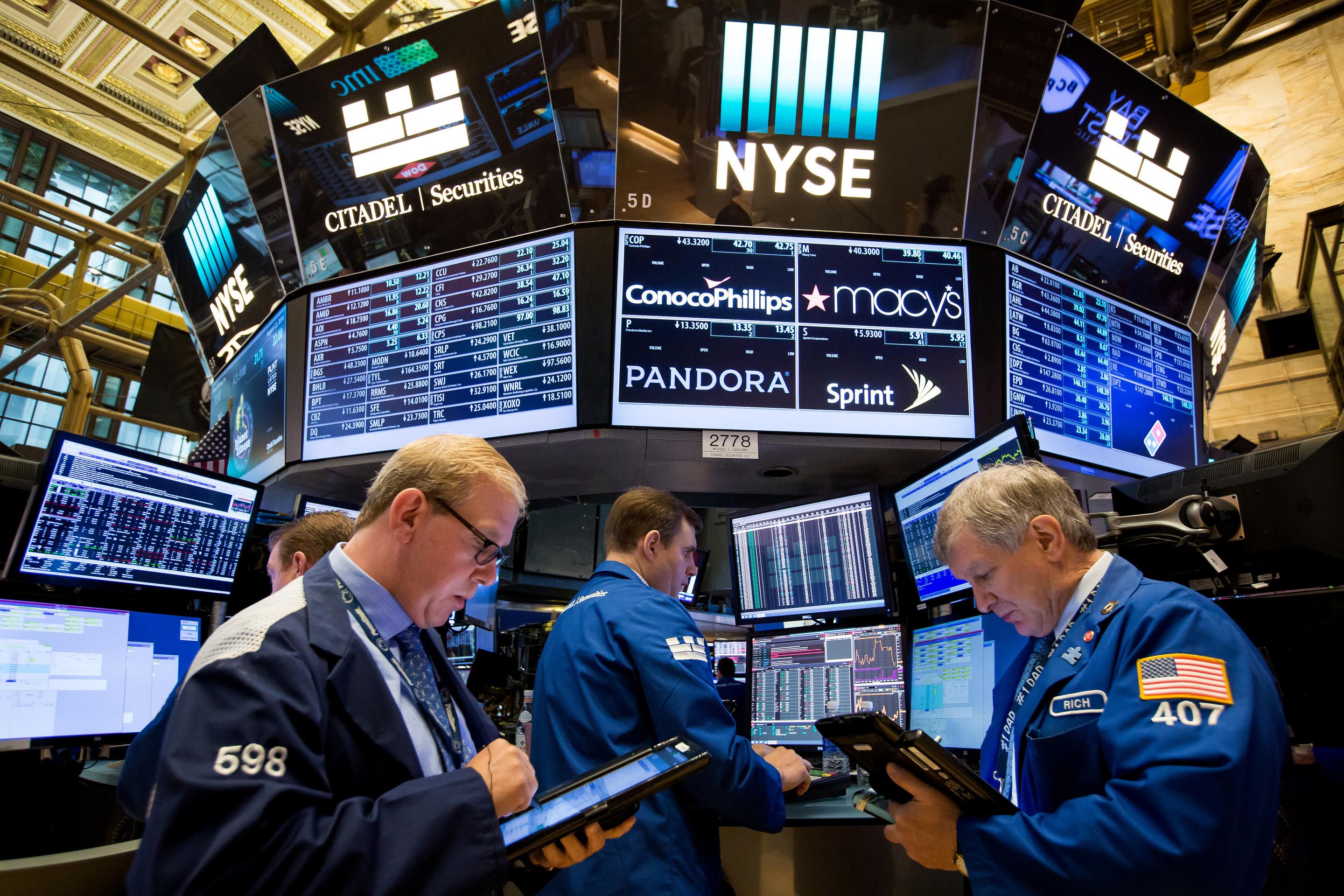
The major U.S. index futures are pointing to a lower opening on Tuesday, with stocks likely to give back ground following the rally seen in the previous session.
Profit taking may contribute to initial weakness on Wall Street, as traders cash in on the strong gains posted on Monday in reaction to the trade war truce reached by President Donald Trump and Chinese President Xi Jinping.
Uncertainty about whether the 90-day truce will give the U.S. and China enough time to reach a long-term trade agreement may inspire traders to cash in on yesterday?s strong upward move.
News that U.S. Trade Representative Robert Lighthizer, one of Trump?s more hawkish advisors on trade with China, has been tapped to lead the negotiations has added to the skepticism.
Trump has appeared optimistic about the potential for an agreement, claiming U.S. relations with China have taken a ?big lead forward? as a result of his meeting with XI.
?Very good things will happen,? Trump said in a post on Twitter. ?We are dealing from great strength, but China likewise has much to gain if and when a deal is completed. Level the field!?
?President Xi and I have a very strong and personal relationship,? he added. ?He and I are the only two people that can bring about massive and very positive change, on trade and far beyond, between our two great Nations.?
Overall trading activity may be somewhat subdued, however, with a lack of major U.S. economic data likely to keep some traders on the sidelines.
Tomorrow?s national day of mourning for former President George H.W. Bush may also limit trading activity, as the NYSE and the Nasdaq will be closed on the day and the release of most economic data has been postponed.
After moving sharply higher at the open, stocks gave back some ground but managed to remain firmly positive throughout the trading session on Monday. With the advance on the day, the major averages added to the substantial gains posted last week.
The major averages moved roughly sideways for much of the session before closing significantly higher. The Dow surged up 287.97 points or 1.1 percent to 25,826.43, the Nasdaq soared 110.98 points or 1.5 percent to 7,441.51 and the S&P 500 shot up 30.20 points or 1.1 percent to 2,790.37.
The initial jump on Wall Street reflected a positive reaction to the highly anticipated meeting between Trump and Xi over the weekend.
At the meeting, Trump and Xi agreed to a 90-day truce in the escalating trade war between the world’s two largest economies as they work to reach a long-term trade deal.
A White House statement said Trump agreed not to raise the tariffs on $200 billion worth of Chinese goods to 25 percent from 10 percent on January 1st as planned.
In return, China agreed to purchase a “not yet agreed upon, but very substantial, amount” of agricultural, energy, industrial, and other product from the U.S.
The White House said the U.S. and China will use the next 90 days to attempt to reach an agreement on issues such as forced technology transfer, intellectual property protection, and non-tariff barriers.
If the two countries are not able to reach an agreement by the end of the time period, the 10 percent tariffs on Chinese goods will be raised to 25 percent.
In remarks to reporters aboard Air Force One, Trump called the agreement with Xi an “incredible deal,” claiming it will have an “incredibly positive impact” on “every type of product.”
Trump also said China will be “opening up” and “getting rid of tariffs,” stating in a subsequent post on Twitter that China has agreed to reduce and remove tariffs on cars coming into the country from the U.S.
Paul Ashworth, Chief U.S. Economist at Capital Economics, noted Trump ripped up an earlier trade deal with China negotiated by Commerce Secretary Wilbur Ross.
“We suspect that since he negotiated this deal himself, Trump will be much more reluctant to torpedo it when his own personal reputation is on the line,” Ashworth said.
He added, “Nevertheless, his own administration includes plenty of China hawks who are pushing the protectionist agenda, so we suspect China will have to offer a little more than the minor concessions that South Korea, Mexico and Canada agreed to reach trade deals with the U.S.”
On the U.S. economic front, the Institute for Supply Management released a report showing an unexpected acceleration in the pace of growth in manufacturing activity in the month of November.
The ISM said its purchasing managers index climbed to 59.3 in November after falling to 57.7 in October, with a reading above 50 indicating growth in manufacturing activity. Economists had expected the index to edge down to 57.5.
Meanwhile, a separate report from the Commerce Department showed construction spending unexpectedly edged lower in October.
Energy stocks showed a substantial move to the upside on the day, benefiting from a sharp increase by the price of crude oil.
Reflecting the strength in the energy sector, the Philadelphia Oil Service Index spiked by 3.5 percent, while the NYSE Arca Natural Gas Index and the NYSE Arca Oil Index both surged up by 2.7 percent.
Considerable strength also emerged among computer hardware stocks, as reflected by the 3.4 percent rally by the NYSE Arca Computer Hardware Index.
Steel, semiconductor, gold, and retail stocks also saw significant strength on the day, reflecting broad based buying interest on Wall Street.
Economy
Nigerian Equity Market Surpasses N145trn After 1.30% Expansion
By Dipo Olowookere
The Nigerian equity market showed no signs of slowing down, as it further appreciated by 1.30 per cent on Friday on the back of sustained buying pressure.
Unlike the preceding sessions, investor sentiment was bullish yesterday after the Nigerian Exchange (NGX) Limited ended with 43 price gainers and 26 price losers, implying a positive market breadth index, the first this week.
UPDC gained 10.00 per cent to close at N4.40, Academy Press also appreciated by 10.00 per cent to quote at N7.70, Haldane McCall improved by 9.97 per cent to N3.97, Zichis soared by 9.94 per cent to N15.60, and Wema Bank added 9.84 per cent to settle at N31.25.
Conversely, Meyer lost 9.92 per cent to sell for N16.80, Trans-Nationwide Express also crashed by 9.92 per cent to end at N7.90, C&I Leasing slipped by 8.53 per cent to N5.90, Omatek dipped by 7.34 per cent to N2.02, and eTranzact decreased by 5.28 per cent to N17.05.
When the bourse closed its doors to business, the All-Share Index (ASI) rose by 2,884.81 points to 225,722.49 points from 222,837.68 points, and the market capitalisation grew by N1.858 trillion to N145.335 trillion from N143.477 trillion.
A look at the activity chart showed that market participants transacted 627.6 million shares worth N44.5 billion in 55,232 deals during the trading day compared with the 667.9 million shares valued at N38.1 billion traded in 53,062 deals a day earlier.
This indicated that the volume of transactions went down by 6.03 per cent, the value of trades went up by 16.80 per cent, and the number of deals jumped by 4.09 per cent.
Access Holdings closed the session as investors’ toast, with a turnover of 75.6 million units worth N2.4 billion. UBA transacted 43.1 million units valued at N2.3 billion, Wema Bank exchanged 41.5 million units for N1.3 billion, Zenith Bank traded 38.4 million units valued at N5.2 billion, and Universal Insurance sold 29.5 million units for N35.9 million.
Economy
Oyedele Eyes Fiscal Discipline, Investor-friendly Environment, Fair Taxation
By Aduragbemi Omiyale
Mr Taiwo Oyedele has set some goals he intends to achieve as Nigeria’s Minister of Finance and Coordinating Minister of the Economy.
While taking over from his predecessor, Mr Wale Edun, on Thursday, the tax expert assured that he has no plans to overturn some of the reforms already put in place by the former occupier of the seat.
In a message on Friday, he emphasised that, “Our immediate task is to consolidate these gains, deepen ongoing reforms, and ensure they translate into tangible benefits for all Nigerians.”
He promised to ensure fiscal discipline by embracing transparent and prudent management of public resources, while also harmonising revenue administration, broadening the tax base, reducing the burden on the vulnerable population, and supporting economic growth.
Mr Oyedele further said his other strategic priorities include creating a predictable and investor-friendly environment anchored on policy coherence, consistency, and clarity; and aligning efforts across all tiers and institutions to maximise policy impact.
He also said efforts would be made to deepen collaboration with the private sector and other key stakeholders for data-driven policy design, co-implementation, and feedback for continuous improvement.
According to him, “Good policy design alone is not enough; success will be defined by execution. We are committed to disciplined implementation, accountability, and measurable results.”
“I look forward to working with colleagues across government, the private sector, and all Nigerians as we move from reform to result, accelerate growth and build a more stable, inclusive, and prosperous economy,” he stated.
Economy
NASD Bourse Edges Up 0.23% as NSI Nears 3,970 Points
By Adedapo Adesanya
The NASD Over-the-Counter (OTC) Securities Exchange further appreciated by 0.23 per cent on Thursday, April 23, with the Unlisted Security Index (NSI) adding 8.99 points to close at 3,969.96 points against the previous day’s 3,968 points.
The rise in the share price of Central Securities Clearing System (CSCS) Plc by N2.86 to N69.34 per unit from N66.48 per unit raised the market capitalisation of the NASD bourse by N5.38 billion to N2.380 trillion from N2.375 trillion.
Yesterday, there were two price losers, led by Food Concepts Plc, which lost 29 Kobo to sell at N2.65 per share versus N2.94 per share, while UBN Property Plc dipped by 22 Kobo to N2.03 per unit from N2.25 per unit.
During the session, the volume of securities traded declined by 97.9 per cent to 451,522 units from 21.5 million units on Wednesday, the value of securities depreciated by 52.32 per cent to N23.6 million from N49.5 million, and the number of deals depreciated by 3.6 per cent to 27 deals from 28 deals.
At the close of business, Great Nigeria Insurance (GNI) Plc remained the most active stock by value on a year-to-date basis with 3.4 billion units valued at N8.4 billion, followed by CSCS Plc with 59.5 million units exchanged for N4.0 billion, and Okitipupa Plc with 27.8 million units traded for N1.9 billion.
GNI Plc also closed the day as the most traded stock by volume on a year-to-date basis with 3.4 billion units worth N8.4 billion, trailed by Resourcery Plc with 1.1 billion units transacted for N415.7 million, and Infrastructure Guarantee Credit Plc with 400 million units sold for N1.2 billion.
-
Feature/OPED6 years agoDavos was Different this year
-
Travel/Tourism10 years ago
Lagos Seals Western Lodge Hotel In Ikorodu
-
Showbiz3 years agoEstranged Lover Releases Videos of Empress Njamah Bathing
-
Banking8 years agoSort Codes of GTBank Branches in Nigeria
-
Economy3 years agoSubsidy Removal: CNG at N130 Per Litre Cheaper Than Petrol—IPMAN
-
Banking3 years agoSort Codes of UBA Branches in Nigeria
-
Banking3 years agoFirst Bank Announces Planned Downtime
-
Sports3 years agoHighest Paid Nigerian Footballer – How Much Do Nigerian Footballers Earn