Connect with us

Education

Publiseer Expands Distribution Channel With Voxa

Published

on

Voxa Publiseer

By Modupe Gbadeyanka

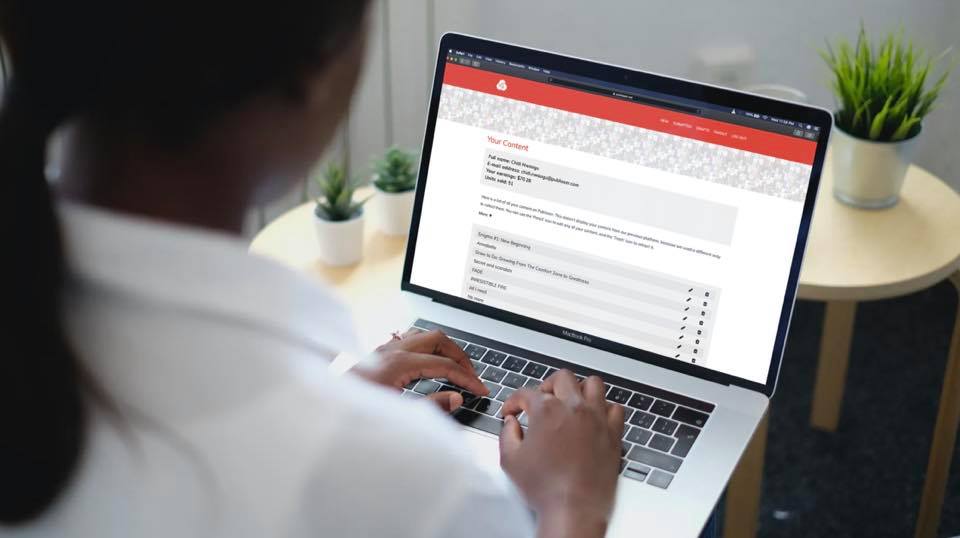
The distribution channel of Nigeria’s Publiseer has been expanded with the addition of Romania’s very first subscription mobile reading app for ebooks and audiobooks, Voxa.

Voxa joined Publiseer’s list of distribution partner stores, giving room for subscribers to have a wide range of books to access and through the new partnership, the Nigerian firm hopes to provide Voxa titles from independent writers from the African continent.

The ebook market in Romania serves over two million readers, which is valued at over $63 million, with a 7 per cent annual growth rate.

“We are all so excited at Publiseer to have Voxa in our distribution channel and bringing such a huge opportunity to our authors,” the co-founder and CEO of Publiseer, Mr Chidi Nwaogu, stated.

“Throughout the year, we’ve been working very hard to expand our distribution network. We’ve partnered with Libri, Dreame, iReader, and now, Voxa and in the future, more would be added,” he further said.

“For authors whose ebooks and audiobooks are already in our catalogue, we will automatically distribute them to Voxa. So, no further action is required from their end.

“However, those who don’t wish for their content to be distributed to Voxa, can simply reach out to us stating this, and they won’t be added to Voxa,” the Head of Content Review and Distribution at Publiseer, Mr Dapo Ogundipe, explained.

Publiseer is a digital content distribution company that lets independent African writers distribute and monetize their ebooks and audiobooks across hundreds of online retailers worldwide.

The company also helps its writers protect their creative works from intellectual property theft and illegal distribution.

As of writing, its services are available to African writers whose works are written in either English or French.


Modupe Gbadeyanka is a fast-rising journalist with Business Post Nigeria. Her passion for journalism is amazing. She is willing to learn more with a view to becoming one of the best pen-pushers in Nigeria. Her role models are the duo of CNN's Richard Quest and Christiane Amanpour.

Education

Zoho Trains Babcock University Students on Low-Code Tools

Published

on

Babcock University Young Creators Programme

By Modupe Gbadeyanka

Over 50 students of Babcock University in Ogun State have benefitted from a programme organised by a global technology company, Zoho, to empower them on hands-on digital skills in low-code application development.

The company partnered with the higher institution of learning through the Babcock Centre for Executive Development (BCED) to set up an initiative known as the Young Creators Programme.

The participating students were chosen across disciplines—including Computer Science, Business, and Information Technology—to build business-ready applications using Zoho Creator, the company’s low-code development platform.

The three day workshop introduced students to practical problem-solving using the latest advancements in cloud technology, enabling them to design and develop custom business solutions without advanced programming knowledge. The scheme also fostered a deeper understanding of how low-code tools can support entrepreneurship and digital transformation.

It marks the beginning of a broader strategic collaboration between Zoho and BCED as both organisations will continue to work together to deliver additional training programs, interactive workshops and innovation-focused events.

Discussions are also underway to add Zoho’s apps to BCED’s entrepreneurship curriculum, ensuring that students learn how they can apply digital solutions for various business problems.

The Young Creators Programme forms part of Zoho’s global effort to promote digital literacy and support innovation among young people.

“As part of our commitment to supporting local talent development in Nigeria, we are excited to collaborate with Babcock University to equip students with future-ready digital skills.

“Through the Young Creators Program, we aim to empower young innovators to build solutions that solve real business challenges while strengthening the local technology ecosystem,” the Country Head for Zoho Nigeria, Mr Kehinde Ogundare, stated.

Also commenting, the Director of BEDC, Mr Ayodeji Ajibade, said, “We are committed to preparing our students for leadership in a rapidly evolving digital economy.

“Partnering with Zoho strengthens our mission by providing students with access to industry-standard tools and practical learning experiences that bridge the gap between classroom knowledge and real-world application.”

Launched in 2022, the Young Creators Programme has trained more than 2000 students around the world, providing them with the tools and confidence to pursue careers and entrepreneurial ventures in the technology space.

Continue Reading

Education

Why Online Engineering Education Is the Next Big Shift

Published

on

Online Engineering Education

The world of engineering is changing faster than ever, and education is evolving right along with it. With the rise of advanced digital tools and remote learning platforms, pursuing an engineering degree online has become a realistic and rewarding option for aspiring professionals. Once considered a hands-on field that required in-person labs and lectures, engineering has now entered a new era where flexibility, innovation, and technology merge to create powerful learning experiences.

Online engineering programs are no longer just a backup plan; they are now a primary pathway for students who want to balance education with personal and professional commitments. The flexibility of online learning allows individuals to study from anywhere in the world while still gaining access to top-tier faculty, modern curriculum, and interactive tools that mirror the in-classroom experience. This approach opens doors for people who might not have the time or resources to attend traditional on-campus programs.

One of the key advantages of studying engineering online is the adaptability of the coursework. Students can work through modules at their own pace, revisit complex topics, and take advantage of virtual labs that simulate real-world conditions. These digital environments are highly advanced, often using 3D modeling, data visualization, and simulation software to replicate the design and testing processes used in professional engineering. As a result, students are able to build practical skills that are directly transferable to modern industries.

Another major benefit of online engineering education is the diversity of programs available. Students can specialize in areas such as civil, electrical, mechanical, computer, or environmental engineering, among others. This variety allows learners to align their education with their career goals, whether they are interested in infrastructure development, renewable energy, robotics, or software systems. The digital nature of these programs also makes it easier to incorporate emerging technologies like artificial intelligence, sustainable design, and advanced manufacturing into the curriculum.

Online engineering degrees also promote a more inclusive learning environment. People from different backgrounds, time zones, and countries can collaborate on projects, share perspectives, and solve complex problems together. This global network of peers mirrors the international nature of the engineering industry itself, where collaboration across borders has become essential. Learning in such a diverse environment not only enhances technical skills but also strengthens communication, teamwork, and leadership abilities.

In addition to academic flexibility, online engineering programs often integrate real-world experience through internships, industry projects, and mentorships. Many institutions partner with leading companies to give students hands-on exposure to current technologies and business challenges. These experiences ensure that graduates are not only well-educated but also job-ready, with the skills needed to contribute effectively from day one.

Employers are increasingly recognizing the value of online engineering degrees. The perception that online learning lacks rigor has faded as universities and accrediting bodies have refined their programs to meet the same standards as traditional degrees. Employers today focus on the quality of education and the capabilities of the graduate, not the format through which they studied. The ability to manage time effectively, work independently, and master digital tools are all traits that online learners develop naturally and that employers highly value.

Technology continues to transform how education is delivered, and engineering is one of the fields benefiting the most. Cloud computing, virtual reality, and AI-driven simulations have made it possible to experience complex engineering processes without stepping into a physical lab. Students can run virtual experiments, test prototypes, and analyze performance in ways that are efficient, cost-effective, and environmentally friendly. This integration of digital technology ensures that graduates are not only knowledgeable but also comfortable working with the latest tools shaping the modern engineering landscape.

Online engineering degrees are particularly appealing to working professionals looking to upskill or shift career paths. Many people in related industries, such as manufacturing, construction, or IT, pursue these programs to deepen their expertise or transition into higher-level technical roles. The self-paced nature of online learning allows them to continue working while advancing their education, creating a bridge between professional experience and academic growth.

In the broader picture, online engineering programs are helping close the global skills gap. As industries expand and adopt new technologies, the demand for qualified engineers continues to rise. Online education offers a scalable way to meet this demand by making high-quality training accessible to people around the world. It empowers individuals to pursue education without geographical or financial barriers, contributing to a more skilled and innovative global workforce.

In essence, the rise of online engineering degrees marks a turning point in higher education. It demonstrates how technology can enhance, not replace, the learning experience. As the engineering profession continues to evolve, so too must the ways we prepare future engineers. Online learning is proving to be one of the most effective tools for developing the thinkers, problem-solvers, and innovators who will shape our world in the decades to come.

Continue Reading

Education

Dangote Cement Donates Educational Items to Lagos Schools

Published

on

Dangote Cement Lagos Schools

By Modupe Gbadeyanka

Some educational items have been donated by Dangote Cement Plc to students and staff of some public schools in Lagos State.

It was gathered that the cement firm gave out 1,000 school bags, 1,000 dozen of 60-leaf notebooks, and 1,000 mathematical sets to students across the schools under Lagos State’s Education District III.

The presentations of the materials were done at the Boys Junior Academy; Girls Junior Academy as well as Ebute Elefun Junior High School, Adeniji Adele Road, Lagos Island and Epetedo Junior High School, Adeniji Adele Road, all in Lagos Island.

Dangote Cement said the gesture was part of its commitment to educational development and community empowerment to foster academic success and societal progress.

“Education is the cornerstone of progress. It opens doors, builds character, and lays the foundation for a brighter future,” the chief executive of Dangote Cement, Mr Arvind Pathak, who was represented by the Group Head of Social Performance, Mr Wakeel Olayiwola, said.

He disclosed that the donations complement previous interventions in 2023 and 2024, which included the provision of solar inverters for computer rooms, school desks, desktop computers, and the renovation of science laboratories and libraries in selected schools.

Mr Pathak acknowledged the challenges faced by many families and schools in providing adequate learning materials saying: “by supporting schools in our neighbouring communities, we are investing not only in the academic success of our children but also in the long-term prosperity of our society.”

“Use them well. Study hard. Dream big and know that you have a community that believes in your potential,” he charged the students.

Principals of four of the schools, including Mrs Bello Afolake of Girls Junior Academy; Sobanke Rafiu of Boys Junior Academy; Mr Kayode Ajala of Ebute-Elefun Junior High School and Mr Taiwo Fatai of Epetedo Junior High School all expressed gratitude to the management of Dangote Cement for the gesture describing the volume of the materials donated to the students as unprecedented.

They all expressed hope that the relationship will last long in task of building the educational capacity of Lagos state and development of the students as the future leaders.

Continue Reading

Trending