Feature/OPED
A Critical Look at Investing and Saving Money
By Samuel Ighoyota Akporhiunuvwiyo
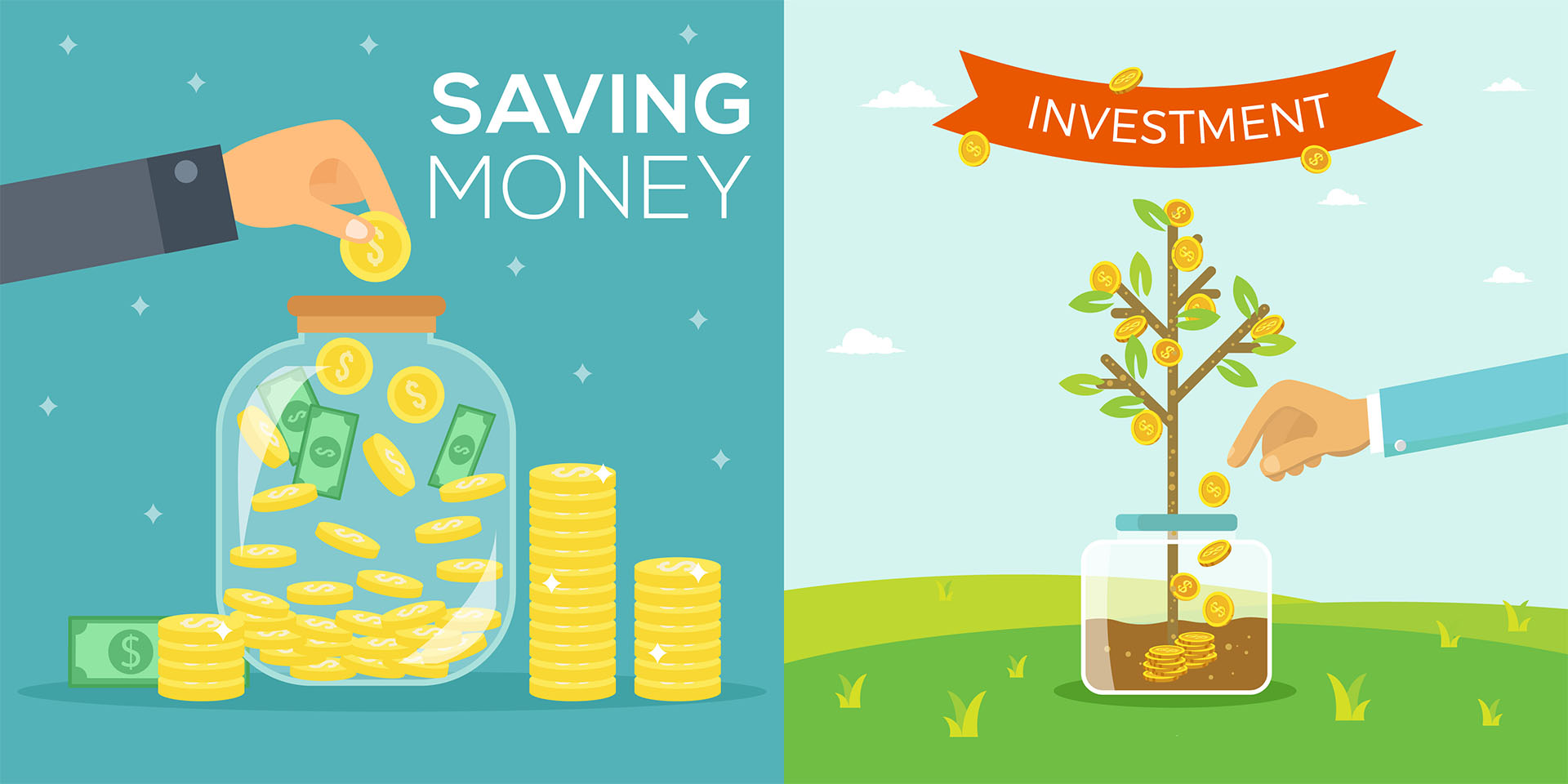
The concept of investing is one which has been misunderstood over the years. Many people confuse investing money with saving money. Although they are used interchangeably, they are totally different.
There is a huge difference between investing and saving. The former entails building wealth gradually over an extended period of time through the purchase and holding of investment and financial tools like stocks, bonds, real estate and others, with the hope of getting more money from these tools.
On the other hand, saving is basically setting aside the money you don’t want to spend now for emergencies or for a future purchase.
There are various forms of investments, but I will narrow this lecture to what we are used to, what we do every day ignorantly.
Everyone has a bank account and this secret I am unveiling to you, most of my commercial banking friends won’t be happy about but we just have to.
Let’s say Emeka saved N100,000 in his savings account with any of the commercial banks for a year. At the end of the year, the interest the money will generate will be eroded by deductions such as bank charges, ATM maintenance fees, etc. The biggest one is inflation, which many people don’t pay attention to.
In about a year, the value of the money would have been depleted to like N80,000, when the inflation rate, which is currently at 12.5 per cent, is factored into it.
So, you are actually losing money by saving that money in a commercial bank, while the bank is gaining.
In fact, Zenith Bank made a pre-tax profit of N58.7 billion in the first quarter of 2020 alone. How do they make their money? What drives their profit margin? Why will the government delay the payment of salaries? Those monies deducted from our salaries as pension, how is the PFA making their profits from these commercial banks, which gather our deposits and invest them in the capital market that guarantees greater returns, including investments in treasury bills, bonds, stocks and others.
So, that N100,000 Emeka deposited can be used to purchase treasury bills, shares, bonds and mutual funds. In summary, it can be used to build a portfolio. A good portfolio can give you a return of more than 20 per cent per annum.
However, there is a level of risk involved; the higher the risk the higher the return. That’s why I used a fair return of 20 per cent.
At the end of the year, Emeka can get more than N120,000. This is because some shares bought with the funds may pay dividends.
What I am saying, in essence, is that keeping your money in a commercial bank is not that bad, but you have to find a way of making some investments too.
Why do we Hold Money?
We hold money for 3 reasons
- Transactionary reason: this is for our daily expenses; you can keep this money in a commercial bank.
- Precautionary reason: this is keeping money to cater for unforeseen expenses like sickness or unplanned celebration; you can keep this with an investment bank
- Speculative reason: to take advantage of business opportunities. Keep this with an investment bank.
Samuel Ighoyota Akporhiunuvwiyo is an Investment Banker
Feature/OPED
How a Regular Savings Culture Can Support Long-Term Financial Stability
By Osasikemwen Ighile
In today’s volatile economic climate, saving money is no longer just a prudent habit—it is a strategic necessity. The constantly rising living costs, inflationary pressures, and currency fluctuations have redefined what it means to be financially secure. The difference now lies not in whether people save, but in how they save.
Reports from the National Bureau of Statistics (NBS) highlight this shift, showing inflation in Nigeria climbing from 22.41% in May 2023 to a peak of 34.80% by late 2024. While temporary cooling occurred in early 2025, the overarching trend underscores a stark reality – cash that isn’t generating interest is rapidly losing its purchasing power.
For many Nigerians, the instinct to put money aside remains strong, but without structure and strategy, those savings often fail to deliver real value and results. Money kept idle may offer liquidity and accessibility, but may not preserve value effectively over time. To achieve financial growth, saving must evolve from passive storage to intentional planning.
For generations, informal saving methods such as keeping cash at home or participating in contribution schemes like ajo or esusu have served as accessible financial tools. While these systems encourage discipline and community trust, they come with clear limitations in a modern economy. Physical cash steadily loses value due to inflation, meaning what seems sufficient today may purchase far less in the near future. Easy access to such funds also increases the likelihood of impulsive spending, weakening long-term financial discipline. More importantly, money kept outside formal financial systems does not grow. It earns no interest, gains no value, and misses the compounding effect that drives wealth accumulation. Contribution schemes, while helpful for short-term goals, are often rigid and do not generate returns—they help rotate money, but not multiply it.
To build and maintain a meaningful financial backbone, savings must be aligned with purpose. An emergency fund, for instance, remains the foundation of financial stability, but leaving it in low-yield accounts limits its potential. Placing such funds in flexible savings options that offer daily interest based on the terms and conditions allows individuals to manage access while still earning modest returns. For funds that are not immediately needed, fixed savings or deposits provide a stronger pathway to growth.
By committing money for a defined period in interest-bearing savings accounts, savers can benefit from interest rates that may assist in preserving value over time, subject to prevailing economic conditions, while also reducing the temptation to spend impulsively. Many individuals report that setting clear savings goals and maintaining disciplined saving habits can improve confidence in managing personal finances.
Saving with clear goals further strengthens financial discipline. When individuals align their savings with specific needs such as rent, education, or business capital, and automate contributions, they remove the uncertainty and inconsistency that often derail financial plans. Over time, this approach builds both confidence and stability.
The difference between merely saving money and actually growing it becomes more evident over time. Funds placed in interest-bearing accounts benefit from compounding and gradually increase in value, while idle cash continues to lose purchasing power. What appears safe on the surface may, in reality, be diminishing.
The emergence of tech-enabled financial platforms like FairMoney has made structured saving more accessible, offering individuals secure and transparent ways to save and manage their funds. FairMoney MFB operates under the oversight of the Central Bank of Nigeria (CBN) and is insured by the Nigeria Deposit Insurance Corporation (NDIC), subject to applicable coverage, limited and regulatory conditions, providing an added layer of confidence.
Ultimately, financial security is not determined solely by income but by how effectively available resources are managed and grown. Intentional saving is about making money work with clarity, discipline, and purpose. In an uncertain economic environment, that shift from simply keeping money to adopting a structured savings approach can form an important component of long-term financial planning.
Osasikemwen Ighile is the Brand Manager for FairMoney Microfinance Bank
Feature/OPED
Nature has been Sending us Signals. Our Farmers Read Them First
By Mannir U. Ringim (PhD)
Long before the satellite forecasts and the seasonal advisories, the African farmer learned to read the sky. He watched the colour of the clouds, the behaviour of the birds, the first scent of rain on hot ground, and he planted accordingly. For generations, that knowledge was reliable enough to feed nations. Today, it is faltering not because the farmer has forgotten how to read the signs, but because the signs themselves have changed. The rains that once came in April now arrive in May, or not at all. The harmattan lingers. The river that once flooded every decade now floods twice in five years. Nature is still sending its signals; they have become harder and crueller to read.
Today, the world marks World Environment Day. This year’s theme, “Inspired by Nature. For Climate. For Our Future,” will be examined in Baku and echoed in boardrooms and headlines across the world. It is a worthy conversation, but the people who live that theme most literally will not be in any of those rooms. They are the smallholder farmers of northern Nigeria and the wider Sahel, the rice growers of the Niger basin, the cassava, cocoa, and oil palm households from Cross River to the forests of the coast. It is a Nigerian story, but not only a Nigerian one: the same signals are being read across West Africa, and in the last decade, the reading has grown harder.
I want to make a single argument on this day of World Environment Day, and although it begins in the field, it ends in the boardroom: in our part of the world, agricultural finance is climate finance. The most direct, most local and most consequential form of climate action available to the region’s financial sector is not a distant carbon market or an offset scheme negotiated abroad. It is the decision to put serious, patient and intelligent capital into the hands of the people working the most climate-exposed asset we possess — our land. Get that decision right, and we address food security, rural livelihoods and climate resilience in a single motion. Get it wrong, and we will keep treating three faces of one crisis as though they were unrelated problems.
The signals from the land
To understand why this matters, it helps to travel the land as those of us in business banking do. Across the Sahel, the desert is not a metaphor; it advances year upon year over farmland that fed families in living memory. Lake Chad — once one of Africa’s great freshwater bodies, shared by Nigeria, Niger, Chad and Cameroon — has retreated to a fraction of its former size, carrying fishing and farming livelihoods with it. In the middle belts, the rains have turned violent and unpredictable, and a single night of flooding can erase a season’s labour and a year’s income. Along the coast and the eroding river valleys, gully after gully swallows farms, homes and roads. These are not isolated misfortunes; they are the local expressions of a global phenomenon, and the people absorbing them first are the people who feed everyone else.
This is the part of the climate story we too often misfile. We log the late rains under “agriculture,” the flood under “disaster relief,” the rising cost of a meal under “the economy,” and we reserve the word “environment” for tree-planting campaigns. But these are not separate ledgers. The farmer who cannot plant because the rains failed, the trader who charges more because the harvest shrank, the young person who leaves the village because the farm no longer pays — all are responding to the same signal. In our region, climate change announces itself first as an agricultural event. We will not manage it as an environmental one until we are willing to finance it as an economic one.
A paradox of capital
Here lies a contradiction we have tolerated for far too long. Agriculture employs more people than any other sector in Nigeria and across much of West Africa, and contributes a substantial share of national output. By any honest measure, it is the foundation of the real economy, and yet, for decades, it has drawn only a single-digit share of total bank lending, which is a fraction of its weight in jobs, in food, and in stability. We have built financial systems that are, in effect, under-invested in the very sector that sustains them.
The reasons are familiar to every banker. Agriculture has long been judged too risky, too seasonal, too informal and too hard to collateralise. A farmer’s income arrives once or twice a year, not monthly; his balance sheet consists of a few hectares, some livestock, and a great deal of practical knowledge. No conventional credit model was built to value it. So, capital did the rational short-term thing: it stayed away, or lent briefly and expensively, on terms that suited the lender’s calendar rather than the crop’s. That caution made sense in a stable climate. In a changing one, it is self-defeating because the farmer who cannot borrow cannot adapt. He cannot buy the drought-tolerant seed, install the modest irrigation that frees him from relying on a single rainy season, or afford the storage that keeps a good harvest from spoiling before the market. We have been asking our most climate-exposed citizens to face the hardest conditions in memory with the least capital available to them. That is not prudence; it is a slow failure of both economics and adaptation, and the bill arrives at every table as more expensive food.
Risk is also a design problem
If there is good news here, it is that much of what we call “agricultural risk” is not a law of nature. It is a design problem, and design problems can be solved. The past few years have produced a genuinely more sophisticated toolkit, and the institutions willing to use it are finding the sector far more bankable than the old assumptions allowed. It begins with lending that fits the farmer rather than forcing the farmer to fit the facility: cash-flow facilities structured around the crop cycle, disbursing at planting and falling due after harvest. Value-chain and anchor-borrower models, in which a credible off-taker sits between the bank and thousands of smallholders, solve the scale, collateral, and market access problems at a single stroke. Warehouse-receipt systems let stored grain serve as collateral, so a farmer need not sell everything at harvest, when prices are lowest, merely to raise cash.
Around that core sits an expanding set of instruments: input and mechanisation finance to lift yields; irrigation finance to break the dependence on the rains; cold-chain and storage finance to attack the staggering share of what we grow that is still lost after harvest, losses that are, in their own quiet way, as much an environmental cost as an economic one, since every wasted tonne is water, land, fuel and labour spent for nothing. Weather-index insurance can pay out automatically when rainfall falls below a threshold, turning an uninsurable risk into a priced one, and the spread of mobile technology and farm-level data — satellite imagery, mapping, digital payment histories — is finally giving lenders an evidence-based way to assess the smallholder they once treated as invisible. None of this is theoretical; each instrument is already in use somewhere in the region today. The task is not to invent new tools but to deploy the existing ones at scale, and with discipline.
Here, agricultural finance and the climate agenda converge, because the instruments that make farming bankable are, almost without exception, the ones that make it resilient. Irrigation is an adaptation. Drought-tolerant seed is an adaptation. Healthier soils, smarter water use, agroforestry that holds back the desert, storage that wastes less — these are not optional “green” extras; they are the difference between a farm that survives a harsher climate and one that does not. The point lands with particular force in West Africa, among the most climate-vulnerable yet least climate-financed regions on earth. The global conversation has turned decisively to climate finance — Azerbaijan, this year’s World Environment Day host, carried that agenda as president of COP29 — but climate finance is not only something that happens at altitude. Its most grounded form, for us, is the facility that enables a cooperative to drill a borehole or build a warehouse. The local reality is how the global ambition gets delivered.
Shared risk, shared frontier
None of this can rest on the banks alone, and it should not. The risks are real, and the most durable way to manage them is to share them among the actors who each hold a piece of the solution. Governments set the frameworks, build rural infrastructure, and provide the guarantees that make long-tenor lending viable. Development finance institutions, the African Development Bank chief among them, with their long-standing ambition to feed the continent, bring the patient, blended capital that crowds in commercial lenders rather than out. Insurers price the weather risk that banks should not carry alone. Agritech firms and aggregators supply data and market linkages. Banks bring structure, reach, governance and capital. Nigeria has tried versions of this before — the Agricultural Credit Guarantee Scheme and the Anchor Borrowers’ Programme among them, and the experience taught us both the promise of public-private agricultural finance and the discipline it demands: such partnerships work only when they are designed with rigour, governed transparently, and judged by outcomes rather than by money disbursed.
For those of us whose responsibilities include the public sector, the most valuable role a bank can play is often not as lender of last resort but as honest broker, aligning the ambitions of government, the capital of development partners, and the needs of the farmer into structures that actually move money to the field, and the prize is larger than risk management. It is tempting, faced with advancing desert and shrinking water, to speak of the Sahel and the rural North only in the language of crisis. However, that language is incomplete and self-fulfilling. The same regions hold vast arable land, established value chains in grains, livestock and horticulture, and one of the youngest workforces on earth. When a young person can finance an irrigated dry-season crop, or a women’s cooperative can secure inputs and a guaranteed buyer, agriculture stops being a fallback and becomes a future. That shift — from relief to investment, from managing decline to financing growth — is the single most powerful contribution finance can make to the regions on the climate front line. It is also good business: the young and the underserved are not a market to be pitied, but the largest growth opportunity in African banking.
Where we choose to stand
At Union Bank, this is not a new conviction. An institution that has banked Nigerian communities for more than a century has watched the relationship between people and land change in real time and has come to regard agricultural finance not as a niche or an act of charity, but as national infrastructure — and, increasingly, as climate infrastructure. The question we put to ourselves is not whether agriculture is worth financing, but how to finance it in a way that builds resilience rather than extends credit, and how to do so at the scale the moment now demands.
The campaign behind this year’s World Environment Day speaks of the signals the Earth is sending us, and the signals we choose to send back. It is an apt frame for a banker. For too long, the signal our financial system sent the farmer was a quiet, discouraging one: you are too risky, too small, too far away to be worth our capital. The farmer heard it clearly, and many of his children left the land. We can now send a different signal.
“For Climate” and “For Our Future” are not phrases to be admired from a distance. For Nigeria and its neighbours, there are decisions to be made at home in how we price risk, where we direct capital, and whether we are finally willing to stand behind the people who have been reading nature’s signals all along. The most meaningful climate commitment our financial sector can make this World Environment Day is not a statement; it is a willingness to finance the land that feeds us, intelligently and at scale. The moment, as the campaign rightly insists, is now. Now for climate — and, just as urgently, now for the farmer.
Mannir U. Ringim is Executive Director, Business Banking at Union Bank of Nigeria, with responsibility for the Public Sector and the Bank’s Northern, South-South and South-East businesses.
He is versatile in spearheading new business development, cultivating partnerships,
and fostering healthy stakeholder relationships, with a focus on driving business growth and achieving revenue milestones.
Mannir’s educational qualifications include a PhD in Economics (focus on Financial Inclusion) from Bayero University, Kano, and Bachelor of Science and Master of Science degrees in Economics from the same institution. He also holds executive certifications from INSEAD Business School in Singapore, Kellogg School of Management in Chicago, and Euromoney in London, reflecting his dedication to continuous growth and excellence. Mannir has been an Honorary Senior Member of the Chartered Institute of Bankers of Nigeria (HCIB) since 2015.
Feature/OPED
Nigeria’s Children Under Siege as Politics Trumps over Governance
By Blaise Udunze
Chapter Two, Section 14 (b) of the 1999 Constitution of Nigeria (as amended) is explicit when it states that the security and welfare of the people shall be the primary purpose of government. Hence, by every standard, the welfare of Nigerians should be the first priority of the government. What would be said if the same government had failed on this path? Judging by this rhetorical question and series of unfolding events, indications have shown that Nigeria is drifting into a dangerous territory where politics increasingly overshadows governance, and the amazing part of it is that insecurity, poverty and social despair continue to consume the very foundations of the state.
Surprisingly, this is eventually playing out when millions of Nigerians expect leadership, empathy and decisive action, the political class appears preoccupied with permutations for 2027, coalition-building, defections, endorsements and electoral calculations. Meanwhile, criminals are expanding their territory.
The horrendous, tragic kidnapping of pupils, teachers and school workers in Oriire Local Government Area of Oyo State has become one of the most painful symbols of Nigeria’s deepening security crisis. Shamefully, it would be recalled that recently armed terrorists invaded three schools in Ahoro-Esinle and Yawota communities. Yes, this might not be the first time of abducting school pupils, but one thing that is more troubling in this case is that dozens of schoolchildren and teachers were abducted, as this includes toddlers barely old enough to understand what was happening around them.
Intently looking at the incident, one vicious act is that among those abducted were two-year-old Christianah Akanbi and three-year-old Sikiru Salami, who are also not exempt from the daily torture.
The horror became even more devastating when a video emerged confirming the gruesome murder of Michael Oyedokun. He was a Mathematics teacher who had simply gone to work on a Friday morning to educate Nigerian children. He never returned home. The life of a teacher, a father and a mentor was cut short when beheaded in captivity by terrorists in Nigeria in May 2026.
His death is not merely a tragedy for his family. But the harrowing experience is that it is an indictment of a nation that appears increasingly unable to guarantee the safety of its citizens.
Let us consider the recent attack in Oyo State; this is not an isolated incident. It is part of a growing pattern that demonstrates the alarming deterioration of security across the country. And this is one harrowing and traumatic situation that might continue to heighten fear in the southwest: barely days after the Oyo school abductions, gunmen invaded Yashikira in Baruten Local Government Area of Kwara State, attacked the Emir’s palace, set parts of it ablaze and abducted ten residents. Also, of great concern is that just days earlier, worshippers had been killed and others abducted from a prayer ground in the same state.
Worst still, these nightmares have been the lived realities confronting Nigerians across Benue, Plateau, Katsina, Zamfara, Borno, Niger and other states. Stories of killings, kidnappings and displacement have become routine headlines.
The frightening reality is that Nigeria is gradually normalising the abnormal. Schools are becoming targets. Highways have become theatres of terror. Farms have become killing fields. Communities are becoming refugee camps. And citizens increasingly feel abandoned.
What makes the situation even more troubling is the growing perception that governance has been subordinated to politics.
This is to say that it has become glaring that while communities mourn their dead and families desperately search for abducted loved ones, the “sorry” situation is that public attention at the highest levels of government often appears focused on political calculations ahead of the 2027 elections.
This perception gained further traction following the Oyo school abductions. Nigerians watched grieving parents cry on television. Videos emerged showing abducted teachers pleading for help from captivity. This has triggered a negative notion, as many citizens felt there was insufficient urgency from the federal authorities in responding to one of the most horrifying school attacks in recent years.
Leadership is not measured only by policies and speeches. It is measured by empathy, responsiveness and the ability to assure citizens that their pain matters.
Section 14(2)(b) of Nigeria’s Constitution leaves no room for ambiguity. It states clearly that the security and welfare of the people shall be the primary purpose of government. Not politics. Not elections. Not defections. Not coalition building. Security and welfare.
Unfortunately, many Nigerians increasingly believe that the priorities of government no longer reflect this constitutional obligation. The consequences extend far beyond security. The educational sector is becoming one of the biggest casualties of the country’s security collapse.
The vicious incidents have brought the society to a standpoint whereby parents who once worried about examination results now worry whether their children will return home alive from school. Meanwhile, teachers who have continued to work tirelessly and still should be focused on learning outcomes are increasingly forced to think about survival.
One glaring adverse impact from all these abnormalities is that school enrolment in vulnerable communities is likely to decline as parents choose safety over education.
The long-term implications are frightening because the fact is that every child denied education today becomes a future economic liability. Every school abandoned due to insecurity creates another generation vulnerable to poverty, extremism and social exclusion. Every teacher lost to violence weakens Nigeria’s human capital.
Another aspect that is more of concern is that the abduction of children from schools represents more than a security challenge, but this is a thorough attack on Nigeria’s future. Perhaps the most heartbreaking and horrendous aspect of these attacks is the psychological damage inflicted on children. It must be established beforehand that when rescued, many victims may never fully recover from the trauma. This could be linked to, especially to the screams, the gunshots, the confusion, the separation from parents and the terror of captivity.
With the recent and past occurrences, without any iota of doubt, such experiences often leave invisible wounds that endure for years. Considering that the children who should be learning multiplication tables and nursery rhymes are instead learning fear.
The real question is, can a nation that cannot protect its children confidently speak about its future? Never! Emphatically, it should be understood that beyond education, insecurity is fueling a broader socio-economic epidemic.
Nigeria is already grappling with one of the worst affordability crises in its history, which also depicts the continued governance complacency. Talking of the removal of fuel subsidy and exchange rate liberalisation, inflation has eroded purchasing power, while food prices, transportation costs, rents and utility bills continue to soar, and worse off is the skyrocketing price of cooking gas.
Yet insecurity is making the crisis even worse. Farmers cannot access their farmlands. Harvests are disrupted. The country has witnessed the rural economies collapsing heavily. The resultant effect is that food production has continued to decline, and supply chains are increasingly vulnerable. The result is predictable because the simple arithmetic is that higher food prices, worsening hunger and deeper poverty.
The level of security collapse has shown that many northern farming communities, bandits now function as parallel authorities, imposing levies and determining who can farm and who cannot. This directly impacts food availability in urban centres hundreds of kilometres away.
Thus, insecurity is no longer merely a security problem; the truth is that it has become an economic problem, which is developmental, educational, and humanitarian. And ultimately, a governance problem.
The inability to effectively confront insecurity also raises difficult questions about institutional capacity.
As public affairs commentator Leonard Umunna recently observed, weak institutions produce weak outcomes. Corruption, poor accountability and ineffective governance structures have collectively undermined the state’s ability to deliver security and development.
Some of the terrifying truths Nigerians must take into cognisance are that when institutions become compromised, citizens lose confidence. Also, when accountability disappears, impunity flourishes, as the same applies when governance fails, criminality fills the vacuum. One truth that cannot be argued is that the vacuum is becoming increasingly visible across Nigeria.
The irony being experienced today in Nigeria is that while political actors are preparing intensely for 2027, the very foundations required for democratic stability are being eroded.
The terror and anxiety are definitely obvious, and the fact is that democracy cannot thrive in an environment of widespread fear.
Citizens who cannot travel safely, farm safely, worship safely or send their children to school safely are unlikely to have confidence in democratic institutions.
Perhaps, some ought to translate these messages to those at the helm of affairs in Nigeria that security is the foundation upon which every other national aspiration rests. And, without security, economic reforms become ineffective. Without security, educational investments become vulnerable. Without security, foreign investment declines. Without security, national unity weakens. Also, another underlying fact is that without security, democracy itself becomes fragile.
The well-known truth, which is quite unfortunate today, is that Nigeria’s challenges are not insurmountable because the country possesses the manpower, resources and institutional structures necessary to reverse the tide.
What appears lacking is the political will, urgency and strategic focus required to confront the crisis comprehensively.
This moment demands more than condolences after attacks. It demands intelligence-driven operations. It demands stronger coordination among security agencies. It demands improved local intelligence networks. It demands accountability. It demands institutional reforms. Most importantly, it demands leadership that places governance above politics.
As Nigeria inches toward another election cycle, political leaders must recognise a simple truth, and that truth is that there may be little value in winning elections in a nation increasingly overwhelmed by insecurity, poverty and social fragmentation.
The pursuit of political power cannot become more important than the survival of the republic itself. The death of Michael Oyedokun should haunt the conscience of the nation. So should the tears of Christianah Akanbi. So, should every parent be afraid to send a child to school? So should the pain of every community living under the shadow of terror. Nigeria is at an intersection; it has reached a tough moment where important and critical decisions must be made.
One path leads to deeper insecurity, educational decline, economic hardship and national instability. The other requires courage, responsibility and a renewed commitment to governance. The choice should not be difficult.
For if politics continues to take precedence over governance, the greatest casualty may not be any political party or administration. It may be Nigeria itself. The country is redeemable, and there is still hope for a better Nigeria.
Blaise, a journalist and PR professional, writes from Lagos and can be reached via: bl***********@***il.com
-
Feature/OPED6 years agoDavos was Different this year
-
Travel/Tourism10 years ago
Lagos Seals Western Lodge Hotel In Ikorodu
-
Showbiz3 years agoEstranged Lover Releases Videos of Empress Njamah Bathing
-
Banking8 years agoSort Codes of GTBank Branches in Nigeria
-
Economy3 years agoSubsidy Removal: CNG at N130 Per Litre Cheaper Than Petrol—IPMAN
-
Banking3 years agoSort Codes of UBA Branches in Nigeria
-
Banking3 years agoFirst Bank Announces Planned Downtime
-
Sports3 years agoHighest Paid Nigerian Footballer – How Much Do Nigerian Footballers Earn