Feature/OPED
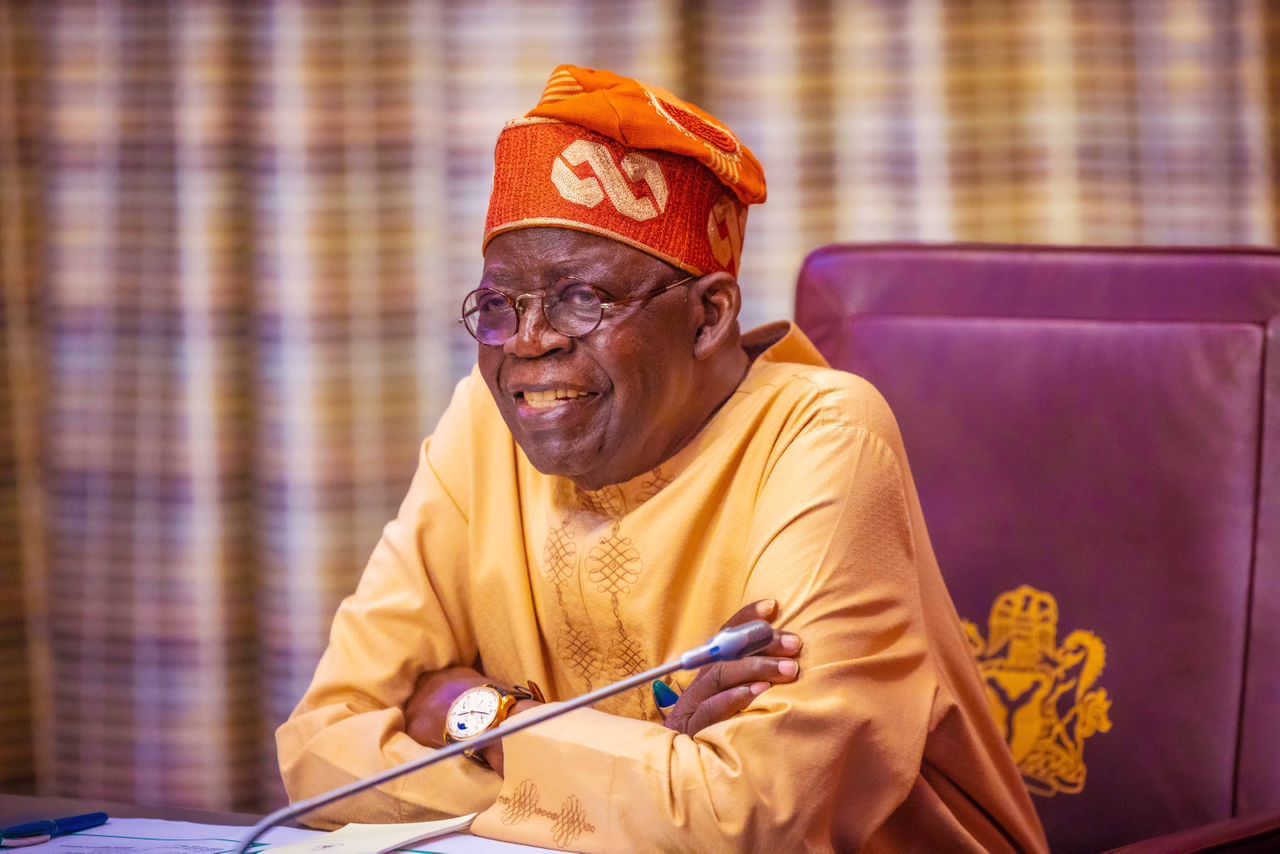
On Mr Tinubu, The Governors Are Liable Too
By Prince Charles Dickson PhD
Is life a freak accident, with no explanation, no reason, and no one to blame? Is it random?
Reminds me of an elderly couple, who were childless, but fond of their neighbour’s daughter and used to take her to the beach every Sunday to have fun. December, 26th 2004. A tsunami occurred, it was the last they were seen of. The young girl was sick that Sunday and couldn’t go. Was it her fortune or misfortune that she got ill that day?
One can only realize the outcome of a situation in the future. Is everything part of the design, are there coincidences and consequences?
The concluded polls, at various levels, have been contested the Supreme Court has put the Almighty presidential polls to rest. We will be dealt another dessert as there will also in some weeks some half a hand guber polls, namely Kogi, Imo, and Bayelsa states. Each poll presents another moment to take steps…, while I have refused to discuss the elections, not as an act of cowardice, but truly, who am I, to discuss, an election many thoughts were a function of “go and verify”, and many others see as their “mandate” has further divided the nation or one that has realigned the nation.
Who am I, especially when I am not on a praise-singing mission like many want to do…
Who am I to discuss elections when in the next few weeks, 40,000 policemen will be deployed for a civil-related exercise?
However with each passing day, I know that I am compelled to make my opinion known, and it’s not just my opinion but that of many Nigerians. And I make these comments so that someday in the future when I am asked what I say or do, these words would hold me liable. I will not sit on the fence and watch, I will talk, I will write and let my words stand for posterity.
Very quickly, let me say, with these elections, we may have made a comparative tangible responsive, and responsible movement in the democratic field, even though at great expense.
To Mr Tinubu and the renewed hope agents—The questions are not far-fetched: will Mr Tinubu, be far from being a ‘yes man’ and be far from the business-as-usual set of leaders that have plagued this nation?
To the Tinubu praise singers that have simply caught the messiah bug. I am surprised some people have not called him a ‘god’. The expectations are high, and for a nation that has for decades lived below its potential we have a right to expect much but sadly we are again (saddled with our permission) a government that ‘prays’ seriously will not be largely a deceptive one.
With a wry smile, it is at this point that I make a detour and say but…this essay is not about Mr. Tinubu. This is about the governors, those men who collect billions in security votes, those men who always blame their predecessors even when they are succeeding themselves. The men that have all kinds of excuses…
How many of the ‘new’ governors have not just by their will but by powers granted them constitutionally, the guts to tread a new path–or are we still going to tow the known path? It is the only road we know for now…road contracts that will be abandoned, and commissioning of hospitals without facilities. Schools that would be neglected, strike within various sectors of the economy amongst many shortfalls and long falls that characterize the state level, with a couple of its fair share of ‘elephant and hippo’ projects.
There may be little Mr Tinubu can do about the National Assembly and their outrageous million naira salaries for doing nothing, but hopefully, he can do more than negotiate more than 35,000 for another set called civil servants that do at least a ‘small thing’.
However, a big question would be, does anyone think that there is one state that would do things differently, the answer is, that we need a re-think. We do not need a soothsayer to tell us that the best that we have now is a conglomeration of deceit…re-congregated elite in many states and at best many that have been out of power and are coming with vengeance to chop.
A cursory look at the first few statements, interviews, and campaign promises of the Tinubu-led APC, raises both hope and fear, but the reality is tough, very tough!
Already there is a call for time and patience, how much of it, we have; only time will tell, and while I have argued that a change in government, if free, fair, and credible does not mean that government should restart its engine. On the contrary, it calls for a re-fuelling and moving ahead. Our experience is that across many states, the government has had to start all over again and the same old music is remixed, and a few months after we notice the same old thread in action.
And fearfully, the same issues that the last administration sought to solve or made comics of, are the same ones we are facing again.
However, like Mr Tinubu, many governors are blessed as Nigerians are so divided on the real issues by religion, ethnicity, nepotism, chopism, and other selfish modules.
Tinubu and his team must not just have the plan, the will; it simply must pay more than lip service to hope…not just like a labourer changes his shirt day by day without choice to the same work wear he is used in more than 60 long years.
At the state level governors must urgently and comprehensively address the job issue, and improve the business of government and governance. There must be workable plans that will translate to the provision of housing, water, and education for all Nigerian children to the Senior Secondary School grade at least.
With more billions spent, electricity domesticated to all levels, will governors use their state structures to make energy available, reliable, and affordable?
I beg to re-echo again that there is an honest search for understanding, education, organization, and action that raises the cost of state and casual violence for its perpetrators or that lays the basis for institutional change. There would be no answers; rather we would continually be plagued by the same questions and problems I highlighted in the paragraphs above.
Because while we want to blame the federal government and are quick to lay out how the bulk is at the president’s table, we forget that the governors must effectively manage or halt social disruptions that threaten the mutual co-existence of a people or we will watch almost helplessly as human inequality increases, social justice decays and poverty increases.
Mr Tinubu is not going to solve our problems, like Mr Buhari before him, he will not disappoint failure. However if the administration can join the speed train age and stop the government from celebrating borehole water in communities that deserve more…then not only will I eat my words, but threaten governors to do even better.
Finally Mr President and particularly your excellencies across some 30 states, you are not under obligation to read or listen to me. Besides you are not the root cause of why after 16 years of democracy, we are still a nation of potential and little in achievement. You cannot do anything about it…but certainly, you can do something…You cannot surprise many of us who do not believe in you. But you can shut us up by performing. May Nigeria Win!
Feature/OPED
Preventing Financial Crimes Amid Mounting Insecurity: Why Following the Money is Now a Survival Imperative
By Blaise Udunze
Nigeria today faces a sobering dual reality: a deepening security crisis and an entrenched financial-crime ecosystem that quietly feeds, sustains, and normalises that crisis. Across the North, Middle Belt, and parts of the South, kidnappers, bandits, insurgent cells, political actors, compromised security agents, and a complex chain of financial facilitators operate within a shadow economy of violence, one that generates billions, claims thousands of lives, and steadily erodes the authority of the state.
For over a decade, security experts and Nigeria’s international partners have warned that no meaningful progress will be made against insecurity unless the financial oxygen sustaining violence is cut off. Yet the country continues to prosecute its anti-terrorism efforts largely through military responses, as though the conflict could be resolved solely on the battlefield. What remains missing is a decisive, transparent, and politically courageous confrontation with the economic networks that make insecurity profitable.
This war is not only about guns and bullets. It is about money.
Money moves fighters.
Money buys weapons.
Money fuels political desperation.
Money underwrites chaos.
Until Nigeria addresses the financial pipelines behind its insecurity, the crisis will continue to reproduce itself.
Kidnapping: The Lucrative ‘War Fund’ Sustaining Insurgency
The rise in mass kidnappings is neither accidental nor spontaneous. It has evolved into a rational, structured, revenue-generating enterprise.
Appearing on Channels TV’s Politics Today in October 2025, Yusuf Datti Baba-Ahmed warned that insurgent and bandit groups now treat ransom payments as reliable “war funds.” The data support his claim.
A 2024 survey by the National Bureau of Statistics (NBS) found that Nigerians paid N2.2 trillion in ransom between May 2023 and April 2024. This astonishing sum does not account for unreported payments made through informal negotiators, mobile transfers, or unregulated community channels.
Kidnapping has matured into a fully formed economy with well-defined roles: negotiators, informants, logistics providers, cash couriers, and security collaborators. Proceeds are reinvested in weapons, motorcycles, communication devices, safe houses, and even land acquisitions.
In the words of a security analyst, “Every successful kidnapping is a fundraiser.”
Sabotage from Within: Keffi’s Explosive Memo and a System Built to Fail
If Nigeria’s external security threats are troubling, the internal compromises are even more alarming.
A leaked memo by Major General Mohammed Ali Keffi accused senior government and military officials of diverting billions of naira earmarked for arms procurement under former Chief of Army Staff, Lt. Gen. Tukur Buratai. Keffi’s allegations included:
– Weapons paid for but never delivered
– Falsified battlefield reports
– Civilian casualties mislabelled to justify inflated expenditures
– Political interference obstructing investigations into terror financing
His claims echoed the earlier warning by Gen. T.Y. Danjuma, who accused sections of the military of working in concert with armed groups and abandoning vulnerable communities.
Keffi’s memo became even more consequential following the 2025 detention of former Attorney General Abubakar Malami by the EFCC over allegations of money laundering, terrorism financing and suspicious financial activity linked to 46 bank accounts.
Together, these revelations paint a disturbing picture: even as Nigerians endure mass abductions, elements within the political and security elite appear to be enabling or shielding the financial networks behind the violence.
Why the Crisis Persists: A Financial Crime Lens
Nigeria’s insecurity cannot be divorced from the environment in which illicit finance thrives. Key enablers include:
- Informal Economies and Unregulated Cash Flows
With over 70 percent of rural transactions still cash-based, terror groups exploit:
– Hawala networks
– POS and mobile-money agents
– Cattle markets and mining sites
– Barter systems centred on livestock and grains
These channels operate beyond the reach of AML/CFT systems.
- Identity Fraud and Weak KYC Enforcement
– Criminal networks routinely open accounts with:
– Fake NINs
– Compromised SIM cards
– Recycled BVNs
– Mule identities
- Collusion within Financial Institutions
The EFCC estimates that up to 70 percent of financial crimes involve bank personnel, primarily through:
– Unauthorised cash withdrawals
– Suppressed Suspicious Transaction Reports (STRs)
– Manipulated internal alerts
- Weak Prosecution and Political Interference
Cases drag on for years, and many evaporate entirely before reaching court often due to political considerations.
- Ungoverned Spaces
Large territories across the North serve as hubs for:
– Arms trafficking
– Illegal mining
– Kidnap-for-ransom camps
– Cross-border smuggling
Public Patience Thins: NLC Moves to the Streets
Public frustration is reaching a boiling point. On December 10, the Nigeria Labour Congress (NLC) announced a nationwide protest scheduled for December 17, citing the “degenerating security situation” and the rise in mass abductions.
The NLC condemned the November 17 abduction of female students in Kebbi, noting that security personnel had been withdrawn from the school shortly before the attack. The union called the act “dastardly and criminal” and directed all affiliates and civil-society partners to fully mobilise for the protest.
This marks a significant shift. For the first time in years, Nigeria’s most influential labour body is placing insecurity at the centre of national mobilization, further underscoring the argument that the current crisis is not simply a security failure but a systemic breakdown of governance, accountability, and financial integrity.
The Financial Engine of Terror: The 23 Suspects Who Moved Billions
A Sahara Reporters investigation uncovered a network of 20 Nigerians and three foreign nationals allegedly linked to the financing of Boko Haram and ISWAP. Their transactions, running into hundreds of billions, were quietly channeled through personal and corporate accounts.
Among those named:
– Alhaji Saidu Ahmed, Zaria businessman: N4.8bn inflows
– Usaini Adamu, Kano trader with 111 accounts: N43bn inflows, N50bn outflows
– Muhammad Sani Adam, forex and precious stones dealer: N54bn across 41 accounts
– Yusuf Ghazali, a forex trader linked to UAE-convicted terrorists, operated 385 accounts
– Ladan Ibrahim, a Sokoto official, is accused of diverting public funds
– Foreign actors included the late Tribert Ayabatwa (N67bn inflows) and Nigerien arms dealer Aboubacar Hima, who moved over $1.19 million.
Strikingly, several of the suspects arrested in 2021 were quietly released without trial, continuing a pattern of impervious investigations and political bottlenecks.
This network confirms a painful truth: Nigeria’s insecurity is not driven solely by men wielding rifles in the bush. It is sustained by individuals in cities, businesses, and bureaucracies, people with access, influence, and remarkable financial mobility.
The Political Dimension: Irabor’s Revelation and the Unnamed Sponsors
The political undertone of Nigeria’s insecurity was reinforced by the former Chief of Defence Staff, Gen. Lucky Irabor (rtd), who admitted that politicians were among those financing terror groups. According to him, some trials were conducted “away from public consumption.”
His statement revived key questions:
– Why is the state shielding the identities of terror sponsors?
– Who benefits from the secrecy?
– What political consequences are being avoided?
Security sources told TruthNigeria that Nigeria’s published list of 19 terror financiers in 2024 represented only a fraction of the full network.
Baba-Ahmed’s accusation that former Kaduna Governor Nasir El-Rufai was part of the political forces that aggravated Northern insecurity, an accusation the former governor has previously denied, adds further urgency to demands for transparency.
The Human Cost: Expanding Killing Fields
Despite repeated assurances, violence continues to spread:
– 303 students and 12 teachers abducted in Niger State
– 38 worshippers kidnapped in Kwara
– Simultaneous raids across Plateau, Kaduna, Benue, and Niger
– Whole communities uprooted by weekly attacks
As Amnesty International observed, “In many rural communities, only the graveyards are expanding.”
SBM Intelligence now describes large portions of the North as “open killing fields,” areas where the state’s influence has collapsed, and community vigilantes have become the default security providers.
Expert Voices: Why Nigeria Must Finally Follow the Money
Security experts converge on a single message: Nigeria cannot defeat terrorism without dismantling its financial infrastructure. Dr. Friday Agbo, a security researcher, disclosed, “Terror groups survive because their financial lifelines remain untouched.”
Jonathan Asake, analyst and former SOKAPU president, said, “Publish the full Dubai list. Without transparency, impunity will remain the norm.”
Gen. Irabor (rtd.) revealed, “There are politicians involved. The conflict is multi-layered: ideology, criminality, and political manipulation.”
These assessments underscore one reality: ideology is secondary. Money is primary. It is the oxygen of Nigeria’s terror landscape.
What Must Change
Nigeria must elevate financial crime to the level of a national-security emergency. Key reforms include:
– Integrating BVN-NIN-SIM identity databases and upgrading real-time monitoring
– Targeting illicit markets: illegal mining hubs, cattle markets, unregulated border posts
– Deploying AI-driven analytics to detect layered transactions, mule networks, and ransom flows
– Strengthening bank compliance units and protecting whistleblowers
– Improving inter-agency intelligence sharing (EFCC, NFIU, DSS, NDLEA, Police, CBN)
– Criminalising unexplained wealth, especially in conflict zones
– Investing in safe-school infrastructure, rural policing, and local reporting channels
Choosing Truth Over Convenience
Nigeria’s two-front war is neither mysterious nor new. It is a well-documented, financially engineered crisis protected by silence, vested interests, and institutional decay. The NLC’s mobilisation signals a turning point; citizens are unwilling to accept official evasions while insecurity intensifies. To end this crisis, Nigeria must:
– Expose and prosecute terror financiers
– Purge corrupt insiders in the security system
– Dismantle ransom economies
– Strengthen financial intelligence
– End political protection for criminal networks
Until these reforms are pursued with integrity, billions will continue to move, weapons will continue to flow, and Nigeria will continue to bleed.
Blaise, a journalist and PR professional, writes from Lagos, can be reached via: [email protected]
Feature/OPED
Championing Ethical Sourcing Within Dairy Communities
Human Rights Day often centres on themes of dignity, equity, and freedom. Yet for many Nigerians, these rights are not debated in courtrooms they are expressed in the ability to access nutritious food, build meaningful livelihoods, and secure a healthy future for their families. Nutrition, in this sense, becomes a fundamental human right.
Despite a growing population and rising nutrition needs, Nigeria faces a pressing dairy reality. The country remains heavily dependent on dairy imports, leaving nutritional access vulnerable and local capacity underdeveloped. This is not just an economic concern; it is a human one. When families cannot easily access affordable, high-quality dairy, the foundations of health and development are weakened.
It is within this context that Arla Nigeria operates not merely as a dairy company, but as a nutrition powerhouse committed to nourishing a nation. Our ambition extends beyond selling products. We are working to build the foundations of a stronger, more resilient local dairy sector that supports food security, economic participation, and national progress.
At the heart of our efforts is the Damau Integrated Dairy Farm in Kaduna Statea fully operational modern farm designed to demonstrate what responsible, efficient, and scalable dairy production can look like in Nigeria. Arla Nigeria produces its own milk on-site, ensuring quality, safety, and consistency as we continue building the systems required for a sustainable local value chain. In fact, until our yoghurt factory launches, the reverse is true: some stakeholders purchase milk from us.
But infrastructure alone is not the story. What truly matters is the human impact surrounding the farm.
Arla Nigeria has been intentional about engaging and empowering the communities around Damau. By creating employment opportunities for local residents, providing skills development, and contributing to community growth, we are ensuring that the benefits of dairy development extend beyond production lines. This is development rooted in people where progress is measured in livelihoods improved and opportunities created.
As Arla Nigeria continues to expand operations, our long-term commitment remains clear: to contribute meaningfully to local milk sourcing and value chain development, strengthening Nigeria’s capacity to feed itself. Backward integration is not a slogan for Arla Foods; it is a structured pathway with building responsibly and sustainably. From farm systems to future household milk initiatives, the goal is to create a model that supports farmers, enhances productivity, and drives economic inclusion in the years ahead.
On Human Rights Day, the conversation often revolves around preventing harm avoiding exploitation, ensuring fair labour, and upholding ethical standards. These are essential, but they are only the beginning. True respect for human rights means creating enabling systems that allow people to thrive.
With Arla Foods, that begins with nutrition. Milk is a super food, rich in essential nutrients that support growth and development. Ensuring access to such nutrition contributes directly to national well-being and productivity. When we help secure a healthier population, we strengthen the foundation for education, economic participation, and long-term prosperity.
This is why Arla believes that dairy is not just food it is nutrition, livelihood, and progress. By investing in sustainable production, community development, and future local sourcing capabilities, Arla Nigeria is contributing to food security and economic growth in a tangible, measurable way.
Ultimately, ethical business is not defined by corporate language or labels. It is defined by the stability, nourishment, and dignity it brings to people’s lives. As Nigeria celebrates Human Rights Day, let us recognise that the right to nutrition and the opportunity to build a better future are among the most powerful rights we can help protect.
Feature/OPED
In Praise of Nigeria’s Elite Memory Loss Clinic
By Busayo Cole
There’s an unacknowledged marvel in Nigeria, a national institution so revered and influential that its very mention invokes awe; and not a small dose of amnesia. I’m speaking, of course, about the glorious Memory Loss Clinic for the Elite, a facility where unsolved corruption cases go to receive a lifetime membership in our collective oblivion.
Take a walk down the memory lane of scandals past, and you’ll encounter a magical fog. Who remembers the details of the N2.5 billion pension fund scam? Anyone? No? Good. That’s exactly how the clinic works. Through a combination of political gymnastics, endless court adjournments, and public desensitisation, these cases are carefully wrapped in a blanket of vagueness. Brilliant, isn’t it?
The beauty of this clinic lies in its inclusivity. From the infamous Dasukigate, which popularised the phrase “arms deal” in Nigeria without actually arming anything, to the less publicised but equally mystifying NDDC palliative fund saga, the clinic accepts all cases with the same efficiency. Once enrolled, each scandal receives a standard treatment: strategic denial, temporary outrage, and finally, oblivion.
Not to be overlooked are the esteemed practitioners at this clinic: our very own politicians and public officials. Their commitment to forgetting is nothing short of Nobel-worthy. Have you noticed how effortlessly some officials transition from answering allegations one week to delivering keynote speeches on accountability the next? It’s an art form.
Then there’s the media, always ready to lend a hand. Investigative journalists dig up cases, splash them across headlines for a week or two, and then move on to the next crisis, leaving the current scandal to the skilled hands of the clinic’s erasure team. No one does closure better than us. Or rather, the lack thereof.
And let’s not forget the loyal citizens, the true heroes of this operation. We rant on social media, organise a protest or two, and then poof! Our collective short attention span is the lifeblood of the Memory Loss Clinic. Why insist on justice when you can unlook?
Take, for example, the Halliburton Scandal. In 2009, a Board of Inquiry was established under the leadership of Inspector-General of Police, Mike Okiro, to investigate allegations of a $182 million bribery scheme involving the American company Halliburton and some former Nigerian Heads of State. Despite Halliburton admitting to paying the bribes to secure a $6 billion contract for a natural gas plant, the case remains unresolved. The United States fined the companies involved, but in Nigeria, the victims of the corruption: ordinary citizens, received no compensation, and no one was brought to justice. The investigation, it seems, was yet another patient admitted to the clinic.
Or consider the Petroleum Trust Fund Probe, which unraveled in the late 1990s. Established during General Sani Abacha’s regime and managed by Major-General Muhammadu Buhari, the PTF’s operations were scrutinised when Chief Olusegun Obasanjo assumed office in 1999. The winding-down process uncovered allegations of mismanagement, dubious dealings, and a sudden, dramatic death of a key figure, Salihijo Ahmad, the head of the PTF’s sole management consultant. Despite the drama and the revelations, the case quietly faded into obscurity, leaving Nigerians with more questions than answers.
Then there is the colossal case of under-remittance of oil and gas royalties and taxes. The Federal Government, through the Special Presidential Investigatory Panel (SPIP), accused oil giants like Shell, Agip, and the NNPC of diverting billions of dollars meant for public coffers. Allegations ranged from falsified production figures to outright embezzlement. Despite detailed accusations and court proceedings, the cases were abandoned after the SPIP’s disbandment in 2019. As usual, the trail of accountability disappeared into thin air, leaving the funds unaccounted for and the public betrayed yet again.
Of course, this institution isn’t without its critics. Some stubborn Nigerians still insist on remembering. Creating spreadsheets, tracking cases, and daring to demand accountability. To these radicals, I say: why fight the tide? Embrace the convenience of selective amnesia. Life is easier when you don’t worry about where billions disappeared to or why someone’s cousin’s uncle’s housemaid’s driver has an oil block.
As World Anti-Corruption Day comes and goes, let us celebrate the true innovation of our time. While other nations are busy prosecuting offenders and recovering stolen funds, we have mastered the fine art of forgetting. Who needs convictions when you have a clinic this efficient? Oh, I almost forgot the anti-corruption day as I sent my draft to a correspondent very late. Don’t blame me, I am just a regular at the clinic.
So, here’s to Nigeria’s Memory Loss Clinic, a shining beacon of how to “move on” without actually moving forward. May it continue to thrive, because let’s face it: without it, what would we do with all these unsolved corruption cases? Demand justice? That’s asking a lot. Better to forget and focus on the next election season. Who knows? We might even re-elect a client of the clinic. Wouldn’t that be poetic?
Now, if you’ll excuse me, I have a new scandal to ignore.
Busayo Cole is a Branding and Communications Manager who transforms abstract corporate goals into actionable, sparkling messaging. It’s rumored that 90% of his strategic clarity is powered by triple-shot espresso, and the remaining 10% is sheer panic. He can be reached via busayo@busayocole.com.
-
Feature/OPED6 years agoDavos was Different this year
-
Travel/Tourism9 years ago
Lagos Seals Western Lodge Hotel In Ikorodu
-
Showbiz3 years agoEstranged Lover Releases Videos of Empress Njamah Bathing
-
Banking7 years agoSort Codes of GTBank Branches in Nigeria
-
Economy3 years agoSubsidy Removal: CNG at N130 Per Litre Cheaper Than Petrol—IPMAN
-
Banking3 years agoFirst Bank Announces Planned Downtime
-
Banking3 years agoSort Codes of UBA Branches in Nigeria
-
Sports3 years agoHighest Paid Nigerian Footballer – How Much Do Nigerian Footballers Earn