Connect with us

Feature/OPED

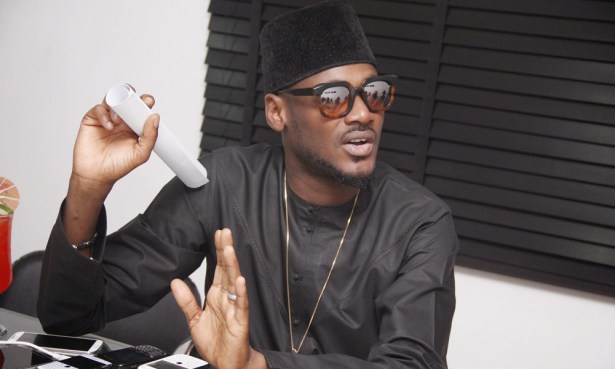
The Two Faces of Tuface

Published

on

By Reuben Abati

Tuface’s decision to lead a protest to register the dissatisfaction of Nigerians with the performance of the incumbent administration and to reiterate the value of government’s responsibility to the people was his finest moment as a citizen and artiste. But it is also now, with his Jammeh-like volte-face, his worst moment.

His transformation into a champion of democratic values and voice of the masses brought him added stardom and value. His retreat has turned him into a revolutionary manqué. He deserves our understanding and sympathy.

When on 24th January Tuface (Innocent Dibia) announced that he was going to lead, under the umbrella of the Tuface Foundation, a mass protest against the economic policies of the Buhari government, he immediately attracted public interest. A multiple award-winning musician, a naturally talented stage performer and author of at least two evergreen songs: “My African Queen” and “If Love is a Crime”, TuBaba, as he is also known, sounded like he was moving from art to politics, and seemed ready to answer to the true calling of the artist as the conscience of the people.

Artists and creative persons have always led protests and lent their voices to progressive causes. That much is the case in the United States at the moment, where artistes have raised their voices and joined protests to remind the “insurgent in the White House” that America is a land of freedom, democracy and justice and not bigotry and tyranny. Here at home, Fela, and his cousin, the Nobel Laureate Wole Soyinka, Chinua Achebe and others as well, have shown the power of creativity and stardom as a veritable vehicle for social change and justice. Artists and their art, and their movement from stage, or the printed page, to the public arena of action have always saved humanity, by humanizing man. This has been the case from Sophocles, all through time and history to Olanrewaju Adepoju, Beyonce and Kanye West.

But activism comes with a price. Tuface obviously didn’t bargain for that. He received enormous support. His announcement of the February 5, later February 6 protest energized the angry, frustrated Nigerian base, and drew our unrelenting “children of anger” back into an overdrive on social media. The international community also became interested, waiting to see the effect of a protest driven by star-power in Nigeria. It was coincidentally a season of protests across the world: in the Gambia, there had been protests against Yahyah Jammeh with a positive outcome, in the US, the UK and elsewhere, Donald Trump’s travel ban on seven Muslim-majority countries and his misogyny led to protests on both counts, and in the case of the former, a Federal judge has given a ruling that has resulted in the suspension of the ban. In Cameroon, concerned citizens are protesting over discrimination against English-speaking Cameroonians. In Romania, a sea of protesting citizens has just had its way. There is all around the world, right now, a resurgence and affirmation of people power, be it Brexit or left-wing activism in Europe. Individuals and groups lead such moments in history- what makes them different is the fire in their bellies and their readiness to command the revolution, at great personal risk.

It looked initially as if Tuface had that burning fire in his belly, but he couldn’t make that leap between self-preservation and the risks of rebellion. He had appeared on television. He spoke confidently about the need for real change in Nigeria. He encouraged Nigerians to come out en masse to support the movement. He even announced the colour and dress code of the protest. His wife stood by him and she, too, talked about her husband’s convictions about national progress and good governance. Each time Tuface appeared in the media, during those five minutes in the sun, he looked bright and determined. But everything changed late Saturday evening. The recorded video of Tuface’s volte-face, announcing the cancellation of the Feb. 6 protest showed him looking dispirited, broken, ashen, as if he had been shaken up and chastised. He looked unsettled with his scraggy, uncombed beard. It is not difficult to know when a man’s balls have been squeezed.

Tuface actually deserves our sympathy. He must have gone through a lot of pressures that broke his spirit. His capitulation makes us appreciate even better the heroism of those who always stood up to dictatorships. His example is indeed a great lesson…And I mean that positively for the fact that…Despite the massive support that he received, he also received a lot of discouragement. An old ally of his, some guy appropriately called Blackface was one of the first persons to blacken the idea of the protest. Some Nollywood, belle-forever-face-front-chop-money-money-finish-carry-go characters also opposed Tuface. Some musicians too, although in the long run, Tuface was able to mobilise the support of every section of the Nigerian community at home and in diaspora. By Saturday when he poured cold ice on the whole thing, the protest had even grown beyond him, much larger, with others seizing the initiative and turning what he had thought would be a small show into a nationwide and diaspora event. At that point, Tuface was no longer the singer of sultry songs, but the symbol of a rebellion. The enormity of that potential must have frightened him. He didn’t have the courage to see it through. Leadership is about courage. A coward can never lead a rebellion.

But we should struggle to understand his situation. He was accused of having seven children from three women, which is an absolutely stupid point. An artist does not have to be a saint. We relate to their art and their engagements with society on the basis of the positive value that they bring forth. It is also possible that Tuface received pressures from his multiple in-laws, and even the Baby Mamas defending their stakes in his life. The official wife must have been accused of trying to encourage him to get into trouble so he could get killed and she alone can sit on his estate. The Baby Mamas and all the in-laws must have called to remind him that his children are still very young and he needs to be alive to be their father and so he should think twice before going to use his chest to stop Nigeria Police bullets. Family members, to whom he is obviously a breadwinner, must have advised him to stay with his singing and dancing and not get involved in politics. They would remind him how Fela’s mum got killed and how Fela’s house was razed down, and how every artist who dared the Nigerian government ended up in exile or in prison or with a strange motor accident.

The Nigerian government was of course unhappy with the planned protest, and the idea of it created enormous confusion in Abuja and Aso Rock. While the office of the Acting President spoke about the right to protest and the government not having anything against the expression of fundamental human rights, the Office of the President on vacation made it very clear that the would-be protesters are enemies of the government of the day and sore losers. Those two seemingly contradictory impressions from Aso Rock can only point to one thing: high-level intrigue within. That is probably why the Nigeria Police kept shuffling: we don’t approve of the protest, we do, we don’t, we beg. The timing says it all also. With the President out of the country, and the plan of the protesters to welcome him with a Trump-like protest from Abuja, to Lagos, Port Harcourt, Uyo and Akure, and in parts of the Western world, the damage would have been incalculable. And Tuface would have been held responsible for leading the sabotage. No Nigerian government since 1999 has benefitted from any mass protest. The anti-third term protest hobbled the Obasanjo government. The Jonathan government never recovered from the pro-fuel subsidy protests of January 2012. Tuface and his planned protest had set the stage for a similar prospect for the Buhari government.

What Tuface imagined was a clean-hearted civil action would have resulted in absolute panic, with some informal voices in and around government doing dangerous analysis on ethnic and religious grounds. Reckless hypotheses such as the following: (a) “so, as Baba hand over this thing to Osinbajo so, the only thing his Christian brothers think they should do is to organize a protest in Baba’s absence?” (b) “You don hear say Osinbajo’s office say people have right to protest? So, Baba cannot even travel on vacation again. Walahi, these Yoruba people cannot be trusted.” (c) What are these security people doing? If they are loyal to Baba, by now they should have invited that Tuface, and ask him about the two SUVs that Akpabio gave him and his wife when they got married. They should show him strong evidence that the SUVs were bought with Akwa Ibom state government money and he should pay back the money or get ready to be sued for being an accomplice in a case of diversion of public funds. (d) Or you could have some people affirming the narrative that was put out by the APC and friends of the government of the day viz: “this is the PDP at work. Tuface must be an agent of PDP. Why are our own APC people sleeping? Baba no dey around, they want to pull down the country. So, Tuface is now working with Ayo Fayose of Ekiti, to embarrass Baba? This Osinbajo, can we trust him?”

By pulling the trigger at this time, Tuface simply put a lot of people under pressure and placed their jobs and loyalty at risk -no doubt about it, they must have come after him with a sledgehammer to stop and discourage him. Clear evidence: a counter-revolutionary #IstandwithBuhari protest has already been announced to last for two days. The Tuface revolution that has been abandoned by its main motivator teaches us more lessons about the dynamics of power in Nigeria and the temperament of the resident power elite. Will the protest now take place on February 6, without Tuface? Or will everyone hold fire and down their tools of anger? What is certain, however, is that Tuface is likely to sit at home tomorrow with Anne, his temptingly pretty wife by his side, watching the latest episode of Big Brother Naija on TV, with chicken and salad before him, and a bottle of wine, and one of his hands, innocently setting the stage for the amorous prelude for child number eight. With his wife telling him: “don’t worry yourself dear, Nigeria is not worth dying for. Who wan die make e go die. You have tried your best, my darling husband!”.

That is how many would-be heroes become anti-heroes, and their dreams die a-borning. If the protests go ahead on February 6 as many are threatening, nonetheless, Tuface would lose a lot. If it doesn’t go ahead, he would still lose. The torch of protest that he has lit may not burn on the streets of Nigeria; it is burning already in the minds of the people. He may have chickened out, but he has already achieved the goal of his initial plan. He has by lending his star power to an anti-Buhari protest, expanded the population of angry Nigerians. He has given voice to their anger and fears. His withdrawal from action will not excuse him. Whatever anyone tells him, in the long run, he would still be punished for his bravery and cowardice on both counts. He should not be surprised if for the next few months, he doesn’t get invited to any concert, or performance contract, or if he gets to perform anywhere, he could be booed off the stage. He should not be surprised if his phones stop ringing, or if it rings at all, he could be told: “call me on what’s app I beg, I don’t know if they are monitoring your calls.”

Let no one blame Tuface. His stage name Tuface is the name of Janus: the two-face Greek god, who looks in two directions. When it mattered most in his career, Tuface Idibia answered the call of his name!


Modupe Gbadeyanka is a fast-rising journalist with Business Post Nigeria. Her passion for journalism is amazing. She is willing to learn more with a view to becoming one of the best pen-pushers in Nigeria. Her role models are the duo of CNN's Richard Quest and Christiane Amanpour.

Advertisement
Click to comment

Leave a Reply

Your email address will not be published. Required fields are marked *

Feature/OPED

Banks’ N1.96trn Black Hole: Who Took the Loans, Who Defaulted, and Why the Real Economy Suffers

Published

on

Banks’ N1.96trn Black Hole

By Blaise Udunze

Nigeria’s banking sector has entered a season of reckoning. Eight of the nation’s biggest banks have collectively booked N1.96 trillion in impairment charges in just the first nine months of 2025 which represents a staggering 49 percent increase from the N1.32 trillion recorded in the same period of 2024.

Behind these figures lies a deeper question that speaks to the very soul of Nigerian finance on who received these loans that have now turned sour? Were they the small and medium enterprises (SMEs), entrepreneurs, and job creators that fuel real economic growth, or were they politically connected insiders and corporate giants whose failures are now being quietly written off at the expense of the public trust?

The Central Bank of Nigeria (CBN) is unwinding its pandemic-era forbearance regime, a policy that allowed banks to restructure non-performing loans and delay recognizing potential losses. It was a relief measure meant to protect the economy during the COVID-19 shock. But as the CBN begins to phase out this regulatory cushion, the hidden weaknesses in many banks’ balance sheets are now coming to light.

The apex bank has since placed several lenders under close supervisory engagement, restricting them from paying dividends, issuing executive bonuses, or expanding offshore operations until they meet prudential standards. Those that have satisfied the conditions are being gradually transitioned out ahead of the full forbearance unwind scheduled for March 2026. This shift, though painful, is forcing banks to confront the true state of their loan books and the picture emerging is anything but flattering.

A review of financial statements of Nigeria’s top listed banks reveals the distribution of impairment charges as of the third quarter of 2025.

–       Zenith Bank Plc leads the pack with an eye-popping N781.5 billion in impairments, a 63.6 percent jump from N477.8 billion in 2024. Most of this amount to about N711 billion which occurred in the second quarter of 2025, driven by losses on foreign-currency loans and the end of regulatory forbearance. The bank’s gross loans declined by 9 percent to N10 trillion, and though its non-performing loan (NPL) ratio improved to 3 percent, that was largely due to massive write-offs.

–       Ecobank Transnational Incorporated (ETI) followed closely, provisioning N393.7 billion, up 47 percent year-on-year. Inflation, exchange-rate volatility, and macroeconomic stress in Nigeria and Ghana all contributed to loan-quality deterioration. Its total loan book stands at N21.1 trillion, with a modestly improved NPL ratio of 5.3 percent.

–       Access Holdings Plc posted impairments of N350 billion, representing a 141.5 percent surge year-on-year. About N255 billion of this came from loans to corporate entities and organizations, while the rest were loans to individuals. The bank cited changing macroeconomic conditions, inflationary pressures, and continued regulatory adjustments as the main culprits.

–       First HoldCo reported N288.9 billion, up 68.6 percent from N171.4 billion a year earlier. The bank attributed the spike to revaluation losses and write-downs of legacy exposures in the energy and trade sectors. Notably, about N100 billions of this was incurred in the third quarter alone.

–       United Bank for Africa (UBA) saw a dramatic improvement, cutting impairments from N123.5 billion to 56.9 billion, thanks to recoveries of N50.4 billion. The bank’s proactive loan-book management and collateral recoveries were credited for this performance.

–       Guaranty Trust Holding Company (GTCO) posted N69.8 billion, up slightly from N63.6 billion last year. The group wrote off a key oil-and-gas exposure but maintained strong profitability, with pre-tax return on equity (ROAE) of 39.5 percent.

–       Stanbic IBTC Holdings Plc recorded N11.6 billion, a sharp 80 percent decline year-on-year following recoveries of N16.3 billion on previously impaired loans.

–       Wema Bank Plc, with N11 billion in impairments, reported one of the lowest provisioning levels in the industry, despite 30 percent loan growth.

Altogether, these eight banks have set aside almost N2trillion in provisions to cover potential losses, a sum roughly equivalent to Nigeria’s entire federal capital expenditure for 2025.

There have been recent claims of a modest level of loan growth that is not commensurate with the overall expansion of the banking system’s balance sheet. Data from MoneyCentral shows that the combined total loans of the nine banks stood at N65.37 trillion as of September 2025, representing a 7.42 percent increase from N60.86 trillion in 2024. This contrasts sharply with a 52.63 percent surge in combined loans recorded in the 2024 financial year and a 32.64 percent increase in 2023, according to data gathered by MoneyCentral.

The underlying question, therefore, is which sectors of the economy are actually benefiting from this reported loan growth?

The real puzzle behind these numbers is who actually received these loans that are now being impaired. While banks have long positioned themselves as engines of private-sector growth, evidence suggests that much of their lending goes to a narrow base of corporate borrowers, politically connected elites, and oil-and-gas companies. These sectors offer large-ticket deals and quick interest earnings but also carry enormous risk.

In contrast, the SME sector, which employs more than 80 percent of Nigeria’s workforce, continues to face credit starvation. Many small businesses are forced to rely on expensive informal loans or personal savings because banks deem them too risky. The pattern is clear that banks chase safety and short-term profits over inclusive growth. When their big corporate bets fail, they write them off through impairment charges, but the cumulative effect is that real economic activity suffers while the credit system grows more fragile.

Another dimension to the problem is the banking industry’s heavy investment in government securities. Over the past two years, Nigerian banks have channeled N20.4 trillion into treasury bills, bonds, and other fixed-income instruments, reaping risk-free returns rather than funding productive ventures. This “securities trap” is profitable for banks but disastrous for the economy. Instead of financing factories, farmers, or tech innovators, banks earn easy money by lending to government thereby crowding out private investment and weakening the transmission of credit to the real sector. When interest rates rise or currency values swing, the market value of these securities falls, forcing banks to record mark-to-market losses that translate into impairment charges. Thus, the same safety net that shields banks from loan risk ends up creating financial volatility of its own.

Beyond macroeconomic challenges, Nigeria’s banks are also grappling with homegrown problems like insider abuses, weak corporate governance, and ineffective risk management. Past crises in the banking sector, from the 2009 consolidation fallout to the 2016 oil-sector shock, reveal a consistent pattern: directors and senior executives often have outsized influence over loan approvals, sometimes extending credit to themselves or politically exposed entities without proper collateral or due diligence. These insider-related loans frequently turn toxic, hidden under layers of restructuring and accounting manoeuvres until a regulatory audit forces exposure.

The recent impairments may well reflect a new cycle of these historical sins as loans extended under pressure, influence, or misplaced optimism, now coming home to roost as the CBN tightens oversight. Corporate-governance codes exist, but enforcement remains uneven. Some banks continue to operate “relationship banking,” were loyalty trumps prudence. The lack of whistleblower protection, combined with weak internal-audit independence, further compounds the problem. Until boards and regulators impose real consequences for reckless lending, the system will continue rewarding the wrong behaviour and punishing taxpayers and shareholders in the long run.

At its heart, impairment is a measure of how well banks anticipate and manage risk. A rise in impairments signals that too many loans were made without properly assessing the borrower’s ability to repay, or that risk models failed to adjust to changing macroeconomic conditions. Several banks blamed their losses on exchange-rate volatility and inflation, but these are hardly new risks in Nigeria’s economic environment. The fact that impairments ballooned even as profits remained high suggests that risk-management frameworks were reactive rather than preventive which focused on compliance rather than foresight. In some cases, the sheer scale of provisioning, such as Zenith’s N781 billion or Access’s N350 billion, points to systemic underestimation of credit risk.

Every naira written off as an impairment represents not just a failed loan but a lost opportunity for the real economy. N1.96 trillion could have funded tens of thousands of new small businesses, millions of jobs, and critical infrastructure projects. Instead, these funds are trapped in the closed circuit of banking losses or vanish into opaque corporate failures. This has broader implications: as banks absorb losses, they tighten lending criteria, making it harder for genuine borrowers to access loans. High impairments signal instability, discouraging foreign investors and depositors, while credit flow dries up, productivity and job creation suffer. The result is a paradoxical economy where banks post impressive profits yet the productive sector languishes.

If there is a silver lining, it is that some banks, notably UBA, Stanbic IBTC, and Wema Bank are demonstrating improved loan-recovery strategies, more disciplined credit models, and a stronger focus on risk-weighted assets. Their experiences prove that impairment is not inevitable; it is the outcome of choices like governance, culture, and accountability. For others, the current round of provisioning should serve as a wake-up call to rethink their business models, diversify exposures, and strengthen compliance culture.

To its credit, the CBN’s forbearance unwind is a critical step toward transparency. By compelling banks to recognize their true loan losses and restricting dividend payouts until they meet prudential standards, the regulator is forcing a long-overdue cleansing of the system. However, reform must go deeper than technical compliance. The CBN must enforce public disclosure of insider-related loans, tighten penalties for concealment, and promote lending to productive sectors through targeted incentives. For instance, a tiered capital framework could reward banks that extend a higher proportion of credit to SMEs and manufacturing, while imposing stricter capital charges on speculative or insider-related lending.

Nigeria’s banking sector has shown resilience through crises, from the global financial meltdown to oil-price collapses. But resilience should not become an excuse for complacency. The N1.96 trillion impairment charges of 2025 are more than a balance-sheet adjustment; they are a mirror reflecting structural flaws in lending culture, governance, and the alignment between finance and development. To rebuild trust and relevance, banks must reorient lending toward real-sector growth, invest in credit analytics and risk intelligence that anticipate shocks, enforce transparency in board-level loan approvals and insider exposures, and collaborate with regulators to design sustainable credit frameworks for SMEs. Above all, there must be a moral recalibration of banking purpose from chasing short-term profits to fueling long-term national prosperity.

The spike in impairment charges does not mean Nigeria’s banks are collapsing. Rather, it signals an industry confronting its hidden fragilities. As the forbearance curtain lifts, the system has a chance to reset to clean up bad debts, rebuild credibility, and reconnect finance with development. But that opportunity will be wasted if the same patterns persist: insider lending, governance lapses, and a preference for easy returns over real investment. Until these issues are confronted head-on, the question will continue to echo through boardrooms and regulatory halls are Nigerian banks truly financing growth or merely recycling risk and protecting privilege? Only transparency, discipline, and a renewed sense of purpose can answer that question in the affirmative.

Blaise, a journalist and PR professional writes from Lagos, can be reached via: [email protected]

Continue Reading

Feature/OPED

5 Simple Ways Limestone’s StoneCircle Is Redefining Safety and Community Living in Nigeria

Published

on

Limestone's StoneCircle

Safety and community living in Nigeria come with real challenges, from rising insecurity to the stress of managing estate dues or keeping tabs on who enters your compound. For most Nigerians, peace of mind now means more than just high fences and gatekeepers, it means smarter tools, real-time support, and tech that works seamlessly.

That’s where Limestone’s StoneCircle comes in. The newly launched platform, alongside Stone Security and Stone Community, offers a powerful suite of solutions designed to make individuals, business owners, and estate managers feel safer, more connected, and more in control.

Here are six simple ways Limestone is transforming how Nigerians live, protect, and manage their communities and properties with tech that works.

1. Send Instant Panic Alerts That Share Your Location in Real Time

In moments of distress, every second matters. With StoneCircle, users can instantly alert their pre-set safety network, including family, friends, and trusted neighbours, with just one tap. The alert shares your real-time location, allowing those who matter most to respond fast.

Whether you’re walking home late, stuck in a suspicious situation, or need medical help, help is now one button away.

2. Report Incidents Instantly with Video Tools

Describing what happened after a crisis can be frustrating and time-consuming. With StoneCircle’s Moments! feature for incident reporting, users can quickly record, tag, and share video updates as events unfold. These time-stamped clips offer clear context to responders or estate managers, helping decisions happen faster and more accurately.

It’s like having a digital witness in your pocket, ready to speak when you can’t.

3. Manage Estate Life From One Place

No more chasing estate managers over gate codes or dues. StoneCircle makes estate living stress-free with tools to handle payments, visitor approvals, complaints, and internal notices, all from your phone.

Think of it as your digital front desk: efficient, transparent, and always available.

4. Stay Connected to Your Safety Circle Anytime, Anywhere

Whether you’re a student on campus or a parent traveling for work, StoneCircle helps you stay close to your inner safety circle. Built-in chat and group creation features mean you can quickly check in, send updates, or call for help without fumbling through apps.

It’s the comfort of knowing someone’s always within reach—digitally and physically.

5. Scale Up with Smart Security for Estates and Institutions

Managing security for a large estate, school, or office building? Limestone’s Stone Security delivers smart cameras, monitoring dashboards, and alert systems that work hand-in-hand with StoneCircle’s mobile tools. It’s a scalable, all-in-one solution for modern Nigerian spaces, bridging on-ground infrastructure with intelligent digital control.

In summary, Limestone’s StoneCircle is more than a safety app; it completely rethinks how Nigerians live together, protect each other, and manage shared spaces. Whether you’re trying to feel safer at home, streamline estate operations, or build a tighter community, the tools are now at your fingertips.

The Limestone Ecosystem at a Glance

  • StoneCircle — the resident app by Limestone for personal safety, estate tasks, and community coordination.

  • Stone Community — the estate management platform for payments, visitor management, communications, and operations.

  • Stone Security — hardware and monitoring for estates and institutions, integrated with the above.

Together, these deliver a seamless operating system for modern Nigerian communities.

Continue Reading

Feature/OPED

Banks Cash Out, Economy Loses Out: How Nigerian Banks’ N5.05trn Government Securities Boom is Stifling Real Growth

Published

on

Richer Bank, CBN Logo

By Blaise Udunze

In a year when Nigeria’s economy continues to groan under the weight of inflation, unemployment, and weak purchasing power, the banking sector has once again recorded a massive windfall, not from lending to the real economy or financing innovation, but from investing in government securities.

According to data compiled by MoneyCentral, Nigerian Tier-1 banks collectively realized N5.05 trillion in income from investment securities in the first nine months of 2025 represents a staggering 42.28 percent increase over the N3.55 trillion recorded in the same period of 2024.

At first glance, this performance might seem like a testament to the banking industry’s resilience and financial ingenuity. But beneath the lustrous profit sheets lies a deeper economic dilemma that reveals how Nigeria’s banks are making more money by lending to government than by lending to people, small businesses, and industries which are the very arteries that sustain productive economic life.

It is no secret that Nigeria’s commercial banks have long found comfort in the safe, predictable yields of government securities such as treasury bills, bonds, and promissory notes. These instruments are virtually risk-free, backed by sovereign guarantees, and often deliver attractive returns in a high-interest-rate environment. For the banks, it is a perfect business model where depositors’ funds flow in at low cost, and those funds are easily parked in high-yield government paper with minimal risk or operational hassle. There is no need to worry about non-performing loans, credit analysis, or the painstaking process of supporting small and medium enterprises (SMEs).

But for the economy, it is a tragedy of misaligned priorities. While the banks luxuriate in “safe profits,” the productive sectors like agriculture, manufacturing, transport, housing, and creative industries remain starved of credit. Nigeria’s SMEs, which account for over 80 percent of employment and nearly half of GDP, face prohibitive interest rates, limited access to capital, and chronic underfunding. The result is economic stagnation disguised as stability.

The data below tells the story clearly:

– Zenith Bank realized N1.14 trillion from income from short-term government securities, which is 55.49 percent higher than 2024’s N734.14 billion.

– Access Bank made N1.13 trillion income from investment securities as at September 2025 which is 36 percent higher than 2024’s N838.14 billion.

– GTCO realized N547.77 billion income from government bonds, which is 45.68 percent higher than 2024’s N376 billion.

– United Bank for Africa (UBA) saw its income from short-term government securities rise 29.77 percent to N973.12 billion in the period under review, up from N750.48 billion the previous year.

– FirstHoldco’s income from investment securities increased 33.70 percent to N720.15 billion in September 2025, from N538.59 billion in September 2024.

Collectively, these numbers paint a clear picture of the real economy struggling to breathe, while the financial sector is growing fat on sovereign debt. This is not banking as development finance; it is banking as arbitrage. And the scale of this investment obsession is enormous. In the past teo years alone, the top 10 listed banks have channeled at least N20.4 trillion into investment securities and this huge capital could have financed millions of jobs, supported thousands of small businesses, and accelerated growth in Nigeria’s productive sectors.

This has now caught the attention of Nigeria’s tax authorities. The Federal Inland Revenue Service (FIRS) recently directed banks, stockbrokers, and other financial institutions to deduct a 10 percent withholding tax on interest earned from investments in short-term securities. Prior to this directive, short-term bills were tax-exempt to boost returns for investors. The new rule requires tax to be deducted at the point of payment on instruments such as treasury bills, corporate bonds, promissory notes, and bills of exchange.

It remains unclear how much the government expects to generate from this withholding tax. However, the FIRS clarified that investors will receive tax credits for the amounts withheld unless the deduction represents a final tax. Notably, interest on federal government bonds remains exempt from the levy. “All relevant interest-payers are required to comply with this circular to avoid penalties and interest as stipulated in the tax law,” FIRS Executive Chairman Zacch Adedeji said in the official notice.

Yield-hungry investors including banks are likely to be the most affected by this directive. In the first half of 2025 alone, Nigeria’s biggest banks realized N3.03 trillion in income from treasury bills, which represents a 60.40 percent increase from N1.89 trillion recorded in the corresponding period of 2024. GTCO, Zenith Bank Plc, United Bank for Africa Plc, Access Holdings Plc, FirstHoldco Plc, FCMB Plc, Fidelity Bank Plc, and Stanbic IBTC Holdings Plc have been in the habit of buying up domestic government bonds that offer among the highest yields in emerging markets.

By introducing this withholding tax, the FIRS aims to reduce excessive speculative investment in short-term securities and redirect liquidity into more productive parts of the economy. Whether this policy shift achieves that goal remains to be seen. In theory, taxing government securities could make lending to the private sector relatively more attractive. In practice, unless accompanied by broader structural reforms such as reducing credit risk, improving collateral enforcement, and stabilizing the macroeconomic environment, banks may simply adjust their margins and continue business as usual.

Nigeria is witnessing a growing disconnect between financial growth and economic growth. On one side is the booming financial economy, driven by banks’ trading gains, FX revaluation, and investment returns. On the other side is the struggling real economy, where factories close, youth unemployment rises, and SMEs collapse under the weight of credit starvation. The banks’ balance sheets may glitter, but the nation’s balance of welfare is grim.

As inflation eased slightly to 18.02 percent in September 2025, the Central Bank of Nigeria (CBN) cut the Monetary Policy Rate (MPR) from 27.5 percent to 27 percent. While this move signals a dovish tone, it does little to change the fact that the cost of credit remains astronomically high. Commercial lending rates hover between 25 percent and 35 percent, which is completely out of reach for most small businesses. Meanwhile, banks can earn double-digit, risk-free returns on treasury bills. Faced with that choice, which banker would lend to a farmer or manufacturer?

Beyond the figures, this trend has human consequences. Every SME denied a loan represents jobs not created, taxes not paid, and innovations never realized. Every startup that shuts down for lack of funding represents a family’s dashed hopes. Every manufacturer operating below capacity because of working capital shortages translates into lost exports and higher import dependence. When banks turn away from development finance, the ripple effect touches every household ranging from the market woman running a petty trade to the tech entrepreneurs across the country.

Several factors explain why banks prefer the comfort of government securities to the challenge of real-sector lending. Many SMEs operate informally, without proper records or collateral, making them unattractive to traditional lenders. Nigeria’s judicial system often makes loan recovery slow and uncertain, discouraging risk-taking. Exchange rate instability and inflation distort business forecasts, making long-term lending risky. Banks also find it easier to meet liquidity and capital adequacy ratios by holding government paper. Executive bonuses and performance metrics are tied to quarterly profits, not long-term economic impact. These factors form an entrenched ecosystem of incentives that rewards speculation over production, in a system where financial stability comes at the cost of real growth.

If Nigeria must break free from this cycle, a paradigm shift is needed, one that redefines the purpose of banking in national development. The CBN and fiscal authorities must create differentiated incentives for banks that channel a higher percentage of their loan portfolio to productive sectors such as agriculture, manufacturing, renewable energy, and technology. Tax rebates, lower cash reserve ratios, or credit guarantees can help de-risk these loans. Nigeria’s collateral registry, credit bureaus, and bankruptcy laws need modernization to reduce perceived risk, while the legal system must guarantee faster resolution of credit disputes.

Government, through the Bank of Industry (BOI) or similar agencies, can establish a blended-finance vehicle that matches public capital with private lending, allowing banks to co-finance SME projects with shared risk. Many small businesses fail to access credit because they lack proper documentation or business plans. A coordinated financial literacy program, supported by banks and chambers of commerce, could improve their readiness for formal credit. Ultimately, change must come from the top. Bank CEOs and boards must see themselves not just as profit managers but as nation builders. The sustainability of their profits depends on the health of the economy that surrounds them.

If this imbalance persists, Nigeria risks becoming a country where banks thrive and industries die. The long-term cost is profound. Economic growth will remain consumption-driven rather than production-led. Unemployment will worsen as SMEs fold up. Government borrowing will continue to crowd out private investment. The naira will weaken due to import dependence and weak export diversification. Financial capitalism, without developmental conscience, will only deepen inequality and discontent.

The time has come for Nigeria’s banking industry, regulators, and policymakers to make a collective choice: between easy profits and enduring prosperity. It is not enough to celebrate trillion-naira incomes if the nation remains trapped in jobless growth. It is not enough to report record balance sheets while millions of Nigerians remain unbanked and unemployed. True financial innovation lies not in exploiting yields, but in empowering people. The banks that will define the next decade are those that look beyond treasury bills, especially those that find value in the dreams of Nigerian entrepreneurs, in the resilience of its farmers, and in the creativity of its youth.

The story of Nigeria’s N5.05 trillion securities income is not just about numbers; it is about choices and their consequences. It reveals a financial system that has lost sight of its developmental mission, a government too dependent on debt, and an economy where growth has become disjointed from human progress. Yet, it is not too late to change course. The recent 10 percent tax on short-term securities should be the first step toward a deeper reform as one that forces a reallocation of capital from paper to people, from speculation to production.

As yields fall and monetary policy adjusts, the smart banks will be those that read the writing on the wall knowing that the future of finance in Nigeria lies not in government debt, but in the real economy because it is the only economy that truly matters. Because in the end, a nation cannot prosper when its banks are rich and its people are poor.

Blaise, a journalist and PR professional writes from Lagos, can be reached via: [email protected]

Continue Reading

Trending