
Feature/OPED
Understanding Corporate Procurement of Power in Sub-Saharan Africa

By Mike Webb
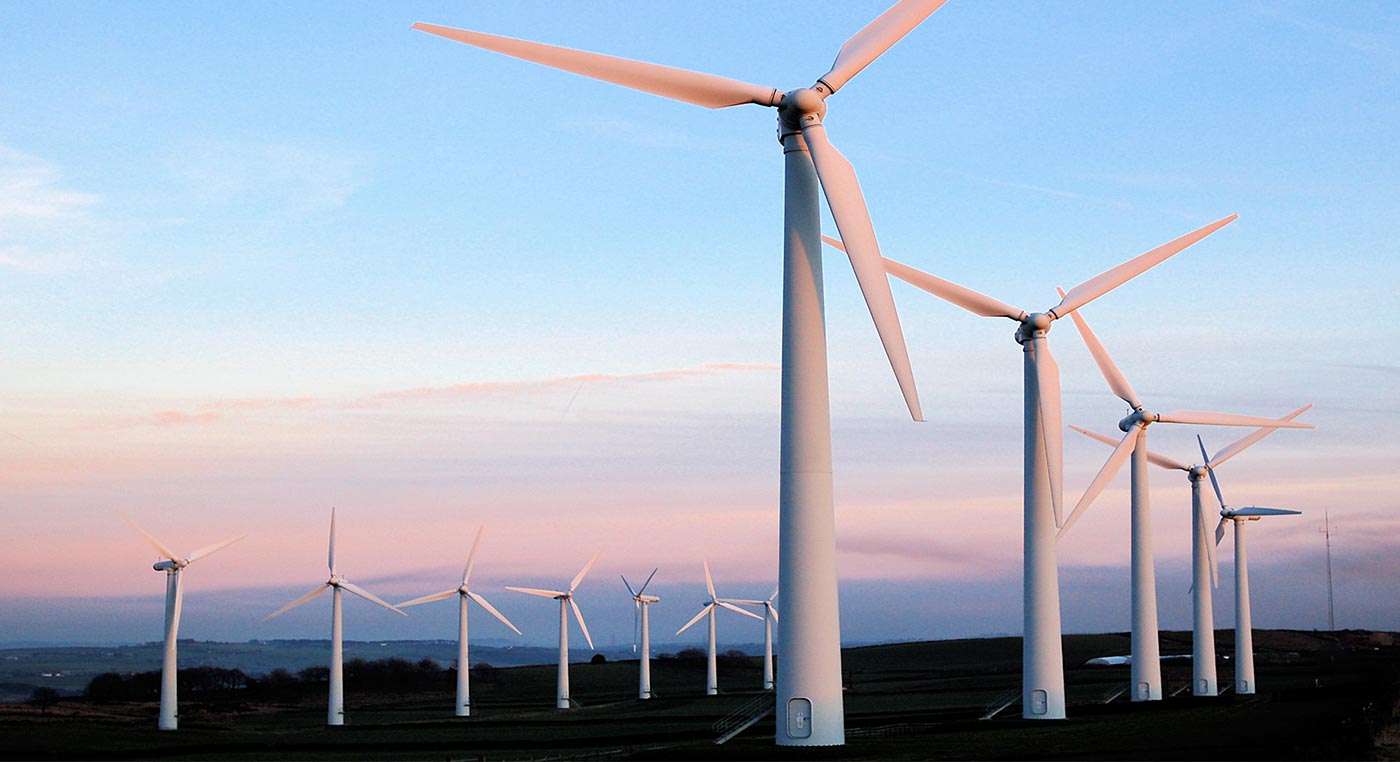
Renewable technologies are evolving at a rapid pace and have seen a dramatic decline in the costs associated with its procurement. This provides the opportunity for corporates to reap the benefits of procuring renewable energy directly from generators through the use of a power purchase agreement (corporate PPAs). Corporate PPAs aim to provide corporates with lower or more stable electricity costs and grid reliability and can contribute significantly to their sustainability targets.
Despite these benefits, corporate PPAs have struggled to take off in sub-Saharan Africa, commonly as a result of regulatory challenges. That being said, there are signals that several markets are evolving and opening up the potential for corporate PPAs. More regulators are considering options to change their power markets to favour this energy transition.
What is a Corporate PPA?
Firstly, a PPA is a contract between a generator of electricity and buyer to purchase electricity (whether physically or notionally) at a pre-agreed price for a pre-agreed period. The buyer of electricity is very often an electricity utility or registered electricity retailer. Alternatively, a corporate (as the end user) can choose to take control of its electricity procurement by contracting either directly or indirectly with a generator. This is a corporate PPA.
Corporates tend to procure their power from renewable energy generators and given the abundance of solar resources on the continent, this is the most common energy source for corporate PPAs in Africa. However, there is a lack of knowledge and understanding on the part of many corporate customers as to how they can structure, price and implement a corporate PPA.
The current regulatory framework
The key issue that obstructs the use of corporate PPAs in most markets is that a licence is required to either operate a power asset or sell power, or both. Most markets have a threshold where a licence is required, usually ranging between 100kW and 1000kW. Where projects exceed these thresholds, the PPA will often be structured as a hire-purchase agreement or lease to avoid the application of the licence requirement. However, in addition to triggering unfavourable tax consequences (where the PPA becomes a contingent liability on the corporate’s books), these solutions carry enforceability risk and may not pass a lender’s bankability requirements. It’s worth noting that there are currently no licence requirements in Senegal and Mozambique and the threshold in Uganda for a licence is 2000 kW. Most other African markets covered in our report, Opportunities for Corporate Procurement of Power in Sub-Saharan, do have licence requirements in some form.
In addition to licence requirements, some jurisdictions require approval from the local distribution network operator to install an on-site power plant (e.g. rooftop solar PV). This approval can be difficult to obtain and sometimes gets held up in months of administrative delays.
Market reforms
As the energy transition (which is a move to decarbonised, decentralised and democratised power markets) slowly makes its way into sub-Saharan Africa, some utilities and regulators are showing signs of key market reforms that will enable more opportunities for corporate PPAs. For example, as of 1 September 2019, Namibia will introduce a new energy policy that will allow the bilateral trading of power between generators and customers. In a small power market such as Namibia, the opportunities may be limited. However, it is expected that neighbouring countries, such as Zambia, could follow Namibia in this reform.
A key reform required in power markets to unlock opportunities of corporate PPA is net metering, where plants are able to supply unused power into the grid in return for a feed-in tariff. This is not available in most countries in sub-Saharan Africa and where it is available, such as South Africa, the tariff is often too low to enhance the economics of the project.
As a result of strong resources, as well as poorly maintained and limited grid networks, sub-Saharan Africa has seen an increase in the roll out of mini-grids. Rapid technological development and operational efficiencies have made mini-grids a practical, cost effective and viable solution to electrify rural areas. In Africa, over 2,000 mini-grids have been identified, with solar projects accounting for 40%. It is expected that the number of mini-grids may increase to 16,000 by 2023. The International Energy Agency estimates that at least 40% of new power connections in sub-Saharan Africa during the next decade will be provided by mini-grids. For example, Rwanda plans to provide over 90% of its electricity supply through mini-grids by 2024.
The regulatory environment around mini-grids in Africa can be quite different depending on the country. Tanzania has fairly clear policies and regulations that favour mini-grids. Nigeria has issued regulation detailing the framework for the establishment of mini-grids. Uganda is currently developing a mini-grid framework with the support of various donor programmes. Similarly, Rwanda has been in consultation with private mini-grid companies in the development of their mini-grid framework.
The Southern African Power Pool
A good sign that the power market is maturing is the increase in trading activity in the Southern Africa Power Pool (SAPP) in the last 18 months, which is beginning to show signs of a functional power pool. The SAPP currently serves more than 300 million people and has an available generation capacity of 67.19 GW.
A total of 2,124 GWh was traded on the SAPP market during 2018, resulting in USD 106.6 million being exchanged on SAPP’s competitive market. Current operating members of SAPP include Botswana, Democratic Republic of Congo, Lesotho, Mozambique, Namibia, South Africa, Swaziland, Zambia and Zimbabwe. Namibia’s move to allow bilateral trading is expected to extend into the use of the SAPP. As the approval of the relevant utility is required for a person to become a participant in the SAPP, these signs are positive.
Countries to watch
In terms of sub-Saharan Africa countries to watch for corporate PPA opportunities, Nigeria, Ghana and Kenya stand out, based on positive economics and relatively accommodating regulatory systems. Senegal, Uganda and Rwanda, with increasing grid tariffs and reasonable momentum in renewable energy adoption, also offer opportunities. However, due to the small nature of the commercial and industrial power demand, the scalability of project portfolios appears to be limited.
South Africa, being the most industrialised economy in Africa, is often considered a good starting point for corporate PPA development. Regulatory and policy uncertainty have been the main reasons why adoption has been relatively low. However, continued increases in Eskom supplied grid electricity tariffs has resulted in a notable increase in corporate PPAs over the last 18 months. This is expected to grow further once the Integrated Resource Plan is finalised and regulations are aligned.
Renewable energy benefits
The corporate PPA market is also critical to facilitating the development of new renewable energy facilities in Africa, as part of or additional to any legislated renewable energy resource allocation, by providing or underwriting longer-term PPAs with renewable energy developers. Developers face constant challenges in securing grid supplied renewable energy projects including unbankable PPAs, administrative delays, policy uncertainty and difficulties in negotiating with incumbent utilities. Corporate PPAs allow developers the opportunity to negotiate directly with the customer, by-passing some of these challenges and ensuring that much needed renewable energy projects go ahead.
Mike Webb is a Senior Associate, Banking & Finance at Baker McKenzie Johannesburg



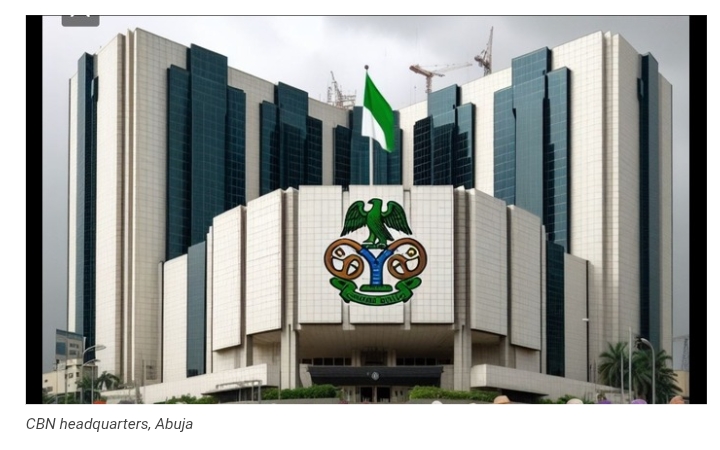
Nigeria is entering a timing-sensitive macro set-up as the oil complex reprices disruption risk and the US dollar firms. Brent moved violently this week, settling at $77.74 on 02 March, up 6.68% on the day, after trading as high as $82.37 before settling around $78.07 on 3 March. For Nigeria, the immediate hook is the overlap with domestic policy: the Central Bank of Nigeria (CBN) has just cut its Monetary Policy Rate (MPR) by 50 basis points to 26.50%, whilst headline inflation is still 15.10% year on year in January.
“Investors often talk about Nigeria as an oil story, but the market response is frequently a timing story,” said David Barrett, Chief Executive Officer, EBC Financial Group (UK) Ltd. “When the pass-through clock runs ahead of the policy clock, inflation risk, and United States Dollar (USD) demand can show up before any oil benefit is felt in day-to-day liquidity.”
Policy and Pricing Regime Shift: One Shock, Different Clocks
EBC Financial Group (“EBC”) frames Nigeria’s current set-up as “policy-lag arbitrage”: the same external energy shock can hit domestic costs, FX liquidity, and monetary transmission on different timelines. A risk premium that begins in crude can quickly show up in delivered costs through freight and insurance, and EBC notes that downstream pressure has been visible in refined markets, with jet fuel and diesel cash premiums hitting multi-year highs.
Market Impact: Oil Support is Conditional, Pass-through is Not
EBC points out that higher crude is not automatically supportive of the naira in the short run because “oil buffer” depends on how quickly external receipts translate into market-clearing USD liquidity. Recent price action illustrates the sensitivity: the naira was quoted at 1,344 per dollar on the official market on 19 February, compared with 1,357 a week earlier, whilst street trading was cited around 1,385.
At the same time, Nigeria’s inflation channel can move quickly even during disinflation: headline inflation eased to 15.10% in January from 15.15% in December, and food inflation slowed to 8.89% from 10.84%, but energy-led transport and logistics costs can reintroduce pressure if the risk premium persists. EBC also points to a broader Nigeria-specific reality: the economy grew 4.07% year on year in 4Q25, with the oil sector expanding 6.79% and non-oil 3.99%, whilst average daily oil production slipped to 1.58 million bpd from 1.64 million bpd in 3Q25. That mix supports external-balance potential, but it also underscores why the domestic liquidity benefit can arrive with a lag.
Nigeria’s Buffer Looks Stronger, but It Does Not Eliminate Sequencing Risk
EBC sees that near-term external resilience is improving. The CBN Governor said gross external reserves rose to USD 50.45 billion as of 16 February 2026, equivalent to 9.68 months of import cover for goods and services. Even so, EBC views the market’s focus as pragmatic: in a risk-off tape, investors tend to price the order of transmission, not the eventual balance-of-payments benefit.
In the near term, EBC expects attention to rotate to scheduled energy and policy signposts that can confirm whether the current repricing is a short, violent adjustment or a more durable regime shift, including the U.S. Energy Information Administration (EIA) Short-Term Energy Outlook (10 March 2026), OPEC’s Monthly Oil Market Report (11 March 2026), and the U.S. Federal Reserve meeting (17 to 18 March 2026). On the domestic calendar, the CBN’s published schedule points to the next Monetary Policy Committee meeting on 19 to 20 May 2026.
Risk Frame: The Market Prices the Lag, Not the Headline
EBC cautions that outcomes are asymmetric. A rapid de-escalation could compress the crude risk premium quickly, but once freight, insurance, and hedging behaviour adjust, second-round effects can linger through inflation uncertainty and a more persistent USD bid.
“Oil can act as a shock absorber for Nigeria, but only when the liquidity channel is working,” Barrett added. “If USD conditions tighten first and domestic pass-through accelerates, the market prices the lag, not the headline oil price.”
Brent remains an anchor instrument for tracking this timing risk because it links energy-led inflation expectations, USD liquidity, and emerging-market risk appetite in one market. EBC Commodities offering provides access to Brent Crude Spot (XBRUSD) via its trading platform for following energy-driven macro volatility through a single instrument.

By Emma Kendrick Cox
This year, the eldest Gen Alpha turns 16.
That means they aren’t just the future of our work anymore. They are officially calling for a seat at the table, and they’ve brought their own chairs. And if you’re still calling this generation born between 2010 and 2025 the iPad generation, then I hate to break it to you, but you’re already obsolete. To the uninitiated, they look like a screen-addicted mystery. To those of us paying attention, they are the most sophisticated, commercially potent, and culturally fluent architects Africa has ever seen.
Why? Because Alphas were not born alongside the internet. They were born inside it. And by 2030, Africa will be home to one in every three Gen Alphas on the planet.
QWERTY the Dinosaur
We are witnessing the rise of a generation that writes via Siri and speech-to-text before they can even hold a pencil. With 63% of these kids navigating smartphones by age five, they don’t see a QWERTY keyboard as a tool. They see it as a speed bump, the long route, an inefficient use of their bandwidth. They don’t need to learn how to use tech because they were born with the ability to command their entire environment with a voice note or a swipe.
They are platform agnostic by instinct. They don’t see boundaries between devices. They’ll migrate from an Android phone to a Smart TV to an iPhone without breaking their stride. To them, the hardware is invisible…it’s the experience that matters.
They recognise brand identities long before they know the alphabet. I share a home with a peak Gen Alpha, age six and a half (don’t I dare forget that half). When she hears the ding-ding-ding-ding-ding of South Africa’s largest bank, Capitec’s POS machine, she calls it out instantly: “Mum! Someone just paid with Capitec!” It suddenly gives a whole new meaning to the theory of brand recall, in a case like this, extending it into a mental map of the financial world drawn long before Grade 2.
And it ultimately lands on this: This generation doesn’t want to just view your brand from behind a glass screen. They want to touch it, hear it, inhabit it, and remix it. If they can’t live inside your world, you’re literally just static.
The Uno Reverse card
Unlike any generation we’ve seen to date, households from Lagos to Joburg and beyond now see Alphas hold the ultimate Uno Reverse card on purchasing power. With 80% of parents admitting their kids dictate what the family buys, these Alphas are the unofficial CTOs and Procurement Officers of the home:
-
The hardware veto: Parents pay the bill, but Alphas pick the ISP based on Roblox latency and YouTube 4K buffers.
-
The Urban/Rural bridge: In the cities, they’re barking orders at Alexa. In rural areas, they are the ones translating tech for their families and narrowing the digital divide from the inside out.
-
The death of passive: I’ll fall on my sword when I say that with this generation, the word consumer is dead. It implies they just sit there and take what you give them, when, on the contrary, it is the total opposite. Alphas are Architectural. They are not going to buy your product unless they can co-author the experience from end to end.
As this generation creeps closer and closer to our bullseye, the team here at Irvine Partners has stopped looking at Gen Alpha as a demographic and started seeing them as the new infrastructure of the African market. They are mega-precise, fast, and surgically informed.
Believe me when I say they’ve already moved into your industry and started knocking down the walls. The only question is: are you building something they actually want to live in, or are you just a FaceTime call they are about to decline?
Pay attention. Big moves are coming. The architects are here.
Emma Kendrick Cox is an Executive Creative Director at Irvine Partners

By Kehinde Ogundare
For years, security for SMEs across sub-Saharan Africa meant metal grilles and alarm systems. Today, the most significant risks are invisible and growing faster than most businesses realise.
Artificial Intelligence has quietly embedded itself into everyday operations. The chatbot responding to customers at midnight, the system forecasting inventory requirements, and the software identifying unusual transactions are no longer experimental technologies. They are becoming standard features of modern business tools.
Last month’s observance of Safer Internet Day on February 10, themed ‘Smart tech, safe choices’, marked a pivotal moment. As AI adoption accelerates, the conversation must shift from whether businesses should use AI to how they deploy it responsibly. For SMEs across Africa, digital trust is no longer a technical consideration. It is a strategic business imperative.
The evolving threat landscape
Cybersecurity threats facing sub-Saharan African SMEs have moved well beyond basic phishing emails. Globally, cybercrime costs are projected to reach $10.5 trillion this year, fuelled by generative AI and increasingly sophisticated social engineering techniques. Ransomware attacks now paralyse entire operations, while other threats quietly extract sensitive customer data over extended periods.
The regional impact is equally significant. More than 70% of South African SMEs report experiencing at least one attempted cyberattack, and Nigeria faces an average of 3,759 cyberattacks per week on its businesses. Kenya recorded 2.54 billion cyber threat incidents in the first quarter of 2025 alone, whilst Africa loses approximately 10% of its GDP to cyberattacks annually.
The hidden risk of fragmentation
A common but often overlooked vulnerability lies in digital fragmentation.
In the early stages of growth, SMEs understandably prioritise affordability and agility. Over time, this can result in a patchwork of disconnected applications, each with separate logins, security standards, and privacy policies. What begins as flexibility can involve operational complexity.
According to IBM Security’s Cost of a Data Breach Report, companies with highly fragmented security environments experienced average breach costs of $4.88 million in 2024.
Fragmented systems create blind spots; each additional data transfer between applications increases exposure. Inconsistent security protocols make governance harder to enforce. Limited visibility reduces the ability to detect anomalies early. In practical terms, complexity increases risk.
Privacy-first AI as a competitive differentiator
As AI capabilities become embedded in business software, SMEs face a choice about how they approach these powerful tools. The risks are not merely theoretical.
Consumers across Africa are becoming more aware of data rights and are willing to walk away from businesses that cannot demonstrate trustworthiness. According to KPMG’s Trust in AI report, approximately 70% of adults do not trust companies to use AI responsibly, and 81% expect misuse. Meanwhile, studies also show that 71% of consumers would stop doing business with a company that mishandles information.
Trust, once lost, is difficult to rebuild. In the digital age, a single data leak can destroy a reputation that took ten years to build. When customers share their payment details or purchase history, they extend trust. How you handle that trust, particularly when AI processes their data, determines whether they return or take their business elsewhere.
Privacy-first, responsible AI design means building intelligence into business systems with data protection, transparency and ethical use embedded from the outset. It involves collecting only necessary information, storing it securely, being transparent about how AI makes decisions, and ensuring algorithms work without compromising customer privacy. For SMEs, this might mean choosing inventory software where predictive AI runs on your own data without sending it externally, or customer service platforms that analyse patterns without exposing individual records. When AI is built responsibly into unified platforms, it becomes a competitive advantage: you gain operational efficiency whilst demonstrating that customer data is protected, not exploited.
Unified platforms and operational resilience
The solution lies in rethinking digital infrastructure. Rather than accumulating disparate tools, businesses need unified platforms that integrate core functions whilst maintaining consistent security protocols.
A unified approach means choosing cloud-based platforms where functions share common security standards, and data flows seamlessly. For a manufacturing SME, this means inventory management, order processing and financial reporting operate within a single security framework.
When everything operates cohesively, security gaps diminish, and the attack surface shrinks. And the benefits extend beyond risk reduction: employees spend less time on administrative friction, customer data stays consistent, and platforms enable secure collaboration without traditional infrastructure costs.
Safer Internet Day reminds us that the digital world requires active stewardship. For SMEs across the African continent who are navigating complex threats whilst harnessing AI’s potential, digital trust is foundational to sustainable growth. Security, privacy and responsible AI are essential characteristics of any technology infrastructure worth building upon. Businesses that embrace unified, privacy-first platforms will be more resilient against cyber threats and better positioned to earn and maintain trust. In a market where trust is currency, that advantage is everything.
Kehinde Ogundare is the Country Head for Zoho Nigeria











-
 Feature/OPED6 years ago
Davos was Different this year
-
Travel/Tourism10 years ago
Lagos Seals Western Lodge Hotel In Ikorodu
-

 Showbiz3 years ago
Estranged Lover Releases Videos of Empress Njamah Bathing
-
 Banking8 years ago
Sort Codes of GTBank Branches in Nigeria
-

 Economy3 years ago
Subsidy Removal: CNG at N130 Per Litre Cheaper Than Petrol—IPMAN
-

 Banking3 years ago
Sort Codes of UBA Branches in Nigeria
-

 Banking3 years ago
First Bank Announces Planned Downtime
-

 Sports3 years ago
Highest Paid Nigerian Footballer – How Much Do Nigerian Footballers Earn