
Feature/OPED
Warri, a Distressed and a Dying City

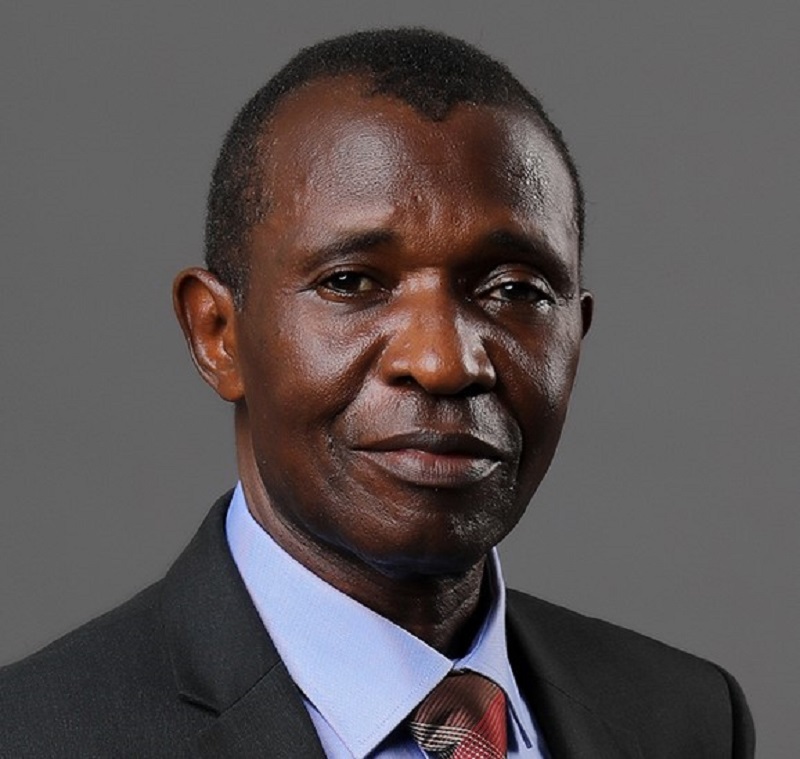
By Michael Owhoko, PhD
Who will restore Warri back to its glorious days? A city that was once the pride of all Wafarians, is now a shadow of itself, rusty and reeking with aroma of poverty occasioned by systemic decline with people cocooned in deprivation and squalor.Warri is allusively known as Wafi, making the people and residents of the city identified as Wafarians.
I was close to tears during my recent visit where I toured the length and breadth of Warri, covering Deco Road, Okumagba Avenue, Okere Road, McCiver, Odion Road, Market Road, Cemetery Road, Iyara, McDermott Road, Warri-Sapele Road, Upper and Lower Erejuwa, Ajamogha, Esisi, and Warri Port. I stayed for over two months, the longest since my relocation to Lagos in 1984.
All I saw was a distressed and a dying city with shattered dreams, shrinking hopes, and diminished opportunities induced by capital flight and economic disorders. It is a metaphor for youth unemployment, dwindling aspirations, and social chaos, where people just labour under profound deficit constrained by rationed resources, owing to lack of fresh capital from investors.
Indeed, Warri is choking from severe economic dehydration, with all available spaces in front of buildings converted into small shops where people engaged in petty trading and POS businesses, making the whole streets look like mini-markets. This is further worsened by the large number of keke tricycles almost outstripping the populace with attendant heavy noise emission. Even the dead have no peace in Warri as the entrance to the only cemetery in the town has been overtaken by petty traders, and keke tricycles mechanics, leaving a small gate forentry.
How did such a once vibrant cosmopolitan city that attracted global presence, including investors, and played host to several notable national and international events, degenerated into a rural enclave with dilapidated structures? What went wrong, and who created the mess which have betrayed the values and ideals that once held Wafarians together in unity and love?
While it is easy to link Warri’s stunted growth to the unending ethnic rivalry among the Itsekiris, Urhobos and Ijaws, for posterity, it is also important to specifically identify those, whose actions, directly or indirectly,have contributed to the city’s appalling condition, which has brought shame and embarrassment to the collective psyche of Wafarians.
First, the opposition of Warri as capital of Delta State at the creation by Itsekiri leaders, led by His Royal Majesty, the Olu of Warri, AtuwatseII, have done more harm to the general good of Warri, and setting the city backward. The deficit outcome has made the motive designed to protect the Itsekiri’s ethnic interests pale into insignificance.
What is the gain of this stand within the context of development, other than fear of Urhobo domination, and the need to thwart it? This was an obvious delusion, and no amount of rationalization can justify the mess that has eclipsed Warri. It was a miscalculation. Sacrificing the city’s progress on the altar of narrow ethnic interest was a tragedy.
Unfortunately, former military President, Ibrahim Babangida (IBB) further complicated the matter when he failed to demonstrate objective governance, taking advantage of the Itsekiri’s disapproval of Warri as capital to illogically site the capital of Delta State in Asaba, hometown of his wife. It was the height of absurdity in decision making, and a study in bad leadership.Had the ethnic trust deficit in Warri been bridged and the ethnic groups unite to demand Warri as capital, the city would have been better transformed with infrastructural advantage typical of a modern capital city, attracting foreign investors, to the benefit of all.
Second, the unending contention over ownership of Warri township among Urhobos, Itsekiris and Ijaws, over the years, have continued to promote ethnic animosity and discord, contributing immensely to the backwardness of the city. Those who started this tussle have since passed on, without adding any value to their respective ethnic groups.Sadly, this bitter ethnic rivalry is being passed on to succeeding generations, who have foolishly continued in this trajectory to spread hate, rather than live in harmony as neighbours, to achieve enduring peace and development in Warri.
It should be noted that these ownership claims are exercise in futility, as either of these ethnic groups, can practically dislodge one another to take physical possession of any habitation. For example, just as it is practically impossible for the Urhobos to evict the Itsekiris from Okere, it is also unrealistic for the Itsekiris to dispossess the Ijaws of Ogbe-Ijaw land.
And so, brandishing colonial and post-colonial court judgements and papers as proof of ownership, is insignificant and waste of energies. The three ethnic groups must bury their pride and ego, and live together peacefully as Wafarians, bound by common cultural affinity, so that Warri can experience peace and progress again.
Third, ethnic leaders that directly or indirectly encourage and incite their youth to resort to violence, and sometimes, carry arms to threaten, destroy or kill their neighbours over land, have nothing to gain other than misery and poverty. Ironically, it is the innocent children of the poor that are used for such senseless conflict, while the children of the rich, enjoy comfort in safe haven in faraway Lagos, Abuja, London, USA or Canada.
Besides, the parents of most of these gullible youth being used to perpetuate these crimes, have no ancestral root, and properties in Warri township. Destruction and mayhem only leave in their trail, economic decline, unemployment, anguish, suffering, hardship and poverty, as investors will flee with their capital from a hostile environment, as shown with the exit of numerous companies in the city.
Lessons ought to have been learnt from the Ijaw-Itsekiri conflict which lasted from 1997 to 1999 over siting of Warri South West Local Government Area Headquarters. At the end of that war, both parties counted only losses, no benefit, no value addition, and no reward. Regrettably, companies that were hitherto sources of sustained fresh capital in Warri, relocated to other cities, bringing lackand despair to Warri and its environs. There must not be a repeat of such a senseless ethnic war, as Warri may never survive a second experience.
The effect of the Ijaw-Itsekiri fight led to exit of companies like Pan Ocean, Schlumberger, Halliburton, Shell Petroleum Development Company, (SPDC), ELF, Conoco-Phillips, Agip, WEAFRI, NISSCO, Globestar, McDermott, DBN, WESCO, Hercules Offshore Nigeria, Nigeria Dredging & Marine, LAMNALCO, and Dunlop.
Others include Saipem, Seismograph Services Limited, Snamprogetti, Dowell, Anadrill, Baroid, Santafe, Oceaneering, Kingsway, Leventis, West Minster Dredging, John Holt, SCOA, Glorylux, United African Company (UAC), Mandillas, Nestoil together with maritime and shipping firms located inside the Nigerian Ports Authority, Warri.
The companies not only left with their investment; they also left behind high unemployment rate of approximately 80 per cent in Warri. Except for Chevron Nigeria Limited, and perhaps, recently, Tantita Security Services Limited, through which fresh funds are being injected into the economy of Warri, the condition of the town would have been catastrophic.
Fourth, those that engage in collection of “deve” (development) fee as precondition for commencement of project, and also, who forcefully demand employment and contract slots from companies, have also contributed to the poor condition of Warri. By their actions, companies, including small business enterprises and individuals, are frustrated and discouraged from establishing businesses in the city, thereby compounding the unemployment burden.
Fifth, the non-operational Warri Port has also added to the economic hardship in Warri. Ocean-going vessels that used to berth, servicing business interests in neighbouring Effurun, Udu, Benin City, Onitsha, Asaba, and the environs, are no more. This is further worsened by the collapse of adjoining companies like the Delta Steel Company, Owvian-Aladja and Warri Refinery and Petrochemical Company, Ekpan, which has taken a huge toll on Warri life.
It is, therefore, imperative for the ethnic groups to redirect their energies to promote peace and unity, in order to restore investors’ confidence.The Ijaws, Urhobos and Itsekiris’ leaders can also leverage their common cultural ties, as expressed in food, clothes, trade, history, and festivals to boost Warri’s economy. For example, Warri cultural celebrations like Agbassa Juju (Idju Owhurie Festival) and Okere Juju (Awankere Festival) can be bolstered and turned into major tourists’ destination, as part of strategy to make Warri great again.
Dr Mike Owhoko, Lagos-based public policy analyst, author, and journalist, can be reached at www.mikeowhoko.com, and followed on X {formerly Twitter} @michaelowhoko.





When the final runner crossed the finish line at the 11th edition of the Access Bank Lagos City Marathon (ABLCM), the applause began to fade. But for hundreds of workers across Lagos, the real work was just beginning.
Major highways had been closed to facilitate the event. Tens of thousands of runners moved through the city in a coordinated surge of athletic endurance. Thousands of bottles of water and energy drinks were distributed, alongside sachets containing essential medical supplies and medication. The race route itself was meticulously prepared, lined with banners, barricades, medical tents and precision timing systems that ensured safety, organisation and accurate performance tracking from start to finish.
What followed was the part that a few cameras lingered on, yet it remains one of the clearest indicators of institutional progress.
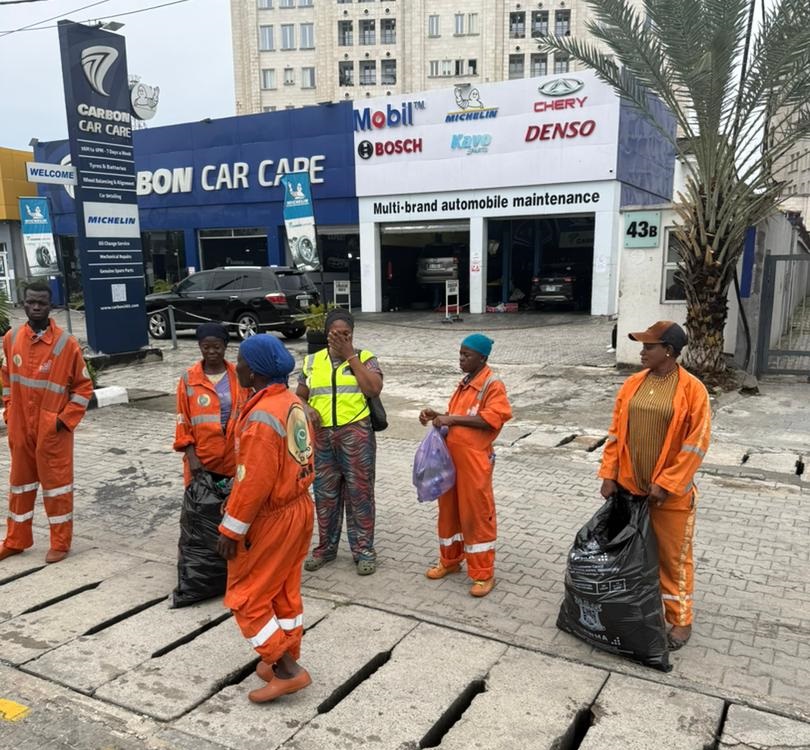
Within minutes of the race conclusion, coordinated sanitation teams fanned out across the marathon corridor. Their work went beyond sweeping. Waste was systematically sorted. Plastic bottles were separated from general refuse. Sachets were gathered in bulk. Collection trucks moved along predefined routes, ensuring rapid evacuation of waste. Temporary race infrastructure was dismantled with quiet precision.
In a megacity like Lagos, speed is a necessity. Urban momentum cannot pause for long. The ability to restore order quickly after an event of this magnitude reflects operational discipline across interconnected systems, municipal authorities, environmental agencies, private waste management partners and event coordinators.
Globally, large-scale sporting events are no longer evaluated solely by participation numbers or prize purses. Sustainability has emerged as a defining metric. Environmental responsiveness is now a core measure of credibility. Cities seeking tourism growth, foreign investment and international partnerships must demonstrate that scale does not compromise responsibility. The 2026 marathon provided a compelling case study in this evolution.
The clean-up operation itself generated meaningful economic activity. Temporary employment opportunities emerged for sanitation workers and logistics personnel. Recycling partners engaged in material recovery, reinforcing circular economy value chains. What was once viewed as routine waste disposal has evolved into a structured ecosystem of environmental services, a sector of increasing importance in modern urban economies.
This level of sustainability was the result of deliberate planning. Effective post-event recovery requires route mapping, waste volume projections, coordination between sponsors such as Access Bank Plc and municipal bodies, contingency planning for congestion points and clear communication protocols.
Each edition of the marathon has built on lessons from the last. International participation has expanded. Accreditation standards have strengthened. Media visibility has grown. Most importantly, environmental management has become embedded in the marathon’s operational framework rather than treated as an afterthought.
Progress rarely arrives in dramatic leaps, it advances through incremental improvements, refined systems and institutional learning. Just as elite runners close performance gaps through disciplined training, cities strengthen their global standing through consistent operational excellence.
The 2026 marathon, therefore, tells a story that extends far beyond athletic achievement. It is a story of coordination, sustainability as strategy rather than slogan, and the often unseen workforce, sanitation workers, planners, volunteers, security officials and environmental partners, whose discipline sustains the spectacle.
Because in the end, global cities are judged by how well they host and how responsibly they restore. On the marathon day in Lagos, it was the runners who demonstrated endurance and the systems, and the people behind them, who ensured that when the cheering stopped, the city kept moving.
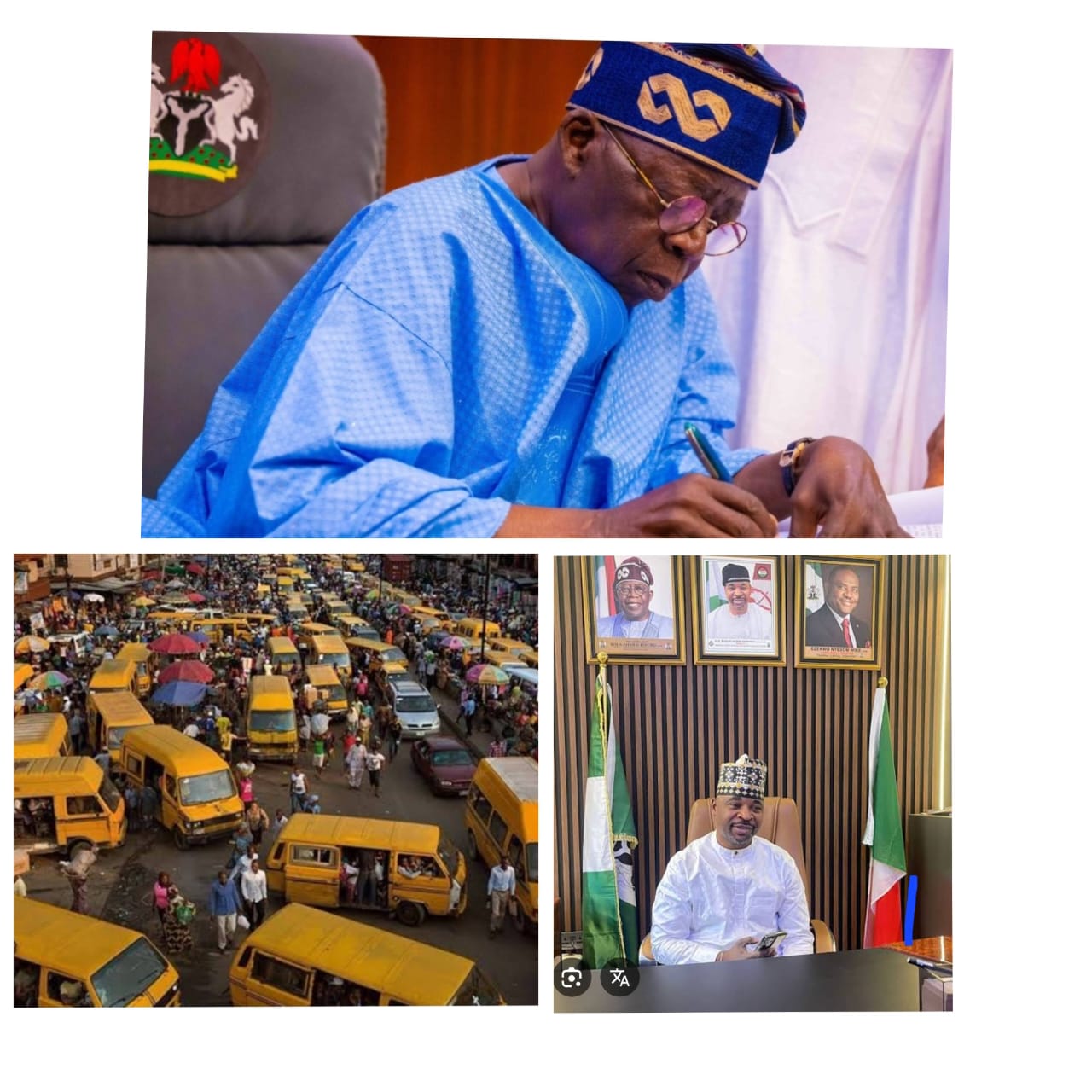
By Blaise Udunze
Lagos prides itself as Africa’s commercial nerve centre. It markets innovation, fintech unicorns, rail lines, blue-water ferries, and billion-dollar real estate. Though with the glittering skyline and megacity ambition lies a parallel state, a shadow taxation regime run not from Alausa, but from motor parks, bus stops, and highway shoulders. They are called “agberos.” And for decades, they have functioned as Lagos’ unofficial tax masters.
What began as loosely organised transport unionism mutated into a pervasive and often violent system of extortion. Today, tens of thousands of commercial buses, over 75,000 danfos according to estimates by the Lagos Metropolitan Area Transport Authority, ply Lagos roads daily. Each bus is a moving ATM. Each stop is a tollgate. Each route is a revenue corridor.
Looking at the daily estimate from their operations, at N7,000 to N12,000 per bus per day, conservative calculations show that between N525 million and N900 million is extracted daily from drivers. Annually, that balloons toward N192 billion to N328.5 billion or more, money collected in cash, unreceipted, unaudited, unaccounted for. This illicit taxation on an industrial scale did not emerge in a vacuum.
The reality today is that to understand the scale of the problem, one must confront its political history. It was during the administration of Bola Ahmed Tinubu as Lagos State governor from 1999 to 2007, who is now the President, that the entrenchment of transport union dominance and motor park patronage deepened.
Under his political machine, transport unions became not just labour associations but mobilisation structures, formidable grassroots networks capable of crowd control, voter turnout engineering, and territorial enforcement. In exchange for political loyalty, street influence translated into operational latitude.
Motor parks became power bases. “Area boys” became enforcers. Union leadership became politically connected. What should have been regulated associations morphed into revenue-generating franchises with muscle.
The system outlived his tenure. It institutionalised itself. It professionalised. It is embedded in Lagos’ political economy.
And today, it thrives in broad daylight. Endeavour to visit Ajah under bridge, Ikeja under bridge, or Mile-2 along Ojo at 6:00 a.m. Watch drivers clutching crumpled naira notes. Observe men in green trousers and caps marked NURTW weaving between buses, collecting what drivers call òwò àrò, or evening as òwò iròlè money taken from passengers.
A korope driver shouts, “Berger straight!” His bus fills. The engines rumble. But before he moves, he must pay. If he refuses? The side mirror may disappear. The windscreen may crack. The conductor may be assaulted. The vehicle may be blocked with planks, and if they resist, the conductor or driver may be beaten. Movement becomes impossible. It is not optional.
This is common across Lagos, especially amongst drivers in Oshodi, Obalende, Ojodu Berger, Mile 2, Iyana Iba, and Badagry, and describes a three-layered structure ranging from street collectors, area coordinators, and union executives at each location. Daily targets flow upward. Commissions remain below.
One conductor disclosed he budgets at N8,500 daily for louts alone, excluding fuel, delivery to vehicle owners, and official tickets. Another driver says he parts with nearly N15,000 in total daily levies across routes.
Of N40,000 collected on trips, barely N22,000 survives before fuel. Sometimes, drivers go home with N3,500. Working like elephants. Eating like ants. The impact extends far beyond drivers.
Every naira extorted is transferred to commuters. An N700 fare becomes N1,500. A N400 corridor becomes N1,200 in traffic, and this is maintained even after fuel prices fall; fares rarely decline. The hidden levy remains.
Retail traders reduce stock purchases because transport eats profits. Civil servants watch salaries stagnate while commuting costs climb. Market women complain that surviving Lagos costs more than living in it.
This is not just a transport disorder. It is inflation engineered by coercion. Economists call it financial leakage, money extracted from the productive economy that never enters the fiscal system. Billions circulate annually without appearing in government ledgers. No roads are built from it. No hospitals funded. No schools renovated.
It is taxation without development. Small and Medium Enterprises form nearly half of Nigeria’s GDP and employ the majority of its workforce. In Lagos, they are under assault from informal levies layered on top of official taxes. Goods delivered by bus carry hidden transport premiums. Commuting staff face higher daily costs. Inflation ripples through supply chains.
The strike by commercial drivers in 2022 exposed the depth of resentment. Under the Joint Drivers’ Welfare Association of Nigeria (JDWAN), drivers protested “unfettered and violent extortion.” Lagos stood still. Commuters trekked. Appointments were missed. Businesses stalled.
Drivers alleged that half of their daily income vanished into motor park collections.
Some who protested were attacked. Yet the collections continued.
Drivers insist daily collections at single corridors can exceed N5 million. Park chairmen allegedly control enormous cash flows. Uniformed collectors operate with visible confidence.
Meanwhile, the Lagos State Government denies sanctioning any roadside extortion. Officials describe the tax system as institutionalised and structured. They promise reforms through Bus Rapid Transit, rail expansion and corridor standardisation. Yet the shadow toll persists.
Contrast this with Enugu State, where Governor Peter Mbah introduced a Unified e-Ticket Scheme mandating digital payments directly into the state treasury. Paper tickets were banned. Cash collections outlawed. Revenue flows are traceable. Harassment criminalised.
Drivers in Lagos say openly that they should be given a single N5,000 daily ticket paid directly to the government, and end the chaos. Instead, they face multiple actors, agberos, task forces, and traffic officials, each demanding settlement.
The difference is in governance philosophy. One digitises and centralises revenue to eliminate leakages.
The other tolerates fragmentation that breeds shadow collectors. The uncomfortable truth is that the agbero structure is politically sensitive. Transport unions are not just labour bodies; they are political instruments. They mobilise during elections. They maintain territorial presence. They command street loyalty. In return, they are allegedly tolerated, protected, or absorbed into broader political structures as they turn into war instruments and a battle axe in the hands of the government of the day. The underlying reality is that the agbero who are the street-level power structures and the government authorities benefit from each other; the line between unofficial influence and official governance becomes unclear, making reform politically sensitive.
The issue is not merely about street disorder; it is about economic governance. Illicit taxation distorts pricing mechanisms, reduces productivity, discourages the formalisation of businesses, and weakens public trust. If citizens are compelled to pay both official taxes and unofficial levies, compliance morale declines. Why comply with statutory taxation when parallel systems operate unchecked?
Dismantling them is not merely administrative; it is political. Perhaps unbeknownst to the people, the cost of inaction is immense. Lagos aspires to be a 21st-century smart megacity under such an atmosphere. But investors notice informal roadblocks. Businesses factor in unpredictability. Commuters absorb unofficial taxes daily. Across Lagos roads, the script repeats “òwò mi dà,” meaning, give me my money.
Passengers plead with collectors to reduce levies so they can proceed. Conductors argue over dues before departure. Citizens feel hostage to a system they neither elected nor authorised.
Taxation, constitutionally, belongs to the state. It must be legislated, receipted, audited and deployed for the public good.
Agbero taxation is none of these. It is coercive. It is not transparent. It is extractive. Lagos has launched rail lines and BRT corridors. The Lagos Metropolitan Area Transport Authority continues transport reforms. Officials promise that bus reform initiatives will eliminate unregistered operators. But reform cannot be selective. You cannot modernise rail while medieval tolling persists on roads. You cannot preach digital governance while cash collectors flourish at bus stops. You cannot aspire to global city status while informal muscle dictates movement.
The solution is not episodic arrests. It is a structural overhaul: mandatory digital ticketing across all parks; a single harmonised levy payable electronically; an independent audit of union revenue; protection for drivers who resist illegal collections; and political decoupling of unions from patronage networks.
The agbero empire is not merely about bus fares. It is about how patronage systems, once empowered, metastasise into parallel authorities. What may have begun as strategic alliance-building two decades ago has matured into a shadow fiscal regime embedded in daily life.
The challenge is that Lagosians are left with no choice as they now pay twice, once to the government, once to the streets. And unlike official taxes, shadow taxes leave no developmental footprint. No bridge bears their name. No hospital wing testifies to their billions. No classroom is built from their collections. Only inflated fares. Broken windscreens. Frustrated commuters. And drivers who sweat under the sun, calculating how much will remain after everyone has taken their cut.
The agbero question is ultimately a governance question. Is Lagos governed by law, or by tolerated coercion? Is taxation a constitutional function, or a roadside negotiation? Is political convenience worth permanent economic distortion? What is absolutely known is that the structure has a political backing and what politics created, politics can dismantle.
Unless meaningful reform takes place, Lagos will continue to remain a megacity with a shadow treasury, where movement begins not with ignition, but with payment to men who answer to no ledger without any tangible returns. This is to say that every danfo that moves carries not just passengers, but the weight of a system that taxes without law, collects without accountability and punishes the very people who keep the city alive.
Blaise, a journalist and PR professional, writes from Lagos and can be reached via: bl***********@***il.com
Many Muslims grow up learning how to balance life carefully. Faith, work, and responsibility all sit on the same scale, and during Ramadan, that balance becomes even more delicate. Days start earlier than usual, nights stretch longer, and energy is spent with intention.
Over time, this rhythm shapes more than schedules; it quietly shapes how Ramadan is experienced.
Between getting ready for work, navigating long days, preparing meals for iftar, observing prayers, and trying to rest, moments for reflection are often pushed to the side. When there’s finally time to pause, many people assume meaningful Islamic content requires complete silence, full attention, and emotional space, things that can feel scarce during the month.
They scroll past channels they believe may be too formal, or not suited to their everyday routine. They stick to what feels familiar, even if it doesn’t quite align with the spirit of the season and without realising it, they limit themselves.
What many don’t know is that content designed for moments like these already exists on GOtv. The Islam Channel offers programming that understands Ramadan as it is truly lived.
On the Islam Channel, viewers can find thoughtful discussions that explore faith in a way that feels relevant to modern life, educational programmes that break down Islamic teachings clearly and calmly, and inspiring shows that encourage reflection without feeling overwhelming. There are conversations that can play softly in the background while you’re cooking, reminders you can catch while getting dressed for work, and programmes that help you unwind gently after a long day of fasting.
What sets the channel apart is how it personalises Islamic themes, making them accessible not just during prayer time, but throughout the day. Its content is created to inform, reflect, and inspire, whether you’re actively watching or simply listening as life continues around you. And while it speaks directly to Muslim audiences, it also remains open and welcoming to non-Muslims interested in understanding Islamic values, culture, and everyday perspectives.
During Ramadan, television often becomes part of the atmosphere rather than the focus. And having access to content that aligns with the season can quietly enrich those in-between moments, the ones that often matter most.
This Ramadan, the Islam Channel is available on GOtv Ch 111, ready to meet you wherever you are in your day.
And here’s the exciting part: with GOtv’s We Got You offer, you can enjoy your current package and get access to the next package at no extra cost. There’s never been a better time to hop on and get more shows, more suspense, and more entertainment, all for the same price!
To upgrade, subscribe, or reconnect, download the MyGOtv App or dial *288#. For watching on the go, download the GOtv Stream App and enjoy your favourites anytime, anywhere.





-
 Feature/OPED6 years ago
Davos was Different this year
-
Travel/Tourism10 years ago
Lagos Seals Western Lodge Hotel In Ikorodu
-

 Showbiz3 years ago
Estranged Lover Releases Videos of Empress Njamah Bathing
-
 Banking8 years ago
Sort Codes of GTBank Branches in Nigeria
-

 Economy3 years ago
Subsidy Removal: CNG at N130 Per Litre Cheaper Than Petrol—IPMAN
-

 Banking3 years ago
Sort Codes of UBA Branches in Nigeria
-

 Banking3 years ago
First Bank Announces Planned Downtime
-

 Sports3 years ago
Highest Paid Nigerian Footballer – How Much Do Nigerian Footballers Earn