
General
Chevron Empowers 90 Journalists

No fewer than 90 journalists have been sponsored by Chevron Nigeria Limited (CNL) for the Advanced Writing And Reporting Skills (AWAReS) at the Pan Atlantic University (PAU), Lagos State.
While addressing beneficiaries of the AWAReS programme for 2018, General Manager, Policy, Government and Public Affairs (PGPA) at CNL, Mr Esimaje Brikinn, disclosed that the gesture was in line with CNL strong belief in the development of human capital.
“CNL strongly believes in the development of human capital. In line Chevron’s core values of building productive and beneficial relationships, CNL has since 2014 sponsored journalists to the AWARes programme.
“The essence of this training is to expose journalists to qualitative improvement in performing their functions, through technical upgrade in fundamental knowledge of both the oil and gas industry in general and the operation of CNL in particular,” Mr Brikinn, who was represented by Mr Sola Adebawo, Manager in charge of Communications at the firm said.
“It is our hope that this visit will help move us further towards attaining these aspects of our goal.
“To date, the AWAReS programme has witnessed the participation of over 90 journalists from various segments of the mass media,” he added.
While commending the management of the Pan -Atlantic University for its academic excellence, Brikinn said, “Over the years, the Pan-Atlantic University has come to stand out in academic excellence and there has been many of positive feedbacks in line with this from past participants in the Chevron-sponsored AWAReS programme.
“Last year, the 2017 class visited us here in Chevron and their feedback showed that the programme added significant value to them as professionals. I hope it has been very enlightening, informative and beneficial to you too.”
“I feel certain thst your time at the Pan-Atlantic University will be of immense value in your reporting and overall communication career,” he added.
While charging the journalists to be objective in their reportage, Mr Brikinn said, “I encourage you to be balanced, fair,and accurate as you tell our stories…journalism isn’t just about telling a story , but telling it the right way.”
On his part, the President of the AWAReS 18 class, Mr Dele Akinsola of the News Agency of Nigeria (NAN), while thanking Chevron for their sponsorship, said they (media practitioners) have been drilled and challenged in the course of the programme.
He said they have learnt, unlearnt and relearnt the skills and ethical principles of journalism, adding that they were all returning to their various media houses better equipped media practitioners.








By Adedapo Adesanya
The Nigeria Data Protection Commission (NDPC) has launched an investigation into an alleged data breach involving Remita Payment Services Limited, Sterling Bank, and other entities, as part of efforts to safeguard personal data and strengthen compliance within Nigeria’s digital ecosystem.
In a statement issued on Sunday by its Head of Legal, Enforcement and Regulations, Mr Babatunde Bamigboye, the commission said, in line with its procedures, a Notice of Investigation was duly served on April 1, 2026.
The agency noted that relevant parties and individuals have been providing information to support efforts to address the incident, adding that the investigation aims to ensure data subjects are adequately protected through appropriate technical and organisational measures.
“The investigation by NDPC covers, among others, the types of personal data involved, the nature and scope of the alleged breach, the risk to data subjects, and the mitigation measures taken where a breach is confirmed,” the statement said.
Meanwhile, the chief executive of NDPC, Mr Vincent Olatunji, has directed that organisations using digital payment systems without implementing the required technical and organisational safeguards, as mandated under the Nigeria Data Protection Act, 2023, will also be examined.
The organisation said this forms part of a broader effort to ensure the integrity and security of Nigeria’s data protection ecosystem.
Data breaches have risen in the last few years, with a 2025 report from Surfshark, a cybersecurity firm, ranking Nigeria third in Sub-Saharan Africa for total breaches since 2004, with 23.2 million compromised accounts.
In September 2024, a hacker identified as Addka72424 released a dataset containing 3.3 billion email addresses, which included 2,555,642 Nigerian accounts. The hacker described it as a “small” experiment to show how much data is freely available online.
This latest development further exposes how cyberthreats continue to evolve, and attackers are constantly adapting their tactics.
The Nigerian government has now launched a national cyber coordination council towards tackling the rising threat.

By Modupe Gbadeyanka
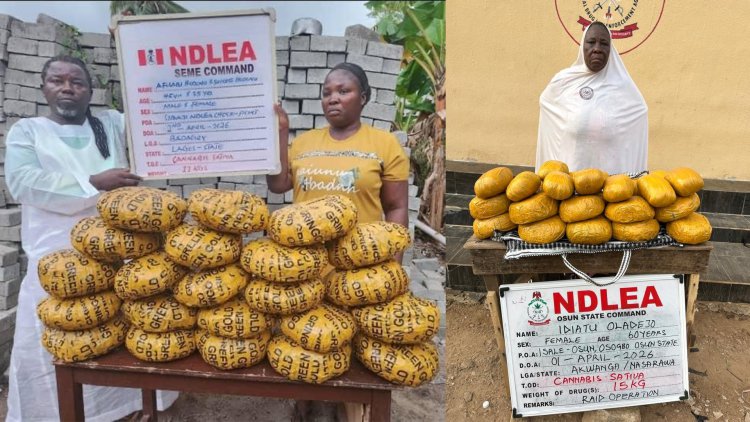
The pastor in charge of the Celestial Church of Christ at Agonvi Sea Beach in the Sakpo area of Seme border, Badagry, Lagos State, Mr Afolabi Hodonu, has been arrested by operatives of the National Drug Law Enforcement Agency (NDLEA).
The 45-year-old cleric was apprehended on Thursday, April 2, 2026, alongside his 35-year-old wife, Mrs Success Hodonu, with blocks of skunk weighing about 11kg.
A statement issued on Sunday by the spokesman of the NDLEA, Mr Femi Babafemi, disclosed that the couple were stopped at the Gbaji checkpoint, and a search of their Honda Pilot SUV led to the recovery of the drugs concealed in hidden parts of their vehicle.
Their arrest followed the apprehension of a fake security agent, Mr Sunday Samuel, 35, at the same checkpoint on Monday, March 30, while conveying 24.5kg of skunk from the Seme border to Lagos.
The statement further disclosed that NDLEA operatives also successfully dismantled a drug trafficking syndicate in high stakes intelligence led operations that lasted three weeks during which cocaine consignments concealed in tins of palm kernel extract heading to the United Kingdom were intercepted and the warehouse where the shipments are packaged raided, while all three layers of the group were unravelled, leading to the arrest of the kingpin.
The breakthrough began on Wednesday, March 11, 2026, when NDLEA officers of the Murtala Muhammed International Airport (MMIA) Strategic Command, Ikeja, Lagos, intercepted 3.10 kilograms of cocaine at the export shed of the airport. The illicit substance was meticulously hidden inside tins of palm kernel extract intended for shipment to the UK.
Two suspects handling the shipment, Idris Olayiwola Amoo and Akinlami Akinsoji Adedoyin, were promptly arrested.
To unravel the sender and the arrowhead of the drug syndicate, a well-coordinated sting operation was carried out on Thursday, April 2, leading to the arrest of Ezemuwo Joel, who operates under a fake identity as Ajayi.
His arrest provided the link to the syndicate’s head, 52-year-old King Arinze, who was flushed out of a hideout in the Isolo area of Lagos.
He was thereafter taken to his warehouse at 11, Ola Ifa Street, Bucknor, Isolo, where NDLEA operatives recovered 886 tins of palm kernel extract prepared for drug concealment; industrial tools, including a sealing machine, tin openers, paint sprays, 52 grams of cannabis sativa and a pack of hand gloves. Arinze has since confessed to personally draining the oil from the tins to conceal the cocaine.
In a separate operation in Borno state, NDLEA operatives on Wednesday, April 1, intercepted a female drug supplier to bandit groups operating between the North East and Chad, 28-year-old Aisha Adamu. She was arrested along the Gamboru Ngala road in possession of 4.3 kilograms of Colorado, a potent synthetic strain of cannabis.
In Adamawa State, NDLEA officers on patrol along Namtari road, Yola South, on Monday, March 30, intercepted a trailer marked RUW 947 XA transporting 48,000 pills of tramadol. The truck driver, Abdulaziz Ismail Korede, was arrested while a follow-up operation led to the arrest of the recipient, Idris Adamu.
While 60-year-old Idiatu Oladejo was arrested with 15kg of skunk in Isale Osun, Osogbo, Osun state, on Wednesday, April 1, NDLEA operatives, acting on credible intelligence, raided the Itaogbolu forest, Akure, Ondo State, where they recovered 351 kilograms of skunk and its seeds. No fewer than 28,600 capsules of tramadol were seized from a 66-year-old Aminu Usman Gembu when he was arrested at Aliade, Benue state, on Wednesday, April 1.
In Edo State, a suspect, Roland Owie, 37, was arrested on Monday, March 30, following the raid of his warehouse at Egbanke community, Orhionmwon LGA, where 1,378 kilograms of skunk were recovered.
A notorious drug dealer, 40-year-old Ayantola Omodunmomi (a.k.a Iya Elle) was on Wednesday, April 1, arrested at Eleta area of Ibadan, the Oyo State capital. Her arrest follows intelligence and surveillance on how she uses her 11-year-old daughter, Anjola, to deliver illicit drugs to her customers. At the time of her arrest, a 45.6kg skunk was recovered from her warehouse.

By Abba Dukawa
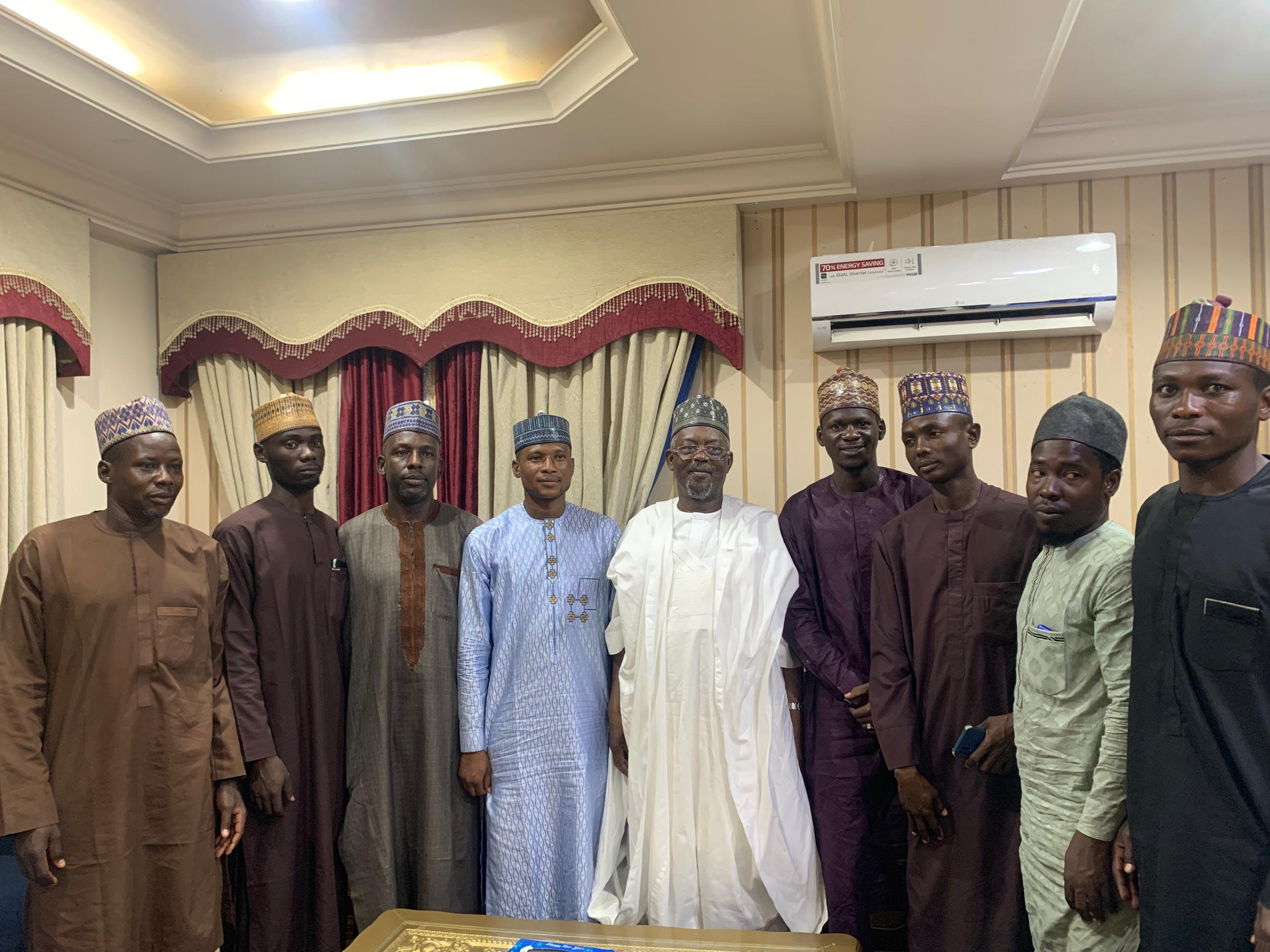
A chieftain of the ruling All Progressives Congress (APC), Mr Abdullahi Mahmud Gaya, reaffirmed his commitment to purposeful leadership, declaring he is not given to making empty promises to the electorate.
The politician, who intends to represent the Ajingi, Gaya, and Albasu Federal Constituency in the National Assembly in the 2027 general elections, stressed that his record of performance over two consecutive terms stands as clear evidence of his capacity and credibility, noting that his tenure has consistently delivered beyond expectations.
According to him, governance should be measured by tangible results rather than rhetoric, and his track record reflects a sustained dedication to the welfare and development of his constituency.
Speaking on Sunday while receiving various support groups at his residence in Kano, Mr Gaya reiterated his resolve to consolidate on past achievements and continue championing policies that will advance the collective interests of his people.
He urged them to return to their respective wards, villages, and towns to enlighten the electorate on the visible developmental strides recorded across the constituency over the past three years under his leadership, emphasising the need for voters to clearly distinguish these achievements from previous representations.
Mr Gaya further stated that there is no retreat in his resolve to contest the seat, stressing that the election is not about personal ambition, but about the collective well-being and continued progress of the people across the three local government areas.
He also urged them to take note that the Electoral Act 2026 outlines two methods through which political parties can nominate candidates, adding that these methods are direct primaries and consensus. Direct primaries involve all registered party members voting to choose their candidates, while the consensus method requires aspirants to voluntarily agree on a single flag bearer.
Speaking on behalf of various support groups, Mr Ismaila Ado, who has benefited from a monthly allowance as a volunteer teacher in one of the schools constructed during his tenure, stated that in addition to the allowance, the politician also facilitated his permanent appointment in the Kano State Ministry of Education.
Also speaking, an elder of the APC in Gaya Local Government Area, Mr Iliyasu Muhammad Gamoji, noted that prior to 2015, the communities of Ajingi, Gaya, and Albasu suffered from years of neglect and slow development.
He explained that when Mr Gaya represented the constituency in the House of Representatives, he did so with a strong commitment and a clear sense of responsibility.
He added that, over time, the lawmaker’s efforts brought tangible progress that positively impacted many lives, noting that roads were constructed, schools were improved, and the communities began to receive renewed attention and meaningful government support during his tenure.
-
 Feature/OPED6 years ago
Davos was Different this year
-
Travel/Tourism10 years ago
Lagos Seals Western Lodge Hotel In Ikorodu
-

 Showbiz3 years ago
Estranged Lover Releases Videos of Empress Njamah Bathing
-
 Banking8 years ago
Sort Codes of GTBank Branches in Nigeria
-

 Economy3 years ago
Subsidy Removal: CNG at N130 Per Litre Cheaper Than Petrol—IPMAN
-

 Banking3 years ago
Sort Codes of UBA Branches in Nigeria
-

 Banking3 years ago
First Bank Announces Planned Downtime
-

 Sports3 years ago
Highest Paid Nigerian Footballer – How Much Do Nigerian Footballers Earn