
General
Dangote Cement Ibese Plant Launches Safety FairPlay Initiative

By Modupe Gbadeyanka
A Safety FairPlay initiative designed to drive behavioural change and cultural shift towards safety conducts among its employees has been launched by the Ibese Plant of Dangote Cement Plc.
This programme will drive lasting behavioural and cultural change through an equitable and transparent framework that promotes safe conduct. Built on three core pillars—Recognition, Correction (Coaching) and Discipline.
It rewards positive safety behaviour, ensures consistency in addressing at-risk actions, and encourages open reporting of incidents, near-misses and errors, the company said in a statement on Thursday.
The scheme will be replicated at all the plants of Dangote Cement, marking a significant milestone in strengthening the Company’s safety culture, the organisation added.
The pilot launch of this policy recorded impressive participation from both the management and employees, thus underscoring a shared commitment to safer work practices.
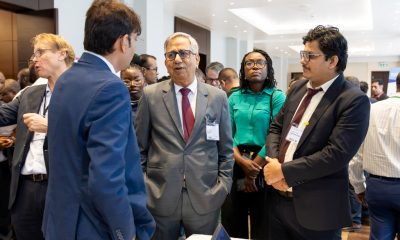
The Technical Director of the cement giant, Mr Anandam Duraisamy, emphasized the strategic importance of the initiative to the business and called on employees to champion a safety culture anchored on fairness, accountability, recognition, and continuous improvement.
He noted that the Safety Fairplay marks a defining moment in the company’s journey toward building a workplace where safety is not just a policy, but a shared mindset—an everyday habit that defines who we are and how we work. We are here to launch an initiative that aims to transform not only what we do, but how we think, act, and respond when it comes to safety.
“Safety FairPlay is about building trust, consistency, and accountability in how we manage safety. When people know that safe behaviour is recognised, risky actions are fairly addressed, and everyone is treated equitably, safety becomes a shared responsibility and a true part of our culture.
“This initiative is about behavioural and cultural change. It recognises that true safety excellence goes beyond equipment, procedures, or compliance; it begins with people-our attitudes, our choices, and our willingness to look out for one another.
“Every incident prevented, every risk spotted, and every safe action taken strengthens our organisation. And that strength comes from you—from each member of our workforce embracing safety as a personal responsibility and a collective value,” he stated.
Also speaking, the Ibese Plant Head of Health, Safety and Environment (HSE), Mr Elvis Akalusi, commended the management for driving the programme and applauded employees for their enthusiastic embrace of the initiative.
He affirmed that the Safety FairPlay Initiative would be fully embedded into the plant’s daily operations, with the full collaboration of all heads of departments.
“This initiative will offer the tools, coaching, recognition, and accountability needed to help each of us make safer decisions. But its success depends on our shared commitment—our courage to consistently do the right thing, even when no one is watching.
“Let us approach this new chapter with open minds and a determination to improve. Let us build a culture where speaking up is encouraged, learning is continuous, and mistakes become opportunities to grow—not reasons for fear,” he stated.








Wholesale marketplaces were created so that business owners could find profitable offers and make deals on B2B platforms worldwide. In addition to buyers and sellers, there are traders, distributors, logisticians, and other professionals on such platforms. Let’s take a closer look at these professions. Traders purchase goods in order to resell them at a higher price; speculation is allowed on B2B marketplaces and is a legal instrument. Distributors are the official representatives of the manufacturer, meaning you can purchase original products at the lowest price. Most often, goods are purchased in China and then transported by sea to European countries or North America. We suggest you try the Globy Platform, where the most reputable Asian distributors are registered. Logisticians can also register on Globy. They provide services for the transportation of goods by sea. The following are the advantages of Globy, which are mentioned most often:
- quick registration on the portal;
- website with simple navigation and management;
- excellent choice of reliable suppliers;
- most relevant products in the catalog;
- free registration;
- no commission.
Some B2B platforms process payments, but Globy allows participants to make money payments outside the platform using one of the secure methods. In addition, Globy does not charge a commission when concluding a purchase deal. To start working on the platform, you need to register in accelerated mode or fill out a form with your company’s details. You can be sure that your banking details, personal, and contact information are protected. Third parties can only see the information that you leave open. When registering, do not forget to enter your company’s contact information (messenger, phone, email) so that new partners can contact you. You can pay attention to the fact that the Globy catalog contains items without specifying a price, but the product profile contains the vendor’s contacts. You can contact the seller to discuss the deal details, determining the price of the product.
Logistics Tool on Globy
There is often a situation when the supplier does not provide transportation services and the buyer has to search for a carrier on their own. In fact, this problem is solved simply. Globy has a special tool that helps you quickly find a charterer. You would open the freight calculator and fill in all the fields in the suggested form. You would specify the sending and destination port, and don’t forget to specify the dates and choose the container size. If you want to place containers in an optimal way, then use the load calculator, which is also available for free on the official website. You can use these tools only after registration. You can log in quickly if you have a Google account or a LinkedIn profile. After entering the data, the freight calculator will process your request and provide a list of prices. You can select a suitable line and contact the charterer to discuss the details of the contract. It is recommended to choose a sea delivery with a minimum number of intermediate stops, in which case the cargo will arrive at the destination port faster.
Receiving Cargo at the Destination Port
Buyers should remember that you can check the cargo when it arrives at the port. If the rules of transportation were violated, there was a long delay, or the goods were damaged, you can refuse the cargo, explaining the reason. You can discuss a price reduction with the supplier if the product has lost its proper appearance or the packaging is damaged. You can evaluate the cargo yourself or with the help of third-party experts. It is best to carefully check the documentation when receiving the goods at the port. All documents must be executed in accordance with international law. You can register on Globy today, find the goods you need, and use the logistics tools for free. More than fifty-five thousand users have already been registered on the platform, which indicates the high authority of Globy. If you have any questions, you can ask them in the Help Center on Globy website.

By Adedapo Adesanya
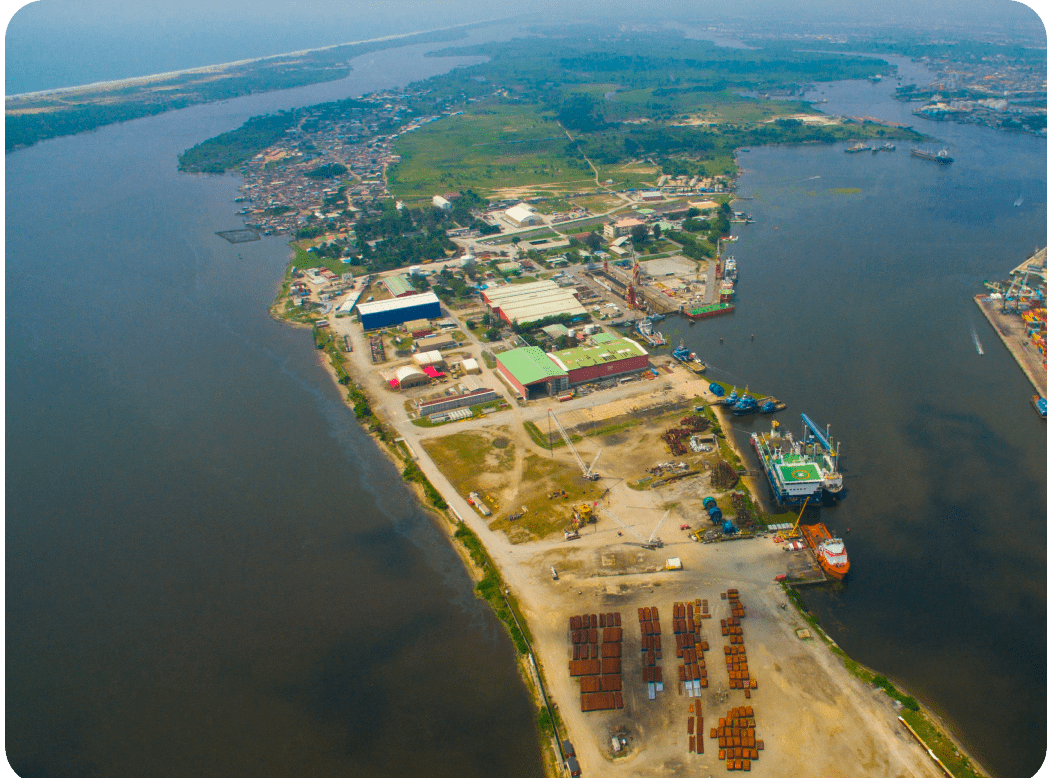
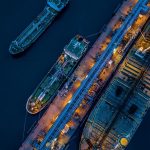
Shipping giant, Mediterranean Shipping Company (MSC), has signed a 45-year concession agreement with Nigerian maritime company, Nigerdock, to develop, operate and maintain a new container terminal at Snake Island Port in Lagos.
A statement by MSC on Thursday noted that the new container terminal would be completed by 2028 with a 910-meter quay, six Ship-to-Shore (STS) cranes, two ship berths, three barge berths, and up to 18 meters of draft.
The dedicated MSC terminal would be part of the company’s announced $1 billion investment in infrastructure and logistics in Nigeria.
“We are thrilled to take this step forward in our partnership with MSC to develop a world-class container terminal within Snake Island Port.
“This gives the world’s leading shipping line a home in Nigeria and brings significant foreign direct investment into the country to accelerate growth in the maritime and logistics industry,” it said.
Global shipping companies are pushing to secure long-term footholds in emerging markets as supply chains are reconfigured worldwide.
MSC said the terminal, to be built by ITB Nigeria and DEME Group, is expected to be ready by 2028.
It will occupy 30 hectares (74 acres) and feature a 910-metre (3,000 ft) quay capable of handling ship‑to‑shore cranes and mobile harbour cranes, serving both deep-sea vessels and barges.
MSC President, Mr Diego Aponte, said: “Completing this key phase in the development of Snake Island Container Terminal with Nigerdock and our trusted partners demonstrates MSC Group’s commitment to providing excellent service to our customers in Nigeria and throughout Africa.
“The new terminal will open up opportunities, enhance efficiency, and elevate Snake Island Port as a major global shipping centre.
“Together with our Group’s other long-term investments in Nigeria, it will generate many local jobs and significantly increase economic revenue and resilience.”
Snake Island Port is an 85-hectare facility operated by Nigerdock, a maritime and logistics company, and comprises three terminals serving the Lagos port complex.
By Modupe Gbadeyanka
In the quest to strengthen circular economy infrastructure and sustainable packaging value chain, the trio of Indorama Ventures Public Company Limited, Nigerian Breweries Plc and Genesis Power and Energy Solutions Limited has partnered to establish a state-of-the-art recycled PET (rPET) plant in Nigeria.
The facility will convert post‑consumer PET bottles into high‑quality recycled material for packaging applications.
The plant, located in Lagos, should be ready in the first half of 2027. It will produce up to 45,000 tons of food‑grade rPET resin annually.
“This compelling initiative demonstrates Genesis’s commitment to deploying capital to climate-resilient investments by leveraging clean energy as a strategic nexus to advancing viable economic opportunities.
“The investment is also a testament to how cross-sector partnerships can enable sustainable industrial development.
“By combining circular economy principles with resilient infrastructure and energy solutions, the initiative supports long-term environmental impact and local value creation,” the chief executive of Genesis Energy, Mr Akinwole II Omoboriowo, said.
Also commenting, the chairman of ESG Council at Indorama Ventures, Yash Lohia, said, “This partnership marks a defining milestone in our global recycling journey. By establishing our largest recycling facility to date and one of the largest rPET sites in Africa, we are bringing Indorama Ventures’ global expertise, proven technologies, and long-term vision for circularity to a region with immense growth potential.
“This investment reflects our belief that scaling sustainability solutions locally is essential to building resilient, sustainable packaging systems that deliver lasting environmental and economic value.”
Business Post reports that the initiative aims to meet fast‑rising demand for recycled content, reduce plastic waste, and create local value through improved collection systems, job creation, and increased participation across the recycling value chain.
The partnership brings together complementary strengths across the PET value chain. Indorama Ventures, the world’s largest recycler of PET for beverages, contributes expertise in sustainable materials development.
Nigerian Breweries, a Heineken operating company, provides strong local market insight and engagement across Nigeria’s beverage ecosystem, while Genesis Energy supports the initiative with sustainable infrastructure and energy expertise.
The project is expected to support recycling capacity in Nigeria, subject to regulatory approvals, technical validation, and operational implementation. Together, the partners aim to establish commercially viable rPET operations that enable responsible growth and long-term environmental impact, as it aligns with Nigeria’s National Policy on Plastic Waste Management, introduced in 2020 to strengthen collection, recycling, and circular economy solutions, with the goal that all plastic packaging be recyclable, biodegradable, compostable, or reusable by 2030.








-
 Feature/OPED6 years ago
Davos was Different this year
-
Travel/Tourism10 years ago
Lagos Seals Western Lodge Hotel In Ikorodu
-

 Showbiz3 years ago
Estranged Lover Releases Videos of Empress Njamah Bathing
-
 Banking8 years ago
Sort Codes of GTBank Branches in Nigeria
-

 Economy3 years ago
Subsidy Removal: CNG at N130 Per Litre Cheaper Than Petrol—IPMAN
-

 Banking3 years ago
Sort Codes of UBA Branches in Nigeria
-

 Banking3 years ago
First Bank Announces Planned Downtime
-

 Sports3 years ago
Highest Paid Nigerian Footballer – How Much Do Nigerian Footballers Earn