
General
Ika Weekly Newspaper and a Catalyst for New Order

By Jerome-Mario Utomi
In the words of Ben Carson, a retired Director of Pediatrics Neurosurgery at John Hopkins Hospital and now a Washington Times Columnist and Fox News contributor, many people use the terms wisdom and knowledge interchangeably.
They are, however, quite different, and have in no way confers the other. Knowledge is familiarity with facts. The more knowledge one has, the more things one is capable of doing, but only with wisdom is one able to discern which of the many things they are capable of doing should be pursued and in what order.
Certainly, the above words/description fittingly captures the clarity of vision and singleness of purpose that set the stage for the advent of Ika Weekly Newspaper, a weekly tabloid published at Agbor in Delta State.
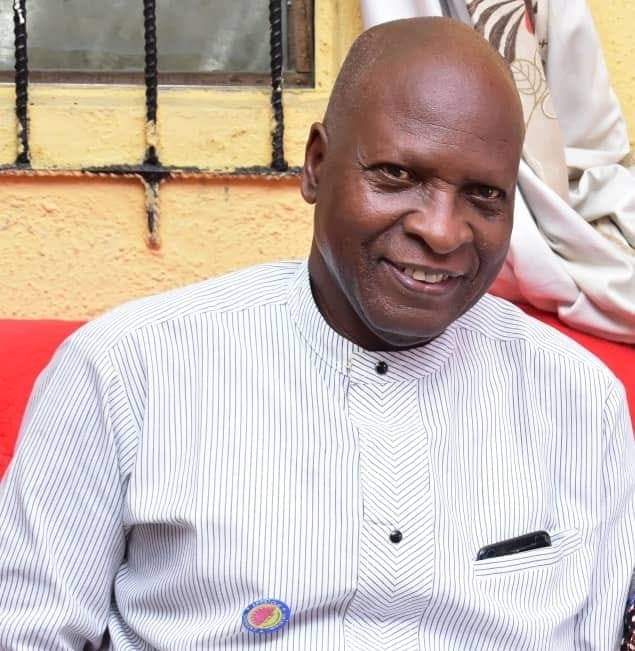
Established in 1989, the Ika Weekly Newspaper which currently operates both print and online, is, for the purpose of clarity, a community newspaper based in Agbor, owned by the Ewuru, Ika South Local Government Area, born publisher, Steven Ekiri-Mekiriuwa Ashien, a former newspaper vendor/bookseller.
Among other objectives, the newspaper was birthed to disseminate across the world news/ information that is Ika nation-specific, act as a vehicle for the propagation and promotion of Ika culture and tradition while recognizing/celebrating Ika sons and daughters that demonstrate uncommon talent in their various fields of endeavours. The newspaper’s interest/attention/focus was neither at war nor in conflict with any state, regional/provisional, or nationally owned newspapers.
While the above information is important as it provides relevant direction for understanding the origin of the newspaper, readers with critical minds may be tempted to put forward the following question; what is the kernel of this piece/ intervention?
Why is the author fixated with a community newspaper and not even a national one, at this critical time when Nigeria as a country is going through the pangs of insecurity and the masses weakened by economic crunch?
One possible answer to the above questions is that aside from the fact that the newspaper’s progress is a reflection of a leader’s search for new fields to increase the wealth, culture and socioeconomic wellbeing of his people, Ika Weekly Newspaper’s odyssey is laced with profound lessons to draw by the generality of mankind.
Media professionals/industry on their part has enough insight to gain from how Ashien’s grappled with the problems of self-reinvention in order to keep the news organization afloat.
Most superficially, similar to the knowledge of history which is useful to the scientist, the economist, or the student of literature or philosophy on the grounds that no science or art is static, the piece in a synoptic manner x-rays the account of problems faced by the publisher in his resolve to build the newspaper house and how he set about solving those problems after pondering on them and the limited options available. To ignore or misstate this account could lead one to wonder in a dilemma.
Let’s take a detailed look at the particulars of the above claim.
Very fundamental is Ashien’s early consciousness/understanding that economic principles of wealth development is very important for the oppressed communities and will go a very long way towards liberating them from the influence of the elite class, even more, is education, he set out to use the media as a vehicle to educate, enlighten and socially influence his people.
Now, this is the first lesson arising from the ‘self-inflicted responsibility’ of educating the people. The task came in double folds. As he (the publisher) bothers to educate the people, he seizes the opportunity to educate himself and exit being educationally disadvantaged.
Says a commentator, the amazing contradiction is that, with little formal education, the man now embodies what it means to be educated. He has read more than the self-acclaimed educated people. His fascination with philosophy has guided his reading habit well. You can be forgiven for doubting his claim of lack of proper education when you consider his proven editing skill and publishing track records. For a man who claims as I remember it, to have started his career as a newspaper vendor in Warri, he has totally reinvented himself and has made his mark in the world of letters.
Before you hastily conclude that things became rosy from this point, wait till you cast a glance at the next paragraph.
But as it is a trademark of many media organizations across the world, 16 weeks of initial publications the newspaper left the newsstand- a factor attributable to macro and uncontrollable reasons.
With the collapse of this effort which Mr Ashien had invested heavily, life again started to become very rough for him. Like many Nigerians at that time, the more he tried his hands on other ventures, the worst it became.
However, as a determined man who always thinks positively coupled with his love for education, he fell back on selling second-hand books, to the extent that he started travelling to Ghana to buy second-hand books which he was hawking from one higher institution in Nigeria to another.
The harder he tried, the more difficult things became.
At this time, Mr Steve Ashien became virtually housebound, lonely, and desolate because finding money to travel out of Agbor became extremely difficult.
But as someone that understands that courage faces fear and masters it while cowardice represses fear, and is thereby mastered by it, he neither allowed himself to be overwhelmed by the uncertainties of life nor lost the will to live.
Rather, on one particular day in 2007, he did something theatrical.
He suddenly decided to go back to Ika Weekly Newspaper publishing. The surprising things about this decision were that at that time, Mr Steve Ashien did not have any money to invest in his dream newspaper publishing.
Though a faith-based man who always put God first in all he does and whose habit of giving/generosity, many characterized as legendary. That notwithstanding, people who knew about his intention gave him neither the needed support nor a chance to succeed. They were sceptical about how possible it would be for him to do magic this time around.
But as native wisdom proclaims, ‘the protestation of the innocent chick does not prevent or stall the sacrifice. If anything, the protestations enriched the sacrifice and hasten its value and efficacy.
Likewise, the flood of oppositions did not stop Mr Steve Ashien from plunging into Ika Weekly Newspaper publication.
Rather, such doubt and oppositions acted as a tonic. He prayed to God for direction and held on to honesty as his hardest currency while working night and day, sleeping on the floor of his office in order to ensure that the Newspaper hits the newsstand.
As luck will have it, help however came from a few people who were ready to report, highlight, and analyse the current affairs/events and topical issues happening in Ika land that was of interest to the people, especially in the political and community leadership.
He promoted citizens/community journalism.
Clearly, a bracing account particularly as the newspaper has since then, remained uninterrupted at the newsstand for over years with workers’ salaries promptly and dutifully paid. Not even the dreaded outbreak of the coronavirus pandemic which disrupted millions of businesses across the world could halt its publication.
Also alluring is the awareness that the organization has grown into other areas of interest. For example, it established the St. Steven’s Library of congress- a resource centre for research and documentation of critical information, and study of Ika history, people, culture, and tradition. However, this library is no longer functional but the knowledge impacted on the general public is still cherished to date.
Despite these achievements, Ashien has refused to be seen. Instead, he opts to function like a cameraman who records events/successes without getting noticed.
But there exists a difference, and that is the fact that even in his ‘hiding’, he remains not just a shining star but a source of inspiration to the youths, a good ambassador of the Ika nation, and most importantly, a Catalyst for New Order. For its part, the newspaper has become a leading light reputed for filling the information gap in Ika Land.
Jerome-Mario Utomi is the Programme Coordinator (Media and Public Policy), Social and Economic Justice Advocacy (SEJA), Lagos. He could be reached via [email protected]/08032725374




By Aduragbemi Omiyale
The sum of N3.3 trillion has been approved by President Bola Tinubu to finally clear the outstanding debts in the power sector.
A statement issued on Sunday by the Special Adviser to the President on Information and Strategy, Mr Bayo Onanuga, said the “long-standing debts accumulated between February 2015 and March 2025.”
It was stated that the payment plan for the debts under the Presidential Power Sector Financial Reforms Programme should restore reliable electricity to the country.
“Following verification, N3.3 trillion has been agreed as a full and final settlement, ensuring a fair and transparent resolution,” a part of the statement noted.
“Implementation has begun, with 15 power plants signing settlement agreements totalling N2.3 trillion. The federal government has already raised N501 billion to fund these payments. Out of the amount, N223 billion has been disbursed, with further payments underway,” it added.
The statement said, “With payments reaching the power value chain, generation will be more stable. With power plants supported, electricity reliability will improve.”
“This programme is not just about settling legacy debts. It is about restoring confidence across the power sector — ensuring gas suppliers are paid, power plants can keep running, and the system begins to work more reliably,” the Special Adviser to the President on Energy, Ms Olu Arowolo-Verheijen, was quoted as saying in the statement.
“It is part of a broader set of reforms already underway — including better metering and service-based tariffs that link what you pay to the quality of electricity you receive.
“The government is also prioritising power supply to businesses, industries, and small enterprises — because reliable electricity is critical to creating jobs, supporting livelihoods, and growing the economy.
“The goal is simple: more reliable power for homes, stronger support for businesses, and a system that works better for all Nigerians,” she added.
President Tinubu has commended all stakeholders who supported efforts to resolve the legacy issues in the power sector. He has also confirmed that the next phase (Series II) will begin this quarter.

By Adedapo Adesanya
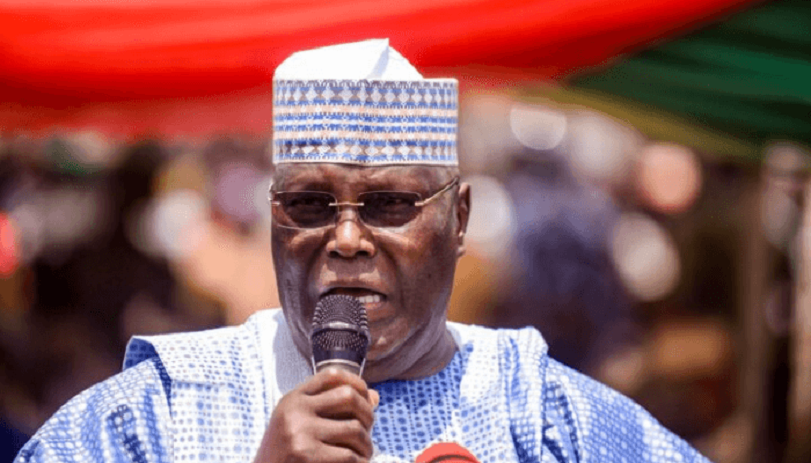
Former Vice-President Atiku Abubakar has hired Von Batten-Montague-York, L.C., a Washington-based lobbying firm, to protect and strengthen his “reputational standing” in the United States for $1.2 million.
According to The Cable, the contract agreement was signed by Mr Karl Von Batten, the managing partner at the firm, and Mr Fabiyi Oladimeji, a Nigerian politician, on March 9 and 10, 2026, respectively.
Based on a document filed with the US Department of Justice, one of the contract’s objectives entails that the firm will “counterbalance” the Nigerian government’s “lobbying narratives” in the US. It comes after the federal government reportedly spent $9 million to strengthen lobbying with the US government earlier this year.
Mr Abubakar, who is eyeing the Nigerian presidency, is currently with the African Democratic Congress (ADC). He will use the firm to “advance understanding” within US policymaking institutions of his “leadership posture and policy vision”.
Based on the contract details, the firm will facilitate and arrange meetings for the former vice-president to engage with US government officials and members of Congress.
Von Batten-Montague-York will also provide the politician with “guidance on policy positioning, reputational considerations, and engagement strategy”.
“These activities include lobbying and government affairs engagement with Members of Congress, congressional staff, and executive branch officials concerning issues related to democratic governance, regional stability, economic development, and U.S. engagement with Nigeria and the broader West African region,” part of the contract details reads.
“The Registrant (lobbying firm) may advocate for policies and perspectives aligned with the foreign principal’s stated positions, including matters relating to governance, economic policy, and bilateral relations with the United States.
“The Registrant also engages in promotion, perception management, and public relations activities designed to enhance understanding among U.S. policymakers and relevant stakeholders of the foreign principal’s policy positions, leadership posture, and strategic priorities.
“This includes the development of messaging strategies, narrative positioning, and reputational advisory services.
“In furtherance of these activities, the Registrant prepares, distributes, and may assist in the dissemination of informational materials, including briefing memoranda, policy papers, talking points, and related communications, intended to inform U.S. government officials and stakeholders.”
The former vice-president is expected to pay the $1.2 million for the 12-month contract in six instalments.

By Dipo Olowookere
The need for Africa to protect itself from many external shocks not of its making has again been emphasised by the African Development Bank (AfDB), the African Union Commission (AUC), the United Nations Development Programme (UNDP), and the UN Economic Commission for Africa (UNECA).
On the margins of the 58th session of the Economic Commission for Africa in Tangier, Morocco, the continent was tasked to strengthen regional integration, accelerate African-led financial solutions, and invest decisively in energy, food, and trade resilience so as to move from vulnerability to preparedness.
The meeting focused on the spikes in energy, food and fertiliser prices caused by the ongoing conflict in the Middle East.
The United States and Israel launched airstrikes on Iran in February 2026, and since then, global oil prices have surged by more than 50 per cent as of late March. Twenty-nine currencies in Africa have weakened, raising the cost of servicing external debt and importing food, fuel, and fertiliser.
Disruptions linked to Gulf energy supplies limit access to ammonia and urea during the critical March–May planting season. This will affect agricultural production, compounding risks of crisis and emergency levels of food insecurity, especially for low‑income households and import‑dependent economies.
To address these issues, the quartet has asked African leaders to, in the short-term, stabilise fuel, food, and fertiliser supply, and execute medium‑term reforms to strengthen energy security, targeted social protection, and regional trade under the African Continental Free Trade Area (AfCFTA).
They also tasked leaders to come up with long‑term structural reforms towards stronger domestic resource mobilisation and African financial safety nets, including accelerated implementation of the African Financing Stability Mechanism.
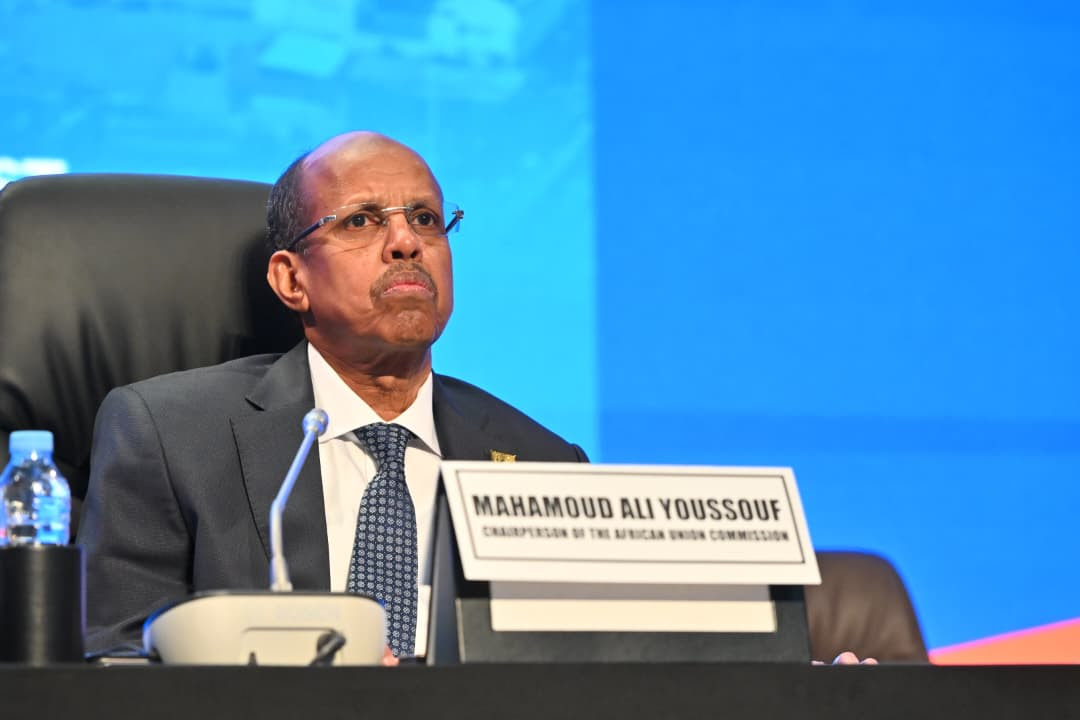
“Continued escalation of the conflict worsens global instability, with serious implications for energy markets, food security, and economic resilience, particularly in Africa, where economic pressures remain acute,” the chairperson of AUC, Mr Mahmoud Ali Youssouf, said.
Also commenting, the UN Under-Secretary-General and Executive Secretary of UNECA, Mr Claver Gatete, said, “Africa has been hit by too many external shocks not of its making. Crises like this reinforce why Africa must finance more of its own future and strengthen regional solutions that build resilience before the next shock hits.”
On her part, the UN Assistant Secretary‑General and Director of UNDP’s Regional Bureau for Africa, Ms Ahunna Eziakonwa, submitted that, “With the right mix of policy choices, financing tools, and political resolve, Africa can weather this shock and emerge more resilient, more self-reliant, and better positioned to shape its own economic future.”
“As global crises multiply, Africa’s response must evolve from managing shocks to fostering resilience. African institutions and development partners need to act swiftly and in concert, leveraging their comparative advantages to cushion short-term shocks while laying the foundations for long-term resilience,” the president of AfDB, Mr Sidi Ould Tah, stated.
-
 Feature/OPED6 years ago
Davos was Different this year
-
Travel/Tourism10 years ago
Lagos Seals Western Lodge Hotel In Ikorodu
-

 Showbiz3 years ago
Estranged Lover Releases Videos of Empress Njamah Bathing
-
 Banking8 years ago
Sort Codes of GTBank Branches in Nigeria
-

 Economy3 years ago
Subsidy Removal: CNG at N130 Per Litre Cheaper Than Petrol—IPMAN
-

 Banking3 years ago
Sort Codes of UBA Branches in Nigeria
-

 Banking3 years ago
First Bank Announces Planned Downtime
-

 Sports3 years ago
Highest Paid Nigerian Footballer – How Much Do Nigerian Footballers Earn