

General
Marginalisation: Delta State Leaders Seek NDDC Chairmanship Slot

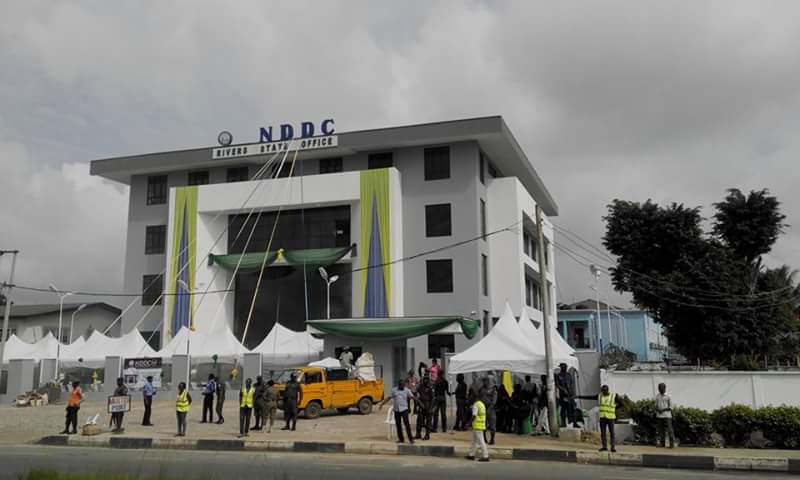
Niger Delta leaders on Friday vowed to take up the marginalisation issue of Delta State with the highest authority in Nigeria.
The leaders said there was no reason whatsoever for Delta State to be so treated compared with Bayelsa, Akwa-Ibom and Cross River in the appointment of Chairman and Managing Director of the Niger Delta Development Commission (NDDC).
At a meeting in Abuja, the leaders said it was the turn of Delta State to produce the chairman and managing director of the Commission.
“The NDDC Act stated that the office of the chairman shall rotate amongst the member states of the commission in the following alphabetical order; Abia State, Akwa Ibom State, Bayelsa State, Cross River State, Delta State, Edo State, Imo State, Ondo State and Rivers State.
“Chief Olusegun Obasanjo, Alhaji Umaru Musa YarÁdua, Dr Goodluck Jonathan and President Muhammadu Buhari appointed Onyema Ugochukwu (Chairman 2001-2005) Abia State, Sam Edem (Chairman, 2005-2007), Akwa-Ibom, Dan Abia (Acting Chairman 2007-2009), Akwa-Ibom, Larry Koinyan (Chairman (2009-2011), Bayelsa State, Tarifa Tebepah (Chairman 2011-2013, Bayelsa State, Bassey Henshaw (Chairman 2013-2015), Cross River State and Ndoma Egba (Chairman 2016-2019), Cross River State,” the group of elders said.
Leader of the Niger Delta Front (NDF), Mr John Harry, who addressed journalists in Abuja, said the leaders urged Nigerians to impress on President Muhammadu Buhari to appoint Delta State indigenes as chairman and managing director of the commission.
“The NDDC Act requires that there shall be for the commission, a Managing Director and two Executive Directors who shall be indigenes of oil producing areas starting with the member states of the Commission with the highest production quantum of oil and shall rotate among member states in the order of production,” the leaders said.
They said Rivers State occupied the position of Executive Director (Finance and Administration) for years through Itonanen Ogiri (EDFA 2013-2015), Mene Derek (EDFA 2016-2019), and Chris Amadi (Transition Acting EDFA 2019-2019.
“The right thing to do is to appoint someone from Bayelsa or Akwa-Ibom as the Executive Director (Finance and Administration) of the Niger Delta Development Commission (NDDC),” they suggested.
Viewed against the background of the provisions of the NDDC Act, the leaders urged the authorities not to compound the problems of the Niger Delta region or make absolute nonsense of the NDDC Act.
“It is time to exhibit fairness,” they told President Muhammadu Buhari, who was commended for the effort he was making to develop the region.
They called on well-meaning people within and outside the Niger Delta region to prevail on President Buhari to appoint Delta indigenes as chairman and managing director.
“We expect the President to use the next NDDC Board to correct the imbalances of previous appointments. We believe in Mr President’s sense of justice and fair play,” the leaders added.
Meanwhile, some leaders of the region on Wednesday reached a consensus on how to consolidate the unity and political stability of the region.
They also urged President Muhammadu Buhari to appoint Deltans as Chairman and Managing Director of the Niger Delta Development Commission (NDDC).
“Mr President, nations are built when existing laws are implemented in its entirety. As you apply the Law and zero on Delta State for the appointment of the Chairman and Managing Director, we plead with you to pick men or women who would further your Next Agenda, serve the interest of the country and the aspirations of the Niger Delta people,” the group appealed.
In a letter to President Buhari, the leaders said there were no doubts as to whether Delta State would produce the Chairman and Managing Director of the intervention agency.
“The ranking of the highest producing states is not in doubt and the state whose turn it is to be appointed the Managing Director of the next board for which Delta State comes top on all fronts and consideration knowing that Bayelsa State, Rivers State, and Akwa – Ibom State have completed their terms in successive ranking order,” they said.
Entitled “Letter establishing the fact on which state should produce the next Chairman and Managing Director of the Niger Delta Development Commission (NDDC)”, the leaders said the letter was not to create controversy but to forestall such or any controversy due to the peculiarity of the circumstance created by the Law or Act.
“Your Excellency, your stance on the Rule of Law and love for fairness and justice no matter the opinion of a few dissenting voices necessitated this letter of great importance from the people of Delta State and the Niger Delta at large. We were never in doubt as to where the pendulum would swing to, having seen the sincerity of your administration in fixing the problems inherited by your Government,” the group stated.
Signed by the Convener, Enlightened Delta Forum, Bestman Odibo and Publicity Secretary, Christopher Orushani, the leaders urged President Buhari to consider fairness and justice in constituting the next board of the Niger Delta Development Commission (NDDC).
“For the first time, Your Excellency, a peculiar but interesting and lawful scenario backed by the act establishing the NDDC Board on the next Chairman of the board which is rotated amongst member states in alphabetic order as stated in the Act establishing the board and also the Managing Director (MD) position which is appointed and rotated based on the “highest” quantum of oil produced amongst the states emanating from one state. In applying the law that supports quantum as the basis for succession, Delta State falls next in line after Akwa – Ibom,” they said.
They stressed that the scenario would not start and end with Delta State as the First beneficiary of this unique position of the Law but that other states would experience same in future rotation.
“Your Excellency, we are glad to point to you the convergence of the positions of the Chairman and the Managing Director to Delta State though the first of its kind but a true reflection of the position of the Act establishing the Board of the NDDC,” the leaders added.
Onyema Ugochukwu (Chairman 2001-2005) Abia State, Godwin Omene (MD/CEO 2001-2003), Delta State, Timi Alaibe (EDFA 2001-2005) Bayelsa State, Ndo Mboro (EDP 2001-2002), Akwa-Ibom State, Emmanuel Agwariavwode (MD/CEO 2003-2005) Delta State, Ukot Ukot (EDP 2002-2005), Akwa-Ibom State.
Sam Edem (Chairman, 2005-2007), Akwa-Ibom, Emmanuel Agwariavwodo (MD/CEO 2005-2006), Delta State, Timi Alaibe (EDFA 2005-2006), Bayelsa State, Timi Alaibe (Acting MD/CEO 2006-2006), Bayelsa, PZ Aginighan (Acting EDFA 2006-2006), Delta State, Beniah Ojum (EDP 2005-2009), Rivers State.
Dan Abia (Acting Chairman 2007-2009), Akwa-Ibom, Timi Alaibe (Substantive MD/CEO 2006-2009) Bayelsa State, PZ Aginighan (Acting EDFA 2007-2009), Delta State, PZ Aginighan (Transition Acting MD/CEO 2009-2009), Delta State.
Larry Koinyan (Chairman (2009-2011), Bayelsa State, Chibuzor Uguoha (Substantive MD/CEO 2009-2011), Rivers State, PZ Aginighan (EDFA 2009-2011), Delta State, El Etteh (EDP 2009-2011), Akwa-Ibom State, Osato Arenyeka-Iyasere (Transition Acting MD/CEO 2011-2011), Edo State.
Tarifa Tebepah (Chairman 2011-2013, Bayelsa State, Christian Oboh (Substantive MD/CEO 2011-2013), Rivers State, L.E.J. Komboye (EDFA 2011-2013), Delta State, E. Eshiet (EDP 2011-2013), Akwa-Ibom State, Christy Atako (Transition Acting MD/CEO 2013-2013), Rivers State.
Bassey Henshaw (Chairman 2013-2015), Cross River State, Dan Abia (Substantive MD/CEO 2013-2015), Akwa-Ibom State, Itonanen Ogiri (EDFA 2013-2015), Rivers State, Omasuli Tuoyo (EDP 2013-2015), Delta State, Ibim Semenitari (Transition Acting MD/CEO 2015-2016), Rivers State
Ndoma Egba (Chairman 2016-2019), Cross River State, Nsima Ekere (Substantive MD/CEO 2016-2019), Akwa-Ibom State, Mene Derek (EDFA 2016-2019), Rivers State, Adjogbe Samuel (EDP 2016-2019), Delta State.
Nelson Brambaila (Transition Acting MD/CEO 2019-2019), Bayelsa, Chris Amadi (Transition Acting EDFA 2019-2019), Rivers State, Adjogbe Samuel (Transition Acting EDP 2019-2019), Bayels State.


