General
SERAP Seeks Reversal of ‘Unfair Lekki Toll Charges’
By Dipo Olowookere
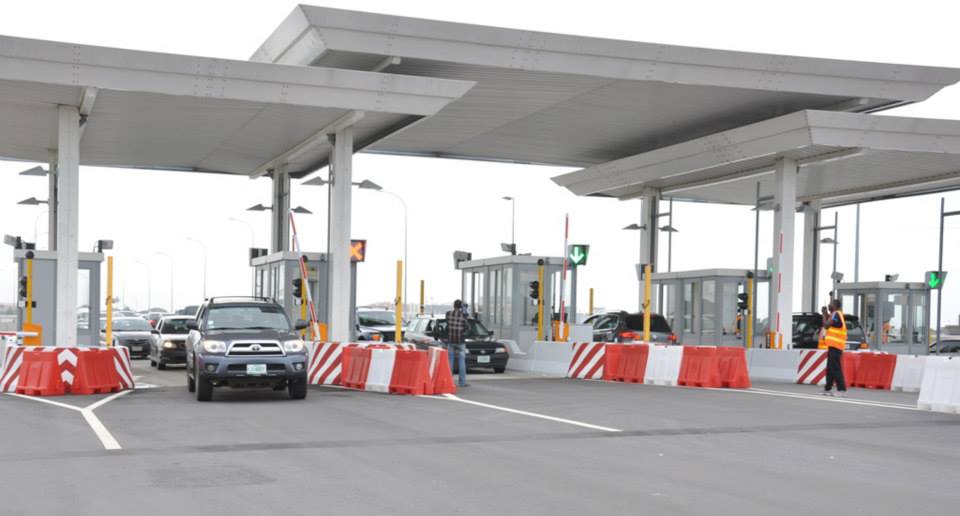
Governor Akinwunmi Ambode of Lagos State has been urged “to take steps to immediately reverse the unfair and discriminatory charges at the Lekki-Epe Expressway and Lekki-Ikoyi Link Bridge toll gates by the Lekki Concession Company (LCC), if the government is not to run the risk of undermining the public interests, democratic values and accountability, and opportunities for participation.”
This call was made by the Socio-Economic Rights and Accountability Project (SERAP), which said, “It’s time for Ambode to ensure and maintain a balance between the needs of the citizens and residents of Lagos State and the Lekki Concession Company.”
The group further urged authorities to “respect and protect the right of protesters to demonstrate against the hike in toll charges and to voice their opinion. International human rights treaties ratified by Nigeria and the country´s own constitution obligate the government to safeguard the rights of freedom of expression, association and peaceful assembly.”
The new rates for the toll charges at the Lekki-Epe Expressway and Lekki-Ikoyi Link Bridge toll gates were implemented February 1 by the Lekki Concession Company (LCC), managers of the road.
But SERAP in a statement by its executive director, Mr Adetokunbo Mumuni, said, “This latest increase in toll charges at the Lekki-Epe Expressway and Lekki-Ikoyi Link Bridge toll gates is unacceptable, as it conflicts with the goals and commitment of the Lagos State government to provide basic public services to citizens and residents.
“It seems the agreement between the Lagos State government and the Lekki Concession Company is no longer serving the needs of citizens and residents.”
According to the organization, “In the face of rising poverty and economic inequalities across the country, the Lagos State government should be considering eliminating toll charges rather than allowing the Lekki Concession Company to get away with overcharging citizens and residents and prioritising profits over the public interests.
“Unless the situation is satisfactorily resolved in the public interests, the government runs the risk of being viewed as beholden to special interests and out of touch with the public good.”
The statement read in part: “The hike shows how profit motive can conflict with public motive. Accountability principles require the government to ensure that the activities of the Lekki Concession Company align with the policies and activities of governance, and that the Company is not allowed to exploit its monopoly position to charge excessive rates.
“It is the duty of the Lagos State government as custodian of the public trust, to take the public interests into account in assessing the activities of the Lekki Concession Company. The government is further obligated to prevent unnecessary and unjustified harm to the public trust and interests.
“Both ‘pre-decision accountability’ in the form of consultation with citizens, residents and other stakeholders, and ‘post-decision accountability’ in the form of taking corrective measures to redress the apparent injustice to those that might be affected by the hike are key democratic and governance values.
“Citizens cannot be mere recipients or purchasers of government services; they must also participate in the act of governance itself. The shift from a participatory role to a consumer role changes the role of individuals vis-a-vis their government from one of citizens to one of consumers. This itself erodes the ideals of a democratic society.
“States contravene their human rights obligations when they fail to take appropriate measures or to exercise due diligence to prevent, punish, investigate or redress the harm caused by acts by private persons or entities.
“At the Admiralty Circle Plaza (Lekki-Epe expressway), cars now pay N200 from N120; sports utility vehicles (SUV) now pay N250 from N150; while commercial buses now pay N150 from N80. Motorcycles now pay N100. At the Lekki-Ikoyi Link Bridge, saloon cars now pay N300 from N250; sports utility vehicles (SUV), mini vans, and light trucks now pay N400 from N300. Motorcycles will now pay N200.”
General
NCSP Strengthens Strategic Investment Cooperation With China
By Adedapo Adesanya
The Nigeria–China Strategic Partnership (NCSP) recently hosted a high-level delegation from Newryton International Industrial Development Company Limited, a leading Chinese investment and industrial development consortium, to advance discussions on deepening bilateral trade, industrial cooperation, and development financing between both countries.
The Newryton delegation, led by Mr David Chen, Assistant Secretary-General of the China Hainan Investment Council, had earlier engaged with the Nigerian Association of Commerce, Industry, Mines and Agriculture (NACCIMA). They were accompanied to the NCSP by Mr Joe Onyuike, Vice-Chairman of NACCIMA’s Agriculture and Livestock Trade Group, who conveyed NACCIMA’s support for the delegation’s engagements.
Discussions centered on the establishment of a Nigeria–China Trade and Investment Platform, including a proposed Promotion Centre in China to support Nigerian products, investors, and state governments.
The consortium also presented opportunities within Hainan Province’s Free Trade Port (FTP), which offers preferential policies that Nigerian businesses can leverage to expand exports and attract new investments.
In his address on behalf of Newryton, Mr Pong outlined plans to collaborate with NCSP in accessing FOCAC-supported financing for strategic investments in agriculture, energy, mining, solid minerals processing, and related sectors. The delegation identified aquaculture as a key area of interest and referenced the forthcoming Global Aquaculture Conference in Hainan Province, encouraging Nigerian stakeholders to participate.
They also expressed readiness to strengthen cooperation in vocational training and employment under the Belt and Road Initiative (BRI).
Welcoming the delegation on behalf of the Director-General, Martins Olajide, NCSP’s Head of Internal Operations, reaffirmed the organisation’s commitment to fostering mutually beneficial partnerships.
He highlighted NCSP’s strong interest in the proposed Nigeria–China Trade and Investment Platform and the development of the Nigerian Oil Palm Industrial Park as a flagship demonstration project.
Also speaking at the meeting, Ms Judy Melifonwu, NCSP’s Head of International Relations, underscored the opportunities presented by China’s zero-tariff policy and the forthcoming NAQS–GACC protocol on the export of Nigerian aquaculture products. She noted that these frameworks would significantly enhance Nigeria’s competitiveness in emerging global markets.
Both parties expressed commitment to advancing discussions toward a structured cooperation framework covering all priority areas.
General
UKNIAF Marks Six Years Infrastructure Support to Nigeria
By Adedapo Adesanya
The United Kingdom–Nigeria Infrastructure Advisory Facility (UKNIAF), established in 2019 as part of a 16-year legacy of UK-funded infrastructure support to Nigeria, convened over 100 senior stakeholders on Tuesday, December 2, to review its progress and formally close out its current phase of operations.
The event brought together representatives from federal and state governments, development partners, development finance institutions, and the private sector to reflect on UKNIAF’s work across the power, infrastructure finance, and roads sectors. Discussions focused on institutional reforms, capacity development, and the sustainability of tools and processes introduced over the past six years.
Since inception, UKNIAF has delivered targeted technical assistance designed to embed evidence-based reforms, data-driven decision-making, and improved institutional performance. Its interventions have mobilised significant financing, strengthened regulatory and planning systems, and enhanced investor readiness across multiple infrastructure markets.
In the power sector, participants highlighted landmark achievements including the development of Nigeria’s first Integrated Resource Plan, which outlines a least-cost and low-carbon pathway for expanding electricity supply. UKNIAF also supported the Nigerian Electricity Regulatory Commission (NERC) in building advanced real-time data capabilities for tariff monitoring, grid management, and outage tracking. The programme enabled pioneering states to establish their own electricity markets following constitutional reforms.
In infrastructure finance, UKNIAF was recognised for strengthening project preparation systems and enabling access to capital. Notable accomplishments include supporting the mobilisation of $75 million from the African Development Bank to the Special Agro-Industrial Processing Zone (SAPZ) programme in two states, and accelerating mini-grid and solar deployment through improved technical standards at the Rural Electrification Agency (REA).
UKNIAF also designed a national project preparation facility, for which N21 billion was allocated in both the 2024 and 2025 budgets to build a pipeline of bankable projects.
Speaking on this, Mr Frank Edozie, UKNIAF Team Lead, described the programme’s close-out as a “handover for sustained delivery,” emphasising that strengthened institutions now hold tools that make Nigeria’s infrastructure landscape more transparent, climate-smart, and investor-ready.
On his part, the Minister of Power, Mr Adebayo Adelabu, commended the programme, noting that its technical assistance and advisory services had helped lay the foundation for a sustainable and inclusive electricity supply industry.
Mrs Cynthia Rowe, Head of Development Corporation at the UK Foreign, Commonwealth and Development Office (FCDO) in Nigeria, praised the partnership, highlighting achievements ranging from state-level electricity market reforms to unlocking major financing and designing Nigeria’s Climate Change Fund.
Enugu State Secretary to the State Government, Professor Chidiebere Onyia, underscored the lasting influence of the programme, stating that UKNIAF’s impact continues through the expertise and leadership transferred to national and sub-national institutions.
The close-out event reaffirmed stakeholders’ commitment to sustaining tools, reforms, and knowledge products developed under UKNIAF, while strengthening collaboration among public, private, and development actors in the infrastructure ecosystem.
Participants included federal and state agencies such as the Nigeria Governors’ Forum, Federal Ministry of Power, Ministry of Finance, NERC, REA, and the Transmission Company of Nigeria, alongside development partners including the African Development Bank, World Bank, and IFC, as well as private sector and civil society stakeholders.
General
Dangote Refinery Reduces PMS Pump Price to N699 Per Litre
By Aduragbemi Omiyale
The gantry price of Premium Motor Spirit (PMS), otherwise known as petrol, has been slashed by the Dangote Petroleum Refinery.
The Lagos-based oil facility brought down the ex-depot price of the petroleum product by 15.58 per cent or N129 per litre to N828 per litre.
Though the company had yet to release an official statement on this development, real-time market data on Petroleumprice.ng on Friday showed the new price.
Punch reports that data from the platform also showed fresh reductions across several private depots following the refinery’s latest review.
Sigmund Depot cut its ex-depot price by N4 to N824 per litre, Bulk Strategic dropped its price by N3, and TechnoOil slashed its by N15.
-
Feature/OPED6 years agoDavos was Different this year
-
Travel/Tourism9 years ago
Lagos Seals Western Lodge Hotel In Ikorodu
-
Showbiz3 years agoEstranged Lover Releases Videos of Empress Njamah Bathing
-
Banking7 years agoSort Codes of GTBank Branches in Nigeria
-
Economy3 years agoSubsidy Removal: CNG at N130 Per Litre Cheaper Than Petrol—IPMAN
-
Banking3 years agoFirst Bank Announces Planned Downtime
-
Banking3 years agoSort Codes of UBA Branches in Nigeria
-
Sports3 years agoHighest Paid Nigerian Footballer – How Much Do Nigerian Footballers Earn