Showbiz
CAMA: Iginla Blames Church Leaders for Creating Division
By Modupe Gbadeyanka
The recently signed Company Acts And Allied Matters (CAMA) law by President Muhammadu Buhari has continued to generate reactions from religious leaders in Nigeria.
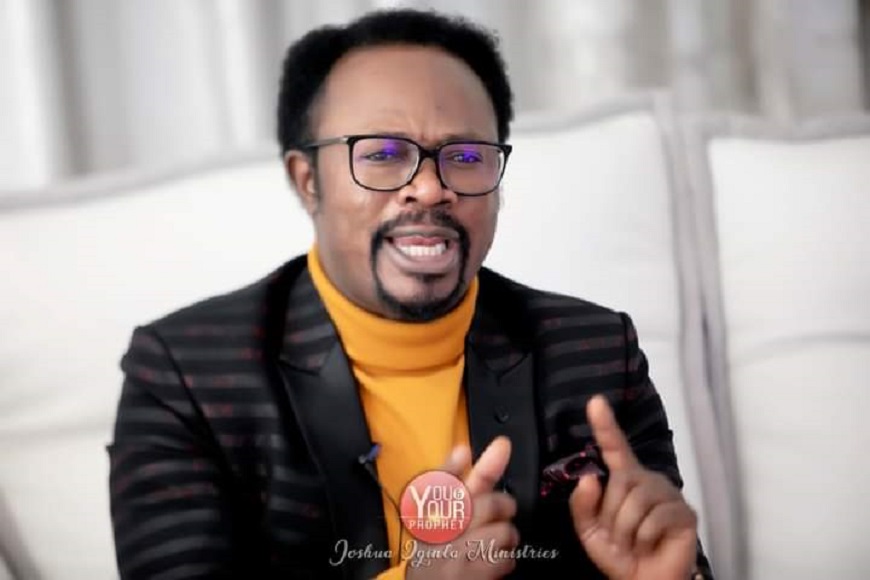
The latest to speak on the issue is the General Overseer of Champions Royal Assembly, Abuja, Prophet Joshua Iginla, who described the law as a coup against Christianity in the country.
However, he blamed his colleagues for not coming up with a voice on some critical issues in the nation, saying this has given room to political leaders to toy with Christians in the country without fear.
“One of the reasons the body of Christ in Nigeria is having problems is because we don’t know our capacity. We have lost focus and spent time having a doctrinal argument. We are the light of Nigeria.
“If we want to ensure that a Christian becomes the President of this country, we have the capacity but we are so self-centred and divided that we are running to people that should be running to us.
“Everything doesn’t end in prayer, there are things we don’t need prayer for in Nigeria. We have the capacity to strengthen things but the church has lost her tastes. We are in days when we no longer attack the devil but ourselves.
“The reason people from other religions will continue to do better is that they understand their capacity,” Mr Iginla declared.
“If as a Christian leader, you are corrupt or found wanting, you should be dealt with but I disagree that someone will propound a law into a spiritual entity. It is because the church is asleep. Last year, I prophesied that the church will face persecution because the church is asleep,” he said further.
Business Post reports that in the new CAMA law, religious bodies and charity organisations will be strictly regulated by the Registrar-General of the Corporate Affairs Commission (CAC) and a supervising minister.
One of the sections religious leaders are crying foul about is Section 839 (1) and (2) of the CAMA law, which provides that the commission may by order, suspend the trustees of an association or a religious body and appoint an interim manager or managers to coordinate its affairs where it reasonably believes that there has been any misconduct or mismanagement, or where the affairs of the association are being run fraudulently or where it is necessary or desirable for the purpose of public interest.
But Prophet Iginla described this as a coup against Christianity, stressing that some pastors are ready to die to prevent the law from being implemented on churches.
He maintained that the church was built by the labour of pastors and appointment of trustees who know nothing about the growth of the church or its affairs is highly condemnable
“Do you know what it took some of us to labour to grow a church up to this level and someone will say he will appoint a trustee over the church. You don’t even know how the church came about. If a pastor is corrupt, let him face the law and go to jail but appointing a trustee? Some of us are ready to die before you do that to us, it is absolutely wrong,” he fumed.
Continuing, the cleric asked, “Do you know why it is happening like this?” “[It is] because the church isn’t feared,” he answered.
How do you make a law for the church? You [want to] change the trustee and put your own trustees? When has some organisation become a spiritual entity? Are you about to preach, do deliverance, in what capacity will you control the church?” he queried further.
“Make laws that prevent men of God from being corrupt and if they are corrupt, take them to court but putting your trustees is a coup against the church,” he advised the government.
Furthermore, he asked the government to divert its attention and energy into fighting corruption in the government, saying, “‘Sometimes I laugh. Thank God for this government and what they are doing, but I must say their energy must be channelled on the right thing. Those who have looted our money and sent our children to live in penury, those governors that have embezzled money should be sent to jail.
“It is only in my country that those who are fighting corruption are even corrupt. Money that was spent on COVID-19, how many got it? Those who are in charge should be sent to jail. Leave the church alone. We are not government. If any pastor is found looting with the government, send him to jail but hunting the church is the last place of priority in the fight against corruption,” he said.
“The government should intensify efforts against those ones. These are people we should use as scapegoats. I am not saying they should not look into the church, look into it but appointing a trustee in the church is wrong. If anyone is appointed to take my sit in my church, except the Lord hasn’t anointed me, he or she will not live to see the next seven days,” he declared.
Showbiz
Then Versus Now: How AMVCA Has Evolved Over the Years
The Africa Magic Viewers’ Choice Awards have long stood as one of the most prestigious platforms celebrating excellence in African film and television.
From its earliest editions, it has consistently brought together the continent’s brightest talents, setting a strong standard for recognition, storytelling, glamour, and cultural pride.
Today, that foundation has only continued to expand and strengthen.
The AMVCA has grown into an even more expansive and dynamic platform, bigger in scale, richer in competition, and more diverse in expression while continuing to provide a stage where established icons and emerging voices are celebrated side by side.
Then: A Strong Foundation of Excellence and Recognition
In its early years, the AMVCA reflected the structure and growth of Nollywood and African storytelling at the time, an industry already rich in talent, creativity, and established stars.
Winning an AMVCA was always a mark of excellence, a recognition of outstanding work within a highly respected ecosystem of filmmakers, actors, and creatives.
Categories were structured around key pillars of storytelling, and while the industry has continued to expand over the years, the awards have consistently celebrated excellence across both on-screen and behind-the-scenes contributions.
From the beginning, recognition has always leaned toward quality performances, strong narratives, and industry-defining work. The excitement was never limited; it was rooted in celebrating the best of African cinema.
The Shift: Expansion, Structure, and Industry Depth
As African film and television continued to evolve, the AMVCA naturally expanded in scope to reflect the growing depth of storytelling across the continent.
In recent editions, the awards featured over 30 categories, split between jury-selected and audience-voted awards, reinforcing a balanced structure that reflects both critical excellence and audience engagement.
What this evolution truly highlights is how deeply layered African storytelling has become.
Cinematography, editing, sound design, costume, and production design have all become highly competitive and widely celebrated categories, sitting alongside acting and directing as essential parts of the storytelling process.
Films like Over the Bridge, Mami Wata, Breath of Life, Brotherhood, and Eyimofe (This Is My Desire) have not only been recognised but have stood out for their artistic ambition, technical excellence, and contribution to the growth of African cinema.
At this level, the AMVCA continues to do what it has always done best: recognising and rewarding craft in all its dimensions.
Now: A Platform Reflecting a Growing and Diverse Industry
In recent editions, the AMVCA has further strengthened its role as a platform that reflects the full spectrum of African entertainment.
One of the clearest developments is the continued spotlight on emerging talent through dedicated recognition categories such as the Trailblazer Award, which highlights rising stars making a notable impact in the industry.
Categories like Best Digital Content Creator also reflect how storytelling has expanded across platforms, embracing the evolution of content creation in today’s digital era.
Across recent editions, younger actors and filmmakers continue to share the stage with industry veterans, reflecting the depth and continuity of talent within the African entertainment space.
At the 2025 edition, for instance, talents such as Genoveva Umeh and Chimezie Imo stood alongside established industry figures, while the Trailblazer Award continued its tradition of recognising emerging excellence. Digital creators were also acknowledged, reinforcing the AMVCA’s alignment with the evolving media landscape.
Even in 2023, names like Tobi Bakre and Broda Shaggi reflected the dynamic nature of modern African entertainment, where film, television, and digital culture intersect seamlessly.
Across all these moments, the AMVCA remains consistent in its purpose: celebrating excellence in all its forms while reflecting the continuous growth of African storytelling.
The Experience of Watching: A Journey Through Time
Reading AMVCA history feels like moving through the evolution of African cinema itself.
Earlier editions reflect the strong foundations of structured storytelling and established excellence. Middle years highlight expansion in scale, ambition, and creative depth. Recent editions reflect a more global, refined, and experimental expression of African film and television.
Across this journey, one thing remains consistent: excellence has always been the standard.
The experience moves from familiar faces to exciting new recognitions, from predictable narratives of success to more layered and competitive storytelling moments, and from national recognition to wider continental and global relevance.
Today, the AMVCA stands not as a shift in purpose, but as a continuous reflection of a growing industry, one that has always celebrated the best of African creativity and continues to do so at an even greater scale.
If the early AMVCAs celebrated stars, the current editions continue to celebrate legacies in motion.
And perhaps that is the real story, not a change in direction, but a steady expansion of excellence, recognition, and impact across African cinema.
Showbiz
UK Launches Fund to Boost Nigeria’s Creative Industries
By Adedapo Adesanya
The UK-Nigeria Technology Hub has launched its Creative Fund, a first‑phase grants initiative designed to address critical technical capacity gaps across Nigeria’s film, fashion, and music industries.
According to a statement on Tuesday, the fund will support the development of local digital production capacity, encourage the adoption of modern creative technologies, and promote the responsible use of Artificial Intelligence (AI) to strengthen Nigeria’s creative value chain.
The initiative directly supports the priorities of the UK‑Nigeria Economic Transformation and Investment Partnership (ETIP) Creatives Working Group, launched in March 2025 and delivers on commitments made during President Tinubu’s State visit to the UK in March 2026.
It is designed to ensure that high-potential creative projects can access the technical talent, tools, and resources required to produce, scale and complete their work locally.
Funded by the UK-Nigeria Tech Hub, under the UK Government’s Digital Access Programme and implemented by Tech4Dev, the Creative Fund responds directly evidence gathered through the State of the Creative Innovation Ecosystem in Nigeria, study in 2024. Drawing on over 1,700 survey responses, and fieldwork across seven states, the research showed that Nigeria’s creative economy employs approximately 4.2 million people and contributes around US$3 billion to GDP annually.
Despite this scale, the sector continues to face structural constraints – over 80 per cent of practitioners are self-taught, fewer than 10 per cent have access to formal financing, and high-value technical work is routinely outsourced outside the country. The Creative Fund is a direct response to these gaps and is central to the work of the ETIP Creative Working Group.
Speaking on this, Mrs Oyinkansola Akintola‑Bello, Director of the UK‑Nigeria Tech Hub, said, “Nigeria’s creative sector already delivers real economic value, and both governments have committed under the UK‑Nigeria Economic Transformation and Investment Partnership to supporting its growth. Through the ETIP Creatives Working Group, we are moving from ambition to action.
”The Creative Fund is a practical first‑phase intervention that addresses critical gaps in skills, infrastructure, and access to advanced tools, enabling Nigerian creatives to produce and scale high‑quality work locally.”
The fund will support high-potential creative projects covering three industries: Film, Fashion, and Music and will focus on initiatives that demonstrate strong potential for impact, scalability, and job creation.
It will subsidise projects that need to close technical gaps, including critical specialists like VFX artists, sound engineers, post-production editors, and design professionals, or the digital tools and resources that make professional-quality work possible locally, for example, digital asset management systems, content delivery tools, Digital Rights Management solutions, and AI-driven production technologies. The aim is straightforward: Nigeria’s best creative work should be made in Nigeria.
On his part, Mr Abraham Akpan, Tech4Dev’s Country Manager for Nigeria and Sub-Saharan Africa, said the Creative industries are a core part of the digital economy, bringing together technology, culture and entrepreneurship.
“This Fund is about ensuring that Nigeria’s creative success is underpinned by sustainable local talent and capacity, while deliberately expanding access to tools, skills and finance for those who have been historically excluded. By prioritising women-led enterprises, youth-led ventures, and underrepresented groups, the fund embeds inclusion into every stage of delivery.”
The Fund is open to creative companies, studios, production houses, fashion enterprises, and music labels leading projects with clear technical needs. Applications will be assessed on project quality, their potential for local and international impact, and the applicant’s level of commitment to co-investment. The initiative also encourages the responsible use of emerging technologies, including artificial intelligence, with selected projects expected to explore its application in production, storytelling, and innovation.
Applications are open now and will be accepted on a rolling basis throughout the programme period.
Showbiz
MasterChef Nigeria Arrives And Sunday Nights on GOtv Just Got Better
The world’s most prestigious culinary competition has finally landed in Nigeria, bringing with it global standards, high-stakes drama, and a powerful celebration of local flavours.
MasterChef Nigeria premiered on Africa Magic Showcase (Channel 8) and Africa Magic Family (Channel 7), introducing viewers to a new era of culinary excellence.
At stake is a life-changing grand prize of ₦73 million and the coveted title of Nigeria’s first-ever MasterChef.
Ten exceptional home cooks from across the country have stepped into the MasterChef kitchen, not as professionals, but as passionate individuals driven by ambition and talent.
From a content creator in Magboro to a lawyer in Abuja, a domestic staff member in Lagos, and a cloud kitchen manager in Lekki, each contestant brings a unique story, but shares the same hunger to win.
Leading the competition are two of Nigeria’s most respected culinary figures: Chef Stone and Chef Eros.
Known for their influence and expertise, they bring both discipline and personality to the kitchen.
“I have trained over 7,000 students. Nigeria is one of the most diverse countries in the world, and our food reflects that. We just need to tell that story on a plate,” said Chef Stone.
Chef Eros adds: “MasterChef Nigeria is set to be incredibly competitive. From demanding tasks to defining moments under pressure, viewers will witness the true depth of culinary talent in this country. As we like to say, Naija no dey carry last.”
Contestants will face a series of intense, high-pressure challenges designed to test their creativity, technical skill, and resilience.
And for some, it’s strictly business.
“I am here for business. I am here to cook. I am not here to play or make friends,” said contestant Derry.
Across 13 episodes, viewers can expect a compelling mix of tension, discovery, and unforgettable moments as the competition unfolds.
MasterChef Nigeria airs every Sunday at 7:00 PM on Africa Magic Showcase (Channel 8) and Africa Magic Family (Channel 7), with repeat broadcasts on Thursdays at 12:00 PM on Africa Magic Family.
-
Feature/OPED6 years agoDavos was Different this year
-
Travel/Tourism10 years ago
Lagos Seals Western Lodge Hotel In Ikorodu
-
Showbiz3 years agoEstranged Lover Releases Videos of Empress Njamah Bathing
-
Banking8 years agoSort Codes of GTBank Branches in Nigeria
-
Economy3 years agoSubsidy Removal: CNG at N130 Per Litre Cheaper Than Petrol—IPMAN
-
Banking3 years agoSort Codes of UBA Branches in Nigeria
-
Banking3 years agoFirst Bank Announces Planned Downtime
-
Sports3 years agoHighest Paid Nigerian Footballer – How Much Do Nigerian Footballers Earn