Travel/Tourism
flydubai Begins Flight Operations to Kinshasa
By Dipo Olowookere
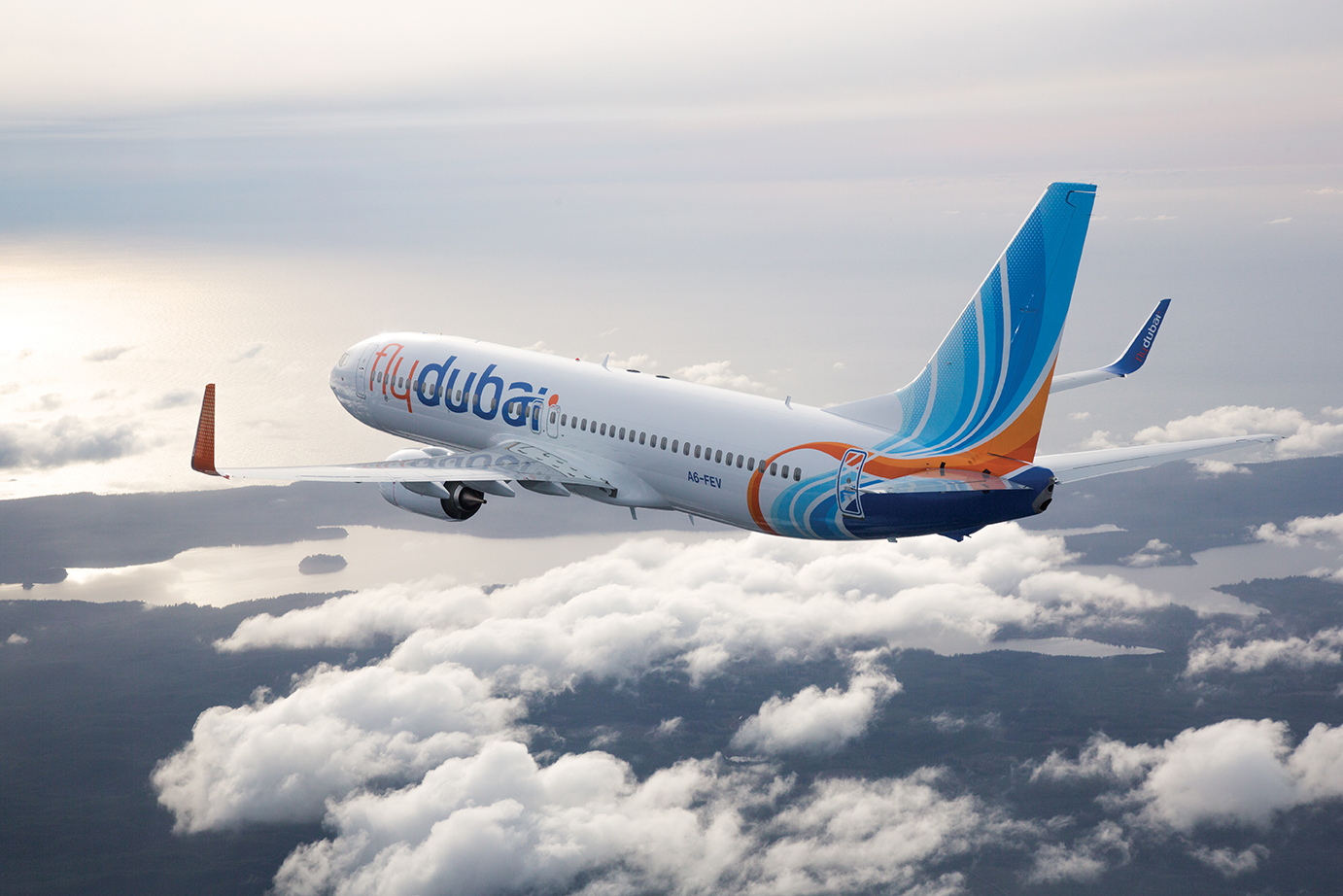
Dubai-based flydubai on Sunday commenced flight operations to the N’djili Airport (Kinshasa International Airport – FIH) and will operate daily flights to N’djili Airport with an enroute stop in Entebbe.
On the inaugural flight to the airport was a delegation led by Sudhir Sreedharan, Senior Vice President, Commercial Operations (UAE, GCC, Indian Subcontinent & Africa) for flydubai.
The delegation was met on arrival by Mr Tshiumba Pmunga Jean, Director General, Civil Aviation Authority, Mr Kufula Makila Rex, Cabinet Director, Minister of Transport and Mr Bilenge Abdala – General Director RVA- (Régie des Voies Aériennes).
The planed arrived N’djili Airport at 14:20 (local time), becoming the first national carrier for the UAE to create direct air links to the Congolese capital, Kinshasa and with the start of the service sees its comprehensive network in Africa grow to 13 destinations in 10 countries.
With the start of flights to Kinshasa, another gateway is opened up for passengers from the GCC, Russia and the Indian Subcontinent into Central Africa.
Passengers from Kinshasa have access to more than 90 destinations on the flydubai network and through its codeshare partnership with Emirates can connect easily and conveniently to Emirates’ destinations spanning six continents in over 80 countries.
Chief Executive Officer of flydubai, Ghaith Al Ghaith, said on the launch of flights to Kinshasa that, “As one of the largest and most populous cities in Africa, Kinshasa, is a key hub for travel and trade.
“Africa is one of the UAE’s emerging trade partners and with the opening of this new route to one of the busiest airports in the Democratic Republic of the Congo there will be further opportunities to strengthen commercial ties across a neighbouring continent with vast natural resources.”
The fast-growing economies of the countries of Africa are important trading markets for the UAE and their increasing prosperity will ensure that their contribution of visitor numbers to Dubai will similarly grow strongly.
Sudhir Sreedharan, Senior Vice President, Commercial Operations (UAE, GCC, Indian Subcontinent and Africa) at flydubai, who led the inaugural delegation, added: “Africa has been an important market for flydubai since the airline’s launch in 2009. We continue to see strong demand for direct airlinks and last year flydubai contributed 13 percent of the total growth at Dubai Airports for the African market.
“I am pleased to see our network in Africa grow to 13 destinations in 10 countries with the launch today of flights to Kinshasa. With the start of the daily service from Dubai’s aviation hub to one of the largest countries in Africa, passengers will have access to increased connectivity.”
All flights to and from Kinshasa will offer travellers flydubai’s onboard experience, whether opting for priority services and more space and privacy in Business Class, or enjoying flexibility and convenience as a passenger in Economy Class.
flydubai says it will codeshare this route with Emirates. With the partnership, passengers can connect easily and conveniently to over 90 of flydubai’s destinations which complement the Emirates route network, spanning six continents in over 80 countries.
In under 10 years, flydubai has grown an extensive network across Africa and currently offers flights to Addis Ababa, Alexandria, Asmara, Djibouti, Entebbe, Hargeisa, Juba, Khartoum and Port Sudan as well as Dar es Salaam, Kilimanjaro and Zanzibar.
Travel/Tourism
Airlines Face Fresh Turbulence Over Jet Fuel Scarcity
By Adedapo Adesanya
The National Association of Aircraft Pilots and Engineers (NAAPE) has revealed that Nigerian airlines are battling a severe jet fuel crisis, triggered by soaring jet fuel prices and supply shortages.
This is the latest blow to the aviation industry, which escaped an industrial action by airline operators over the price of jet fuel.
The latest development is increasing costs, disrupting flights and creating concerns about operational safety and sustainability.
According to Reuters, the persistent scarcity of jet fuel has triggered widespread operational challenges, including flight delays, route adjustments and extended crew duty periods, as airlines struggle to manage schedules amid rising costs.
According to the President of the association, Captain Bunmi Gindeh, the fuel shortages were pushing crews beyond planned limits, increasing fatigue and potentially eroding safety margins in an industry governed by strict rest regulations.
According to local carrier Rano Air, it revealed that jet fuel prices had more than quadrupled, as well as made some routes commercially unsustainable, forcing operational adjustments.
Other carriers have also begun rescheduling or cancelling flights and cutting unprofitable routes, industry sources cited by Reuters said.
This comes at a difficult time for Nigeria’s aviation sector, already strained by foreign-exchange volatility, high aircraft maintenance costs, airport infrastructure strains and fuel price swings.
Airlines group, Airline Operators of Nigeria (AON), last month threatened to suspend operations over what they described as crippling and artificially inflated jet fuel prices.
Nigeria’s airline industry carries millions of passengers annually across an extensive domestic network and plays a critical role in connecting cities where road travel is often slow or insecure, making reliable air services economically and socially important.
The publication reported that the Nigerian Midstream and Downstream Petroleum Regulatory Authority (NMDPRA) has said fuel prices would not be capped, adding that any decisions on deregulated products would be formally communicated.
The crisis is worsening existing problems in Nigeria’s aviation sector, including forex instability, expensive aircraft maintenance and weak infrastructure.
Travel/Tourism
FG Unveils Leasing Initiative to Cut Airlines’ Fleet Acquisition Costs
By Adedapo Adesanya
The federal government has approved the establishment of a national aircraft leasing company aimed at easing access to modern fleets for domestic airlines and transforming aviation financing in Nigeria.
The minister of aviation and aerospace development, Mr Festus Keyamo, announced the decision after a meeting of the Federal Executive Council (FEC), describing the move as a significant shift in how Nigerian carriers will acquire and finance aircraft.
Mr Keyamo said the proposed company would operate as a private-sector-driven Special Purpose Vehicle (SPV) with government backing.
“This initiative is a game-changer for our aviation industry. It eliminates the long-standing challenges Nigerian airlines face in accessing aircraft on competitive terms and positions the country as a hub for aviation financing in Africa,” he said.
According to the minister, the new platform will allow airlines to source aircraft through a centralised system, replacing the current model where operators negotiate individually with international lessors, often at higher costs and stricter terms.
Mr Keyamo noted that the government’s role would be largely supportive, providing sovereign guarantees to boost investor confidence, while private sector players drive the project.
“Through the Ministry of Finance Incorporated, the government will hold equity and earn revenue without direct financial investment. Our primary obligation is to provide the confidence investors need, especially in ensuring asset security,” he added.
The initiative, he said, has already begun attracting interest from both local and international investors, signalling early confidence in its viability.
Beyond supporting Nigerian carriers, the leasing company is also expected to extend services across West Africa and the broader continent, positioning Nigeria as a regional hub for aircraft leasing.
Airlines in Nigeria have come into focus in recent weeks due to renewed concerns over the financial sustainability of operators, which almost forced them to suspend operations last month. However, the Bola Tinubu-led government approved a 30 per cent relief on debts owed by local airlines to aviation agencies and ordered talks involving fuel marketers, airlines, and regulators to reach a fair jet fuel price.
Travel/Tourism
Passengers to Enjoy Starlink Wi-Fi on Emirates’ Flagship A380
By Aduragbemi Omiyale
Air travellers flying through Emirates will enjoy Starlink Wi-Fi onboard after the completion of the installation of the internet service on the company’s flagship A380.
The introduction of Starlink on the A380 builds on Emirates’ ongoing investment into redefining the customer journey, including one of the most ambitious retrofit programmes in aviation history.
The airline operator recently test-run this on a flight to Dubai, and it allowed passengers to enjoy seamless broadband while flying at 40,000 feet.
The Emirates A380 was one of the first commercial aircraft in the world to offer internet to its customers, with first-generation systems offering a total aircraft bandwidth of less than 1 Mbps. The installation and certification were accomplished in Newquay, UK.
With more A380s scheduled for accelerated installation throughout 2026, Emirates customers will soon enjoy a transformative leap in onboard connectivity with the ability to stream, game, browse, and work throughout their journey on personal devices.
The service will be complimentary for all customers, across all cabins, with easy sign-up and access. Future enhancements will include Live TV streaming over Starlink, initially on personal devices and later integrated into seatback screens.
So far, more than 650,000 Emirates customers have already flown on Starlink‑equipped flights, experiencing the benefits of next‑generation onboard connectivity firsthand.
As the world’s largest passenger aircraft, the A380 presents unique engineering challenges and opportunities. This industry-first Starlink configuration is designed to meet the demands of the A380’s ‘double-decker’ layout and high passenger capacity and is capable of delivering more than 2 Gbps of total aircraft bandwidth across the cabin.
Compared with the Emirates Boeing 777, the Emirates A380 features additional wireless access points and a third antenna to deliver an enhanced connectivity experience for its higher passenger capacity. Optimised inter‑deck integration supports a seamless Wi‑Fi experience, with customers able to enjoy high speeds depending on usage and device capability.
Starlink installations will soon begin at Emirates Engineering facilities in Dubai to accelerate deployment across the fleet.
Emirates is committed to bringing the best possible connectivity to its entire fleet at the earliest opportunity, with 25 Boeing 777-300ER aircraft already equipped with Starlink and the first A380 now joining service.
-
Feature/OPED6 years agoDavos was Different this year
-
Travel/Tourism10 years ago
Lagos Seals Western Lodge Hotel In Ikorodu
-
Showbiz3 years agoEstranged Lover Releases Videos of Empress Njamah Bathing
-
Banking8 years agoSort Codes of GTBank Branches in Nigeria
-
Economy3 years agoSubsidy Removal: CNG at N130 Per Litre Cheaper Than Petrol—IPMAN
-
Banking3 years agoSort Codes of UBA Branches in Nigeria
-
Banking3 years agoFirst Bank Announces Planned Downtime
-
Sports3 years agoHighest Paid Nigerian Footballer – How Much Do Nigerian Footballers Earn