Travel/Tourism
Many African Hub Airports to Exceed Capacity by 2020—ICAO
By Dipo Olowookere
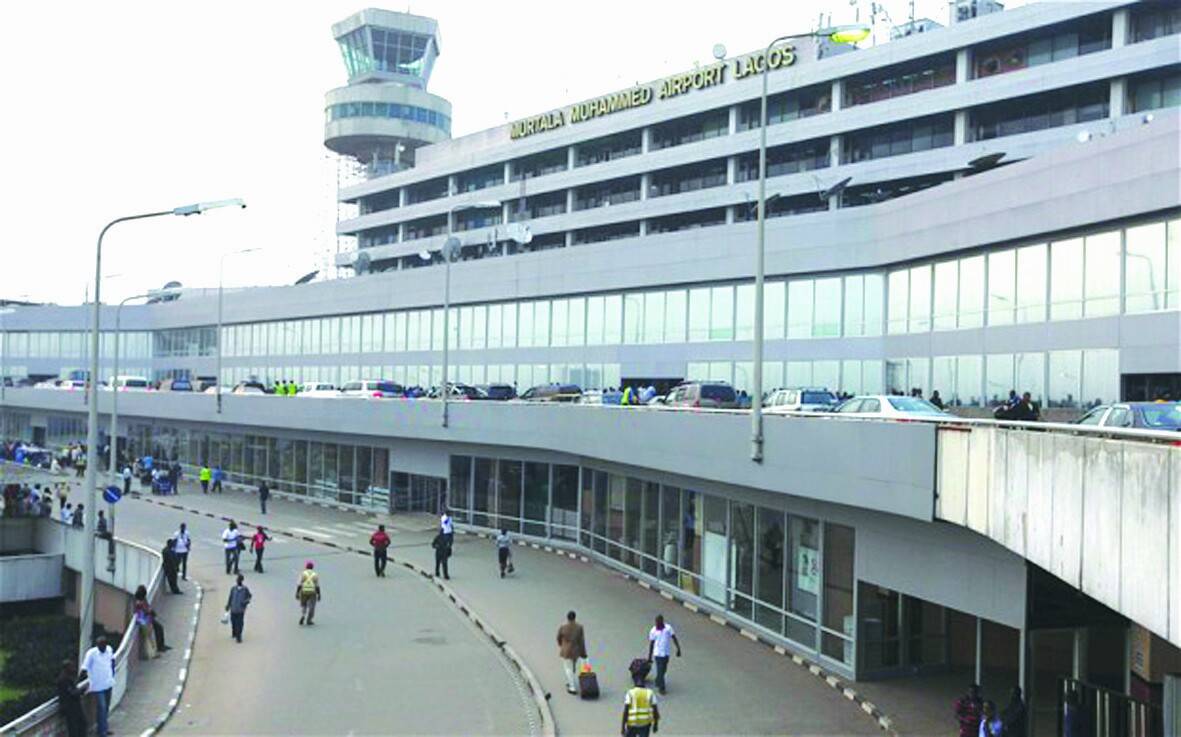
President of the International Civil Aviation Organization (ICAO), Mr Olumuyiwa Benard Aliu, has warned that many African hub airports, due to the more recent and effective focus on air transport liberalization, are now expected to exceed their capacity by 2020.
Mr Aliu gave this warning at the Airports Council International’s (ACI’s) 2018 Africa Regional Conference held in Lagos recently.
According to the ICAO Council President, the continent’s rapidly-expanding air traffic can only be sustained and optimized through the continued development and modernization of local aviation infrastructure, particularly at airports.
“The industry here generates very positive impacts on tourism and trade, directly and indirectly supporting 6.8 million jobs and generating 72.5 billion dollars in Gross Domestic Product (GDP),” President Aliu said. “But due to the more recent and effective focus on air transport liberalization, many African hub airports are now expected to exceed their capacity by 2020.”
The ACI Conference was declared open by the Secretary to the Government of the Federation of Nigeria, Mr Boss Gida Mustapha, in the presence of over 280 participants from 47 Countries and numerous international organizations. Also present were CEOs from the aviation industry (airports, airlines, air navigation service providers, manufacturers, etc.) and members of the Nigerian Senate and House of Representatives and other senior government officials.
In delivering his keynote address at the opening of the Conference, the ICAO Council President also noted that airport modernization and capacity “is a key reason why ICAO’s Global Plans are designed to establish globally-harmonized aviation objectives and requirements in support of the worldwide modernization which is now underway.” He stressed that ICAO’s goal in this respect “is to ensure there are no constraints of infrastructure capacity, technology and financial resources for aviation development,” and noted that ICAO’s World Aviation Forum events are specifically designed to address these concerns and bring project planners and financers together.
Another key development priority stressed by President Aliu was that related enhancements in human capacity development, through improved education and training, should be seen as “directly supportive of the sustainability of any new infrastructure project or new capacity being considered.”
From a more operational standpoint, he drew attention to the fact that airport facilities are much more than just impressive new terminal buildings, and that ICAO remains concerned that many African airports are seeking to attract international flights without the requisite certifications.
“More attention must continue to be paid to the airside safety priorities at Africa’s airports,” he said, “including international airport perimeter fencing, taxiway and runway safety, effective fire services, and better wildlife management,” he remarked.
The President concluded by focusing upon the important aviation security role of airports today, and the many new innovations which are helping them to operate with less noise and emissions than in the past.
During his mission in Lagos, President Aliu met with Nigeria’s Minister of State for Aviation, Mr Hadi Sirika, to discuss the State’s progress on the development of aviation infrastructure and related partnerships subsequent to ICAO’s World Aviation Forum event which was conducted in Abuja, Nigeria, last November.
Minister Sirika briefed President Aliu on recent investments made in upgrading the Nigerian aviation training school in Zaria, an ICAO-endorsed Regional Training Centre of Excellence, and the need and means to promote the facility to greater regional benefit was also discussed.
He also spoke to CEOs of local aviation agencies regarding safety, security, passenger facilitation, and environmental performance priorities, and in discussions with ACI’s Director General, Ms Angela Gittens, he applauded her organization’s successful APEX-in-Security programme while noting further collaborative opportunities for the two Organizations. He also expressed his deep appreciation to DG Gittens for ACI’s determined support to-date of ICAO’s ‘No Country Left Behind’ assistance and capacity-building priorities.
Travel/Tourism
US to Nigerian Travellers: Visa Overstays Not Good for Fellow Citizens
By Adedapo Adesanya
The United States (US) has warned that visa overstays by Nigerian travellers could deny future opportunities for other aspiring applicants.
The United States embassy had earlier in February stated that compliance would help protect visa access for students and business travellers.
In a reminder statement posted on its official X handle on Monday, the US Mission in Nigeria advised that strengthening compliance helps protect visa access for students, business travellers, and families who travel responsibly.
“#Reminder: Visa overstays by Nigerian travellers can affect opportunities for their fellow citizens. Strengthening compliance helps protect access for students, business travellers, and families who travel responsibly. If you are aware of visa fraud, please report it to [email protected] or [email protected],” the statement read.
Last August, the Mission also announced that all non-immigrant visa applicants must now provide details of their social media accounts from the past five years.
In a statement, the embassy said applicants are required to disclose usernames or handles from every platform used within the period when completing the DS-160 visa application form.
“Visa applicants are required to list all social media usernames or handles of every platform they have used from the last 5 years on the DS-160 visa application form. Applicants certify that the information in their visa application is true and correct before they sign and submit,” the statement read.
The mission warned that omitting such information could result in visa denial and render applicants ineligible for future visas.
The DS-160 is the standard online form required for most US non-immigrant visas, including temporary business (B-1), tourism (B-2), student visas (F and M), and work-related categories such as the H-1B.
It insisted the new rules were designed to enhance security, they come amid repeated US criticism of governments accused of clamping down on free speech online.
Travel/Tourism
Tinubu Okays 30% Debt Relief to Airlines, Orders Fuel Price Talks
By Adedapo Adesanya
President Bola Tinubu has approved a 30 per cent relief on debts owed by local airlines to aviation agencies and ordered talks involving fuel marketers, airlines, and regulators to reach a fair jet fuel price.
He had earlier agreed in principle to write off part of domestic airlines’ debts to aviation agencies following successful talks with the Airline Operators of Nigeria (AON).
The group demanded a total waiver of debts owed to aviation agencies to cushion the effect of a 300 per cent increase in aviation fuel prices during a crucial high-level meeting with the Minister of Aviation and Aerospace Development, Mr Festus Keyamo and other critical stakeholders in Abuja.
Recall that the airlines had called off their impending strike due to commence on Monday over the rising cost of operations, particularly for fuel, triggered by the current Middle East crisis.
In an update on Thursday, Mr Keyamo said President Tinubu had approved the 30 per cent write‑off and tasked stakeholders, including fuel marketers, government representatives, airlines, and regulators, to reach a fair jet fuel price by Sunday.
Also, the federal government agreed to set up a committee to review taxes, levies and fees charged on domestic air tickets, to recommend cuts to ease pressure on airlines and passengers.
Engagements among representatives from government, airlines, fuel marketers, and regulators will continue to agree on what the minister described as “fair and reasonable” pricing for jet fuel, with any outcome to be made public.
The cost of fuel has generally risen in the last two months due to the escalating war with Iran by the US and Israel, which has triggered one of the most severe energy shocks in decades. Oil prices are currently above $100 per barrel as markets react to escalating tensions and the risk of prolonged disruption.
At the centre of the crisis is the Strait of Hormuz, a chokepoint through which roughly one-fifth of global oil supply flows. With shipping constrained, the effects are cascading across the global economy, raising fuel costs, fueling inflation, and increasing the risk of economic slowdown across many economies. This is forcing airlines to raise fares, curb growth plans and rethink forecasts.
Travel/Tourism
Nigeria Achieves 91.4% Safety Rating in ICAO Assessment
By Adedapo Adesanya
Nigeria has received a 91.4 per cent aviation safety rating following the latest assessment by the International Civil Aviation Organisation (ICAO) Coordinated Validation Mission (ICVM), marking one of its strongest performances in recent years.
This was disclosed by the Minister of Aviation and Aerospace Development, Mr Festus Keyamo, who announced the development on Wednesday at his office in Abuja, describing it as one of the highest safety ratings Nigeria has achieved under ICAO evaluations since 1960.
He explained that the outcome follows a comprehensive audit in which all aviation agencies and airlines operating in the country were assessed and certified safe based on the findings of the ICAO visiting team.
Speaking further, Mr Keyamo attributed the success to President Tinubu’s deliberate policy and support for the aviation industry.
The ICVM team concluded its on-site safety oversight audit in Nigeria on Wednesday after beginning its review last week.
The exercise was carried out as a follow-up to the ICAO Universal Safety Oversight Audit Programme (USOAP), conducted between August and September 2023.
Mr Keyamo had on Wednesday disclosed key federal government interventions aimed at reducing the financial pressure on airlines following rising concerns over the cost of Jet A1 fuel and the threat of service disruptions in the aviation sector.
Mr Keyamo stated that President Bola Tinubu had approved a generous discount on certain outstanding fees owed to the government by airline operators after they threatened to shut down over a 300 per cent surge in jet fuel price
He explained that the decision is part of efforts to provide immediate relief to the sector and prevent a breakdown in air transport services.
-
Feature/OPED6 years agoDavos was Different this year
-
Travel/Tourism10 years ago
Lagos Seals Western Lodge Hotel In Ikorodu
-
Showbiz3 years agoEstranged Lover Releases Videos of Empress Njamah Bathing
-
Banking8 years agoSort Codes of GTBank Branches in Nigeria
-
Economy3 years agoSubsidy Removal: CNG at N130 Per Litre Cheaper Than Petrol—IPMAN
-
Banking3 years agoSort Codes of UBA Branches in Nigeria
-
Banking3 years agoFirst Bank Announces Planned Downtime
-
Sports3 years agoHighest Paid Nigerian Footballer – How Much Do Nigerian Footballers Earn