

Economy
Shareholders’ Group Explains Effects of 5% VAT on Stock Market, Economy


By Dipo Olowookere
On Thursday, July 25, 2019, the payment of five percent Value Added Tax (VAT) on commissions earned by dealing members on traded values of shares, resumed after being suspended five years ago by federal government.
Weeks before the resumption, stockbrokers had been sending notices to their clients on the development and there had been calls for an extension of the ‘tax holiday’.
One of the registered shareholders groups in the Nigerian capital market, the Ibadan Zone Shareholders’ Association (IZSA), has urged government to suspend the VAT payment for now, especially when the market is battling with bearish runs.
The organisation warned that if government refuses to do something about this issue urgently, there could be consequences for the stock market and the economy at large.
In a statement jointly signed by its Chairman and General Secretary, Mr Akinduro Eric Akin and Mr Ayoola Gilbert Olufemi respectively, the group said the present low business activity in the market was a good reason for government to reconsider it stand on VAT and put it on hold so as to continue to encourage local investors bowing to hit of selling their shares.
It noted that the continued market decline was a clear indication that something was critically wrong with the Nigerian economy, especially looking at the mixed macroeconomic indices revealing very weak economic fundamentals, in the form of low market liquidity and absence of a policy direction.
According to the organisation, the market was already saturated with various taxes and commission on transactions and the inclusion of VAT would further send negative signals to the investment community, resulting in the loss of shareholders value, which will further discourage many investors from investing in the market.
“Recent statistics shows that return on our investment has been discouraging vis-à-vis capital appreciation.
“In view of this and on behalf of the entire members of the Ibadan Zone Shareholders Association, we do hereby request that the Federal Government of Nigeria should extend the VAT exemption pending the time we have robust economy,” the group said in the statement obtained by Business Post.
Commenting on the negative effect the VAT could have on the market if government refuses to listen, IZSA said “the shareholders community is of the opinion that the news on the resumption of value added tax by the government portrays a bad policy for the growth of the Nigerian capital market in recent times considering persistent decline that has overrun activities at capital market.”
“Also, [it] signals the insensitive of government to the plight of investors and development of small and medium scale enterprises in Nigeria.”
The group noted in the statement that since the year began, foreign investments inflow into the Nigerian stock market stood at N41.2 billion for the month of June 2019 compared with N37.9 billion in the month of May.
“This is the highest foreign investment inflow into the stock market this year. Unfortunately, this is not what matters.
“Foreign Investors shipped out N52.4 billion in investments out of the country compared to the inflow of N41.2 billion.
“In fact, foreign investment outflow has outpaced foreign investment inflow every month since January 2019. The Nigerian stock market has come to rely on foreign investment to drive up market values,” it said.
“In total, foreign investor outflow for the period between January and June 2019 stood at N257.8 billion compared to N214.9 billion in inflows over the same period.
“Domestic retail investor investment was N329.6 billion compared to N285 billion June 2019 year to date,” it added.



By Adedapo Adesanya
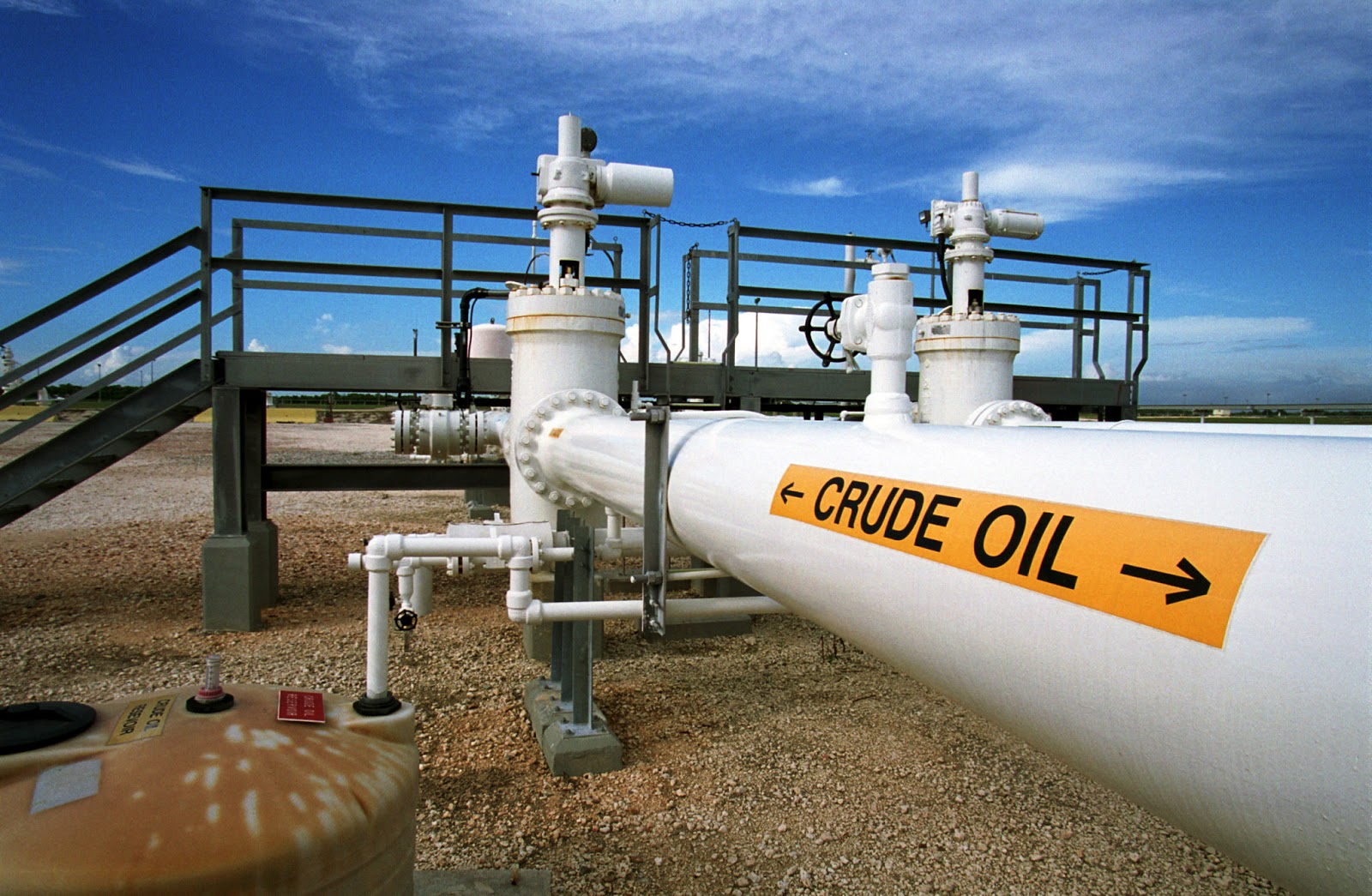
Crude oil prices rallied by more than 1 per cent on Wednesday after the United States President, Mr Donald Trump, ordered a blockade of all oil tankers under sanctions entering and leaving Venezuela.
Brent crude settled at $59.68 a barrel after chalking up 76 cents or 1.3 per cent, while the US West Texas Intermediate (WTI) crude traded at $55.94 a barrel, up 67 cents or 1.2 per cent.
Mr Trump ordered a blockade of sanctioned tankers heading to or departing from Venezuela, the latest move to increase pressure on Nicolas Maduro’s government, targeting its main source of income.
At least 34 US-sanctioned oil tankers with a history of carrying Venezuelan oil are currently at sea in the Caribbean.
Oil market participants said prices were rising in anticipation of a potential reduction in Venezuelan exports, although they were still waiting to see how Trump’s blockade would be enforced and whether it would extend to include non-sanctioned vessels.
The country, which is a member of the Organisation of the Petroleum Exporting Countries (OPEC), has produced around 900,000 barrels of crude oil and condensate so far in 2025, accounting for roughly 1 per cent of the total global supply.
Venezuela could lose up to 500,000 barrels per day of its oil production, according to Reuters estimates. China is the biggest buyer of Venezuelan crude, which accounts for roughly 4 per cent of its imports, with shipments in December on track to average more than 600,000 barrels per day.
While many vessels picking up oil in Venezuela are under sanctions, others transporting the country’s oil and crude by way of Iran and Russia have not been sanctioned.
Crude oil inventories in the US decreased by 1.3 million barrels during the week ending December 12, after losing 1.8 million barrels in the week prior, according to new data from the U.S. Energy Information Administration (EIA) released on Wednesday.
The EIA’s data release follows figures by the American Petroleum Institute (API) that were released a day earlier, which suggested that crude oil inventories fell by a massive 9.2 million barrels.
For total motor gasoline (petrol), the EIA reported that inventories had increased by 4.8 million barrels, on top of the 6.4 million barrel gain in the week prior. For middle distillates, inventories increased by 1.7 million barrels, with production easing by 228,000 barrels daily to an average of 5.2 million barrels daily.


By Aduragbemi Omiyale
One of the paint makers in Nigeria, Premier Paints Plc, is currently in talks with a new investor, Xenergi Limited, for the purchase of 51 per cent stake in the company.
Xenergi Limited intends to acquire shares of Clover Global Resources Limited and TGHL Capital Limited in the organisation.
Business Post gathered that the new investor will buy 39.02 per cent from Clover Global Resources Limited and 15.20 per cent from TGHL Capital Limited.
The deal, according to a regulatory notice issued on Tuesday on the Nigerian Exchange (NGX) Limited, will involve about 63 million shares of Premier Paints.
At the current share price of the paint producer, this should be about N630 million as it closed at N10.00 per unit on NGX on December 16, 2025.
“Subject to obtaining required regulatory approvals, the transaction is expected to close before January 31, 2026.
“The company will continue to inform the public of the progress of the transaction,” the disclosure signed by the company secretary, Alozie Nwokoro, said.
By Adedapo Adesanya
The Naira was flat against the US Dollar in the Nigerian Autonomous Foreign Exchange Market (NAFEX) on Tuesday, December 16, retaining the previous closing value of N1,451.82/$1.
In the same vein, the local currency saw no movement against the Pound Sterling and the Euro in the spot market during the session at N1,943.98/£1 and N1,705.74/€1, respectively.
Also, the Nigerian Naira remained unchanged in the black market yesterday at N1,475/$1 and was N1,460/$1 at the GTBank forex counter.
The Central Bank of Nigeria (CBN) has strengthened US Dollar supply with $250 million to authorised dealer banks at the official window cumulatively as foreign portfolio investors, exporters and non-bank corporate supply dripped.
The spread between official and other non-regulated markets decreased to N30.59$/1 from N44.57/$1, from the previous week, research subsidiary of Coronation Merchant Bank Limited said in a report.
FX analysts said foreign exchange inflows through the Nigerian Foreign Exchange Market decreased to $716.3 million from $844.70 million in the previous week , a 15 per cent drop in a week.
Foreign portfolio investors accounted for the highest share of inflows at 32.98 per cent, followed by exporters at 30.84 per cent, the CBN (17.36 per cent), Non-bank Corporates (16.94 per cent), others (0.72 per cent) and Individuals (0.63 per cent).
On Monday, Nigeria’s headline inflation rate eased to 14.45 per cent in November 2025, down from 16.05 per cent recorded in October, according to the latest Consumer Price Index (CPI) report released by the National Bureau of Statistics (NBS), representing a decrease of 1.6 percentage points month-on-month and marks a significant moderation compared to the same period last year.
As for the cryptocurrency market, there was some recoveries after overall capitalization falling below $3 trillion for the third time in a month. Large-cap assets, particularly those with Exchange Traded Fund (ETF) exposure, are experiencing selling pressure as institutional investors reassess risk.
Ripple (XRP) appreciated by 1.5 per cent to $1.92, Litecoin (LTC) expanded by 1.5 per cent to $78.91, Dogecoin (DOGE) rose by 0.8 per cent to $0.1308, Solana (SOL) went up by 0.4 per cent to $127.60, Binance Coin (BNB) grew by 0.3 per cent to $865.40, and Bitcoin (BTC) gained 0.2 per cent to sell at $86,735.17.
On the flip side, Cardano (ADA) depreciated by 1.0 per cent to $0.3802 and Ethereum (ETH) slumped by 0.4 per cent to $2,935.85, while the US Dollar Tether (USDT) and the US Dollar Coin (USDC) were flat at $1.00 each.











-
 Feature/OPED6 years ago
Davos was Different this year
-
Travel/Tourism9 years ago
Lagos Seals Western Lodge Hotel In Ikorodu
-

 Showbiz3 years ago
Estranged Lover Releases Videos of Empress Njamah Bathing
-
 Banking7 years ago
Sort Codes of GTBank Branches in Nigeria
-

 Economy3 years ago
Subsidy Removal: CNG at N130 Per Litre Cheaper Than Petrol—IPMAN
-

 Banking3 years ago
First Bank Announces Planned Downtime
-

 Banking3 years ago
Sort Codes of UBA Branches in Nigeria
-

 Sports3 years ago
Highest Paid Nigerian Footballer – How Much Do Nigerian Footballers Earn